The best low investment business ideas in India in 2026 are the ones that need little equipment and sell something people buy every day: a sabzi thela from about ₹20,000, a chai cart from about ₹25,000, home tuition from about ₹35,000, a home tiffin service or tailoring from about ₹40,000, and a mobile repair counter from about ₹45,000. Above ₹1 lakh, a home bakery, a barber shop, a small kirana or a dhaba become possible. Below, every idea is grouped by budget, with what the money really covers, how to pick, how to borrow, and the mistakes that sink most first-timers.
All setup figures here come from the same research our free business simulator uses, priced for a tier-2 city. Metro costs run higher and small-town costs lower.
What does "low investment" really cover?
When a blog says a business "starts at ₹50,000", it usually means the equipment. That is only half the money. Every business needs two separate pots:
- Setup cost (one-time): cart or counter, burners, scale, racks, signboard, the rent deposit, licences and the first stock fill.
- Working capital (running money): the cash you need to buy stock, pay rent and wages, and survive slow days before your sales catch up.
Most small businesses that close in the first year do not close because the idea was bad. They run out of working capital. A vegetable seller who spends everything on a new cart has nothing left when tomatoes jump in price. A tuition teacher who rents a room in May has to pay rent through the months before the new session fills up.
Our game models both pots. When you start a round, your budget first pays the setup cost of the format you choose, and only what is left becomes your cash for the week. Choose a format that eats your whole budget and the game will not let you start. Real life is less polite: it lets you start and then you run dry.
A simple rule: keep at least one month of fixed costs (rent, wages, electricity, EMI) in hand for a cart or home business, and two to three months for a rented shop.
Business ideas under ₹50,000
These are the true low-budget options. Most are carts, home-based services or skill-based work. The table shows every business in our guides whose cheapest format costs ₹50,000 or less.
| Business | Setup from | Typical shop: setup | Typical shop: profit a month (tier 2 city) |
|---|---|---|---|
| 🥬 Vegetable shop | ₹20,000 | ₹20,000 | ₹17,500–₹39,000 |
| ☕ Chai business | ₹25,000 | ₹60,000 | ₹55,000–₹1.1 lakh |
| 📚 Tuition centre | ₹35,000 | ₹1.3 lakh | ₹17,500–₹60,500 |
| 🧵 Tailoring shop or boutique | ₹40,000 | ₹2.3 lakh | ₹15,000–₹43,500 |
| 🍱 Tiffin service | ₹40,000 | ₹1 lakh | ₹17,500–₹30,500 |
| 📱 Mobile repair shop | ₹45,000 | ₹1.5 lakh | ₹24,000–₹69,500 |
| 🥟 Street food stall | ₹50,000 | ₹50,000 | ₹35,000–₹90,000 |
| 👗 Clothing store | ₹50,000 | ₹7 lakh | ₹21,500–₹1.1 lakh |
The profit column is for the format most common in a tier-2 city, which is sometimes bigger than the cheapest one. Read each guide for the small-format numbers.
Sabzi thela and chai cart: daily cash, daily risk
A Vegetable shop thela costs about ₹20,000 to set up in our data: the cart itself is ₹8,000–18,000 new (₹4,000–8,000 used), plus a scale, crates and ₹3,000–6,000 of opening stock (IIFL). Our tier-2 benchmark for a well-run thela is ₹17,500–39,000 a month (an estimate). The catch is wastage: leafy vegetables and tomatoes spoil fast, and a bad mandi buy wipes out a week's margin.
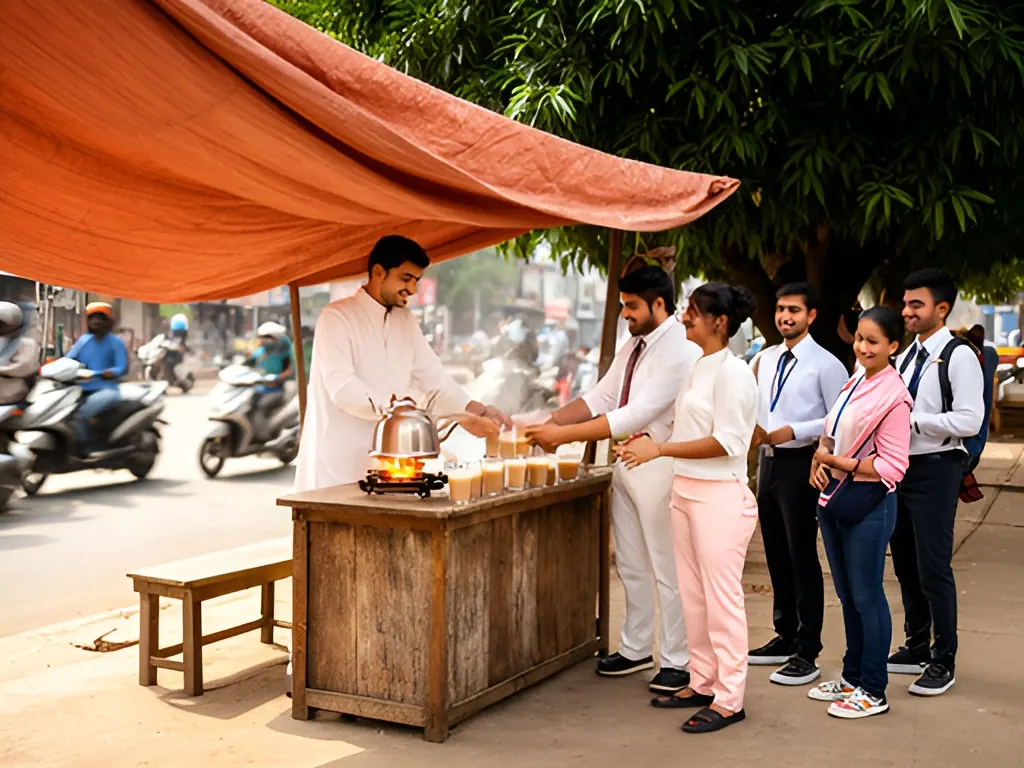
A Chai business cart is about ₹25,000 for the cart, burner and vessels. Milk is more than half your cost and goes off by evening, and the step from a ₹10 to a ₹15 cup loses customers fast. In a small town, our benchmark for a cart is ₹22,000–42,000 a month.
Try it free in the simulator: Chai business
Run a realistic week of this business in 5 minutes before you invest a rupee.
Try it free in the simulator →Skill businesses: tuition, tailoring, tiffin, mobile repair
These cost little because your skill is the main asset.
- Tuition centre from home: about ₹35,000 for a board, seating and materials. Capacity is capped by your room and your hours.
- Tailoring shop or boutique from home: about ₹40,000. A domestic electric machine is ₹12,500–20,000; an overlock machine adds ₹12,000–30,000.
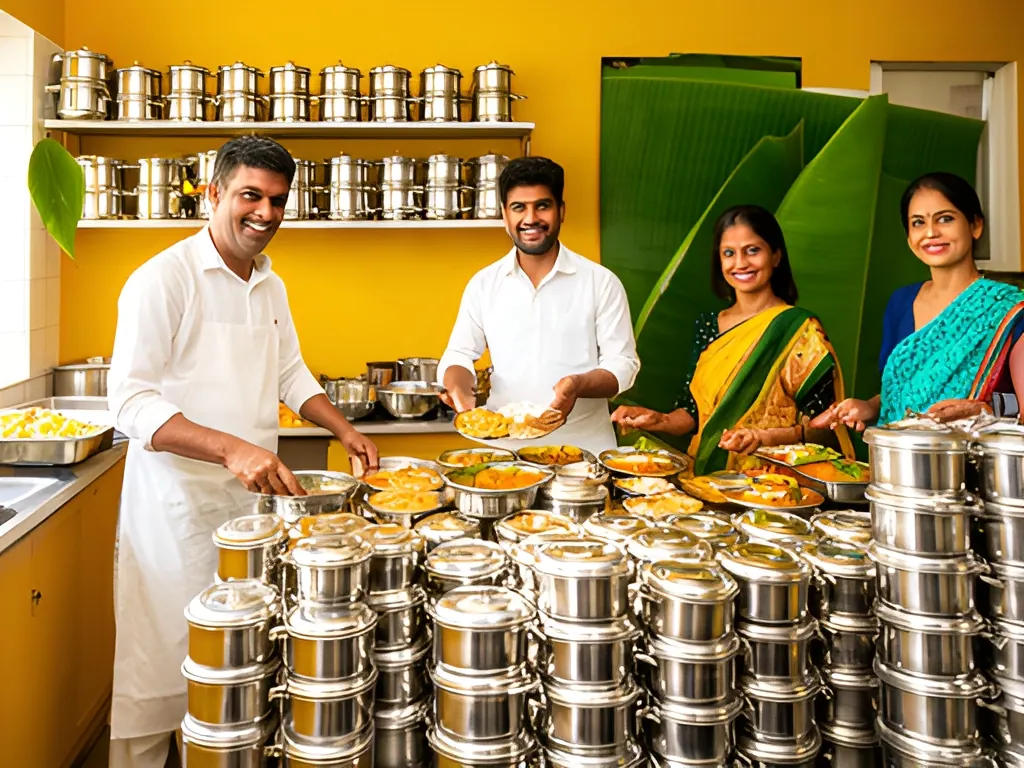
- Tiffin service from home: about ₹40,000 for vessels, a commercial burner, steel dabbas and delivery bags. Keep ₹15,000–40,000 for the first month's ration and gas.
- Mobile repair shop repair counter: ₹30,000–60,000 for a solo counter in a tier-2 or tier-3 town (IIFL). You need real repair skill first; a bad screen swap costs you the customer and the part.
Business ideas from ₹50,000 to ₹2 lakh
This band adds fixed stalls, small shops in cheap locations and equipment-heavy carts.
| Business | Setup from | Typical shop: setup | Typical shop: profit a month (tier 2 city) |
|---|---|---|---|
| 🍗 Chicken shop | ₹55,000 | ₹3.3 lakh | ₹13,000–₹43,500 |
| 🍃 Paan shop | ₹70,000 | ₹2.5 lakh | ₹21,500–₹78,000 |
| 🥤 Sugarcane juice business | ₹75,000 | ₹75,000 | ₹17,500–₹47,500 |
| 🥐 Bakery | ₹1 lakh | ₹12 lakh | ₹45,000–₹68,000 |
| 🚿 Car wash | ₹1 lakh | ₹6 lakh | ₹20,000–₹25,000 |
| 👟 Footwear shop | ₹1 lakh | ₹6 lakh | ₹86,500–₹3.5 lakh |
| 🍨 Ice cream parlour | ₹1.5 lakh | ₹8 lakh | ₹8,500–₹30,500 |
| ✏️ Stationery shop | ₹1.8 lakh | ₹4 lakh | ₹13,000–₹60,500 |
| 💇 Salon or beauty parlour | ₹1.8 lakh | ₹2.5 lakh | ₹40,000–₹78,000 |
| 🍛 Catering business | ₹2 lakh | ₹7.5 lakh | ₹86,500–₹1.1 lakh |
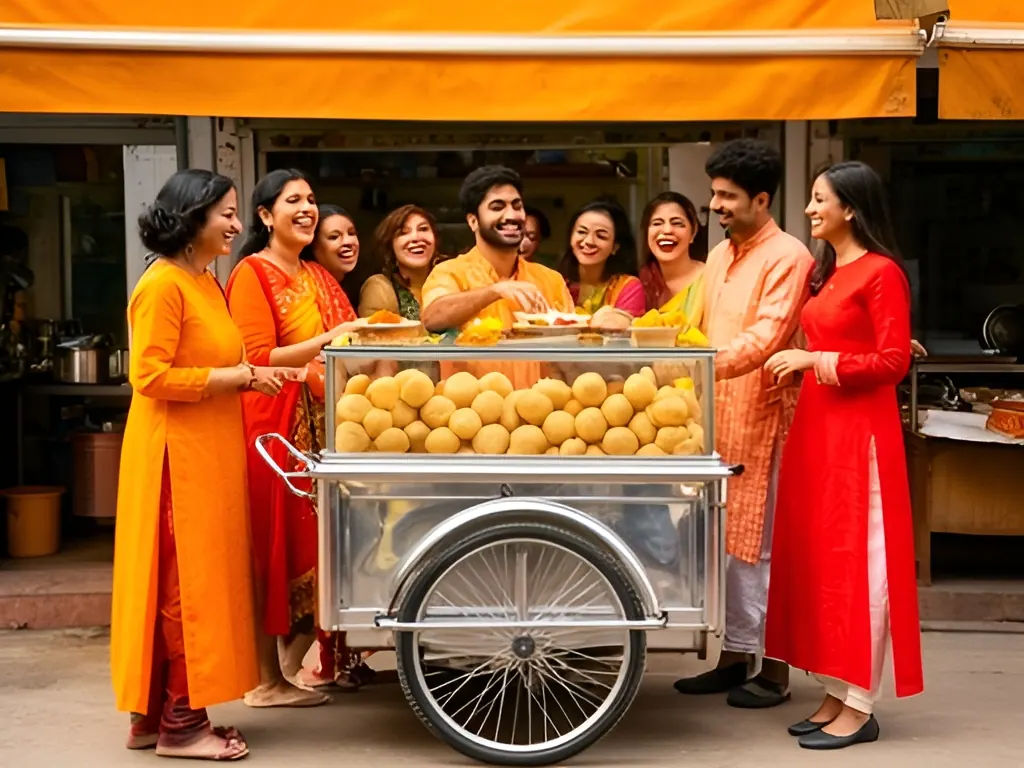
A Street food stall cart (about ₹50,000) has some of the best margins in our data: a well-run tier-2 cart benchmarks at ₹35,000–90,000 a month. It also carries eviction risk. Getting a Certificate of Vending under the Street Vendors Act cuts that risk and opens PM SVANidhi loans.
A juice cart with a sugarcane crusher costs about ₹75,000, and a paan gumti about ₹70,000. Both are seasonal: juice peaks in summer and drops sharply in the monsoon.
At ₹1–2 lakh you can start a home bakery, a doorstep car-wash kit, a footpath chappal stall or a Salon or beauty parlour (a men's barber shop starts around ₹1.8 lakh in our data). Some of these have long paybacks: an ice-cream cart takes years to earn back its ₹1.5 lakh at our tier-2 benchmarks, because the season is short.
Business ideas from ₹2 lakh to ₹5 lakh
Here you can rent a real shop. Rent deposits of 3–10 months' rent are common, so the deposit alone can take a big bite.
| Business | Setup from | Typical shop: setup | Typical shop: profit a month (tier 2 city) |
|---|---|---|---|
| 🛍️ Kirana store | ₹2 lakh | ₹4.5 lakh | ₹8,500–₹19,500 |
| 👓 Optical shop | ₹2.5 lakh | ₹7.5 lakh | ₹86,500–₹2.8 lakh |
| 🍛 Dhaba or fast-food restaurant | ₹2.8 lakh | ₹8 lakh | ₹86,500–₹1.3 lakh |
| 🔧 Hardware and paint shop | ₹4 lakh | ₹10 lakh | ₹21,500–₹1.5 lakh |
| 🧋 Café | ₹5 lakh | ₹12 lakh | ₹65,000–₹1.3 lakh |
| 🚚 Food truck business | ₹5 lakh | ₹12 lakh | ₹52,000–₹78,000 |
| 🐔 Poultry farm | ₹5 lakh | ₹22 lakh | ₹8,500–₹39,000 |
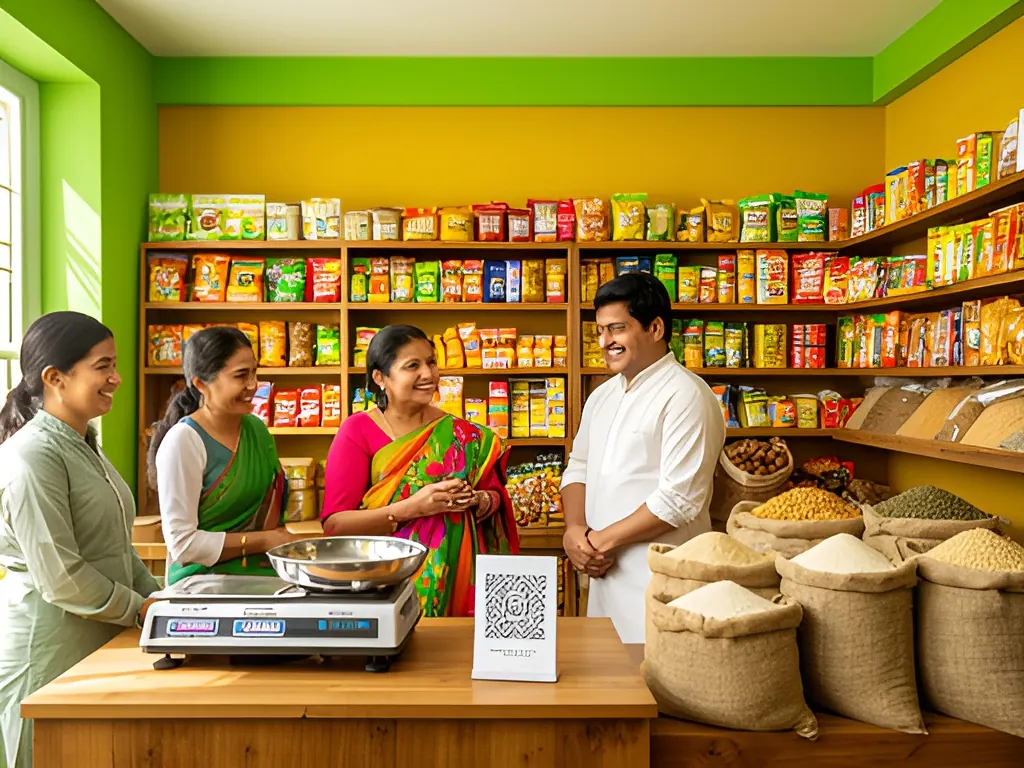
A home-front Kirana store starts around ₹2 lakh, but margins are thin: a small tier-2 kirana benchmarks at only ₹8,500–19,500 a month, and opening stock takes 40–55% of setup (Accountune). Quick commerce is taking about one percentage point of grocery share each quarter in the top metros (HDFC SKY), so a kirana works better in tier-2 and tier-3 towns.
For bigger budgets, see our lists of business ideas under ₹5 lakh and under ₹10 lakh.
How do you choose between low investment business ideas?
Do not start with the idea. Start with four questions.
1. Location: who walks past?
A chai cart outside a college and the same cart in a quiet lane are two different businesses. Count footfall at the time you would sell, for at least three days, including a weekend. Office areas die on Sundays; markets peak at weekends; railway stations are busy but carry high rent and eviction risk.
2. Skill: what can you do better than the next person?
Tuition, tailoring, mobile repair and tiffin depend on skill and reputation. A cart or a shop depends more on location and buying well. If you have no skill edge, pick a business where buying and location matter most, and learn the buying.
3. Time: how many hours can you give?
A tiffin service means cooking from 6 am every day. A sabzi thela means a mandi trip before sunrise. A chai stall needs you at 7–10 am and 4–7 pm. If you have a job, home tuition in the evening or a weekend stall fits better than a full-day shop.
4. Risk: what can you afford to lose?
Ask what happens in the worst month. Perishable stock (milk, vegetables, meat, cakes) can spoil. A cart can be moved on by the municipality. A rented shop locks you into rent even when sales fall. Choose a business whose worst month you can survive without borrowing at 5% a month.
Loans for a low investment business
- Mudra (PMMY), collateral-free: Shishu up to ₹50,000; Kishor ₹50,000–5 lakh; Tarun ₹5–10 lakh; Tarun Plus ₹10–20 lakh for those who repaid a Tarun loan. Interest is roughly 9–14% a year depending on the bank (estimate). See our Mudra loan guide.
- PM SVANidhi (street vendors): ₹15,000, then ₹25,000, then ₹50,000, each unlocked by repaying the last one, with digital cashback of up to ₹1,600. Lending runs to 31 March 2030, and you need a Certificate of Vending or a Letter of Recommendation from your urban local body (News on AIR).
- PMEGP: a 15–35% subsidy on project cost for new units, useful for bigger setups.
- PM Vishwakarma (tailors and other trades): a ₹15,000 toolkit voucher and loans of ₹1 lakh then ₹2 lakh at 5%. It is not available if you have already taken PMEGP, PM SVANidhi or Mudra (Drishti IAS).
Avoid daily-collection lenders at the market. Their 5–10% a month works out far higher than any bank loan.
Licences you will likely need
- Food businesses: FSSAI basic registration costs ₹100 a year and now covers turnover up to ₹1.5 crore from 1 April 2026 (FSSAI order). Municipally registered vendors are deemed registered.
- Shops: Shop & Establishment registration and a municipal trade licence (a few hundred to a few thousand rupees a year, by city).
- Udyam registration: free, and it helps with bank loans.
- GST: only needed above ₹40 lakh turnover for goods or ₹20 lakh for services (lower in special-category states).
Common mistakes with low investment businesses
- Spending the whole budget on setup. A shiny cart with no stock money is a parked cart.
- Copying the busiest stall in town. If five momo carts stand at one corner, the sixth splits the same crowd.
- Pricing below the local norm to "attract customers". On thin margins, a ₹2 cut can halve your profit.
- Ignoring wastage. Track what you throw away every day for a month. That number decides whether a perishable business works.
- Giving udhaar freely. Credit to neighbours is how many kirana and tiffin owners lose their working capital.
- Skipping the licence. A ₹100 FSSAI registration costs less than one inspection fine.
- Counting revenue as profit. A chai stall that sells ₹3,000 a day may keep under ₹1,000 after milk, sugar, gas and the helper.
Try before you invest
Before you put real money into any of these, run it for free in the BizGame simulator. Each round is one realistic week in five minutes: you choose the city tier, location and format, set prices and staff, buy stock, and face rain, festivals and price spikes. It is a learning game, not a way to earn money, but it shows quickly whether you understand the business.
Try it free in the simulator: Vegetable shop
Run a realistic week of this business in 5 minutes before you invest a rupee.
Try it free in the simulator →