A Mudra loan is a collateral-free business loan under the Pradhan Mantri Mudra Yojana (PMMY), given by banks, NBFCs and microfinance lenders to small non-farm businesses. It comes in four slabs: Shishu up to ₹50,000, Kishor ₹50,000–5 lakh, Tarun ₹5–10 lakh, and Tarun Plus ₹10–20 lakh for borrowers who have repaid a Tarun loan. It is a government scheme, but the bank still decides whether to lend, how much and at what rate, so approval is never automatic.
This guide covers who qualifies, what papers you need, how a branch manager actually looks at your file, and what the EMI would be for four businesses we have researched. It also covers the cases where a different scheme (PM SVANidhi, PMEGP, Kisan Credit Card, Stand-Up India) fits better.
What are Shishu, Kishor, Tarun and Tarun Plus?
The slabs only describe loan size. The rules, the documents and the bank's thinking change as the amount goes up.
| Slab | Loan amount | Typical use |
|---|---|---|
| Shishu | Up to ₹50,000 | A chai cart, a sabzi thela, a sewing machine, a repair toolkit |
| Kishor | ₹50,000 – ₹5 lakh | A small shop fit-out, opening stock, a home parlour, a compact kitchen |
| Tarun | ₹5 – ₹10 lakh | A neighbourhood chemist, a cloud kitchen, a small café |
| Tarun Plus | ₹10 – ₹20 lakh | Expansion, only for borrowers who repaid an earlier Tarun loan |
The slab figures are the same across our research notes and the 2026 sources they cite (OkCredit; IIFL). Interest is set by each lender. Our notes estimate 9–14% a year for small Mudra loans at banks, against 16–30% for unsecured NBFC loans and 2–5% a month from informal lenders. That gap is the main reason a Mudra loan is worth the paperwork.
Who is eligible for a Mudra loan?
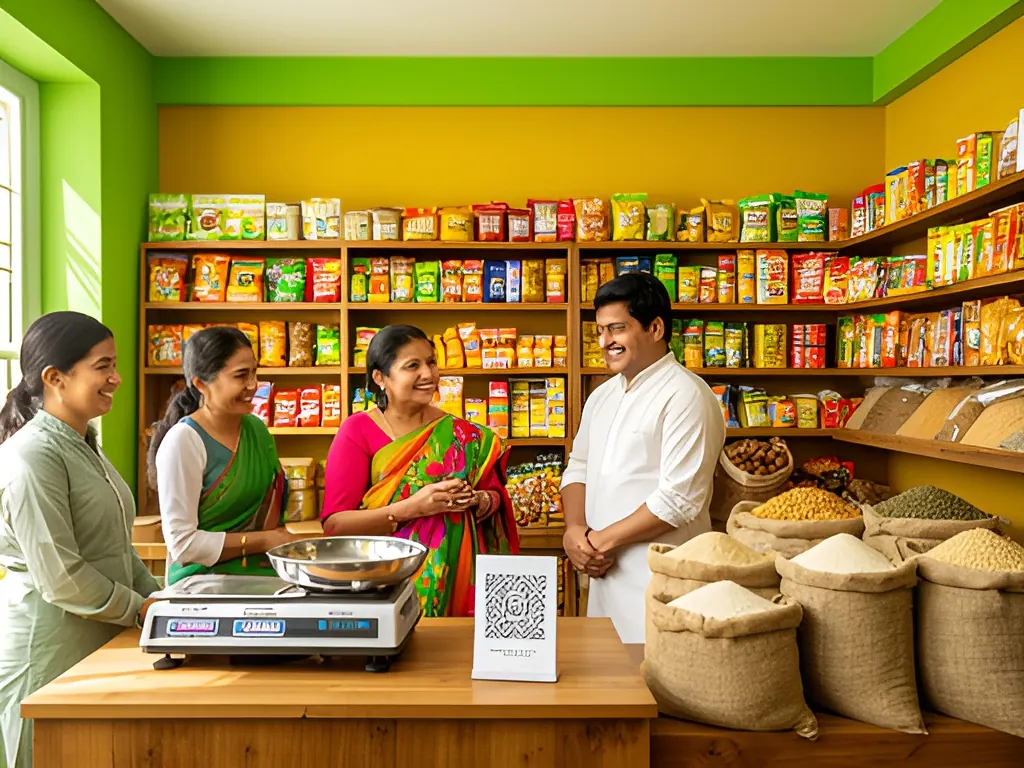
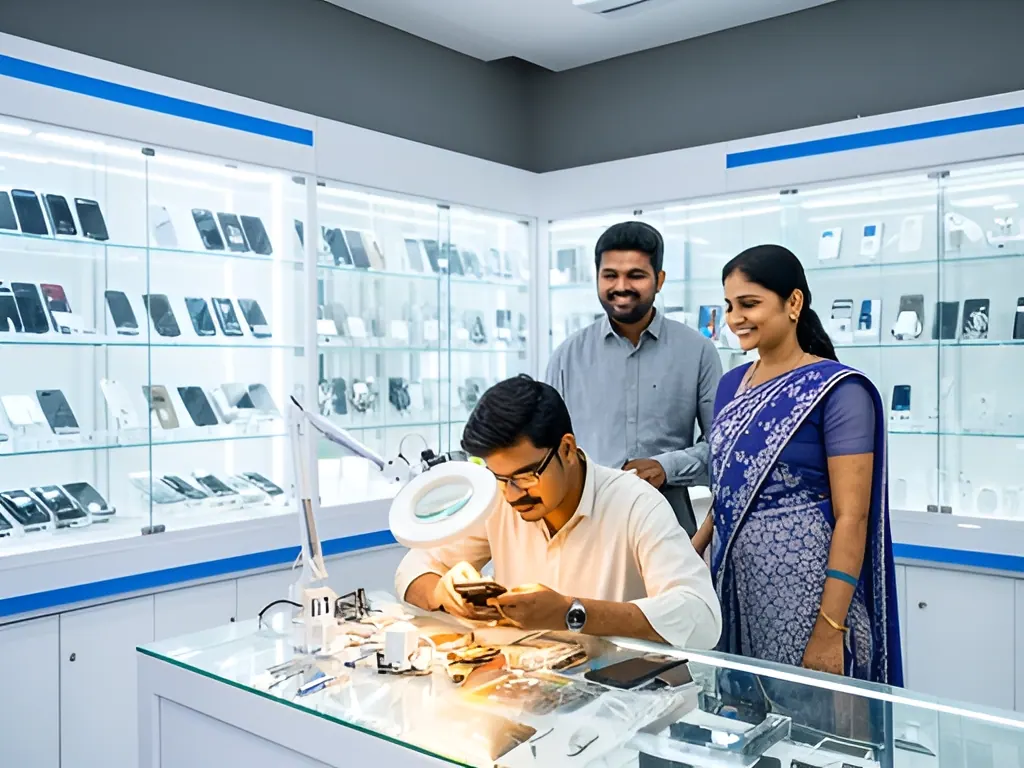
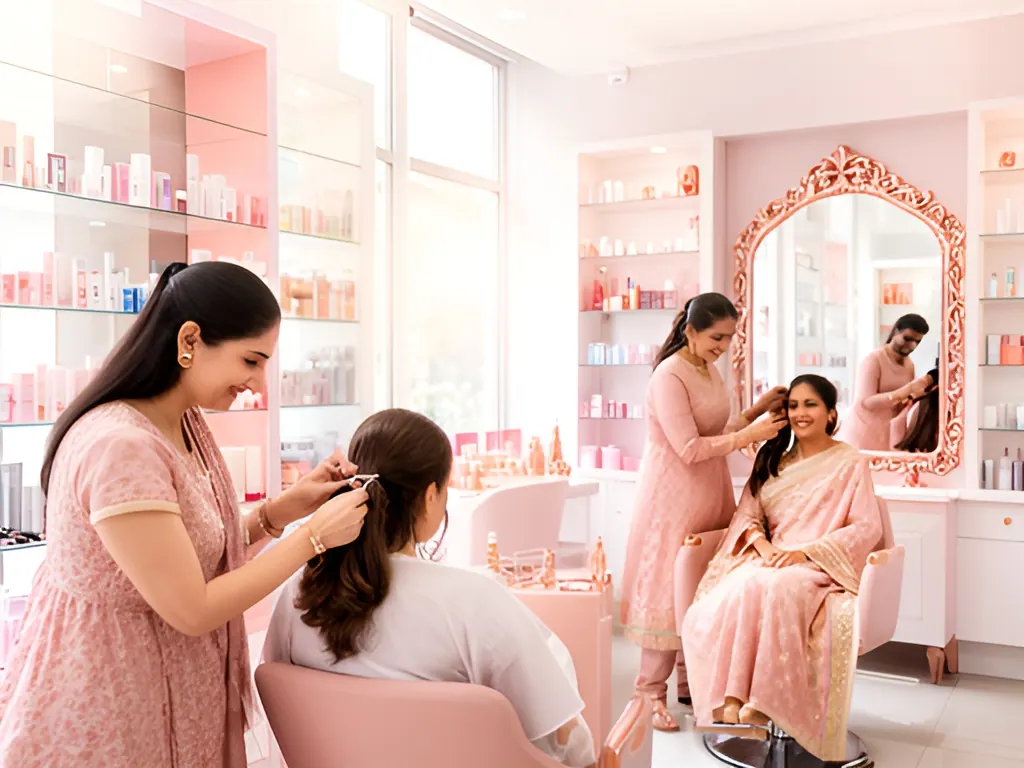
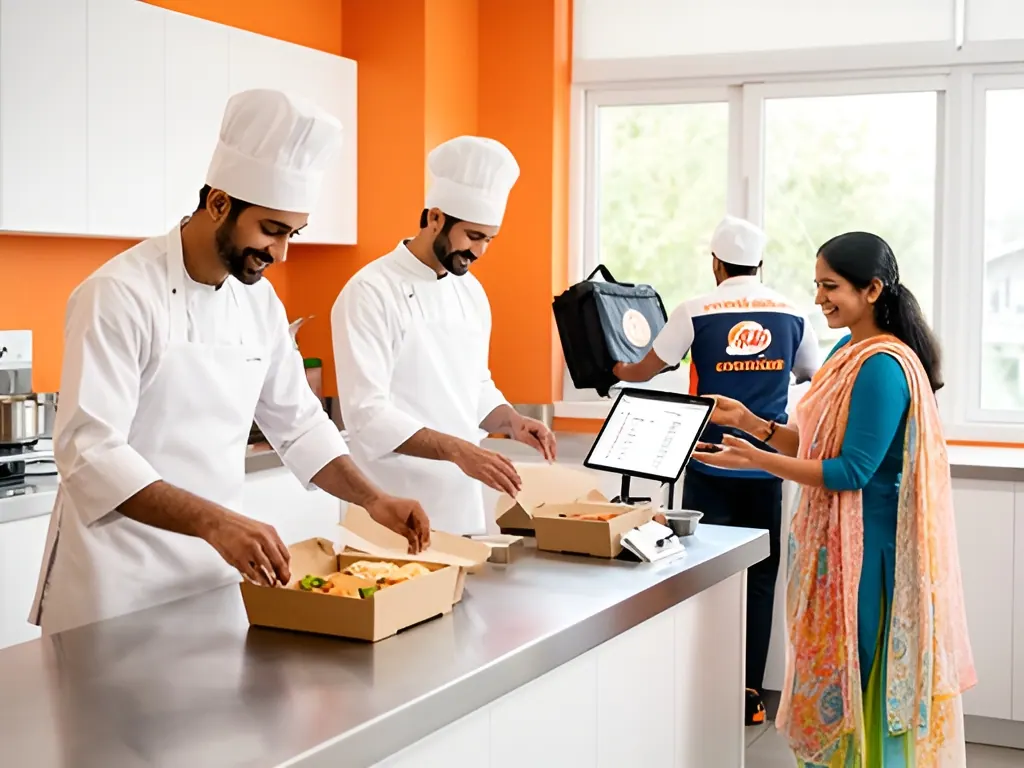
Broadly, any Indian individual, proprietorship or partnership running (or starting) a small income-generating business in manufacturing, trading or services. That covers almost everything in our guides: a Kirana store, a Mobile repair shop repair counter, a Salon or beauty parlour, a Tailoring shop or boutique unit, a Cloud kitchen, a Street food stall stall.
What banks look for in practice:
- Age 18 or above and valid KYC.
- No default history. A poor credit score or an old unpaid loan is the most common reason for rejection.
- A real business. Either an existing shop with some record of sales, or a clear new-business plan with quotations.
- Repayment capacity. The bank wants to see that monthly profit comfortably covers the EMI.
Farming itself is not covered by Mudra. Allied activities such as dairy and poultry are usually financed through the Kisan Credit Card instead (more on that below).
What documents do you need?
Requirements vary by lender and slab, so ask the branch for its checklist. Most ask for:
- Identity and address proof: Aadhaar, PAN, voter ID or similar, plus passport photos.
- Business proof: Udyam registration (free, and it unlocks MSME schemes), Shop & Establishment registration, trade licence, FSSAI registration for food businesses, GST registration if you have one.
- Quotations for machines, furniture and opening stock you plan to buy. Banks often pay the supplier directly.
- Bank statements, usually for the last 6–12 months.
- A simple project report for Kishor and above: what you will sell, expected sales, costs, profit and EMI.
- Proof of premises: rent agreement or ownership papers.
For Shishu, the file can be thin. For Tarun, expect the bank to want income tax returns and a proper projection.
How do banks decide on a Mudra application?
A branch manager is not judging whether your idea is exciting. They are asking whether the money will come back. In practice they check five things:
- Credit score and history. Missed EMIs on a phone or a two-wheeler loan will hurt you.
- EMI versus profit. Most lenders are uneasy if the EMI eats more than about a third to half of your expected monthly profit. That is a rule of thumb, not a published norm.
- Your experience. A barber who has worked in a salon for five years and now wants his own chair is an easier yes than someone with no background.
- Your own contribution. Putting in some of your own money, even 10–20% of the project, shows commitment.
- Cash in the bank account. Sales routed through UPI and a current account give the bank something to look at. A shop that runs entirely on cash has no visible track record.
If a branch refuses, ask why in writing. You can apply elsewhere, but fix the reason first.
Realistic EMI examples for four small businesses
The examples below use setup costs from our business guides (tier-2 city prices) and the profit benchmarks from the same research. Interest rates are assumed for illustration. Your bank's rate will differ.
Chai tapri: Shishu loan of ₹50,000
A roadside tapri costs about ₹60,000 to set up in our Chai business guide. Borrow ₹50,000 at 12% over 24 months and the EMI is about ₹2,350, with roughly ₹6,500 paid as interest in total. That is small next to a working tapri's income. The real risk is milk wastage and eviction drives, not the EMI.
Mobile repair shop: Kishor loan of ₹1.5 lakh
A repair-and-accessories shop with two benches costs about ₹1.5 lakh in our Mobile repair shop guide. At 11% over three years, the EMI is about ₹4,900, and total interest is about ₹27,000. The tier-2 benchmark profit for this shop is roughly ₹24,000–69,000 a month (estimates), so the EMI is manageable if you get the location right.
Small kirana: Kishor loan of ₹3.5 lakh
A 200 sq ft kirana costs around ₹4.5 lakh. Borrow ₹3.5 lakh at 11% for three years and the EMI is about ₹11,500. The research benchmark for a small tier-2 kirana is only about ₹2,000–4,500 a week, or ₹8,700–19,500 a month. In a slow month the EMI could take most or all of the profit. This is the classic mistake: a kirana is a low-margin, high-stock business, and borrowing heavily for one is risky. A longer tenure or a smaller loan (start as a home-front shop, about ₹2 lakh) is safer. See the Kirana store guide.
Cloud kitchen: Tarun loan of ₹6 lakh
A standard 300 sq ft cloud kitchen costs about ₹7 lakh. At 10.5% over five years, the EMI is about ₹12,900, and you would pay about ₹1.7 lakh in interest. The tier-2 benchmark is ₹3,500–9,500 a week (₹15,000–41,000 a month). After a 28–40% effective platform take, many kitchens struggle in their first year, so this EMI is heavy. Read the Cloud kitchen guide before you borrow.
| Business | Setup from | Typical shop: setup | Typical shop: profit a month (tier 2 city) |
|---|---|---|---|
| ☕ Chai business | ₹25,000 | ₹60,000 | ₹55,000–₹1.1 lakh |
| 📱 Mobile repair shop | ₹45,000 | ₹1.5 lakh | ₹24,000–₹69,500 |
| 🛍️ Kirana store | ₹2 lakh | ₹4.5 lakh | ₹8,500–₹19,500 |
| 🥡 Cloud kitchen | ₹5.5 lakh | ₹7 lakh | ₹15,000–₹41,000 |
| 💇 Salon or beauty parlour | ₹1.8 lakh | ₹2.5 lakh | ₹40,000–₹78,000 |
Try it free in the simulator: Kirana store
Run a realistic week of this business in 5 minutes before you invest a rupee.
Try it free in the simulator →What if Mudra is not the right fit?
PM SVANidhi for street vendors
If you run a cart, thela or footpath stall, PM SVANidhi is often easier than Mudra. It gives collateral-free working-capital loans of ₹15,000, then ₹25,000, then ₹50,000, each tranche unlocked by repaying the previous one. Lending is open until 31 March 2030. You need a Certificate of Vending or a Letter of Recommendation from your urban local body (News on AIR). The scheme design includes a 7% interest subsidy and digital-payment cashback capped at ₹1,600. By May 2026, about 75.5 lakh vendors had taken 1.12 crore loans (IANS). Good fits: Street food stall, Chai business, Vegetable shop and Sugarcane juice business carts.
PMEGP for a subsidy on a new unit
The Prime Minister's Employment Generation Programme gives a subsidy of 15–35% of project cost (higher for women, SC/ST and rural applicants). Service projects can go up to ₹20 lakh, with the bank funding 90–95% (Ganjam PMEGP document, 2026). It is meant for new manufacturing and service units. Pure trading, like a garment shop, is generally not eligible, but a Tailoring shop or boutique unit, a Salon or beauty parlour or a café can qualify. Applications go through KVIC and the District Industries Centre, and they take longer than a Mudra loan.
Kisan Credit Card for dairy and poultry
For a Dairy farm or Poultry farm farm, the Kisan Credit Card is cheaper. It offers up to ₹3 lakh at 7%, falling to an effective 4% with prompt repayment. The animal-husbandry sub-limit is ₹2 lakh, and loans are collateral-free up to ₹2 lakh (₹3 lakh with a milk-union tie-up) (RBI). Check with your bank whether the FY2026-27 interest subvention is in place.
Stand-Up India for women and SC/ST founders
Stand-Up India covers bigger greenfield projects: ₹10 lakh to ₹1 crore for women and SC/ST entrepreneurs. It suits a proper bakery, a boutique or a mid-size restaurant, not a cart.
PM Vishwakarma for tailors
Tailors (darzi) are one of the 18 trades under PM Vishwakarma: a ₹15,000 toolkit e-voucher and loans of ₹1 lakh, then ₹2 lakh, at 5%. But you cannot use it if you have already taken Mudra, PMEGP or PM SVANidhi, so choose carefully (Drishti IAS).
How to apply for a Mudra loan, step by step
- Get Udyam registration online. It is free.
- Write down your numbers: setup cost, monthly sales, costs, profit, and the EMI you can afford. Our business guides give tier-wise figures you can start from.
- Collect quotations from suppliers for equipment and stock.
- Go to your own bank first. The bank that already holds your savings account knows you. You can also apply online through the government's JanSamarth portal or the lender's own site.
- Ask for the full cost: rate, processing fee, insurance add-ons and the total amount repayable.
- Use the money only for the business. Banks may check, and diverting a business loan is a fast way to ruin your credit.
Watch out for agents who promise "guaranteed Mudra approval" for a fee. There is no official middleman, and no one can guarantee a loan.
Mistakes first-time borrowers make
- Borrowing the full setup cost. If the shop is slow for six months, you still owe every EMI. Start smaller and keep a cash buffer of at least two to three months of rent and wages.
- Forgetting working capital. Many people borrow for the counter and the fridge and run out of money for stock in month two.
- Choosing too short a tenure. A lower EMI over a longer period costs more interest but lowers the risk of a missed payment.
- Mixing personal and business money. Keep a separate account. It makes your next loan (Kishor to Tarun to Tarun Plus) much easier.
Try before you invest
Before you sign for a loan, play a few seasons in BizGame's free simulator. You can take a loan in the game, watch the EMI come out of your cash every week and see what a monsoon slump or a price war does to a Kirana store or Mobile repair shop shop. It is a learning game, not a way to earn money, but losing virtual cash costs you nothing.
Try it free in the simulator: Mobile repair shop
Run a realistic week of this business in 5 minutes before you invest a rupee.
Try it free in the simulator →