How to start a fish farming business in Haryana (2026): investment, profit and licences

A fish farming business in Haryana needs about ₹93,500–₹7.3 lakh to set up, depending on the format. Run well in a city like Hisar, it typically nets −₹9,500–₹33,500 a month. The numbers below are India-wide research rescaled to Haryana's own wages, shop rents, power tariffs and street prices.
How much investment do you need in Haryana?
- Cheapest start
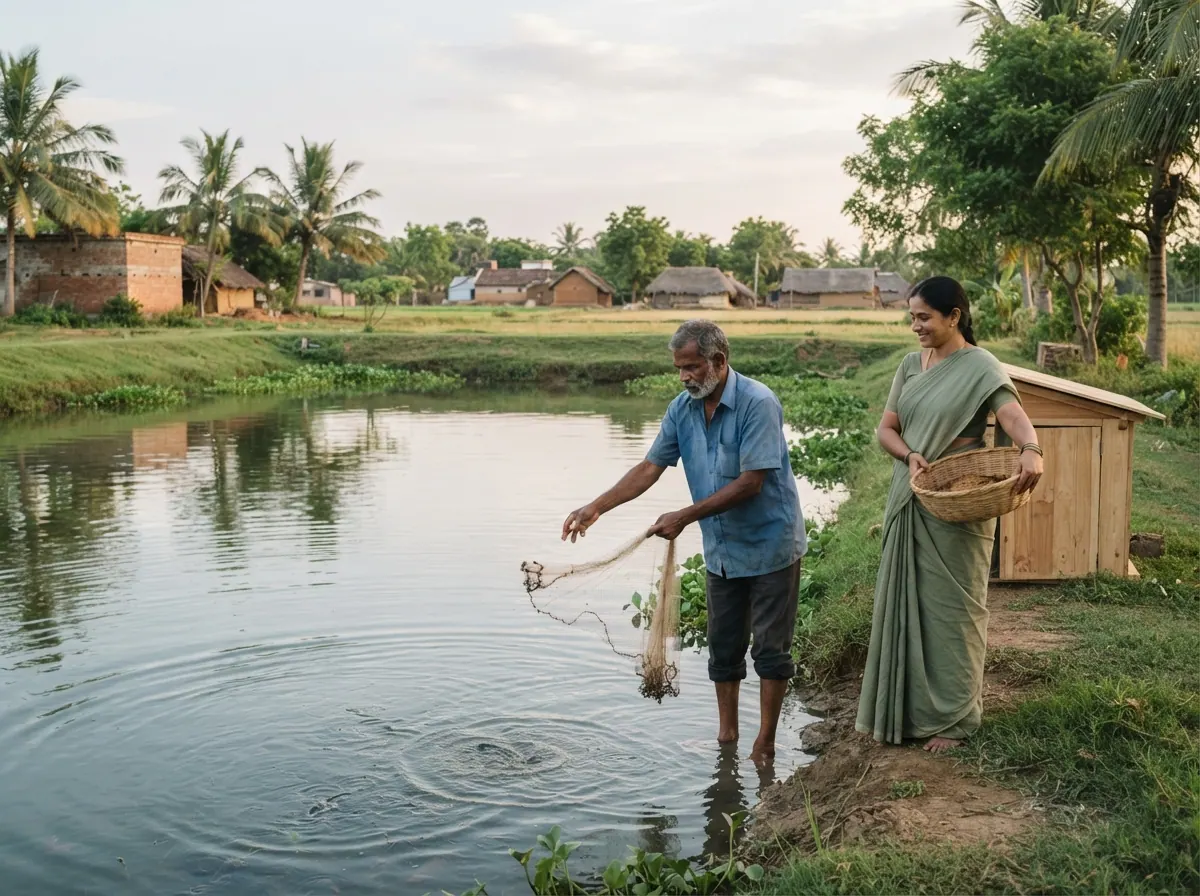
Village carp pond, 1 acre
Own or panchayat pond on rice bran and oil cake. About 1.6 t a year, family run. Low risk, low return.
Setup cost₹93,500Suggested budget (with working capital): ₹1 lakh Pellet pond with aerator, 2 acres
Leased pond on 28% floating feed with one aerator. About 7 t a year. This is the real business.
Setup cost₹3.6 lakhSuggested budget (with working capital): ₹3.9 lakh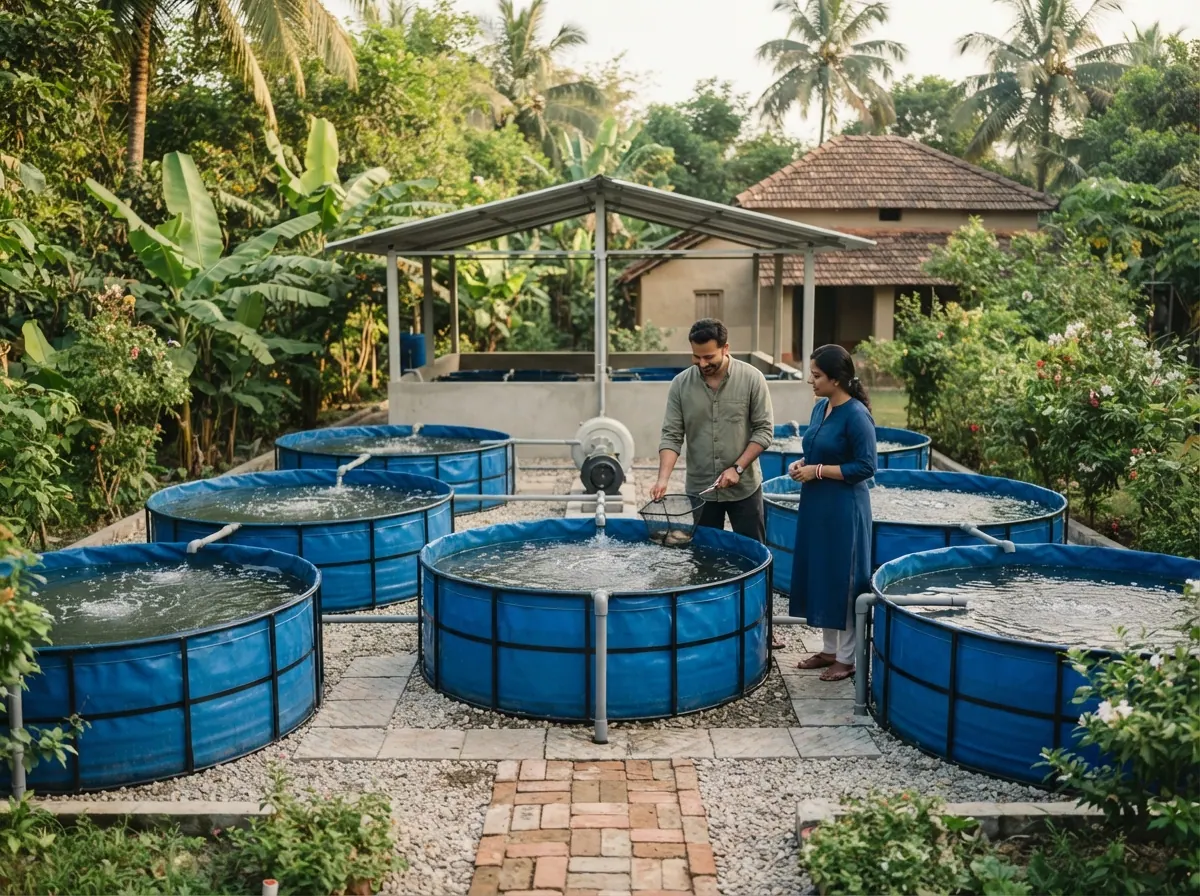
Backyard biofloc, 7 tanks
100–200 m² of tarpaulin tanks with a 24×7 blower. Sold live at about ₹110/kg. Most Bengal farmers surveyed missed their profit: a gamble.
Setup cost₹4.1 lakhSuggested budget (with working capital): ₹4.4 lakh
Aerated pond, 3 acres
Leased 3 acres with several aerators and a resident worker. About 12 t a year, heavy feed cash.
Setup cost₹7.3 lakhSuggested budget (with working capital): ₹7.8 lakh
How to start a fish farming business, step by step
- Choose your format and budget: Start with Village carp pond, 1 acre: about ₹93,500 to set up, or ₹1 lakh with working capital.
- Pick the location: Compare the rent with the number of customers who pass by, at the hours you will be open.
- Get your licences: Commonly needed: no universal central licence for a private freshwater pond; confirm with the district fisheries office, APSADA registration in Andhra Pradesh (licence valid 5 years), panchayat pond lease by auction or tender, state permission and monosex seed from an authorised hatchery for tilapia, PMMSY papers: DPR, land or lease papers, training certificate, FSSAI basic registration (₹100/year) only if you retail fish. Rules vary by state and city, so confirm with your municipal office.
- Arrange stock, staff and prices: Check local prices first, and keep money aside for the first months of rent, wages and stock.
- Plan for the risks: Watch for: summer night oxygen crashes, disease such as EUS ulcers and argulus lice, biofloc tank loss in a night power cut, winter harvest glut and feed price jumps, floods, drought and a lost lease, fish crop has no working insurance.
- Practise before you invest: Run it day by day in the free simulator to see where the money goes.
How much profit can you make in Haryana?
A well-run fish farming business in Haryana typically nets −₹9,500–₹33,500 a month in a mid-size city: about ₹0–₹52,500 in the metro and ₹1,500–₹8,000 in a small town. A casually run one can make far less or lose money.
| City | Net profit per week | Net profit per month |
|---|---|---|
| Gurugram | ₹0–₹12,123 | ₹0–₹52,500 |
| Hisar | −₹2,211–₹7,737 | −₹9,500–₹33,500 |
| Jind | ₹301–₹1,806 | ₹1,500–₹8,000 |
Ranges are for a well-run business of the typical format in each city size, from public sources and estimates. Your results depend on location and how you run it.
What changes in Haryana
The researched local factors that move this business’s numbers.
| Here | India | vs India | |
|---|---|---|---|
| Minimum wage, monthly | ₹15,221 | ₹12,500 | +22% |
| Unskilled day wage | ₹600 | ₹500 | +20% |
| Shop rent, metro (per sq ft/month) | ₹180Estimate | ₹150 | +20% |
| Shop rent, mid-size city | ₹60Estimate | ₹60 | ≈ |
| Shop rent, small town | ₹30Estimate | ₹25 | +20% |
| Commercial power, per kWh | ₹7.5Estimate | ₹9.5 | −21% |
| Commercial LPG cylinder | ₹2,812 | ₹2,810 | ≈ |
| Petrol, per litre | ₹103 | ₹102 | +1% |
| Cup of tea / coffee | ₹12Estimate | ₹12 | ≈ |
| Simple meal | ₹90Estimate | ₹80 | +13% |
| Men's haircut | ₹100Estimate | ₹100 | ≈ |
| Milk, 1 litre | ₹58 | ₹60 | −3% |
| Bread loaf | ₹50Estimate | ₹45 | +11% |
| Factor | Typical value in India | Source |
|---|---|---|
| Minimum wage, unskilled (all Haryana) | ₹15,221/month; semi-skilled ₹16,781, skilled ₹18,501, highly skilled ₹19,426 (from 1 Apr 2026, about a 35% jump) | employsome.com |
| Typical shop helper pay | Gurugram ₹13,000–16,000; Hisar ₹10,000–13,000; small towns ₹8,000–11,000Estimate | Est.: national presets T1 ₹12–18k, T2 … |
| Casual daily labour rate (T2) | ₹600/dayEstimate | Est.: RBI Handbook rural non-farm wage… |
| Gurugram benchmarks | Galleria Market ₹1,250–1,350/sq ft/month; Sector 29 ₹180–200 (Apr–Jun 2026) | outlookbusiness.com |
| Shop rent by tier | T1 Gurugram sector market ₹180; T2 Hisar ₹60; T3 Jind ₹30 per sq ft/monthEstimate | Est.: T1 anchored on Gurugram Sec 29 (… |
| Commercial (NDS) electricity, effective | about ₹7.5/kWh for a small shopEstimate | desiutility.com |
| Commercial LPG 19 kg (Haryana / Gurugram) | ₹2,812 state; Gurugram ₹2,828 (25 Oct 2026) | goodreturns.in |
| Haryana S&E Act now applies only at 20+ employees | Ordinance 12 Nov 2025, Amendment Act notified 5 Feb 2026: shops with <20 staff only file an online intimation within one month; registration (20+) valid until cancelled | ey.com |
| Registration for 20+ establishments | Via Saral portal; fees ₹500–5,000 (blog range) | clearlycomply.org |
| Municipal trade licence (Gurugram MCG / other ULBs) | Required for eateries, salons, meat shops; ₹1,000–10,000/yr by trade and area; 2–4 weeksEstimate | Est.: Haryana Municipal (Trade Licence… |
| NCR overlap | Gurugram/Faridabad shops follow Haryana's act, not Delhi's | india-briefing.com |
| Professional tax | None in HaryanaEstimate | Est.: Haryana does not levy profession… |
| GST thresholds | National: goods ₹40 lakh, services ₹20 lakh | accountune.com |
| Liquor vends | Haryana sells liquor through auctioned private vends (L-2/L-14A); 'theka' clusters drive evening snack tradeEstimate | Est.: Haryana excise policy 2025–27 (a… |
Festivals and demand
- Karva Chauth (29 Oct 2026) · salon/mehendi and sweets spike 3–5× for women's services; evening eateries busy after moonrise
- Diwali (Dhanteras 6 Nov, Lakshmi Puja 8 Nov, Bhai Dooj 11 Nov) (6–11 Nov 2026) · sweets, gifts, clothing, salon and kirana demand 1.5–3× in the run-up; most small shops shut or half-day on Diwali itself
- Holi (about 22 Mar 2027) · colours, sweets, thandai and snacks up the week before; most shops shut on Dhulandi morning
- Lohri / Makar Sankranti (13–14 Jan 2027) · peanuts, rewri, gajak demand; bonfire gatherings
- Hariyali Teej (about early Aug 2027) · ghewar and sweets surge; state holiday
- International Gita Mahotsav, Kurukshetra (about late Nov–mid Dec 2026) · fair stalls and food vendors in Kurukshetra
Licences and rules
Rules vary by state and city: confirm with your municipal office.
- No universal central licence for a private freshwater pond; confirm with the district fisheries office
- APSADA registration in Andhra Pradesh (licence valid 5 years)
- Panchayat pond lease by auction or tender
- State permission and monosex seed from an authorised hatchery for tilapia
- PMMSY papers: DPR, land or lease papers, training certificate
- FSSAI basic registration (₹100/year) only if you retail fish
- Online intimation under Haryana S&E Act 1958 (shops with <20 employees) · nil; within one month of starting · Labour Department (Saral portal)
- S&E registration (20+ employees) · ₹500–5,000 (blog range); valid until cancelled · Labour Department
- Municipal trade licence · ₹1,000–10,000/yr (Est.) · Municipal corporation / council
Run it day by day before you invest
Run a fish farming business day by day. Choose your city, budget and location, then make the decisions a real owner faces as they come up. Your advisor can test each choice on your next 3 months. The free simulator currently runs on India-wide numbers; a state preset is coming.
Play the simulator freeFrequently asked questions
How much does it cost to start a fish farming business in Haryana?
About ₹93,500–₹7.3 lakh, depending on the format. That is the India-wide setup cost rescaled to Haryana's rents and prices.
How much profit does a fish farming business make in Haryana?
A well-run one typically nets −₹9,500–₹33,500 a month in a city like Hisar. Casual owners earn far less.
What licences does a fish farming business need in Haryana?
No universal central licence for a private freshwater pond; confirm with the district fisheries office, APSADA registration in Andhra Pradesh (licence valid 5 years), Panchayat pond lease by auction or tender, State permission and monosex seed from an authorised hatchery for tilapia, PMMSY papers: DPR, land or lease papers, training certificate, FSSAI basic registration (₹100/year) only if you retail fish, Online intimation under Haryana S&E Act 1958 (shops with <20 employees), S&E registration (20+ employees), Municipal trade licence
Which city in Haryana is best for a fish farming business?
Bigger cities bring more customers and higher bills but also higher rent and wages. The chart above compares metro, mid-size city and small town.