How to start a fish farming business in Tamil Nadu (2026): investment, profit and licences
A fish farming business in Tamil Nadu needs about ₹77,000–₹6 lakh to set up, depending on the format. Run well in a city like Coimbatore, it typically nets −₹7,000–₹25,000 a month. The numbers below are India-wide research rescaled to Tamil Nadu's own wages, shop rents, power tariffs and street prices.
How much investment do you need in Tamil Nadu?
- Cheapest start
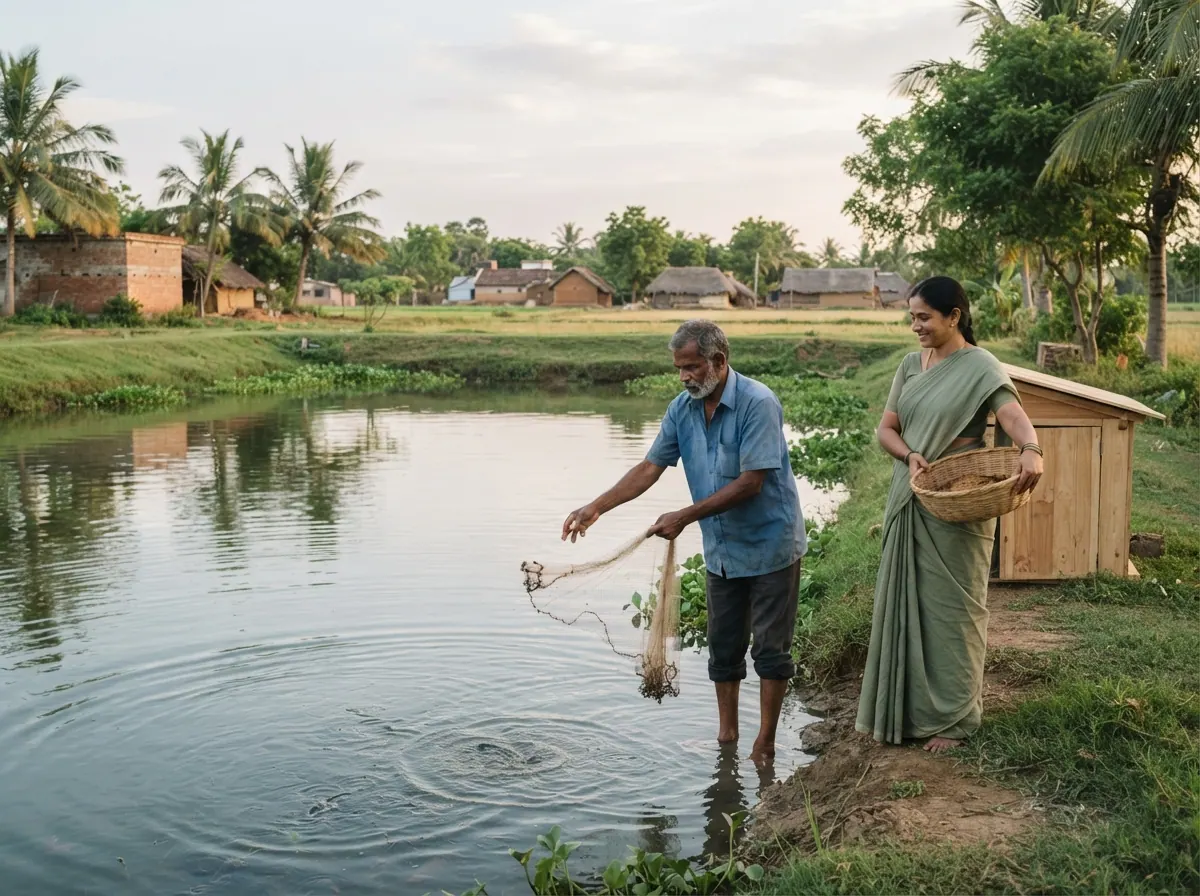
Village carp pond, 1 acre
Own or panchayat pond on rice bran and oil cake. About 1.6 t a year, family run. Low risk, low return.
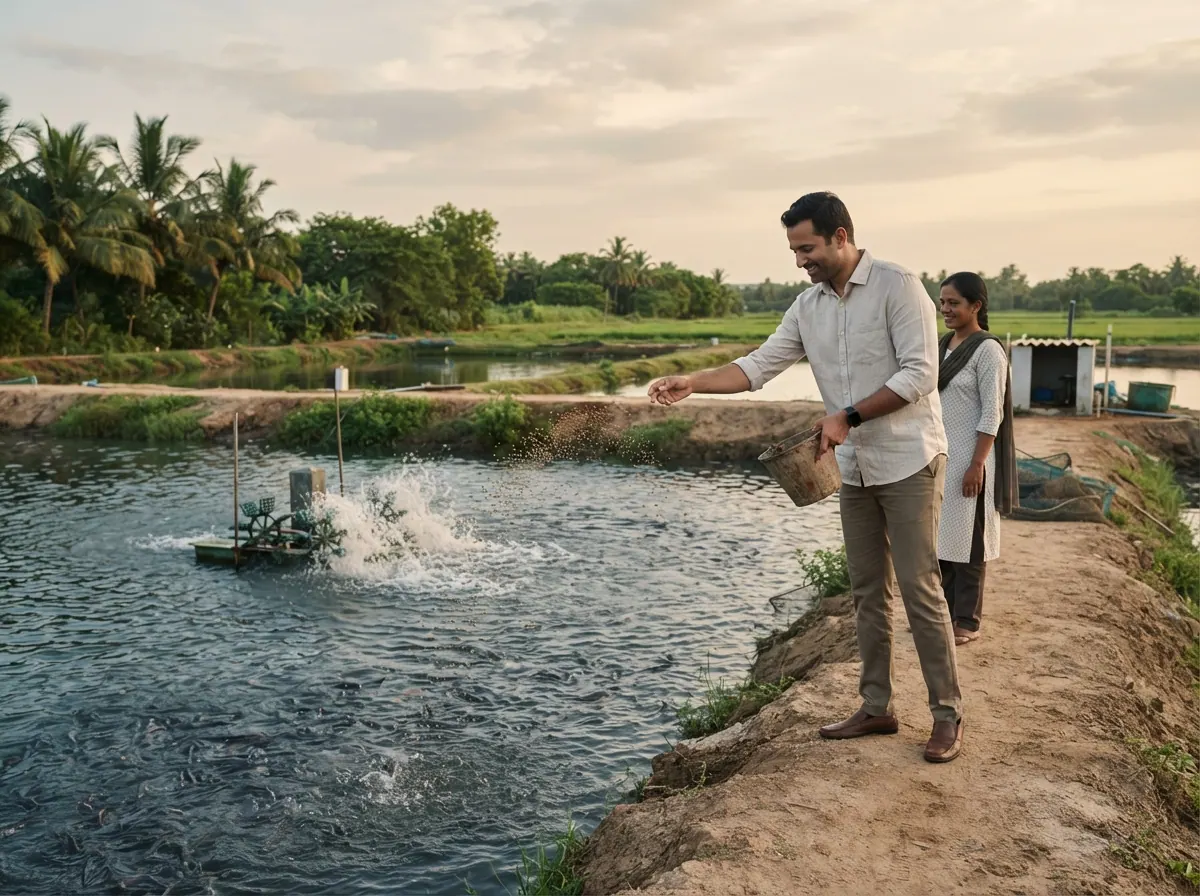
Setup cost₹77,000Suggested budget (with working capital): ₹83,000 Pellet pond with aerator, 2 acres
Leased pond on 28% floating feed with one aerator. About 7 t a year. This is the real business.
Setup cost₹3 lakhSuggested budget (with working capital): ₹3.3 lakh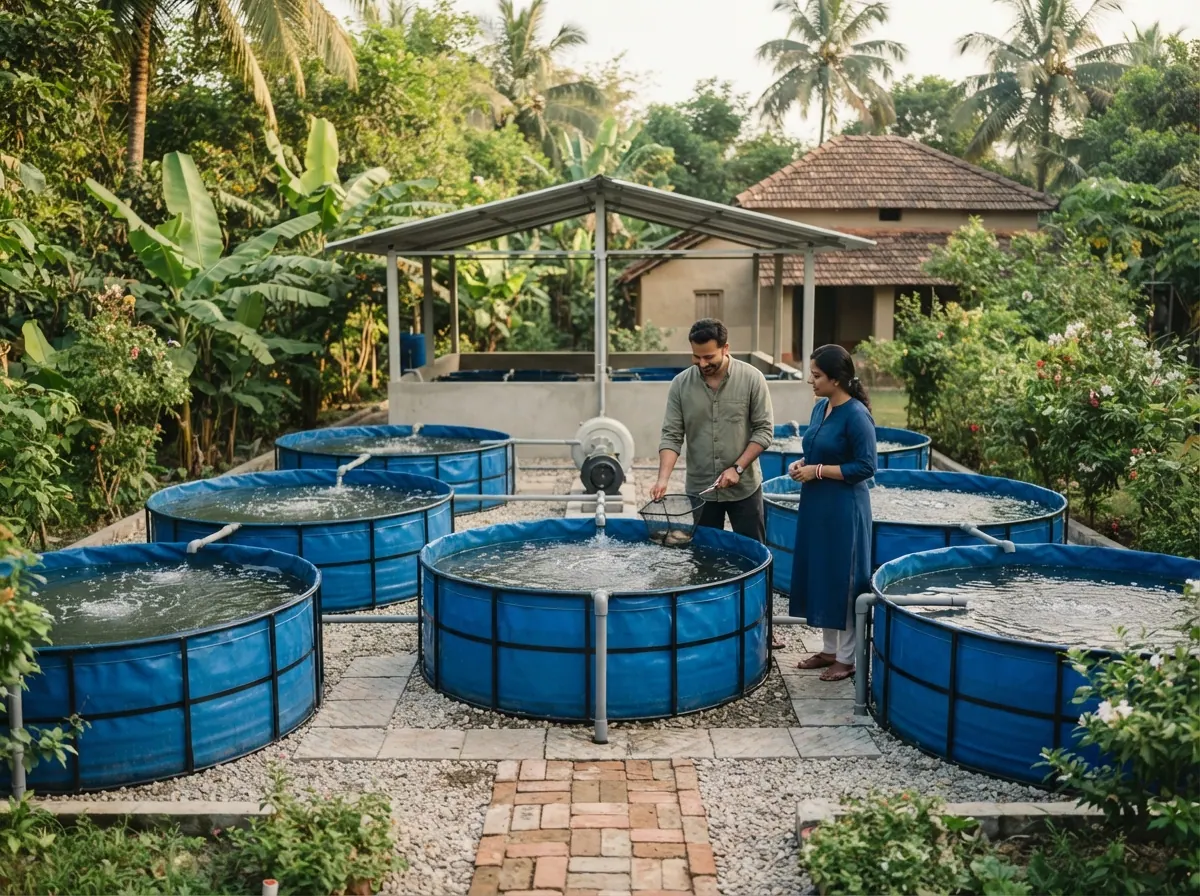
Backyard biofloc, 7 tanks
100–200 m² of tarpaulin tanks with a 24×7 blower. Sold live at about ₹110/kg. Most Bengal farmers surveyed missed their profit: a gamble.
Setup cost₹3.4 lakhSuggested budget (with working capital): ₹3.6 lakh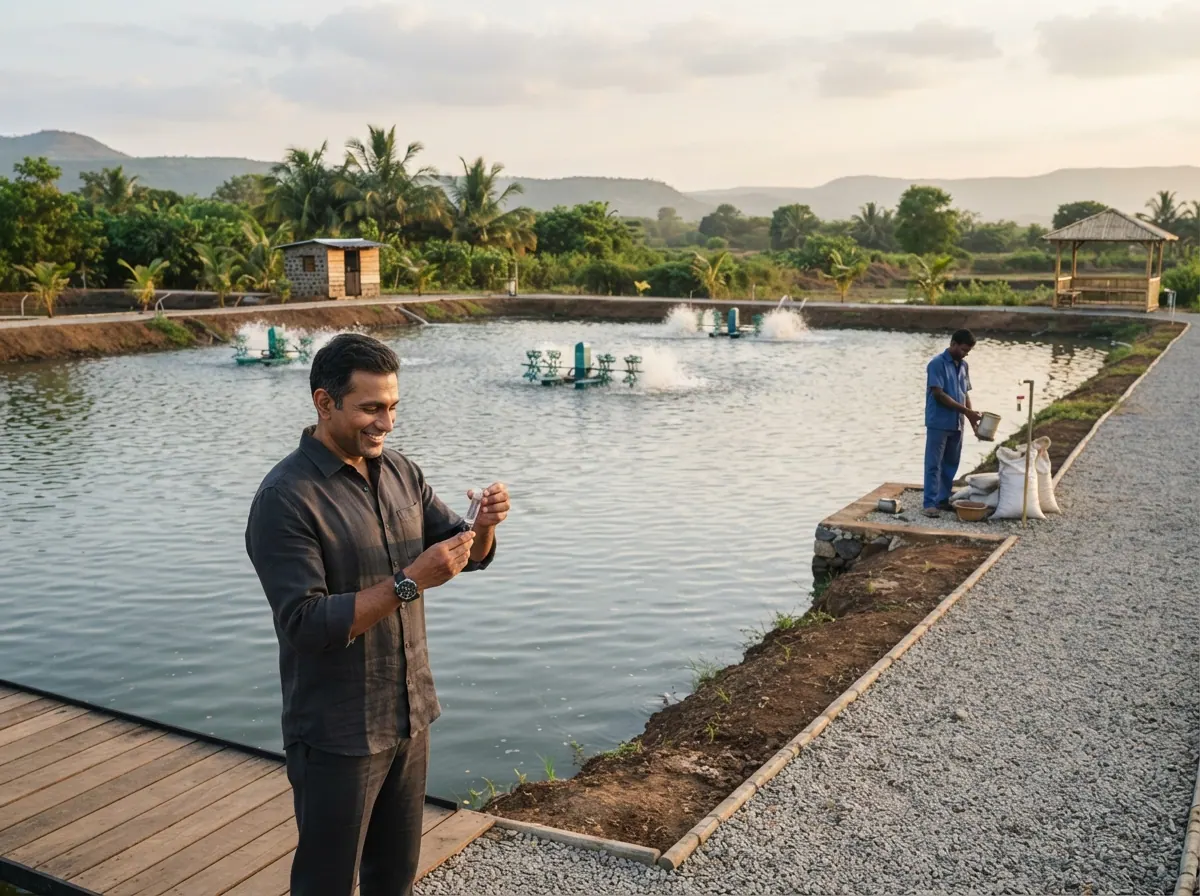
Aerated pond, 3 acres
Leased 3 acres with several aerators and a resident worker. About 12 t a year, heavy feed cash.
Setup cost₹6 lakhSuggested budget (with working capital): ₹6.4 lakh
How to start a fish farming business, step by step
- Choose your format and budget: Start with Village carp pond, 1 acre: about ₹77,000 to set up, or ₹83,000 with working capital.
- Pick the location: Compare the rent with the number of customers who pass by, at the hours you will be open.
- Get your licences: Commonly needed: no universal central licence for a private freshwater pond; confirm with the district fisheries office, APSADA registration in Andhra Pradesh (licence valid 5 years), panchayat pond lease by auction or tender, state permission and monosex seed from an authorised hatchery for tilapia, PMMSY papers: DPR, land or lease papers, training certificate, FSSAI basic registration (₹100/year) only if you retail fish. Rules vary by state and city, so confirm with your municipal office.
- Arrange stock, staff and prices: Check local prices first, and keep money aside for the first months of rent, wages and stock.
- Plan for the risks: Watch for: summer night oxygen crashes, disease such as EUS ulcers and argulus lice, biofloc tank loss in a night power cut, winter harvest glut and feed price jumps, floods, drought and a lost lease, fish crop has no working insurance.
- Practise before you invest: Run it day by day in the free simulator to see where the money goes.
How much profit can you make in Tamil Nadu?
A well-run fish farming business in Tamil Nadu typically nets −₹7,000–₹25,000 a month in a mid-size city: about ₹0–₹44,000 in the metro and ₹1,000–₹6,500 in a small town. A casually run one can make far less or lose money.
| City | Net profit per week | Net profit per month |
|---|---|---|
| Chennai | ₹0–₹10,120 | ₹0–₹44,000 |
| Coimbatore | −₹1,653–₹5,786 | −₹7,000–₹25,000 |
| Tiruvannamalai | ₹246–₹1,479 | ₹1,000–₹6,500 |
Ranges are for a well-run business of the typical format in each city size, from public sources and estimates. Your results depend on location and how you run it.
What changes in Tamil Nadu
The researched local factors that move this business’s numbers.
| Here | India | vs India | |
|---|---|---|---|
| Minimum wage, monthly | ₹13,972 | ₹12,500 | +12% |
| Unskilled day wage | ₹650Estimate | ₹500 | +30% |
| Shop rent, metro (per sq ft/month) | ₹120Estimate | ₹150 | −20% |
| Shop rent, mid-size city | ₹50Estimate | ₹60 | −17% |
| Shop rent, small town | ₹22Estimate | ₹25 | −12% |
| Commercial power, per kWh | ₹9.7Estimate | ₹9.5 | +2% |
| Commercial LPG cylinder | ₹2,983 | ₹2,810 | +6% |
| Petrol, per litre | ₹108 | ₹102 | +6% |
| Cup of tea / coffee | ₹15Estimate | ₹12 | +25% |
| Simple meal | ₹90Estimate | ₹80 | +13% |
| Men's haircut | ₹120Estimate | ₹100 | +20% |
| Milk, 1 litre | ₹44Estimate | ₹60 | −27% |
| Bread loaf | ₹45 | ₹45 | ≈ |
| Factor | Typical value in India | Source |
|---|---|---|
| Minimum wage, unskilled shops (helper/peon/sweeper), Zone A–D | ₹14,044 / 13,972 / 13,894 / 13,823 per month (basic + VDA ₹7,353), from 1 Apr 2026 | dcpsol.com |
| Minimum wage, salesman/cashier/clerk | ₹14,182 (Zone A) – ₹13,972 (Zone D) per month | dcpsol.com |
| Minimum wage, manager | ₹14,743 (Zone A) – ₹14,567 (Zone D) per month | dcpsol.com |
| Zone used for T2 (Coimbatore) | Zone B ₹13,972 assumedEstimate | Est.: zone lists not retrieved; Chenna… |
| Typical informal helper pay | Chennai ₹12k–16k; Coimbatore ₹10k–14k; towns ₹7k–11kEstimate | Est.: national presets; TN floors mode… |
| Casual unskilled day wage, T2 | ₹650/dayEstimate | Est.: legal floor ₹540/day (Zone A) pl… |
| VDA revision cadence | Twice a year (Apr and Oct) | keka.com |
| Shop rent T1 Chennai (neighbourhood) | ₹120/sq ft/month (high streets ₹123–349 in 2025; Anna Nagar 2nd Ave +11% YoY Q2 2026)Estimate | apparelresources.com |
| Shop rent T2 Coimbatore | ₹50/sq ft/monthEstimate | Est.: national T2 band ₹40–67 |
| Shop rent T3 Tiruvannamalai | ₹22/sq ft/month (higher near the temple)Estimate | Est.: national T3 band ₹13–27 |
| Commercial electricity (LT Tariff V) | ≈₹9.7/kWh (FY26 ₹9.4 from 1 Jul 2025; FY27 inflation-linked hike assumed ~3%)Estimate | mercomindia.com |
| Commercial LPG 19 kg, Chennai | ₹2,983 (1 Oct 2026) | goodreturns.in |
| 365-day / 24x7 opening | All shops may open every day for 3 years (notification 24 Aug 2026); rotating weekly off, displayed holiday roster, restrooms, lockers, ICC if women employed | scconline.com |
| Earlier 24x7 order (10+ employees) | GO 8 May 2025, effective 5 Jun 2025 for 3 years | trilegal.com |
Festivals and demand
- Deepavali (about 8 Nov 2026) · Sweets, crackers (Sivakasi supply), textiles 2–3×; T. Nagar crowds; Deepavali day slow for services
- Karthigai Deepam (late Nov / early Dec 2026) · Tiruvannamalai draws lakhs of pilgrims; food stalls, lamps, flowers spike; traffic curbs
- Christmas / New Year (25 Dec 2026 – 1 Jan 2027) · Bakeries and cafés peak; Velankanni pilgrim towns busy
- Pongal (Bhogi, Thai Pongal, Mattu Pongal, Kaanum Pongal) (14–17 Jan 2027) · Rice, jaggery, sugarcane, new clothes up; many shops shut 1–2 days; Chennai empties as workers go home
- Thaipoosam (23 Jan 2027) · Murugan temple towns (Palani) pilgrim rush; vegetarian demand
- Ramzan / Eid al-Fitr (Eid about 10 Mar 2027) · Biryani and evening snacks surge in Muslim neighbourhoods
Licences and rules
Rules vary by state and city: confirm with your municipal office.
- No universal central licence for a private freshwater pond; confirm with the district fisheries office
- APSADA registration in Andhra Pradesh (licence valid 5 years)
- Panchayat pond lease by auction or tender
- State permission and monosex seed from an authorised hatchery for tilapia
- PMMSY papers: DPR, land or lease papers, training certificate
- FSSAI basic registration (₹100/year) only if you retail fish
- Shop & Establishment registration (TN Shops & Establishments Act 1947), online via Labour dept · Nominal (exact 2026 fee not retrieved; est. under ₹500 for micro shops) · Labour Welfare & Skill Development Dept
- Trade licence (Greater Chennai Corporation / municipal bodies) · By trade and area (est. ₹500–5,000/yr for small shops) · Urban local body
- Permission to open all 365 days / 24x7 · Free blanket notification (24 Aug 2026, 3 years) with conditions · Labour dept
Run it day by day before you invest
Run a fish farming business day by day. Choose your city, budget and location, then make the decisions a real owner faces as they come up. Your advisor can test each choice on your next 3 months. The free simulator currently runs on India-wide numbers; a state preset is coming.
Play the simulator freeFrequently asked questions
How much does it cost to start a fish farming business in Tamil Nadu?
About ₹77,000–₹6 lakh, depending on the format. That is the India-wide setup cost rescaled to Tamil Nadu's rents and prices.
How much profit does a fish farming business make in Tamil Nadu?
A well-run one typically nets −₹7,000–₹25,000 a month in a city like Coimbatore. Casual owners earn far less.
What licences does a fish farming business need in Tamil Nadu?
No universal central licence for a private freshwater pond; confirm with the district fisheries office, APSADA registration in Andhra Pradesh (licence valid 5 years), Panchayat pond lease by auction or tender, State permission and monosex seed from an authorised hatchery for tilapia, PMMSY papers: DPR, land or lease papers, training certificate, FSSAI basic registration (₹100/year) only if you retail fish, Shop & Establishment registration (TN Shops & Establishments Act 1947), online via Labour dept, Trade licence (Greater Chennai Corporation / municipal bodies), Permission to open all 365 days / 24x7
Which city in Tamil Nadu is best for a fish farming business?
Bigger cities bring more customers and higher bills but also higher rent and wages. The chart above compares metro, mid-size city and small town.