How to start a mushroom farming business in Punjab (2026): investment, profit and licences
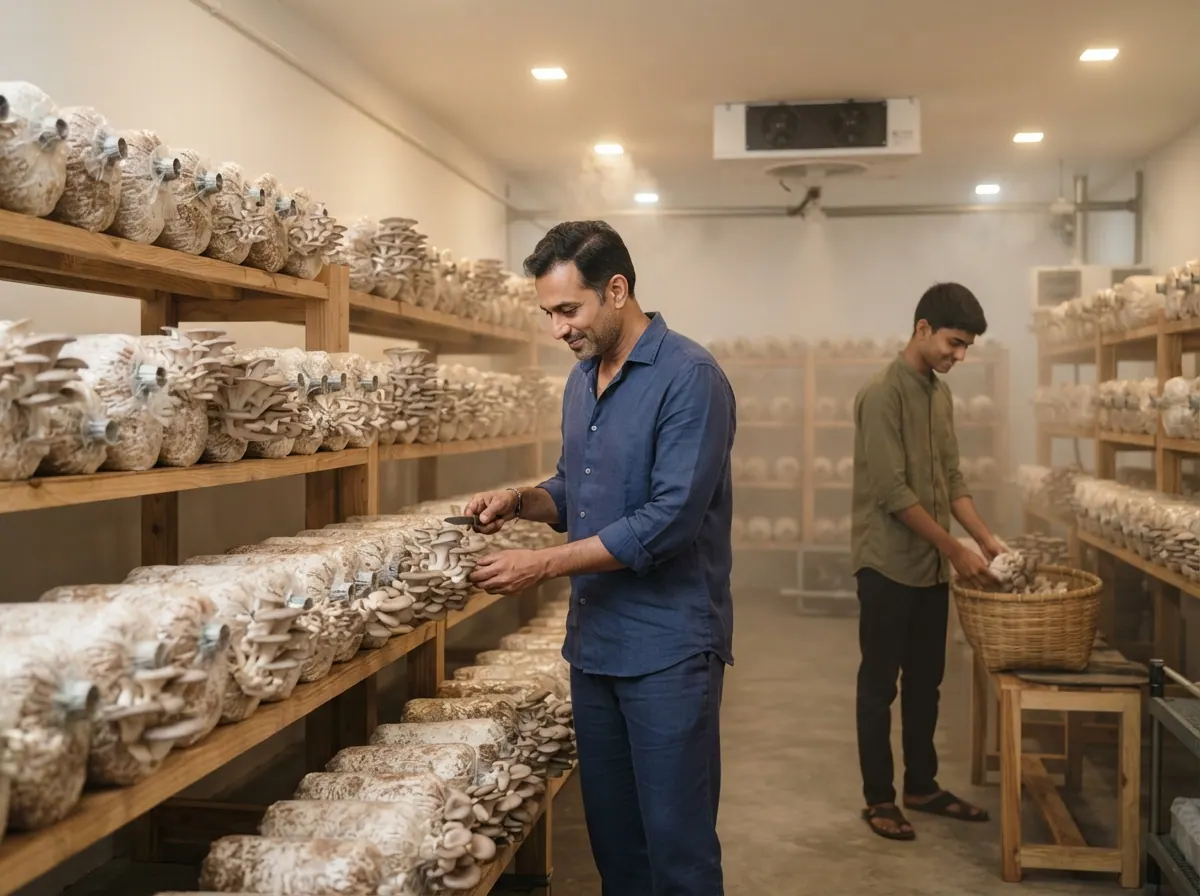
A mushroom farming business in Punjab needs about ₹49,500–₹29.6 lakh to set up, depending on the format. Run well in a city like Patiala, it typically nets ₹25,000–₹1.1 lakh a month. The numbers below are India-wide research rescaled to Punjab's own wages, shop rents, power tariffs and street prices.
How much investment do you need in Punjab?
- Cheapest start
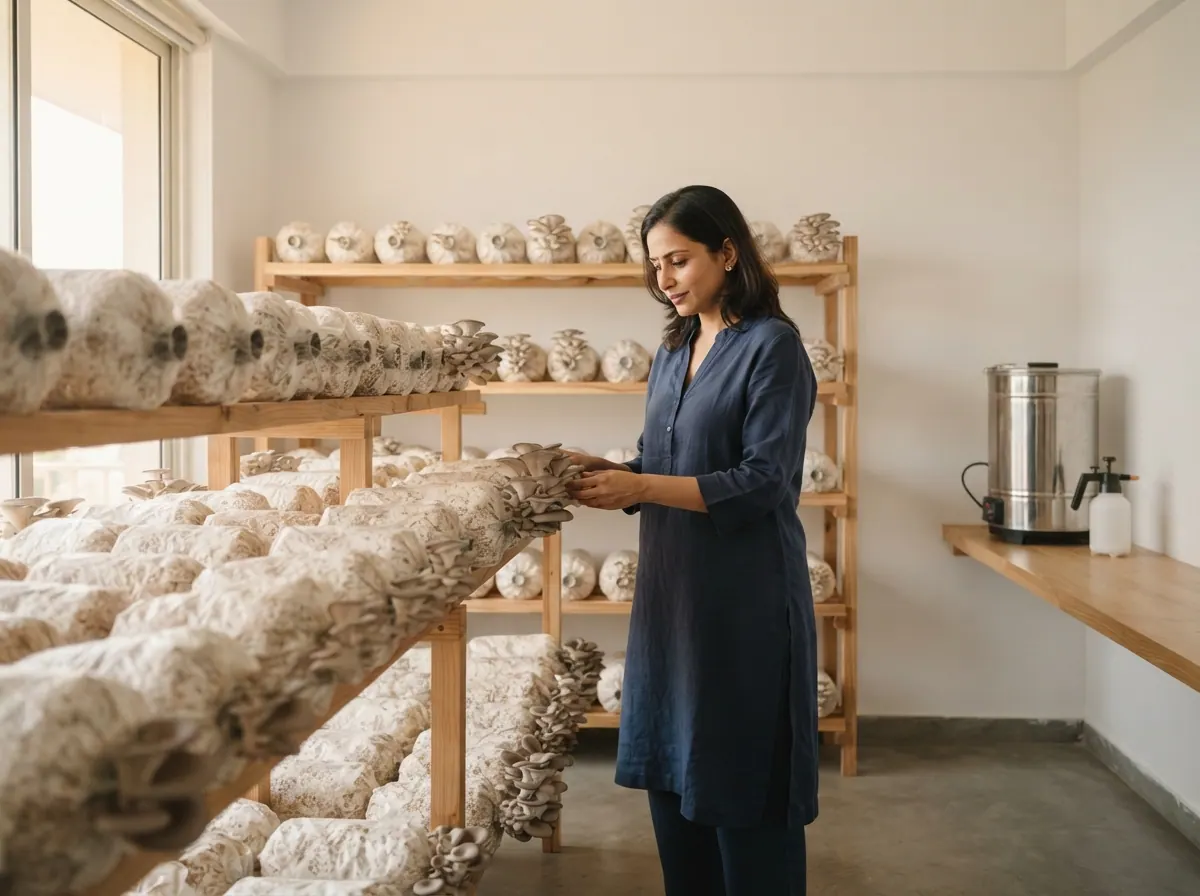
Home oyster, spare room
300–500 oyster bags, racks, a sprayer and a hot-water drum. 25–40 kg a week and 1–2 hours a day.
Setup cost₹49,500Suggested budget (with working capital): ₹54,000 Oyster room, 1,000 sq ft
1,000–1,500 bags, foggers and exhaust fans, an owner and a helper. 200–250 kg a week.
Setup cost₹2.5 lakhSuggested budget (with working capital): ₹2.9 lakh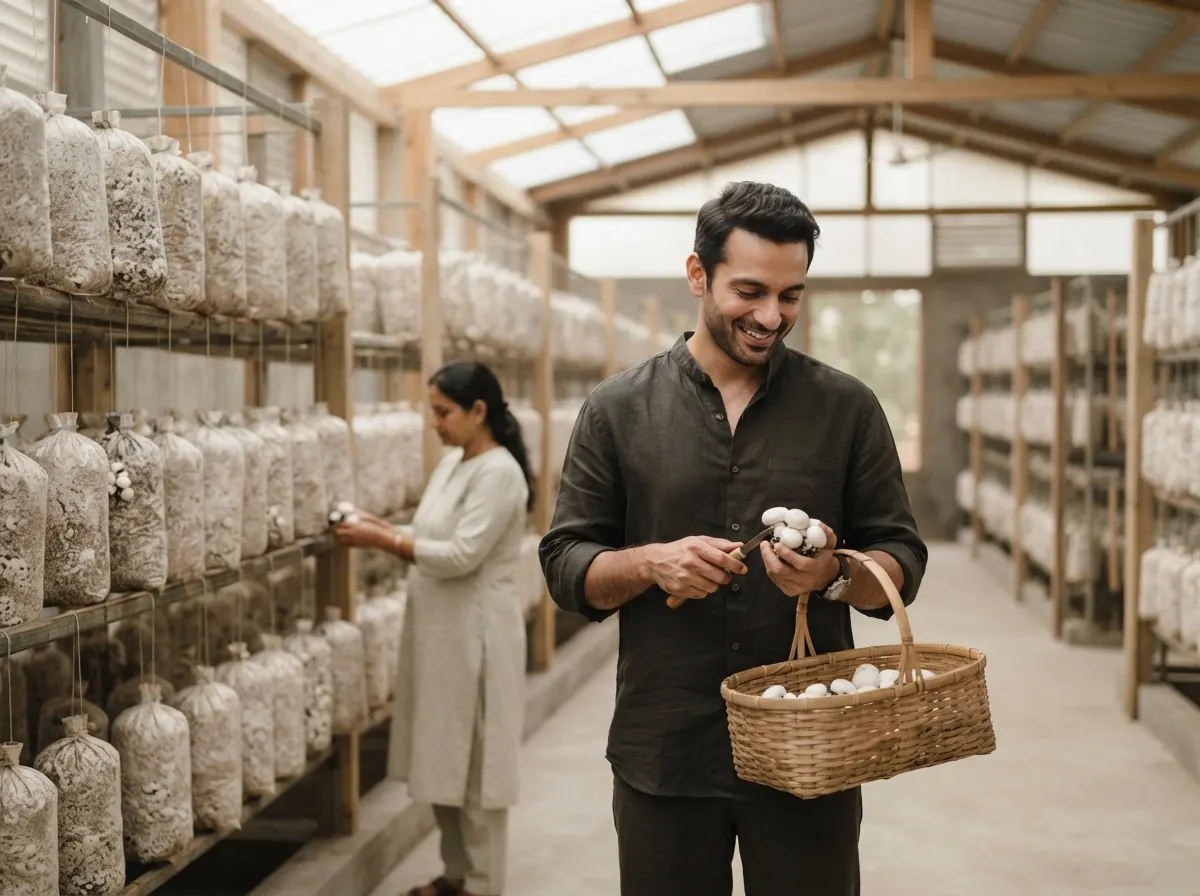
Seasonal button shed
3,000–4,000 button bags from November to March, oyster in summer. Cheap to run, but you sell into the winter glut.
Setup cost₹6 lakhSuggested budget (with working capital): ₹6.4 lakh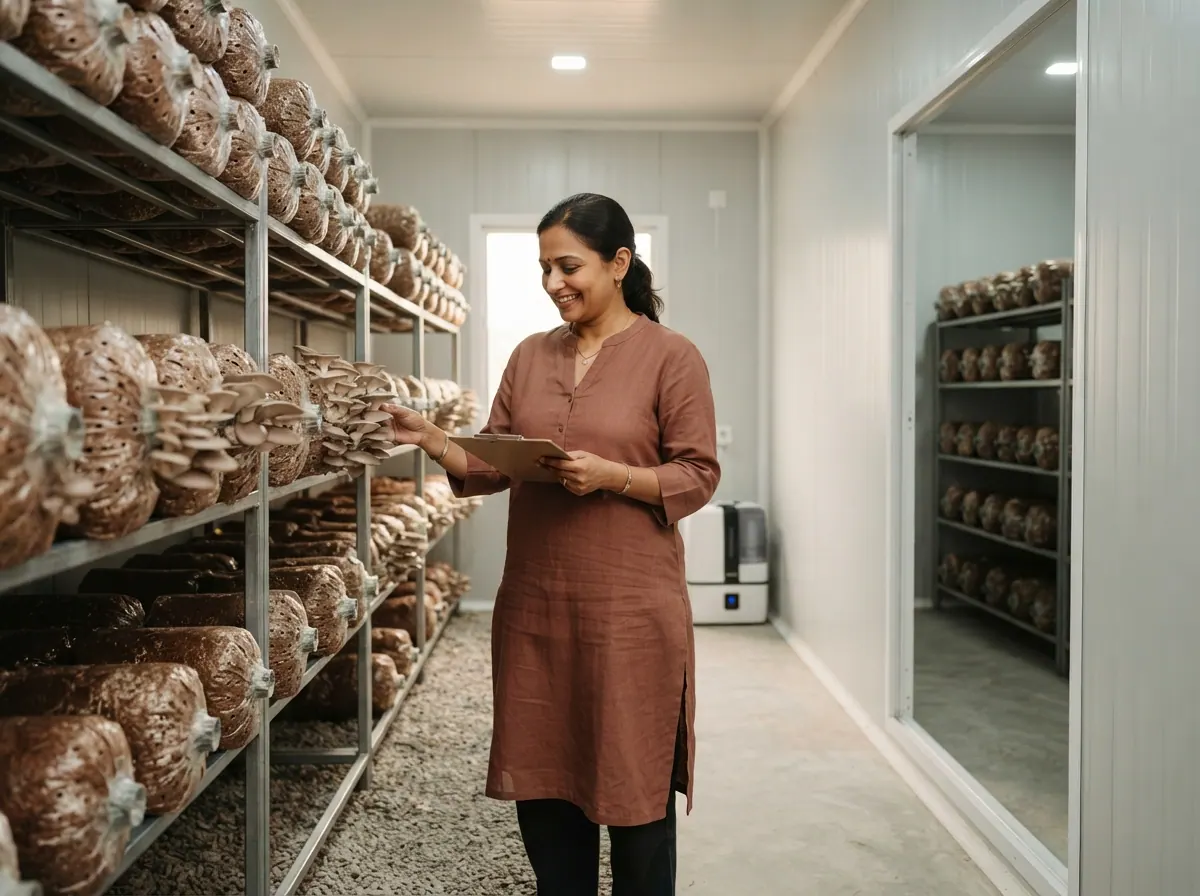
AC button unit, 2 rooms
About 3,000 bags in two insulated rooms, year-round, compost bought in. About 1,150 kg a week, big power and loan bills.
Setup cost₹29.6 lakhSuggested budget (with working capital): ₹31.5 lakh
How to start a mushroom farming business, step by step
- Choose your format and budget: Start with Home oyster, spare room: about ₹49,500 to set up, or ₹54,000 with working capital.
- Pick the location: Compare the rent with the number of customers who pass by, at the hours you will be open.
- Get your licences: Commonly needed: 0% GST on fresh and dried mushrooms (HSN 0709, 0712), No FSSAI needed for loose fresh produce sold by the grower (estimate), FSSAI basic registration (₹100/year) for dried or packed product, MIDH subsidy: 40% of a ₹20–30 lakh norm, credit-linked and paid later. Rules vary by state and city, so confirm with your municipal office.
- Arrange stock, staff and prices: Check local prices first, and keep money aside for the first months of rent, wages and stock.
- Plan for the risks: Watch for: green mould and contaminated spawn, summer heat cutting oyster yield, winter button glut pulling prices to ₹80–100/kg, a 2–3 day shelf life, nematodes and flies in unclean sheds, buy-back scheme frauds.
- Practise before you invest: Run it day by day in the free simulator to see where the money goes.
How much profit can you make in Punjab?
A well-run mushroom farming business in Punjab typically nets ₹25,000–₹1.1 lakh a month in a mid-size city: about ₹59,500–₹4.2 lakh in the metro and ₹4,000–₹12,000 in a small town. A casually run one can make far less or lose money.
| City | Net profit per week | Net profit per month |
|---|---|---|
| Ludhiana | ₹13,764–₹96,350 | ₹59,500–₹4.2 lakh |
| Patiala | ₹5,770–₹25,389 | ₹25,000–₹1.1 lakh |
| Mansa | ₹905–₹2,829 | ₹4,000–₹12,000 |
Ranges are for a well-run business of the typical format in each city size, from public sources and estimates. Your results depend on location and how you run it.
What changes in Punjab
The researched local factors that move this business’s numbers.
| Here | India | vs India | |
|---|---|---|---|
| Minimum wage, monthly | ₹13,486 | ₹12,500 | +8% |
| Unskilled day wage | ₹600 | ₹500 | +20% |
| Shop rent, metro (per sq ft/month) | ₹120Estimate | ₹150 | −20% |
| Shop rent, mid-size city | ₹60Estimate | ₹60 | ≈ |
| Shop rent, small town | ₹25Estimate | ₹25 | ≈ |
| Commercial power, per kWh | ₹6.6 | ₹9.5 | −31% |
| Commercial LPG cylinder | ₹2,919 | ₹2,810 | +4% |
| Petrol, per litre | ₹106 | ₹102 | +3% |
| Cup of tea / coffee | ₹15Estimate | ₹12 | +25% |
| Simple meal | ₹100Estimate | ₹80 | +25% |
| Men's haircut | ₹120Estimate | ₹100 | +20% |
| Milk, 1 litre | ₹65 | ₹60 | +8% |
| Bread loaf | ₹50Estimate | ₹45 | +11% |
| Factor | Typical value in India | Source |
|---|---|---|
| Minimum wage, unskilled (all Punjab) | ₹13,486/month; semi-skilled ₹14,383, skilled ₹15,414, highly skilled ₹16,601 (from 1 May 2026) | employsome.com |
| Typical shop helper pay | Ludhiana ₹12,000–15,000; Patiala ₹10,000–13,000; small towns ₹8,000–11,000; many helpers are migrants from UP/BiharEstimate | Est.: national presets plus Punjab's r… |
| Casual daily labour rate (T2) | ₹600/dayEstimate | Est.: RBI Handbook rural non-farm wage… |
| Shop rent by tier | T1 Ludhiana ₹120; T2 Patiala ₹60; T3 Mansa ₹25 per sq ft/monthEstimate | outlookbusiness.com |
| Commercial electricity (PSERC 2026–27) | 7–20 kW: ₹6.10/unit up to 500 units, ₹7.10 above; commercial tariffs cut by 65–79 paise from 1 Apr 2026 | etvbharat.com |
| Effective small-shop rate used | about ₹6.6/kWh plus fixed chargesEstimate | Est.: midpoint of cited ₹6.10–7.10 sla… |
| Commercial LPG 19 kg (Punjab) | ₹2,918.50 (25 Oct 2026); domestic ₹983 | goodreturns.in |
| Punjab S&E Act no longer applies to shops with <20 workers | Amendment Act gazetted 29 Aug 2025; small shops file a notice of business (Sec 13-A) within six months; 20+ establishments get deemed registration if not processed in 24 h | khaitanco.com |
| 2025 amendment detail (hours, overtime) | Longer daily hours and overtime limits relaxed (overtime cap reported as 144 h/quarter) | knowledge.dlapiper.com |
| Municipal trade licence / tehbazari for vendors | Municipal corporations (Ludhiana, Amritsar, Jalandhar) charge trade licence and tehbazari (vending fee) of roughly ₹100–1,000/month for stallsEstimate | Est.: Punjab Municipal Corporation Act… |
| Punjab State Development Tax (PSDT) | ₹200/month (₹2,400/yr) for traders/professionals with taxable income above about ₹2.5 lakh; registration within 30 days of liability | calcguru.in |
| PSDT amendment 2025 | Lump-sum annual option and settlement of arrears added | tribuneindia.com |
| GST thresholds | National: goods ₹40 lakh, services ₹20 lakh | accountune.com |
| Liquor vends and dry days | Private vends via e-tender; dry days on Gurpurabs and electionsEstimate | Est.: Punjab excise policy 2026–27; dr… |
Festivals and demand
- Karva Chauth (29 Oct 2026) · salon/mehendi and sweets spike 3–5× for women's services; evening eateries busy after moonrise
- Diwali (Dhanteras 6 Nov, Lakshmi Puja 8 Nov, Bhai Dooj 11 Nov) (6–11 Nov 2026) · sweets, gifts, clothing, salon and kirana demand 1.5–3× in the run-up; most small shops shut or half-day on Diwali itself
- Gurpurab (Guru Nanak Jayanti) (about 24 Nov 2026) · langar, sweets and flowers up; markets close for processions
- Lohri (13 Jan 2027) · rewri, gajak, peanuts 3–5×
- Hola Mohalla (about 23–25 Mar 2027) · pilgrim surge at Anandpur Sahib
- Baisakhi (14 Apr 2027) · harvest fairs; rural spending peak
Licences and rules
Rules vary by state and city: confirm with your municipal office.
- 0% GST on fresh and dried mushrooms (HSN 0709, 0712)
- No FSSAI needed for loose fresh produce sold by the grower (estimate)
- FSSAI basic registration (₹100/year) for dried or packed product
- MIDH subsidy: 40% of a ₹20–30 lakh norm, credit-linked and paid later
- Notice of business under Punjab S&E Act 1958, Sec 13-A (shops with <20 workers) · nil; within six months · Labour Department
- PSDT enrolment · ₹200/month · Excise & Taxation Department
- Municipal trade licence / tehbazari (vendors) · roughly ₹100–1,000/month for stalls (Est.) · Municipal corporation
Run it day by day before you invest
Run a mushroom farming business day by day. Choose your city, budget and location, then make the decisions a real owner faces as they come up. Your advisor can test each choice on your next 3 months. The free simulator currently runs on India-wide numbers; a state preset is coming.
Play the simulator freeFrequently asked questions
How much does it cost to start a mushroom farming business in Punjab?
About ₹49,500–₹29.6 lakh, depending on the format. That is the India-wide setup cost rescaled to Punjab's rents and prices.
How much profit does a mushroom farming business make in Punjab?
A well-run one typically nets ₹25,000–₹1.1 lakh a month in a city like Patiala. Casual owners earn far less.
What licences does a mushroom farming business need in Punjab?
0% GST on fresh and dried mushrooms (HSN 0709, 0712), No FSSAI needed for loose fresh produce sold by the grower (estimate), FSSAI basic registration (₹100/year) for dried or packed product, MIDH subsidy: 40% of a ₹20–30 lakh norm, credit-linked and paid later, Notice of business under Punjab S&E Act 1958, Sec 13-A (shops with <20 workers), PSDT enrolment, Municipal trade licence / tehbazari (vendors)
Which city in Punjab is best for a mushroom farming business?
Bigger cities bring more customers and higher bills but also higher rent and wages. The chart above compares metro, mid-size city and small town.