How to start a vegetable farming business in Ladakh (2026): investment, profit and licences
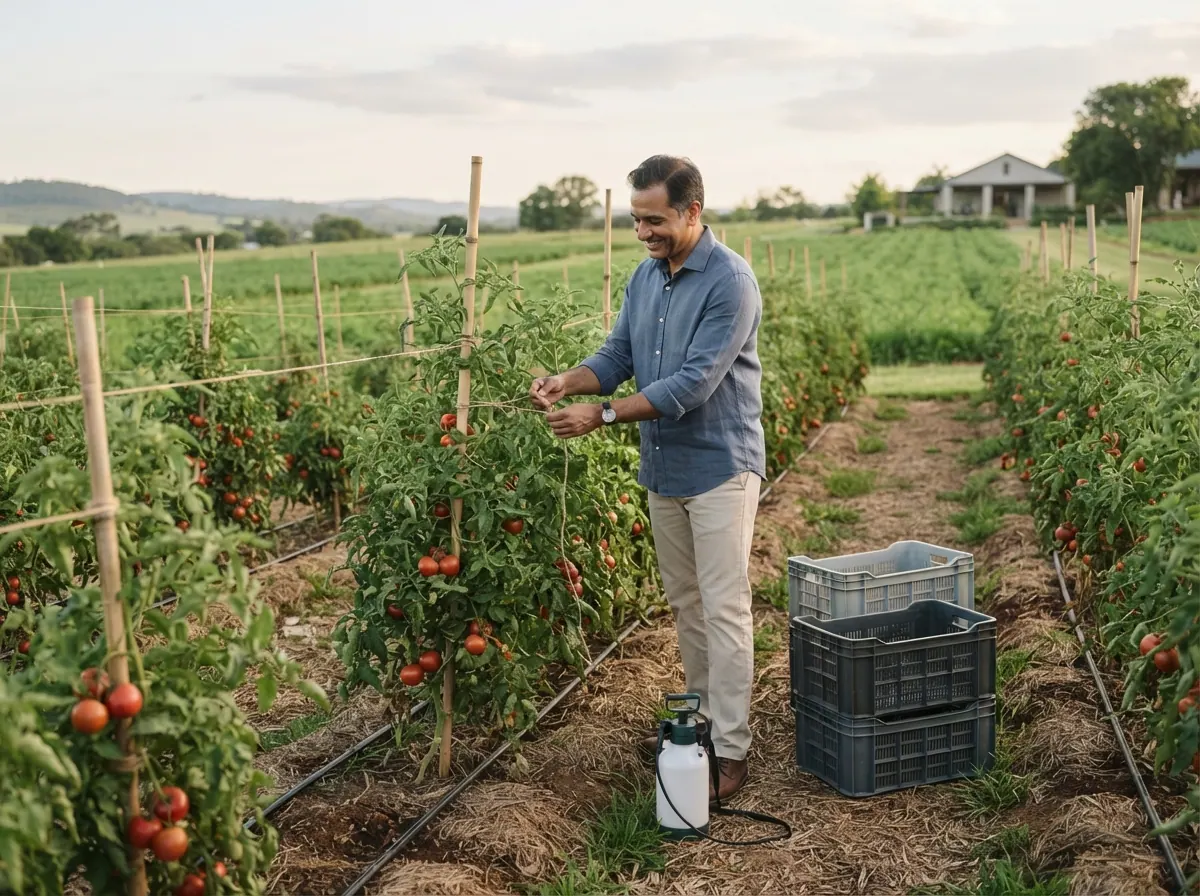
A vegetable farming business in Ladakh needs about ₹1.9 lakh–₹10.6 lakh to set up, depending on the format. Run well in a city like Kargil, it typically nets ₹7,000–₹34,000 a month. The numbers below are India-wide research rescaled to Ladakh's own wages, shop rents, power tariffs and street prices.
How much investment do you need in Ladakh?
- Cheapest start
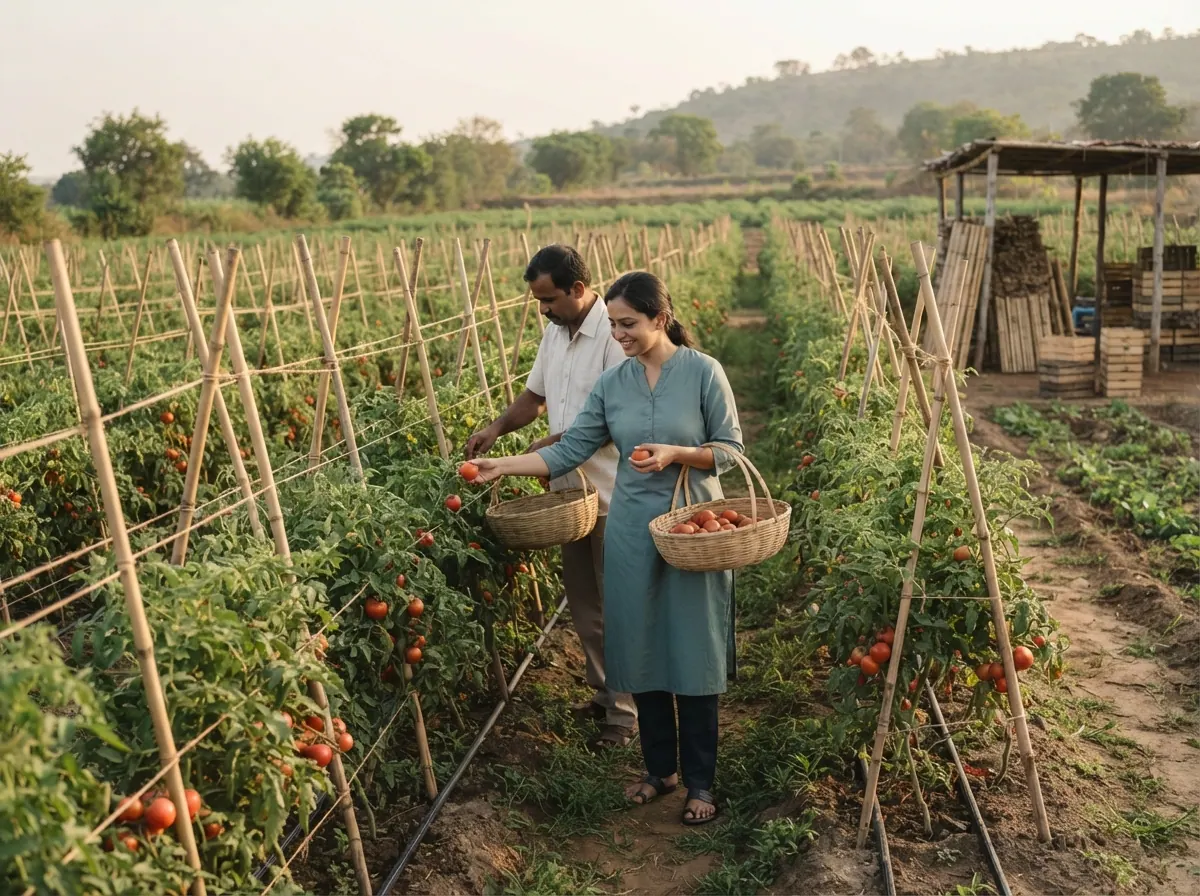
Open field, family labour
1 acre with furrow or basic drip and bamboo stakes. Sold at the farm gate or a weekly market. 10–15 t tomato a crop.
Setup cost₹1.9 lakhSuggested budget (with working capital): ₹3.1 lakh Open field, drip and mulch
1 acre with drip, mulch, stakes, sprayer and crates. Sold at the mandi. 15–22 t tomato a crop.
Setup cost₹2.5 lakhSuggested budget (with working capital): ₹4.2 lakh
Farm-to-home boxes
1.5–2 acres, packing shed, e-rickshaw and PGS for about 40 weekly boxes at ₹600. Needs a city within 1–2 hours. Takes 6–12 months to fill up.
Setup cost₹7.5 lakhSuggested budget (with working capital): ₹8.2 lakh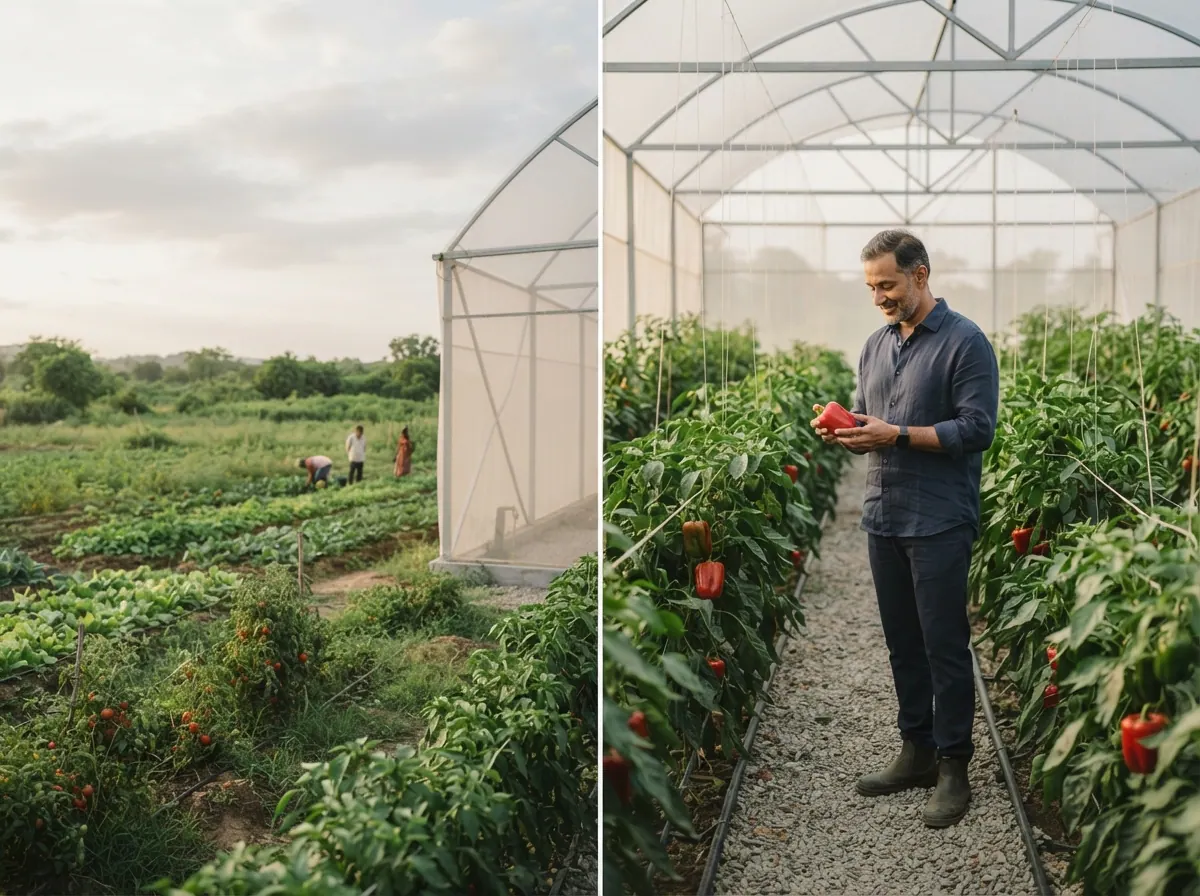
Polyhouse and 1 acre
1,000 sq m NVPH for capsicum plus an acre outside. Needs hotel or retail buyers, because mandi sale breaks the sums. Subsidy comes months later.
Setup cost₹10.6 lakhSuggested budget (with working capital): ₹12.9 lakh
How to start a vegetable farming business, step by step
- Choose your format and budget: Start with Open field, family labour: about ₹1.9 lakh to set up, or ₹3.1 lakh with working capital.
- Pick the location: Compare the rent with the number of customers who pass by, at the hours you will be open.
- Get your licences: Commonly needed: no licence to grow or sell raw vegetables; your state's APMC Act decides where you can sell, mandi charges of about 10–15% of sale value when you sell in the yard, FSSAI basic registration (₹100/year) if you wash, pack and label boxes, PGS-India or NPOP certificate before calling produce organic, land records, project report, soil and water tests for MIDH or NHB subsidy. Rules vary by state and city, so confirm with your municipal office.
- Arrange stock, staff and prices: Check local prices first, and keep money aside for the first months of rent, wages and stock.
- Plan for the risks: Watch for: tomato price crash to ₹2–5/kg in a glut, Tuta absoluta and leaf curl virus, heat waves and rain at picking time, pickers not available at peak harvest, hail on polyhouse film and late subsidy money, subscribers leaving a vegetable box plan.
- Practise before you invest: Run it day by day in the free simulator to see where the money goes.
How much profit can you make in Ladakh?
A well-run vegetable farming business in Ladakh typically nets ₹7,000–₹34,000 a month in a mid-size city: about ₹14,500–₹85,500 in the metro and ₹2,500–₹20,500 in a small town. A casually run one can make far less or lose money.
| City | Net profit per week | Net profit per month |
|---|---|---|
| Leh | ₹3,299–₹19,795 | ₹14,500–₹85,500 |
| Kargil | ₹1,563–₹7,816 | ₹7,000–₹34,000 |
| Diskit (Nubra) | ₹587–₹4,696 | ₹2,500–₹20,500 |
Ranges are for a well-run business of the typical format in each city size, from public sources and estimates. Your results depend on location and how you run it.
What changes in Ladakh
The researched local factors that move this business’s numbers.
| Here | India | vs India | |
|---|---|---|---|
| Minimum wage, monthly | ₹11,700 | ₹12,500 | −6% |
| Unskilled day wage | ₹800 | ₹500 | +60% |
| Shop rent, metro (per sq ft/month) | ₹150Estimate | ₹150 | ≈ |
| Shop rent, mid-size city | ₹50Estimate | ₹60 | −17% |
| Shop rent, small town | ₹30Estimate | ₹25 | +20% |
| Commercial power, per kWh | ₹5Estimate | ₹9.5 | −47% |
| Commercial LPG cylinder | ₹3,150Estimate | ₹2,810 | +12% |
| Petrol, per litre | ₹110 | ₹102 | +8% |
| Cup of tea / coffee | ₹20Estimate | ₹12 | +67% |
| Simple meal | ₹150Estimate | ₹80 | +88% |
| Men's haircut | ₹150Estimate | ₹100 | +50% |
| Milk, 1 litre | ₹70Estimate | ₹60 | +17% |
| Bread loaf | ₹60Estimate | ₹45 | +33% |
| Factor | Typical value in India | Source |
|---|---|---|
| Minimum wage, unskilled (Ladakh) | ₹450/day (≈₹11,700/month at 26 days); listed from 2 Nov 2022 | wageindicator.org |
| UT daily-wager rationalisation 2026 | LG approved ₹575/day for daily, part-time and seasonal workers engaged by the UT administration (from ₹450) | etvbharat.com |
| Code on Wages (Ladakh) Rules 2026 | Notified 3 Aug 2026 (S.O. 231), in force 10 Aug 2026; 8-hour day, weekly paid rest; technical committee to reclassify skills | teamleaseregtech.com |
| Typical shop helper pay (summer season) | ₹15,000–20,000/month plus lodging for May–Sep; most helpers are seasonal migrants (Nepal, Bihar, Himachal)Estimate | Est.: short season and high living cos… |
| Casual daily labour rate | ₹800/day in seasonEstimate | Est.: seasonal scarcity; well above th… |
| Shop rent by tier | T1 Leh Main Bazaar ₹150; T2 Kargil ₹50; T3 Diskit (Nubra) ₹30 per sq ft/month; many leases priced per seasonEstimate | Est.: tourist-season leases in Leh are… |
| Commercial electricity | about ₹5.0/kWhEstimate | Est.: Ladakh Power Development Dept ta… |
| Power reliability | Winter outages and voltage dips; Leh shops rely on diesel gensets and solarEstimate | Est.: grid link via Srinagar–Leh line … |
| Commercial LPG 19 kg (Leh) | about ₹3,150Estimate | goodreturns.in |
| Shops & Establishments | J&K Shops & Establishments Act 1966 as adapted for Ladakh; registration with Labour DeptEstimate | Est.: post-2019 UT adaptation orders |
| Tourism trade registration | Guesthouses, homestays, travel agents and taxis register with Ladakh Tourism; taxi unions control routesEstimate | Est.: Ladakh tourism registration rules |
| Inner Line Permit for visitors | Needed for Nubra, Pangong, Tso Moriri; protected-area permit fee plus environment fee per touristEstimate | Est.: Leh district permit system |
| Professional tax | NoneEstimate | Est.: no PT statute applied in Ladakh |
| GST thresholds | National: goods ₹40 lakh, services ₹20 lakh (UTGST)Estimate | Est.: same as J&K before 2019; verify |
Festivals and demand
- Ladakhi Losar (about mid-Dec 2026) · family new year; shops shut a few days in off-season
- Diwali (Dhanteras 6 Nov, Lakshmi Puja 8 Nov, Bhai Dooj 11 Nov) (6–11 Nov 2026) · sweets, gifts, clothing, salon and kirana demand 1.5–3× in the run-up; most small shops shut or half-day on Diwali itself
- Muharram / Ashura (Kargil) (about mid-Jun 2027) · Kargil markets shut on Ashura
- Hemis Tsechu (about late Jun 2027) · tourist peak in Leh
- Ladakh Festival (Sep 2027) · end-of-season tourist event (cancelled 2025)
Licences and rules
Rules vary by state and city: confirm with your municipal office.
- No licence to grow or sell raw vegetables; your state's APMC Act decides where you can sell
- Mandi charges of about 10–15% of sale value when you sell in the yard
- FSSAI basic registration (₹100/year) if you wash, pack and label boxes
- PGS-India or NPOP certificate before calling produce organic
- Land records, project report, soil and water tests for MIDH or NHB subsidy
- Shops & Establishments registration (J&K 1966 Act as adapted) · nominal (Est.) · Labour Department, UT Ladakh
- Tourism trade registration (guesthouse, travel agent, taxi) · by category (Est.) · Department of Tourism, Ladakh
Run it day by day before you invest
Run a vegetable farming business day by day. Choose your city, budget and location, then make the decisions a real owner faces as they come up. Your advisor can test each choice on your next 3 months. The free simulator currently runs on India-wide numbers; a state preset is coming.
Play the simulator freeFrequently asked questions
How much does it cost to start a vegetable farming business in Ladakh?
About ₹1.9 lakh–₹10.6 lakh, depending on the format. That is the India-wide setup cost rescaled to Ladakh's rents and prices.
How much profit does a vegetable farming business make in Ladakh?
A well-run one typically nets ₹7,000–₹34,000 a month in a city like Kargil. Casual owners earn far less.
What licences does a vegetable farming business need in Ladakh?
No licence to grow or sell raw vegetables; your state's APMC Act decides where you can sell, Mandi charges of about 10–15% of sale value when you sell in the yard, FSSAI basic registration (₹100/year) if you wash, pack and label boxes, PGS-India or NPOP certificate before calling produce organic, Land records, project report, soil and water tests for MIDH or NHB subsidy, Shops & Establishments registration (J&K 1966 Act as adapted), Tourism trade registration (guesthouse, travel agent, taxi)
Which city in Ladakh is best for a vegetable farming business?
Bigger cities bring more customers and higher bills but also higher rent and wages. The chart above compares metro, mid-size city and small town.