How to start a plumbing business in Andhra Pradesh (2026): investment, profit and licences
A plumbing business in Andhra Pradesh needs about ₹29,500–₹9.8 lakh to set up, depending on the format. Run well in a city like Vijayawada, it typically nets ₹22,500–₹45,000 a month. The numbers below are India-wide research rescaled to Andhra Pradesh's own wages, shop rents, power tariffs and street prices.
How much investment do you need in Andhra Pradesh?
- Cheapest start
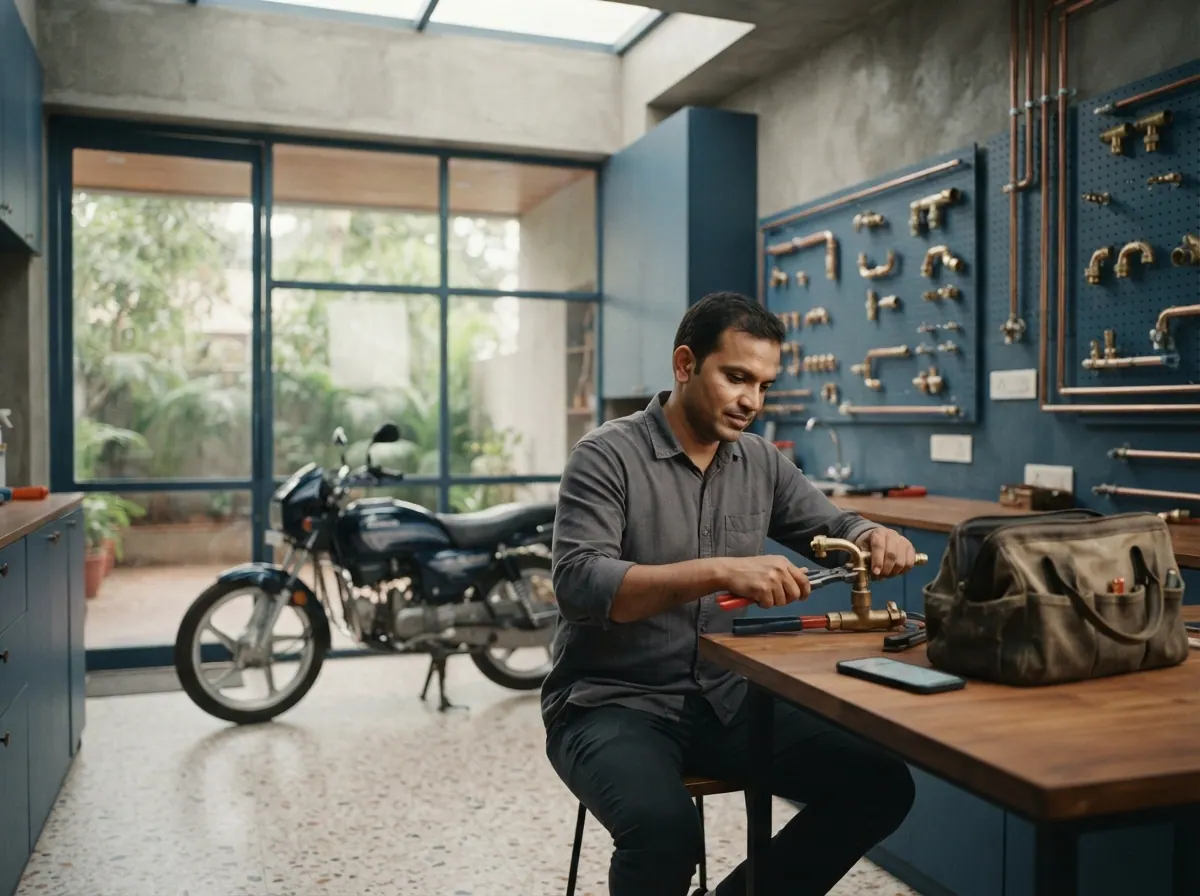
Solo plumber on call
Your own two-wheeler, a tool bag and a phone. 2–6 paid visits a day.
Setup cost₹29,500Suggested budget (with working capital): ₹39,500 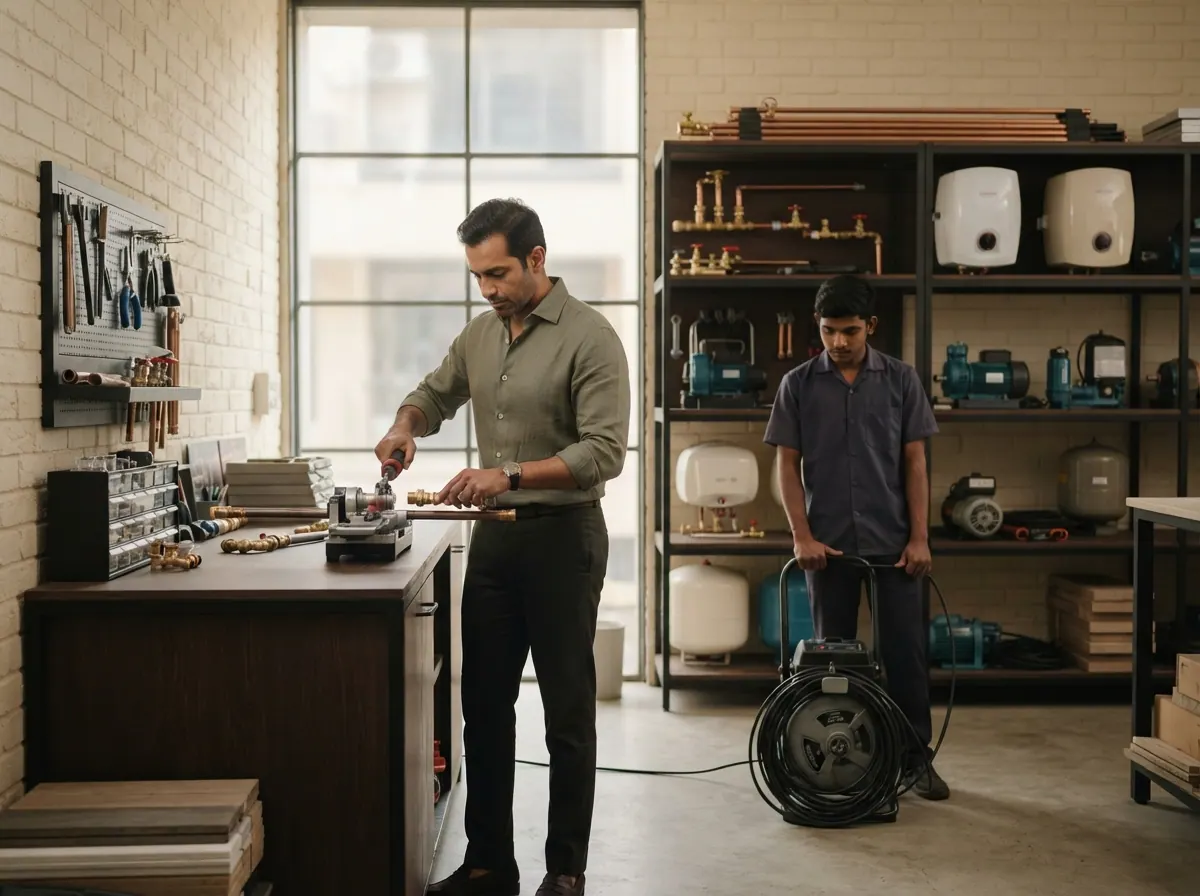
Plumber and helper outfit
Drain machine, threading set and a loader. Motors, tanks and geysers too.
Setup cost₹2.2 lakhSuggested budget (with working capital): ₹2.4 lakh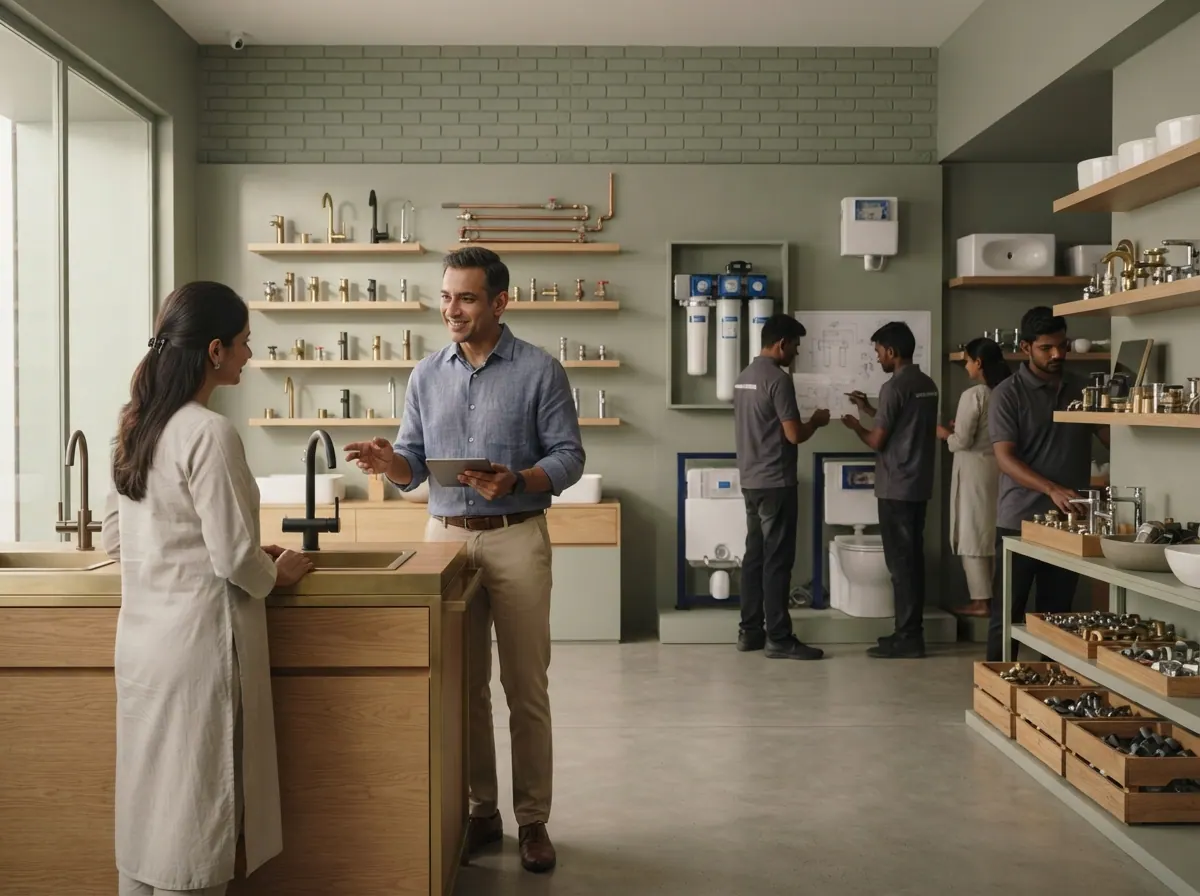
Sanitary shop with a crew
Taps, pipes, tanks and your own plumbers. Needs staff, and a big-town market.
Setup cost₹9.8 lakhSuggested budget (with working capital): ₹10.2 lakh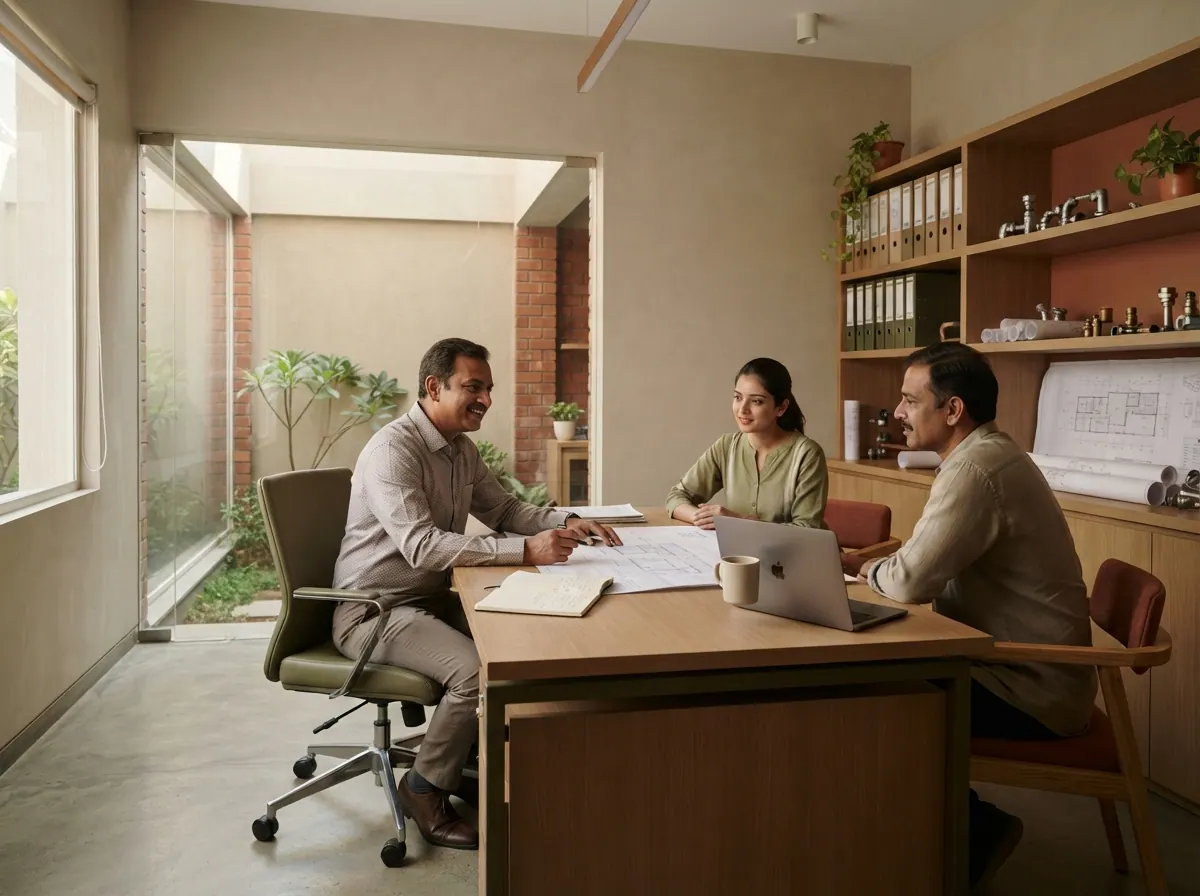
Plumbing contractor
New flats by the point, ₹450–1,200 labour. Needs a crew, builders pay late.
Setup cost₹9.8 lakhSuggested budget (with working capital): ₹10.1 lakh
How to start a plumbing business, step by step
- Choose your format and budget: Start with Solo plumber on call: about ₹29,500 to set up, or ₹39,500 with working capital.
- Pick the location: Compare the rent with the number of customers who pass by, at the hours you will be open.
- Get your licences: Commonly needed: no national plumbing licence; IPSC NSQF Level 3 or ITI certificate is voluntary, utility licensed-plumber panel for new water connections (for example Delhi Jal Board), free Udyam registration for Mudra loans and tenders, Shop & Establishment registration once you have a shop or staff, GST registration above ₹20 lakh turnover (18% on works contracts). Rules vary by state and city, so confirm with your municipal office.
- Arrange stock, staff and prices: Check local prices first, and keep money aside for the first months of rent, wages and stock.
- Plan for the risks: Watch for: electric shock on geyser and motor jobs, a failed joint flooding the flat below, builders paying 30–90 days late, platform rating blocks and commission changes, a trained helper leaving with your customers.
- Practise before you invest: Run it day by day in the free simulator to see where the money goes.
How much profit can you make in Andhra Pradesh?
A well-run plumbing business in Andhra Pradesh typically nets ₹22,500–₹45,000 a month in a mid-size city: about ₹36,500–₹73,500 in the metro and ₹14,000–₹32,500 in a small town. A casually run one can make far less or lose money.
| City | Net profit per week | Net profit per month |
|---|---|---|
| Visakhapatnam | ₹8,483–₹16,966 | ₹36,500–₹73,500 |
| Vijayawada | ₹5,182–₹10,364 | ₹22,500–₹45,000 |
| Narasaraopet | ₹3,196–₹7,457 | ₹14,000–₹32,500 |
Ranges are for a well-run business of the typical format in each city size, from public sources and estimates. Your results depend on location and how you run it.
What changes in Andhra Pradesh
The researched local factors that move this business’s numbers.
| Here | India | vs India | |
|---|---|---|---|
| Minimum wage, monthly | ₹12,647 | ₹12,500 | +1% |
| Unskilled day wage | ₹600Estimate | ₹500 | +20% |
| Shop rent, metro (per sq ft/month) | ₹90Estimate | ₹150 | −40% |
| Shop rent, mid-size city | ₹50Estimate | ₹60 | −17% |
| Shop rent, small town | ₹18Estimate | ₹25 | −28% |
| Commercial power, per kWh | ₹9Estimate | ₹9.5 | −5% |
| Commercial LPG cylinder | ₹3,070Estimate | ₹2,810 | +9% |
| Petrol, per litre | ₹118 | ₹102 | +15% |
| Cup of tea / coffee | ₹12Estimate | ₹12 | ≈ |
| Simple meal | ₹90Estimate | ₹80 | +13% |
| Men's haircut | ₹100Estimate | ₹100 | ≈ |
| Milk, 1 litre | ₹58Estimate | ₹60 | −3% |
| Bread loaf | ₹45 | ₹45 | ≈ |
| Factor | Typical value in India | Source |
|---|---|---|
| Minimum wage, unskilled shops (peon/helper), Zone I | ₹12,647/month (basic ₹3,700 + VDA ₹8,947), 1 Apr – 30 Sep 2026 | dcpsol.com |
| Minimum wage, unskilled, Zone II | ₹12,317/month | dcpsol.com |
| Minimum wage, skilled (salesman/electrician), Zone I | ₹13,467/month; manager ₹14,504 | dcpsol.com |
| VDA revision cadence | Every 1 Apr and 1 Oct (Oct 2026 revision expected; not retrieved) | ascent-hr.com |
| Typical informal helper pay | Vizag ₹11k–15k; Vijayawada ₹9k–13k; towns ₹7k–10kEstimate | Est.: national presets |
| Casual unskilled day wage, T2 | ₹600/dayEstimate | Est.: legal floor ≈ ₹486/day (₹12,647/… |
| Shop rent T1 Visakhapatnam | ₹90/sq ft/monthEstimate | Est.: below Hyderabad/Chennai; no repo… |
| Shop rent T2 Vijayawada | ₹50/sq ft/month (Besant Road/MG Road higher)Estimate | Est.: national T2 band; capital-region… |
| Shop rent T3 Narasaraopet | ₹18/sq ft/monthEstimate | Est.: national T3 band |
| Commercial electricity (LT-II), effective | ≈₹9.0/kWh averageEstimate | mercomindia.com |
| Commercial LPG 19 kg | ≈₹3,070Estimate | goodreturns.in |
| S&E registration | Within 30 days via integrated Form-A; Form C certificate displayed; auto-renewal by self-certification | greythr.com |
| S&E fee | ≈₹125 (no staff) / ₹200 (1–5) / ₹300 (6–10)Estimate | Est.: unverified guide figures summari… |
| Municipal trade licence | Est. ₹500–5,000/yrEstimate | Est.: no schedule retrieved |
Festivals and demand
- Deepavali (about 8 Nov 2026) · Sweets, crackers, clothes up 2–3 weeks
- Karthika Masam (about Nov 2026) · Many Hindus go vegetarian for the month; non-veg eateries −20–40%; temple and river-bath trade up
- Christmas (25 Dec 2026) · Bakeries up; sizeable Christian community in coastal districts
- Sankranti (Bhogi, Sankranti, Kanuma) (13–16 Jan 2027) · Biggest festival: clothes, sweets, cockfight-fair crowds in Godavari districts; cities empty for 3–5 days as people go home
- Eid al-Fitr (about 10 Mar 2027) · Haleem and evening food demand in Muslim areas (Kurnool, Guntur)
- Ugadi (about 8 Apr 2027) · Ugadi pachadi ingredients, clothes; new-year purchases
Licences and rules
Rules vary by state and city: confirm with your municipal office.
- No national plumbing licence; IPSC NSQF Level 3 or ITI certificate is voluntary
- Utility licensed-plumber panel for new water connections (for example Delhi Jal Board)
- Free Udyam registration for Mudra loans and tenders
- Shop & Establishment registration once you have a shop or staff
- GST registration above ₹20 lakh turnover (18% on works contracts)
- Shop & Establishment registration (AP Shops & Establishments Act 1988), Form-A via MeeSeva/Labour portal · Fixed by headcount (approx. ₹125 none, ₹200 for 1–5, ₹300 for 6–10, unverified); renewal by self-certification + online fee · Labour Department
- Municipal trade licence (Vijayawada/GVMC etc.) · By trade and area (est. ₹500–5,000/yr for small shops) · Municipal corporation
Run it day by day before you invest
Run a plumbing business day by day. Choose your city, budget and location, then make the decisions a real owner faces as they come up. Your advisor can test each choice on your next 3 months. The free simulator currently runs on India-wide numbers; a state preset is coming.
Play the simulator freeFrequently asked questions
How much does it cost to start a plumbing business in Andhra Pradesh?
About ₹29,500–₹9.8 lakh, depending on the format. That is the India-wide setup cost rescaled to Andhra Pradesh's rents and prices.
How much profit does a plumbing business make in Andhra Pradesh?
A well-run one typically nets ₹22,500–₹45,000 a month in a city like Vijayawada. Casual owners earn far less.
What licences does a plumbing business need in Andhra Pradesh?
No national plumbing licence; IPSC NSQF Level 3 or ITI certificate is voluntary, Utility licensed-plumber panel for new water connections (for example Delhi Jal Board), Free Udyam registration for Mudra loans and tenders, Shop & Establishment registration once you have a shop or staff, GST registration above ₹20 lakh turnover (18% on works contracts), Shop & Establishment registration (AP Shops & Establishments Act 1988), Form-A via MeeSeva/Labour portal, Municipal trade licence (Vijayawada/GVMC etc.)
Which city in Andhra Pradesh is best for a plumbing business?
Bigger cities bring more customers and higher bills but also higher rent and wages. The chart above compares metro, mid-size city and small town.