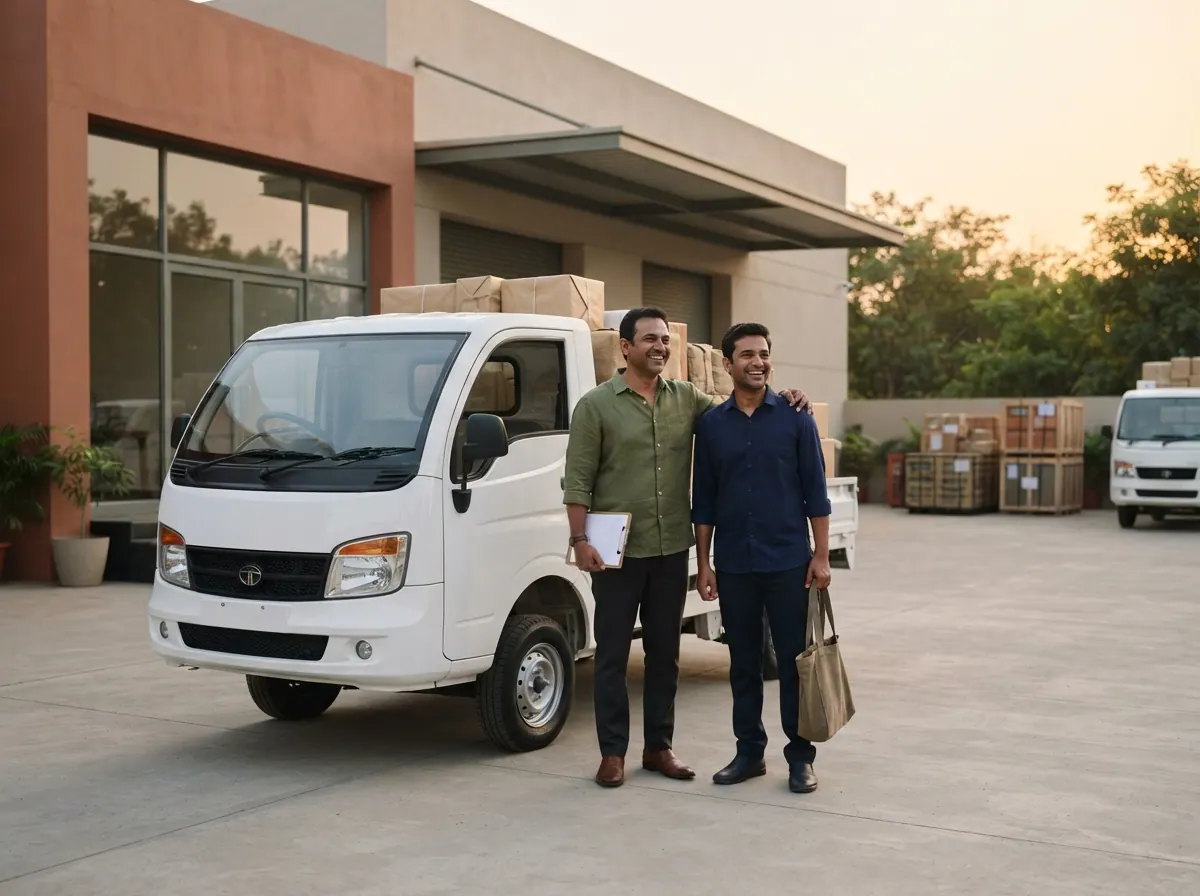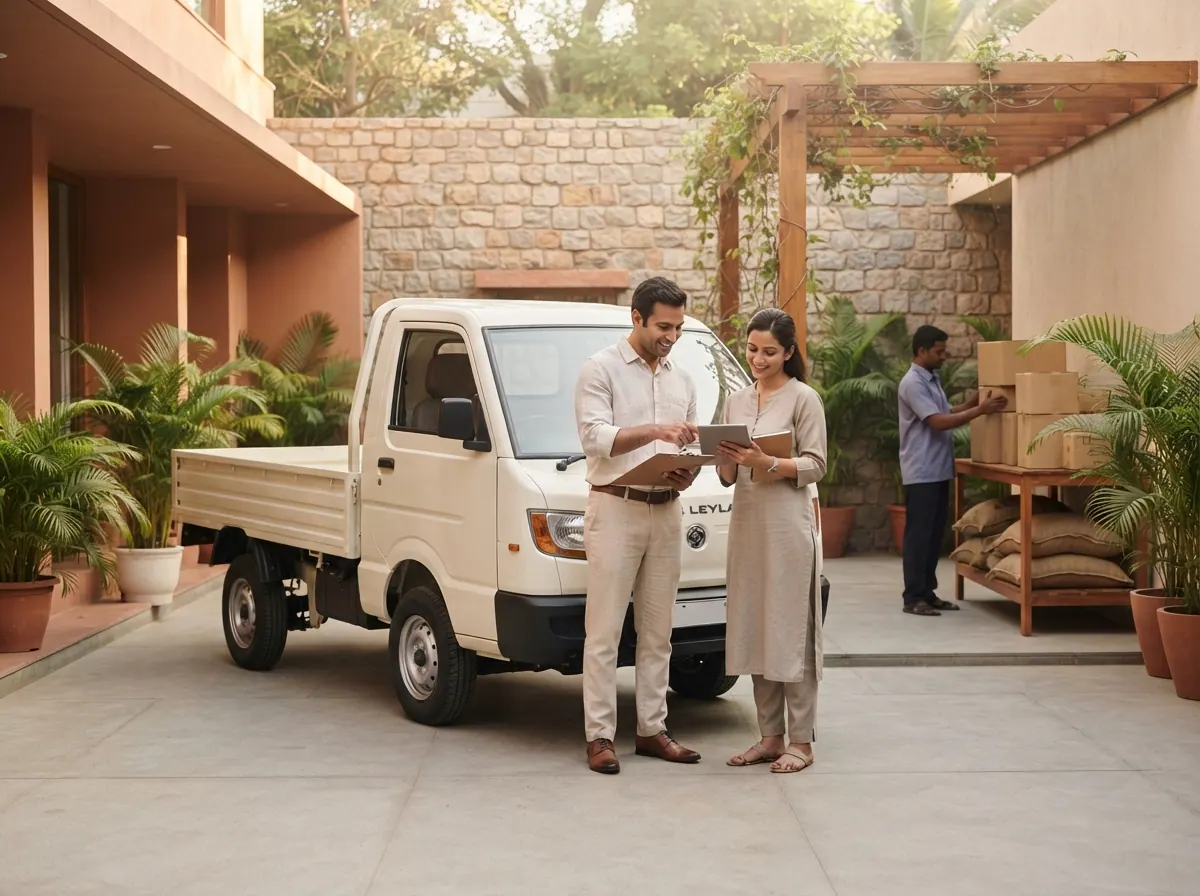
गुड्स ट्रांसपोर्ट बिज़नेस का मतलब है कि आपके पास टेम्पो, मिनी ट्रक या पिकअप है और दुकानों, व्यापारियों, फैक्ट्रियों और परिवारों का माल ढोने के लिए आपको प्रति ट्रिप या प्रति किलोमीटर पैसे मिलते हैं। एक छोटी गाड़ी करीब ₹6–9 लाख की, पिकअप करीब ₹9–11 लाख की, और बड़ा ट्रक करीब ₹25 लाख तक। खुद चलाने वाला मालिक एक गाड़ी से अच्छी रोज़ी कमा सकता है। ड्राइवर रखकर लोड के इंतज़ार में बैठने वाले मालिक का अक्सर काम नहीं चलता।
यहाँ सारे आँकड़े अंदाज़े हैं। पैसा लगाने से पहले अपने इलाके के भाव ज़रूर देखें।
खर्चा कितना आता है?
टाटा एस जैसी छोटी कमर्शियल गाड़ी, नई, के लिए:
| चीज़ | अंदाज़ा |
|---|---|
| गाड़ी, ऑन-रोड (डाउन पेमेंट और लोन मिलाकर) | ₹5–7 लाख |
| कमर्शियल इंश्योरेंस, पहला साल | ₹30,000–45,000 |
| रजिस्ट्रेशन, परमिट, फिटनेस सर्टिफिकेट | ₹15,000–30,000 |
| तिरपाल, रस्सी, जैक, स्पेयर टायर, औज़ार | ₹10,000–20,000 |
| GPS और FASTag | ₹3,000–5,000 |
| चालू पैसा: डीज़ल, ड्राइवर, छोटे जुर्माने | ₹60,000–1 लाख |
| कुल | करीब ₹6.2–8.8 लाख |
बोलेरो जैसी पिकअप करीब ₹9–11 लाख की पड़ती है क्योंकि भारी लोड उठाती है। 14 फुट का ट्रक ₹15–25 लाख तक जा सकता है। गाड़ी वो चुनें जो आपके इलाके में ढुलती है: सब्ज़ी और दूध के लिए छोटा तेज़ टेम्पो, ईंट और रेत के लिए पिकअप, फर्नीचर और कार्टन के लिए ढका हुआ बॉडी।
कमाई कितनी हो सकती है?
मान लें छोटा डीज़ल टेम्पो, व्यस्त महीने में 22 काम के दिन, रोज़ 5 लोकल ट्रिप करीब ₹450 प्रति ट्रिप, रोज़ 100 किमी, 18 किमी प्रति लीटर, डीज़ल ₹90 लीटर, और ₹5 लाख का लोन जिसकी EMI करीब ₹10,500।
व्यस्त महीना, मालिक खुद चलाए (22 दिन)
- आमदनी: 22 × 5 × ₹450 = ₹49,500
- डीज़ल: 100 ÷ 18 = 5.6 लीटर × ₹90 = करीब ₹500 रोज़ × 22 = ₹11,000
- EMI = ₹10,500
- इंश्योरेंस और परमिट बाँटकर = ₹3,500
- मरम्मत और टायर = ₹3,000
- लोडिंग की मदद, पार्किंग, जुर्माना = ₹2,000
- कुल खर्चा = ₹30,000
- बचत: ₹49,500 − ₹30,000 = ₹19,500
व्यस्त महीना, ₹14,000 पर ड्राइवर
- ₹19,500 − ₹14,000 = ₹5,500
सुस्त महीना (18 दिन, रोज़ 4 ट्रिप)
- आमदनी: 18 × 4 × ₹450 = ₹32,400
- डीज़ल ₹9,000 + EMI ₹10,500 + इंश्योरेंस और परमिट ₹3,500 + मरम्मत ₹2,000 + छोटे खर्चे ₹1,500 = ₹26,500
- बचत, मालिक चलाए: ₹32,400 − ₹26,500 = ₹5,900
- ड्राइवर के साथ: ₹5,900 − ₹14,000 = −₹8,100
साल भर, मालिक खुद चलाए (8 व्यस्त महीने, 4 सुस्त)
- 8 × ₹19,500 = ₹1,56,000
- 4 × ₹5,900 = ₹23,600
- कुल: करीब ₹1.8 लाख साल, यानी करीब ₹15,000 महीना
यह ₹15,000 आपकी ड्राइविंग की मज़दूरी भी है। ड्राइवर रखकर औसत इलाके में टेम्पो मुश्किल से चलता है। आँकड़े ऊपर क्या उठाता है: रोज़ ज़्यादा ट्रिप, डेयरी या थोक व्यापारी का महीने का कॉन्ट्रैक्ट, और वापसी का लोड ताकि खाली न लौटें। लोन खत्म होने पर ₹10,500 महीना आपके पास रहता है।
शुरू करने से पहले क्या चाहिए?
- अपने ट्रांसपोर्ट के नियमित ग्राहकों की लिस्ट। अपने इलाके की 10–15 दुकानों, मंडी के व्यापारियों, डेयरी, पैकर और छोटी फैक्ट्रियों से बात करें। पूछें कि किसे रोज़ गाड़ी चाहिए।
- गाड़ी की क्लास का ड्राइविंग लाइसेंस, जो माल वाहन के लिए मान्य हो।
- ऐसा रूट जो आप जानते हों। गलियाँ, लोडिंग की जगह, मंडी के घंटे और ट्रक की एंट्री का समय जानने से घंटे बचते हैं।
- सुस्त हफ्तों और मरम्मत के लिए बचत। बरसात में भी EMI इंतज़ार नहीं करती।
- फोन और एक कॉपी। हर ट्रिप, लोड, वज़न, रकम और किसने दिया, लिखें।
कदम-दर-कदम
- एक हफ्ता किसी खुद चलाने वाले मालिक के साथ जाएँ उसी काम में जो आप करना चाहते हैं, और गिनें कि पैसे वाले ट्रिप कितने हैं और खाली दौड़ कितनी।
- माल और अपने इलाके की सड़कों के हिसाब से गाड़ी चुनें। ब्रांड का सर्विस नेटवर्क देखें।
- किराए पर माल ढोने से पहले कमर्शियल रजिस्ट्रेशन, परमिट और फिटनेस सर्टिफिकेट बनवाएँ।
- दो लोन ऑफर की तुलना करें, और कुल ब्याज देखें। कुछ बैंक लोडिंग कॉन्ट्रैक्ट माँगते हैं।
- रेट तय करें: प्रति ट्रिप, प्रति किलोमीटर और प्रति इंतज़ार घंटा। लिखें और बताएँ।
- पहले नियमित ग्राहक जोड़ें, फिर एक-एक लोड के पीछे दौड़ें। तीन पक्के कॉन्ट्रैक्ट तीस फोन कॉल से बेहतर हैं।
- हमेशा बिल या लोड स्लिप माँगें, और ज़्यादा कीमत के माल पर लोड करने से पहले भेजने वाले से ई-वे बिल पूछें।
- समय पर सर्विस कराएँ, और गाड़ी में स्पेयर टायर, तिरपाल और जैक रखें।
कौन से लाइसेंस और कागज़ लगते हैं?
- कमर्शियल रजिस्ट्रेशन, फिटनेस सर्टिफिकेट और गुड्स कैरिज परमिट, RTO से। लोकल और राज्य के बाहर के काम के लिए अलग परमिट लगते हैं।
- सही क्लास का ड्राइविंग लाइसेंस, माल वाहन के लिए।
- कमर्शियल इंश्योरेंस, और जाँचें कि वो माल और थर्ड-पार्टी नुकसान कवर करता है।
- ई-वे बिल। एक तय कीमत से ऊपर के माल पर GST नियम से लग सकता है, आमतौर पर भेजने वाला बनाता है। भेजने वाले से पूछें, और मौजूदा सीमा CA से पूछें।
- वज़न की सीमा। तय लोड से ज़्यादा ढोना अपराध है और इंश्योरेंस खतरे में डालता है।
- GST और इनकम टैक्स। भाड़े की आमदनी और लोन के ब्याज के बारे में CA से पूछें।
क्या गलत हो सकता है?
- ऐसे ग्राहक जो महीने भर में पैसे देते हैं, और कभी समय पर नहीं। कॉन्ट्रैक्ट वाला व्यापारी आपको 60 दिन तक लटका सकता है।
- खाली वापसी ट्रिप, जिनमें उतना ही डीज़ल लगता है और कमाई शून्य।
- ओवरलोडिंग। भारी लोड ज़्यादा पैसे देता है और स्प्रिंग व टायर घिसता है, और चेकिंग या एक्सीडेंट में बहुत महँगा पड़ता है।
- खराबी। गाड़ी खड़ी, EMI चालू, और नियमित ग्राहक किसी और को बुला लेता है।
- डीज़ल बेचने वाला ड्राइवर। ट्रिप लॉग और फ्यूल जाँच के बिना आप पता नहीं लगा सकते।
- माल का नुकसान। टूटा कार्टन या गिरा दूध आपका बिल बन जाता है, और स्लिप के बिना लादा माल आपके और उनके बीच कहा-सुनी बन जाता है।
- जुर्माने और शहर में एंट्री के नियम। कुछ शहर कुछ घंटों में माल गाड़ियाँ रोकते हैं।
ये हालात आपके सामने आएँगे
आप क्या करेंगे? हर फ़ैसले की एक क़ीमत है।
शुरुआत
A small tempo is cheap to run in tight lanes. A pickup carries heavier loads and earns more per trip, with a bigger EMI.
- Buy the pickup: Big EMI, heavier paying loads
- Buy the small tempo: Smaller EMI, lighter loads
A four-year-old tempo costs far less. The owner has few service papers, and the clutch feels a bit loose.
- Buy new: Big EMI, warranty, fewer breakdowns
- Buy the used tempo: Saves money, repair risk
A friend says nobody checks small tempos in your town. The RTO says hire work needs commercial papers from day one.
- Get commercial papers first: Cost and delay, work legal
- Start loads first: Earn now, fine risk
A dairy wants a daily milk run at a fixed price. Open loads pay more per trip but come and go.
- Take the dairy contract: Steady trips, lower rate
- Wait for open loads: Better rates, empty days
A driver costs ₹14,000 a month. If you drive yourself, trips are limited to your own hours and energy.
- Hire a driver: Monthly wage, more trips
- Drive it yourself: Saves wage, tiring days
A closed body keeps cartons dry and suits furniture and parcels. Open bodies carry bricks and vegetables more easily.
- Fit a covered body: Cost, access to parcel work
- Stay with an open body: No cost, fewer kinds of work
A trader asks to see where the vehicle is during a delivery. A tracker costs money but also shows a hired driver's route.
- Fit a tracker: Costs, better trust and control
- Skip it: Saves money, questions remain
पहला महीना
A trader gives you five loads a week but pays only after a month. Diesel has to be paid each day.
- Give credit, keep the loads: Cash tight, steady work
- Ask for cash on delivery: Money safe, lose the trader
A brick seller wants an extra row loaded and offers ₹300 more. Your vehicle is already at its limit.
- Refuse the overload: Lose money, vehicle and papers safe
- Carry the extra row: Extra money, wear and fine risk
You delivered a load 40 km away and must drive back empty. A return load costs time to find but pays less.
- Find a cheap return load: Cover fuel, wait for it
- Drive back empty: Save time, lose money
A trader says ten cartons broke on a rough road and wants ₹5,000. You had no loading slip noting their condition.
- Pay part and settle: Lose money, keep the customer
- Refuse, ask for proof: Keep money, lose the customer
Entry into the market area is closed to goods vehicles until 10 at night. Customers want morning delivery.
- Deliver at night: Long nights, steady customers
- Hand loads to a local cart: Easier, lower margin
Diesel rose, and your trip rates stayed the same. Other tempo owners are talking about raising rates together.
- Raise rates a little: Margin saved, some customers leave
- Hold rates: Keep customers, thinner margin
रोज़ का काम
Traders want vehicles night and day for three weeks. You can take every trip and risk the vehicle or turn some down.
- Take every trip: Big money, wear and exhaustion
- Limit to regular customers: Less money, steady health
A WhatsApp group of owners shares return loads. Members expect you to help others in turn and keep to fixed rates.
- Join the group: Fewer empty runs, group rules
- Stay on your own: Freedom, more empty runs
After months of heavy loads, the springs sag and a tyre is bald. A good set is expensive, and a patch is cheap.
- Replace tyres and springs: Big bill, safe on the road
- Patch and keep driving: Cheaper, breakdown risk
A small factory offers a fixed monthly sum for daily pickups. It is steady, but you must be there every day, even in a slow week.
- Sign the monthly contract: Steady money, no free days
- Keep open loads: Freedom, uneven income
A family is moving across town and wants furniture loaded carefully. It pays well, but needs helpers and ropes.
- Take the house shift: Good fee, labour and care
- Decline, stay with trade loads: Easier, less money
Your tempo is using more diesel than the trips explain. The cause might be the engine, the driver, or leaks.
- Service the engine, check logs: Costs money, finds the cause
- Warn the driver only: Cheap, loss may continue
Someone nearby charges ₹50 less a trip with an old vehicle. Two of your regular traders asked about it.
- Match the rate: Keep traders, thinner margin
- Hold, promise on-time loads: Better margin, lose some
A dealer offers a yearly service pack at a fixed price. It saves worry, but you pay first even in a slow month.
- Buy the service pack: Costs now, fewer surprises
- Pay for repairs as needed: Cash kept, bigger risk
जब मुश्किल आए
The vehicle stopped on the highway with a load of vegetables for the mandi. The mechanic needs half a day.
- Hire another tempo for the load: Costs money, load saved
- Wait for the repair: Cheaper, load may spoil
At a junction, your loaded tempo grazed a scooter. The rider has a sore arm, and the family wants money.
- Use insurance and help the rider: Slow paperwork, record clean
- Settle privately in cash: Fast, bigger payment
A trader you have carried for months owes ₹18,000 and keeps saying next week. You still need that diesel money.
- Pause loads until paid: Chance of money, lose the work
- Keep carrying and ask politely: Keep the customer, debt grows
Officers find your fitness certificate expired last month. They ask you to stop until it is renewed.
- Renew and pay the fine: Lose days, papers right
- Argue and hope to continue: Risk of a bigger penalty
Heavy rain stopped construction and market loads for two weeks. Your EMI is due.
- Borrow to pay the EMI: Interest cost, record clean
- Pay the EMI late: Keep cash, late charges
बढ़ाना
You turn down loads every week. A second tempo needs a trusted driver and another EMI in slow months too.
- Buy a second tempo: New EMI, more loads at once
- Raise rates, keep one: Safer, limited growth
A 14-foot truck carries more per trip and opens longer routes. It also needs a heavier licence and bigger papers.
- Buy the bigger truck: Heavy EMI, longer routes
- Stay with the tempo: Light costs, local loads
A goods booking app brings steady loads but takes a cut of each trip and fixes the rate.
- Join the app: More loads, lower margin
- Stay with your customers: Better rate, fewer loads
A local warehouse wants a vehicle for its shop deliveries every morning. Rates are fixed and a little below spot rates.
- Take the warehouse work: Steady work, lower rate
- Keep free for spot loads: Better rate, uncertain
क्या यह आपके लिए ठीक है?
यह आपके लिए ठीक है अगर आप लंबे घंटे चला सकते हैं, अपने इलाके की गलियाँ और मंडी के समय जानते हैं, ईमानदारी से कॉपी में हिसाब रखते हैं, और तमीज़ से पैसे वसूल सकते हैं। अगर आपके पास पहले से कुछ नियमित ग्राहक हैं जो आपको बुलाएँगे, तो और अच्छा।
यह कम ठीक है अगर आप गाड़ी खरीदकर ड्राइवर को सौंपना चाहते हैं और खुद मौजूद नहीं रहना चाहते। खरीदने से पहले दो हफ्ते किसी काम करते टेम्पो मालिक के साथ रहें और ट्रिप, इंतज़ार और बकाया लिखें। वो पन्ना डीलर की ब्रोशर से ज़्यादा सिखाएगा।