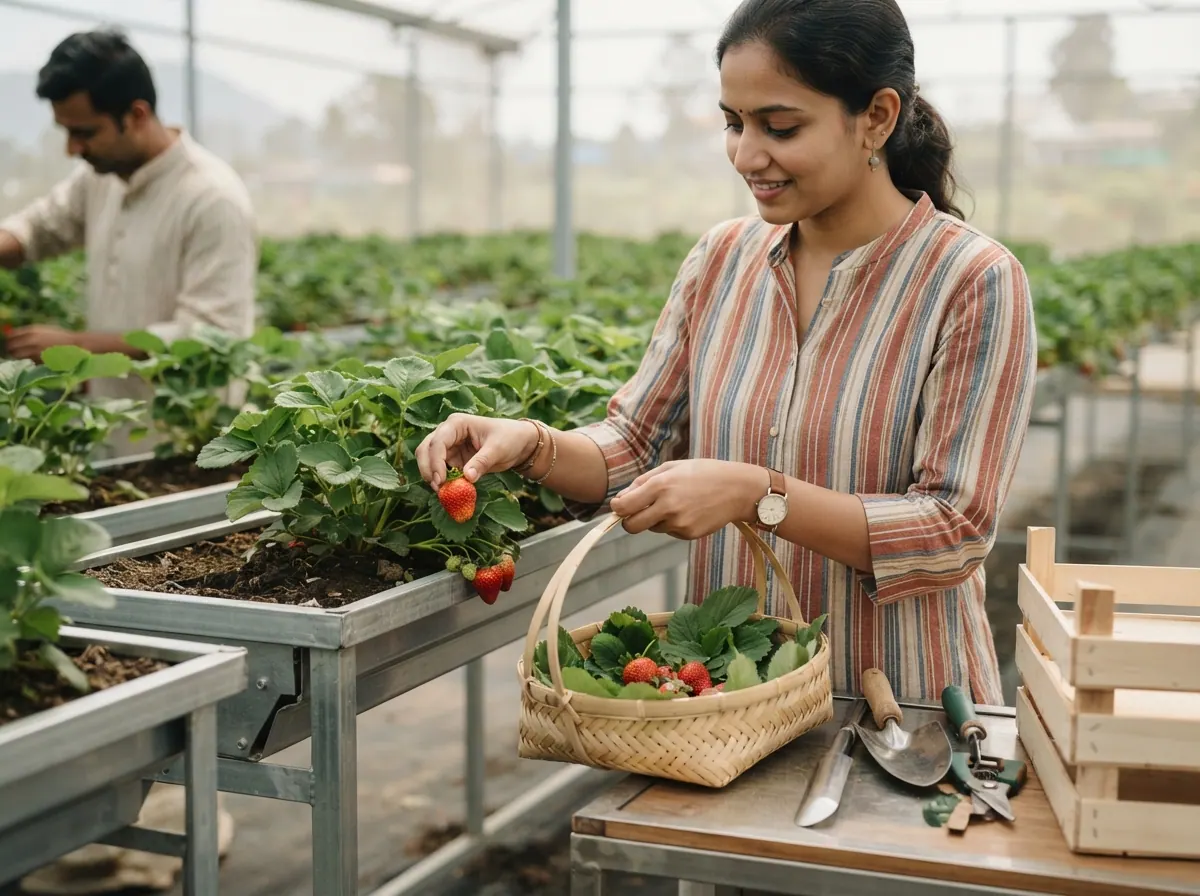
भारत में स्ट्रॉबेरी की खेती में, ज़मीन और पानी आपका हो तो, आधे एकड़ में करीब ₹1.8–3.3 लाख और एक एकड़ में ₹3.3–5.8 लाख लगते हैं। चाहिए अच्छी नर्सरी के स्वस्थ पौधे, प्लास्टिक मल्च और ड्रिप वाली ऊंची क्यारियां, ठंडे मौसम में रोपाई, हर दूसरे दिन सावधानी से तुड़ाई, और नरम फल के लिए खरीदार जो जल्दी खराब हो जाता है। कमाई करीब चार महीने की छोटी तुड़ाई में आती है, और पौधे हर साल दोबारा खरीदने पड़ते हैं।
यहां दिए सभी आंकड़े अनुमान हैं। खर्च करने से पहले अपने इलाके के दाम ज़रूर जांच लें।
इसमें कितना खर्च आता है?
| मद | आधा एकड़ | एक एकड़ |
|---|---|---|
| पौधे (करीब 10,000 या 20,000) | ₹40,000–70,000 | ₹80,000–1.4 लाख |
| क्यारियां, प्लास्टिक मल्च, ड्रिप लाइन | ₹50,000–80,000 | ₹1–1.6 लाख |
| खाद, उर्वरक, फ़सल सुरक्षा | ₹25,000–40,000 | ₹50,000–80,000 |
| पनेट, क्रेट, पैकिंग के छोटे औज़ार | ₹15,000–30,000 | ₹30,000–60,000 |
| पंप, टंकी या पानी का कनेक्शन | ₹20,000–40,000 | ₹30,000–60,000 |
| शुरू के महीनों की मज़दूरी का चालू पैसा | ₹20,000–40,000 | ₹40,000–80,000 |
| कुल | करीब ₹1.8–3.3 लाख | करीब ₹3.3–5.8 लाख |
ज़्यादातर फ़ार्म में पौधे हर साल खरीदे जाते हैं, इसलिए पौधों का खर्च सालाना है, एक बार का नहीं। प्लास्टिक मल्च और ड्रिप लाइन संभालकर रखें तो कुछ सीज़न चल सकती हैं।
कौन-सी किस्म और कौन-सा मौसम?
- किस्म। नर्सरी से पूछें कि आपके क्षेत्र में कौन-सी किस्म अच्छी चलती है। अक्सर लिए जाने वाले नाम हैं विंटर डॉन, स्वीट चार्ली, कैमरोसा, नबीला और फ़ेस्टिवल। वह किस्म चुनें जो आपके खरीदारों को पसंद हो, क्योंकि आकार, रंग और कड़ापन दाम पर असर डालते हैं।
- भरोसेमंद नर्सरी के पौधे। कमज़ोर या बीमार पौधे पूरी फ़सल बिगाड़ देते हैं। स्रोत पूछें और जड़ें देखें।
- रोपाई का समय। मैदानी इलाकों में आमतौर पर ठंडे मौसम में, करीब सितंबर से अक्टूबर में, और फल करीब दिसंबर से मार्च तक। ठंडे पहाड़ी इलाकों में कैलेंडर अलग है।
- मौसम। स्ट्रॉबेरी को ठंडी रातें और धूप पसंद है। फल आते समय तेज़ बारिश और अचानक गर्मी क्वालिटी घटाती है।
इसमें कितनी कमाई हो सकती है?
एक एकड़ अच्छे सीज़न में लें, ज़मीन और पानी पहले से आपका।
सीज़न की आमदनी
- बिकने लायक फल: एक एकड़ से करीब 5,000 किलो, नुकसान के बाद का सतर्क अंदाज़ा
- पूरे सीज़न का औसत दाम करीब ₹140 किलो
- 5,000 × ₹140 = ₹7,00,000
सीज़न का खर्च
- पौधे = ₹1,10,000
- मल्च और ड्रिप का नवीनीकरण = ₹40,000
- खाद, उर्वरक, स्प्रे = ₹70,000
- पनेट और पैकिंग: 5,000 × ₹10 = ₹50,000
- क्यारी, रोपाई और तुड़ाई की मज़दूरी = ₹2,00,000
- ढुलाई: 5,000 × ₹5 = ₹25,000
- पानी, बिजली और मरम्मत = ₹30,000
- कुल = ₹5,25,000
बचत: ₹7,00,000 − ₹5,25,000 = सीज़न का करीब ₹1,75,000।
12 महीनों में बांटें तो यह करीब ₹14,600 महीना है। तुड़ाई के चार महीनों में करीब ₹44,000 महीना। इसमें आपकी अपनी मेहनत नहीं गिनी गई, इसलिए खुद तुड़ाई करें तो profit ज़्यादा होगा। औसत दाम ₹140 की जगह ₹100 रहे तो आमदनी ₹5,00,000 रह जाती है और नुकसान हो जाता है। इसीलिए खरीदार और लगातार क्वालिटी मायने रखते हैं।
शुरू करने से पहले क्या चाहिए?
- अच्छी जल निकासी और साफ़ पानी। जलभराव से स्ट्रॉबेरी की जड़ें जल्दी मर जाती हैं।
- ताज़े फल की कद्र करने वाला खरीदार, जैसे शहर की फल दुकान, जूस या आइसक्रीम बनाने वाला, होटल, या फ़ार्म पर आने वाले लोगों को सीधी बिक्री।
- कोल्ड चेन, या बहुत छोटा रास्ता। फल ठंडे में तोड़ें और उसी दिन या अगले दिन बेचें। पास में मंडी न हो तो कूल बॉक्स में ले जाने की योजना रखें।
- सधे हुए तोड़ने वाले। नरम फल पर निशान पड़ जाते हैं, और तुड़ाई का हुनर असली खर्च है।
कदम दर कदम
- अपने क्षेत्र का कोई चालू स्ट्रॉबेरी फ़ार्म देखें और पूछें कि पिछले साल क्या गलत हुआ।
- मिट्टी और पानी की जांच कराएं, कृषि या बागवानी दफ़्तर या किसी लैब से।
- खाद डालकर ऊंची क्यारियां बनाएं, ड्रिप लाइन बिछाएं और प्लास्टिक मल्च चढ़ाएं।
- भरोसेमंद नर्सरी से पौधे मंगवाएं, रोपाई से काफ़ी पहले, और सही समय पर लगाएं।
- ड्रिप से पानी दें और पत्तियां गीली न होने दें। जहां पौधे नहीं चाहिए वहां की रनर हटा दें।
- कीट और फफूंद पर नज़र रखें, ख़ासकर गीले मौसम में, और स्प्रे से पहले बागवानी दफ़्तर से सलाह लें।
- हर दूसरे दिन तुड़ाई करें, आकार और पकने के हिसाब से छांटें, और फल को धीरे से पनेट में रखें।
- जल्दी बेचें और दाम, मात्रा और नुकसान का रिकॉर्ड रखें।
कौन-से लाइसेंस लगते हैं?
छोटे फ़ार्म पर दुकान से कम कागज़ी काम होता है, हालांकि राज्य के हिसाब से फ़र्क पड़ता है:
- ज़मीन और पानी की अनुमति, आपके राज्य के नियम से, अगर बोरवेल या नहर का पानी लेते हैं।
- बागवानी योजनाएं। राष्ट्रीय बागवानी मिशन और राज्य मिशनों ने फल-सब्ज़ी की फ़सलों की मदद की है। ज़िला बागवानी दफ़्तर से पूछें कि स्ट्रॉबेरी या ड्रिप सिंचाई शामिल है या नहीं, और सब्सिडी पक्की होने से पहले उस पर हिसाब न टिकाएं।
- लोन। बैंक फ़सल और बागवानी लोन देते हैं। किसान क्रेडिट कार्ड एक विकल्प है। शर्तें अपने बैंक से पक्की करें।
- पैक्ड फल बेचना या प्रोसेस करना, जैसे जैम या जूस बनाना, इसके लिए खाद्य लाइसेंस चाहिए। खाद्य सुरक्षा दफ़्तर से पूछें।
- टैक्स। फ़ार्म से आगे ट्रेडिंग शुरू करें तो CA से पूछें कि खेती की आमदनी कैसे गिनी जाएगी।
क्या गलत हो सकता है?
- खराब पौधे। कमज़ोर या बीमार खेप पूरा सीज़न बिगाड़ देती है।
- फल आते समय बारिश। गीला फल सड़ता है और फफूंद तेज़ी से फैलती है।
- मार्च की गर्मी। फल छोटा और नरम हो जाता है, और दाम तभी गिरते हैं जब सब बेच रहे होते हैं।
- देर से तुड़ाई। ज़्यादा पका फल सफ़र नहीं कर पाता। आज दाम कम हो तब भी समय पर तोड़ें।
- एक दूर के खरीदार पर निर्भरता। जो फल गर्म ट्रक में एक दिन बिताता है, वह दाम और शक्ल दोनों खो देता है।
- वीडियो का profit आंकड़ा कॉपी करना। कई वीडियो एकदम अच्छे सीज़न की पैदावार और दाम दिखाते हैं, और पौधों का खर्च, मज़दूरी और नुकसान छोड़ देते हैं।
ये हालात आपके सामने आएँगे
आप क्या करेंगे? हर फ़ैसले की एक क़ीमत है।
शुरुआत
A nursery from the hills sells certified plants at a high price. A local dealer sells cheap plants with no papers.
- Buy certified plants: Costly, healthier crop
- Buy from the local dealer: Cheaper, disease risk
One variety tastes sweeter but is soft. Another is firmer and travels well but is less sweet.
- Plant the firm variety: Travels well, plainer taste
- Plant the sweet variety: Better taste, bruises easily
Drip lines cost a lot for an acre. Hand watering costs little but wets the leaves and wastes water.
- Install drip lines: Costly, healthier plants
- Water by hand: Cheaper, more fungus
Mulch film keeps fruit off the soil and stops weeds. Without it, fruit touches wet earth.
- Lay plastic mulch: Cost now, cleaner fruit
- Use straw instead: Cheaper, more weeding
It is still warm in September. Planting now gives early fruit, but the heat can kill young plants.
- Plant when nights cool: Safer plants, later fruit
- Plant now for early prices: Early fruit, plant loss risk
A fruit wholesaler in the city could take your whole harvest, but at a fixed price below the retail rate.
- Sign with the wholesaler: Sure sale, lower price
- Sell to shops and direct: Better price, more effort
A lab offers soil and water tests for a fee. The nearby farmer says it is not needed.
- Get the test done: Small fee, right fertiliser
- Skip the test: Free, guess the fertiliser
पहला महीना
Many plants droop in the afternoon sun. Shade net and extra watering will help but cost money.
- Cover with shade net: Costly, saves most plants
- Water more often: Cheaper, some plants die
Plants send out runners that take energy from fruit. Cutting them takes labour on every bed.
- Hire workers to trim: Labour cost, bigger fruit
- Leave the runners: Free, smaller fruit
You see grey mould on a few leaves after a cloudy week. The nearest shop sells a strong spray.
- Ask the horticulture officer: Time lost, right treatment
- Spray the shop's strong mix: Quick, wrong dose risk
A dealer says more fertiliser gives bigger fruit. The soil report suggests less.
- Follow the soil report: Cheaper, steady growth
- Use the dealer's dose: Costlier, soft fruit risk
रोज़ का काम
New pickers pull fruit hard and drop it in baskets. Many berries are bruised by evening.
- Train pickers properly: Time and small cost
- Pay by weight picked: Faster, more bruising
A school and some city families ask if they can pick strawberries at your farm on Sundays.
- Open for farm visits: Extra work, higher price per kg
- Keep it a working farm: Simple, normal prices
Shops pay more for neat 250 g punnets than loose fruit in a crate. Punnets cost extra.
- Pack in punnets: Extra cost, better price
- Sell loose in crates: Cheaper, more bruising
Pickers say harvest work is harder than planting and want more. Other farms offer a little extra.
- Raise the picking rate: Higher cost, loyal workers
- Keep the rate: Saves money, some leave
Fruit sitting in the sun for an hour loses shelf life. A cool room or ice boxes cost money.
- Buy ice boxes: Small cost, fruit lasts longer
- Cool in the shade: Free, shorter shelf life
Another farm pays more and your pickers leave at the peak. Ripe fruit waits on the plants.
- Pay extra to bring pickers: Costly, fruit picked on time
- Pick less, sell less: Saves wages, fruit rots
Many berries are small or marked. Shops want only perfect fruit.
- Sell seconds to juice makers: Low price, nothing wasted
- Discard and keep quality: No income, shop trust
जब मुश्किल आए
Heavy rain is due for three days. You can pick everything now, even the half-ripe fruit, or wait.
- Pick early and sell cheap: Lower price, no rot
- Cover with plastic tunnel: Costly, protects ripe fruit
Everyone's fruit arrives together, and the mandi price drops by a third. You can still sell fresh or process.
- Sell to a jam maker: Lower price, nothing wasted
- Hold fruit for the next day: Spoils faster, price may rise
Your tempo stops halfway to the city with 300 kg of berries on board in the afternoon heat.
- Hire another vehicle now: Costly, fruit arrives
- Wait for the repair: Free, fruit may spoil
Tiny mites appear under leaves in the dry spell. Spraying near picking time may leave residue on fruit.
- Follow the officer's advice: Waiting period, safe fruit
- Spray and pick the next day: No waiting, residue risk
Temperatures rise earlier than usual. Fruit gets small and soft, and plants flower less.
- Add shade net and water more: Costly, saves late harvest
- End the season early: Saves cost, loses last picks
बढ़ाना
A neighbour offers one more acre for lease. It would double your crop and your risk.
- Lease and plant: Lease and plants cost money
- Stay on your plot: Safe, same income
Buying plants every year is a big cost. You could raise runners on a small plot, but it takes skill.
- Start a small nursery: Effort, lower plant cost
- Keep buying plants: Simple, higher yearly cost
Soft and small fruit goes cheap. A neighbour suggests small-batch jam for local shops.
- Start a small jam batch: Needs food licence, new income
- Sell seconds cheaply: No setup, low price
A supplier offers a low-tunnel cover that protects plants from rain and gives earlier fruit.
- Buy the tunnels: Costly, earlier fruit, less rain loss
- Stay open field: Cheaper, weather risk
The bank offers a loan on your Kisan Credit Card for inputs, but a bad season would make repayment hard.
- Take a small loan: Eases cash, adds interest
- Use only your savings: No interest, tight cash
Customers in town ask for fruit by phone and WhatsApp. Home delivery takes a driver and time.
- Start direct delivery: Better price, extra effort
- Stay with the mandi: Easy, lower price
A buyer asks for bills and your records are on scraps of paper. A CA can set up a simple register.
- Set up proper records: Small fee, clear profit view
- Keep scraps of paper: Free, no clear picture
क्या यह आपके लिए सही है?
स्ट्रॉबेरी की खेती उनके लिए ठीक है जिनके पास अच्छा पानी है, जल्दी पहुंचने लायक बाज़ार है, और जो चार महीने रोज़ खेत में रह सकते हैं। जो खराब साल का नुकसान नहीं झेल सकते, या जिनका सबसे पास का खरीदार कई घंटे दूर है, उनके लिए यह कम ठीक है।
एक अच्छी जांच: पहले साल पाव एकड़ से शुरू करें। अगर सारा माल उचित दाम पर तोड़, पैक और बेच सकें, तो जो सीखा उसके साथ अगले साल बढ़ाएं।