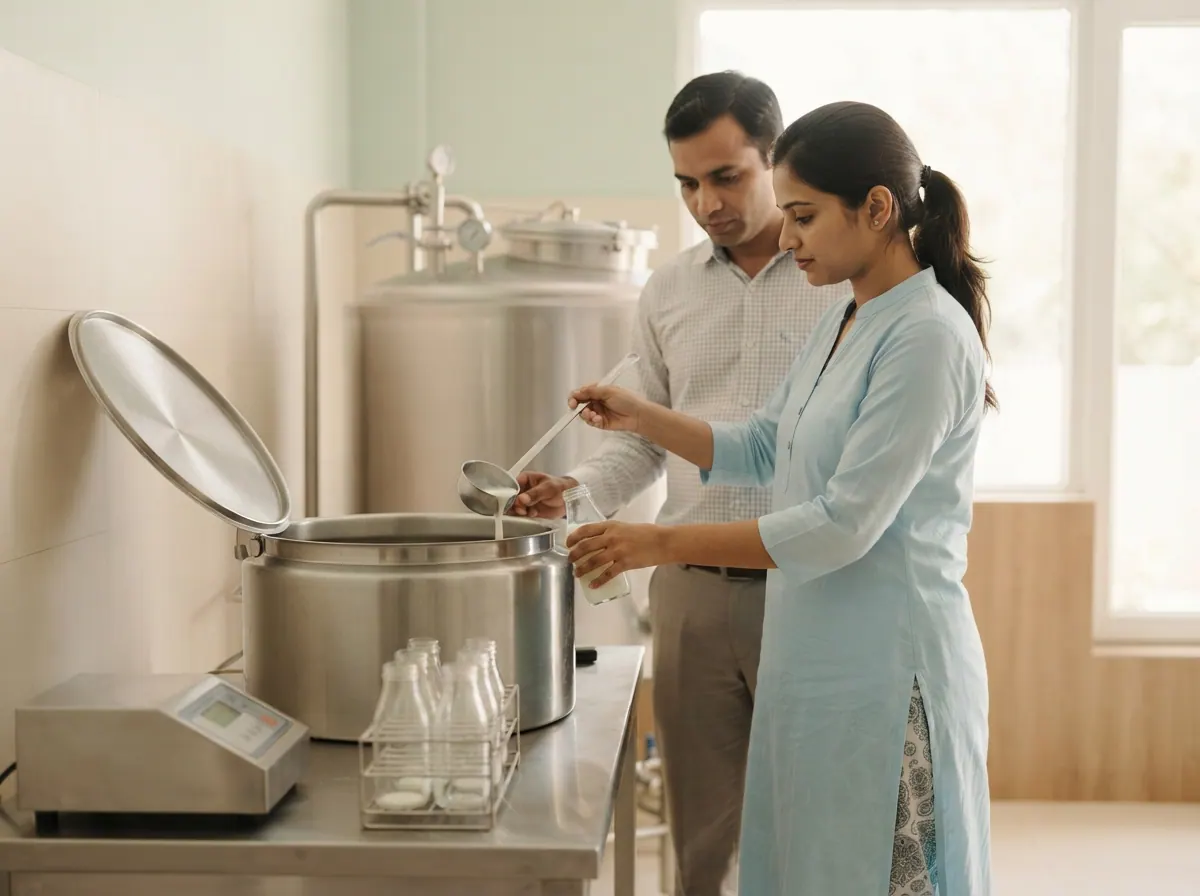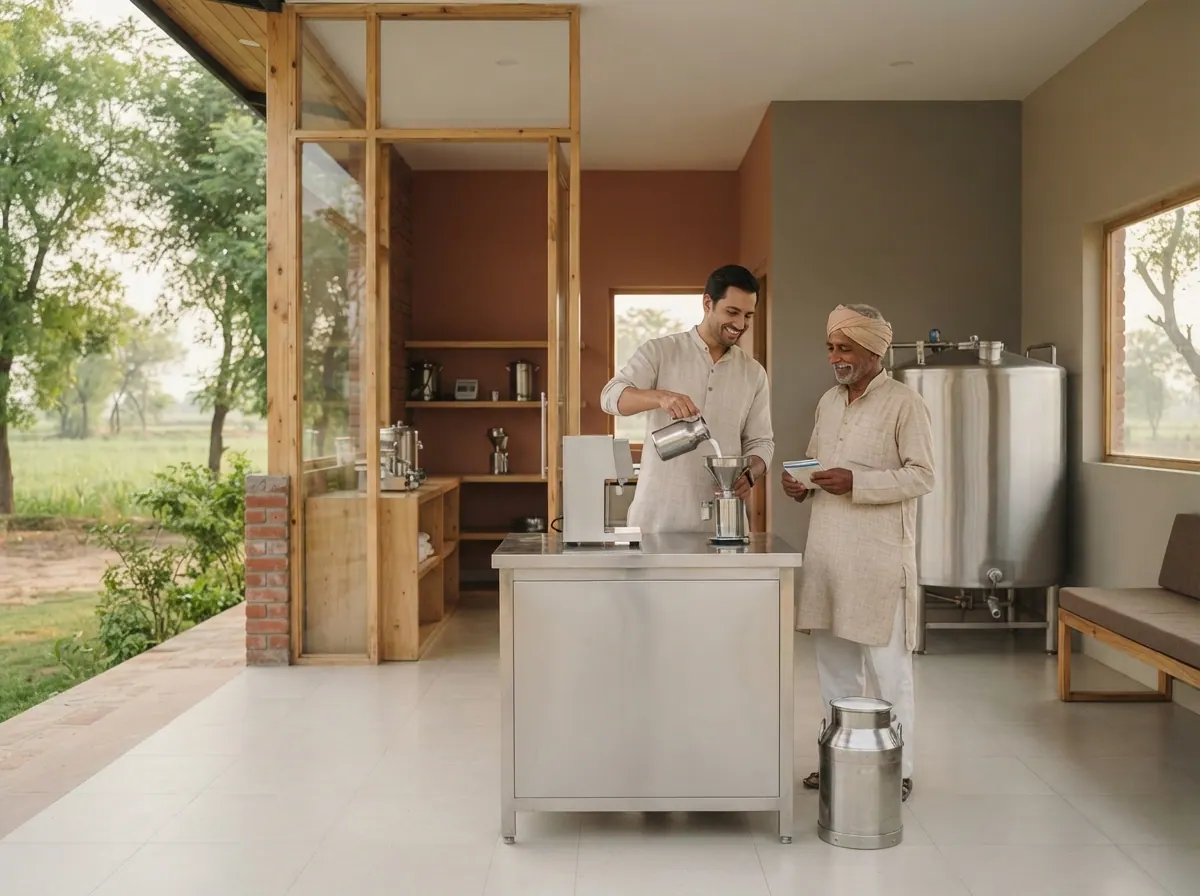
भारत में बेसिक मिल्क कलेक्शन सेंटर करीब ₹1–2.3 लाख से शुरू हो सकता है, और 1,000 लीटर के बल्क मिल्क कूलर वाले में करीब ₹5.5–11 लाख लगते हैं। चाहिए किसानों के पास साफ़ कमरा, मिल्क एनालाइज़र और तौल कांटा, केन, ऐसी डेयरी से टाई-अप जो टैंकर या वैन भेजे, डेयरी से पैसा मिलने से पहले किसानों को देने का चालू पैसा, और रोज़ पर्याप्त दूध। आपकी कमाई प्रति लीटर थोड़ी-सी होती है, इसलिए बिज़नेस मात्रा पर और हर लीटर को खराब होने से बचाने पर टिका है।
यहां दिए सभी आंकड़े अनुमान हैं। खर्च करने से पहले अपने इलाके के दाम ज़रूर जांच लें।
इसमें कितना खर्च आता है?
| मद | बेसिक सेंटर, चिलर नहीं | 1,000 लीटर बल्क कूलर के साथ |
|---|---|---|
| शेड, फ़र्श और नाली | ₹30,000–60,000 | ₹60,000–1.2 लाख |
| बल्क मिल्क कूलर (1,000 लीटर) | – | ₹3–5 लाख |
| मिल्क एनालाइज़र, तौल कांटा, कंप्यूटर या बिलिंग यूनिट | ₹30,000–80,000 | ₹50,000–1.2 लाख |
| जनरेटर या इन्वर्टर बैकअप | – | ₹40,000–1 लाख |
| केन, छन्नी, टेस्टिंग किट | ₹10,000–20,000 | ₹15,000–30,000 |
| मेज़, रजिस्टर, छोटा फ़र्नीचर | ₹5,000–10,000 | ₹10,000–20,000 |
| किसानों को देने का चालू पैसा | ₹30,000–60,000 | ₹1–2 लाख |
| कुल | करीब ₹1–2.3 लाख | करीब ₹5.5–11 लाख |
बल्क कूलर बड़ा खर्च है, और कई डेयरियों की अपनी पसंदीदा कंपनियां होती हैं या वे एग्रीमेंट के तहत खुद कूलर देती हैं। खरीदने से पहले डेयरी से पूछें।
कलेक्शन सेंटर कैसे चलता है?
- सुबह-शाम कलेक्शन। किसान दिन में दो बार दूध लाते हैं। आप उसे तौलते हैं, फ़ैट और SNF जांचते हैं, और हर किसान के नाम दर्ज करते हैं।
- रिजेक्शन और सफ़ाई। खट्टा या पानी मिला दूध वापस किया जाता है। हर चक्कर के बाद केन और उपकरण धोने ज़रूरी हैं।
- चिलिंग। बल्क कूलर सेंटर में दूध कुछ घंटों में कम तापमान पर ठंडा हो जाता है, ताकि टैंकर का इंतज़ार कर सके। बेसिक सेंटर में इसकी जगह दूध अगली वैन से जल्दी भेजा जाता है।
- डिस्पैच। डेयरी तय समय पर वैन या टैंकर से दूध उठाती है।
- किसान को भुगतान। किसानों को फ़ैट और SNF के हिसाब से तय चक्र पर पैसा मिलता है, अक्सर हर दस दिन या पखवाड़े में। आपका रिकॉर्ड उनके रिकॉर्ड से मेल खाना चाहिए।
इसमें कितनी कमाई हो सकती है?
मान लें बल्क कूलर सेंटर रोज़ करीब 1,000 लीटर इकट्ठा करता है, और मार्जिन करीब ₹1.8 प्रति लीटर है।
महीने की आमदनी
- 1,000 लीटर × 30 दिन = 30,000 लीटर
- 30,000 × ₹1.8 = ₹54,000
महीने का खर्च
- ऑपरेटर और टेस्टर = ₹10,000
- हेल्पर = ₹6,000
- कूलर की बिजली, और बिजली जाने पर डीज़ल = ₹6,000
- शेड का किराया = ₹4,000
- सफ़ाई का केमिकल, टेस्ट का सामान = ₹3,000
- चालू पैसे का ब्याज, करीब ₹3.5 लाख पर 12% = ₹3,500
- बाकी खर्च = ₹2,000
- कुल = ₹34,500
बचत: ₹54,000 − ₹34,500 = करीब ₹19,500 महीना, कूलर के लोन की किस्त से पहले।
अगर आप पांच साल में करीब 12% पर ₹4 लाख का लोन भी चुका रहे हैं, तो किस्त करीब ₹9,000 महीना है, और करीब ₹10,500 बचते हैं। गर्मी में दूध रोज़ 600 लीटर पर आ जाए तो आमदनी ₹32,400 रह जाती है और सेंटर घाटे में जाता है। 1,000 लीटर का एक खराब टैंकर, ₹35 लीटर के हिसाब से, ₹35,000 का नुकसान है, यानी लगभग दो महीने का profit।
शुरू करने से पहले क्या चाहिए?
- पास में काफ़ी किसान और पशु, जो साल भर रोज़ दो बार आपको दूध दें, गर्मी में भी जब दूध कम होता है।
- डेयरी से टाई-अप, जिसके दाम, टेस्टिंग तरीका, भुगतान चक्र और पिकअप का समय लिखित में हो।
- भरोसेमंद बिजली या बैकअप, क्योंकि बिना बिजली का बल्क कूलर सिर्फ़ महंगी टंकी है।
- ईमानदार टेस्टर। किसान फ़ैट की रीडिंग पर पैनी नज़र रखते हैं, और एक विवादित रीडिंग से पूरा गांव जा सकता है।
- चालू पैसा। आप किसानों को डेयरी के भुगतान से पहले पैसे देते हैं।
कदम दर कदम
- दूध गिनें। गांवों में घूमकर किसानों और पशुओं की सूची बनाएं, और पूछें कि हर कोई कितना और किसे बेचता है।
- डेयरी के खरीद दफ़्तर से बात करें। पूछें कि वे कौन-से सेंटर मानते हैं, उनका रेट, टेस्ट का तरीका, मार्जिन और भुगतान के दिन।
- जगह चुनें, ऐसी सड़क के पास जहां टैंकर आ सके, जहां पानी, नाली और बिजली हो।
- कमरा तैयार करें, धुलने लायक फ़र्श, केन के लिए चबूतरे और साफ़ पानी के साथ।
- उपकरण ऐसे सप्लायर से खरीदें जो आपके टेस्टर को ट्रेनिंग दे और मशीन की सर्विस भी करे।
- पहले कुछ किसानों के साथ टेस्ट करें, और फ़ैट की रीडिंग उन्हें खुलकर दिखाएं।
- रोज़ का रिकॉर्ड रखें: लीटर, फ़ैट, SNF, रिजेक्शन और भुगतान, और हर चक्र पर डेयरी की पर्चियों से मिलान करें।
- हर शिफ़्ट के बाद सब कुछ साफ़ करें और कूलर का तापमान जांचें।
कौन-से लाइसेंस लगते हैं?
नियम राज्य के हिसाब से बदलते हैं, इसलिए डेयरी और स्थानीय दफ़्तरों से पक्का करें:
- FSSAI रजिस्ट्रेशन या लाइसेंस, दूध संभालने और चिल करने के लिए। खाद्य सुरक्षा दफ़्तर से पूछें कि आपके आकार के लिए कौन-सा लगता है।
- डेयरी या सहकारी संस्था की मंज़ूरी, अगर आप किसी ख़ास डेयरी के साथ काम करते हैं।
- पंचायत या स्थानीय अनुमति शेड के लिए।
- बिजली कनेक्शन, कूलर के लिए सही टैरिफ़ पर।
- तौल कांटे और माप की जांच। अपने कांटे की जांच और मुहर के लिए वैधानिक माप-तौल दफ़्तर से पूछें।
- उद्यम और GST। आपके कमीशन पर टैक्स कैसे लगेगा, यह CA से पूछें।
- लोन और योजनाएं। कुछ डेयरी और पशुपालन योजनाओं ने चिलिंग उपकरणों में मदद की है। किसी मदद पर हिसाब टिकाने से पहले अपनी डेयरी और ज़िला दफ़्तर से पक्का करें।
क्या गलत हो सकता है?
- चिलिंग से पहले दूध खट्टा हो जाता है। गर्मी में कुछ घंटों की देरी बहुत दूध बिगाड़ सकती है। जल्दी ठंडा करें और समय पर भेजें।
- फ़ैट रीडिंग पर किसानों से विवाद। शक वाली मशीन या जल्दबाज़ी वाला टेस्टर भरोसा तोड़ता है। कैलिब्रेशन रखें और रीडिंग दिखाएं।
- किसान बेहतर दाम पर चले जाते हैं। निजी खरीदार एक हफ़्ते के लिए एक रुपया ज़्यादा दे देता है, और आपकी मात्रा घट जाती है।
- टैंकर नहीं आता। पिकअप में देर हो और दूध रुका रहे, तो नुकसान आपका या डेयरी का होता है, इसलिए यह लिखित में तय करें।
- डेयरी का देर से भुगतान। आप किसानों को हर दस दिन में पैसे देते हैं और डेयरी देर से देती है, इसलिए पैसा कम पड़ता है।
- मिलावटी दूध। पानी, डिटर्जेंट या दूसरी मिलावट वाला दूध वापस करना होगा, और किसानों को कारण बताना होगा।
ये हालात आपके सामने आएँगे
आप क्या करेंगे? हर फ़ैसले की एक क़ीमत है।
शुरुआत
A cooler costs several lakh but keeps milk safe for hours. A basic centre is cheap but depends on a quick van.
- Buy a 1,000-litre cooler: Costly, milk stays fresh
- Start with a basic centre: Cheap, spoilage risk in summer
The dairy's officer promises a good margin and a daily pickup, but nothing is written down.
- Ask for terms in writing: Takes time, clear margin
- Start on the officer's word: Faster, later disputes
A cheap analyser reads fat roughly. A better one costs more and farmers trust its readings.
- Buy the better analyser: Costlier, fewer disputes
- Buy the cheap one: Saves money, arguments likely
A site on the road suits the tanker. A site inside the village is easier for farmers on foot.
- Rent the roadside shed: Higher rent, easy pickup
- Use a village room: Cheaper, hard for the van
The local private buyer pays cash at once. You can only pay after the dairy's cycle.
- Pay farmers weekly from savings: Cash tied up, farmers join
- Stick to the dairy cycle: Safe cash, fewer farmers
Power goes for hours in your village. A cooler without backup warms up and spoils milk.
- Buy a generator: Costly, milk stays cold
- Rely on the grid: Saves money, big spoilage risk
The dairy officer asks if your centre is registered. The office says it takes two weeks.
- Register before opening: Fee and delay, clean papers
- Apply for temporary registration: Small fee, opens a little later
पहला महीना
A farmer shouts that the buffalo milk gave a low fat reading. Others are watching.
- Retest in front of everyone: Takes time, builds trust
- Stand by the reading: Quick, the farmer may leave
A regular farmer's can reads thin and low. The farmer swears nothing was added.
- Reject and explain: Lose the litres, keep standards
- Test it, accept only if clean: Costs a test, safe milk only
One farmer brought milk that has turned. If mixed with the rest it can spoil the whole batch.
- Reject that can: Lose a little, protect the batch
- Pay half, send it apart: Costs more, handled apart
Your helper says washing every can with hot water slows the morning round and adds fuel cost.
- Wash every can properly: Time and fuel, clean milk
- Wash with warm water, quickly: Less fuel, cans still clean
रोज़ का काम
An inspector checks your weighing scale. It has not been verified and stamped this year.
- Get it verified now: Fee, clean record
- Book verification, use a verified scale: Fee, a day of delay
Your register shows 180 litres more than the dairy credited last cycle.
- Audit your records fully: Costs a day, finds the cause
- Accept the dairy's figure: Quick, you lose the money
The tester who runs the analyser says another centre has offered a better salary.
- Raise the tester's pay: Higher cost, trusted tester
- Train a new person: Cheaper, mistakes at first
The dairy suggests a quick test kit for adulteration. Farmers may feel you are accusing them.
- Test every day with the kit: Kit cost, safer milk
- Test only when in doubt: Cheaper, miss some cases
Sweet makers want much more milk for a week and will pay a higher rate to your farmers directly.
- Supply sweet makers too: Better price, dairy upset
- Keep to the dairy: Steady, lose the extra
जब मुश्किल आए
Temperatures climb and the van is two hours late. Milk is warming in the cans.
- Chill with ice and send early: Ice cost, milk saved
- Shade the milk, call another van: Small cost, milk protected
The dairy tanker breaks down and will not reach you until tomorrow. The cooler is full.
- Arrange a private tempo: Costly, milk reaches the dairy
- Hold on ice, test before sending: Ice cost, tested milk only
A private dairy agent pays two rupees more per litre for a month to take away your farmers.
- Match with a small bonus: Cuts margin, keeps farmers
- Hold your rate: Margin kept, some leave
The dairy's payment is late by two weeks. Farmers expect their money on the usual day.
- Pay farmers from savings: Cash drained, trust kept
- Ask farmers to wait: Keep cash, trust drops
The bulk cooler's temperature reading rises overnight. A technician is two hours away.
- Call the technician at once: Visit fee, milk protected
- Move milk to ice, call tomorrow: Ice cost, milk protected
Cows in a nearby village are sick. Their milk is not fit to collect and farmers are worried.
- Stop collecting that milk: Lose litres, protect others
- Collect only from healthy herds: Extra checks, fewer litres
बढ़ाना
Farmers ask you to stock cattle feed and mineral mix. It brings more visits but ties up money.
- Stock feed and minerals: Cash tied up, loyal farmers
- Stay with milk only: Simple, no extra income
A vet offers to hold a health camp at your centre. You would pay for tents and tea.
- Host the camp: Small cost, farmer goodwill
- Skip the camp: No cost, no goodwill
Farmers in the next village ask you to open a second collection point. It means a new room and tester.
- Open a second point: Costly, more litres
- Collect their milk by van: Cheaper, more spoilage risk
In winter milk flows more and your cooler overflows. A bigger cooler costs a lot.
- Buy a 2,000-litre cooler: Costly, room to grow
- Send milk to dairy twice daily: Higher van cost, no big spend
A company offers rooftop solar for your cooler. It costs a lot but could lower your bill.
- Install solar: Costly, lower bills later
- Keep paying the bill: No spend, bills stay
A supplier offers an electronic unit that prints slips and records every farmer's milk automatically.
- Buy the unit: Costly, fewer disputes
- Keep the manual register: Cheap, slow and error-prone
A bank offers a loan to upgrade your equipment, but your margins are thin in summer months.
- Take the loan: Upgrade now, instalments
- Upgrade slowly from profit: Safer, slower
Your accountant says your commission may need registration as turnover grows.
- Ask a CA, register if needed: CA fee, clean books
- Track turnover, register at limit: Free, a notice is unlikely
क्या यह आपके लिए सही है?
मिल्क कलेक्शन सेंटर उनके लिए ठीक है जो दूध उत्पादक इलाके में रहते हैं, कई किसानों को जानते हैं, सुबह-शाम सेंटर पर रह सकते हैं और ईमानदार रिकॉर्ड रखते हैं। जिनके इलाके में पशु कम हैं, या जो बिना जल्दी उठे आसान कमाई चाहते हैं, उनके लिए यह कम ठीक है।
एक अच्छी जांच: कूलर खरीदने से पहले दो हफ़्ते डेयरी के टेस्टर के साथ किसी गांव के कलेक्शन पॉइंट पर बैठकर लीटर गिनें। अगर रोज़ का दूध आपके ब्रेक-ईवन से काफ़ी कम है, तो छोटा शुरू करें या पास का कोई और गांव देखें।