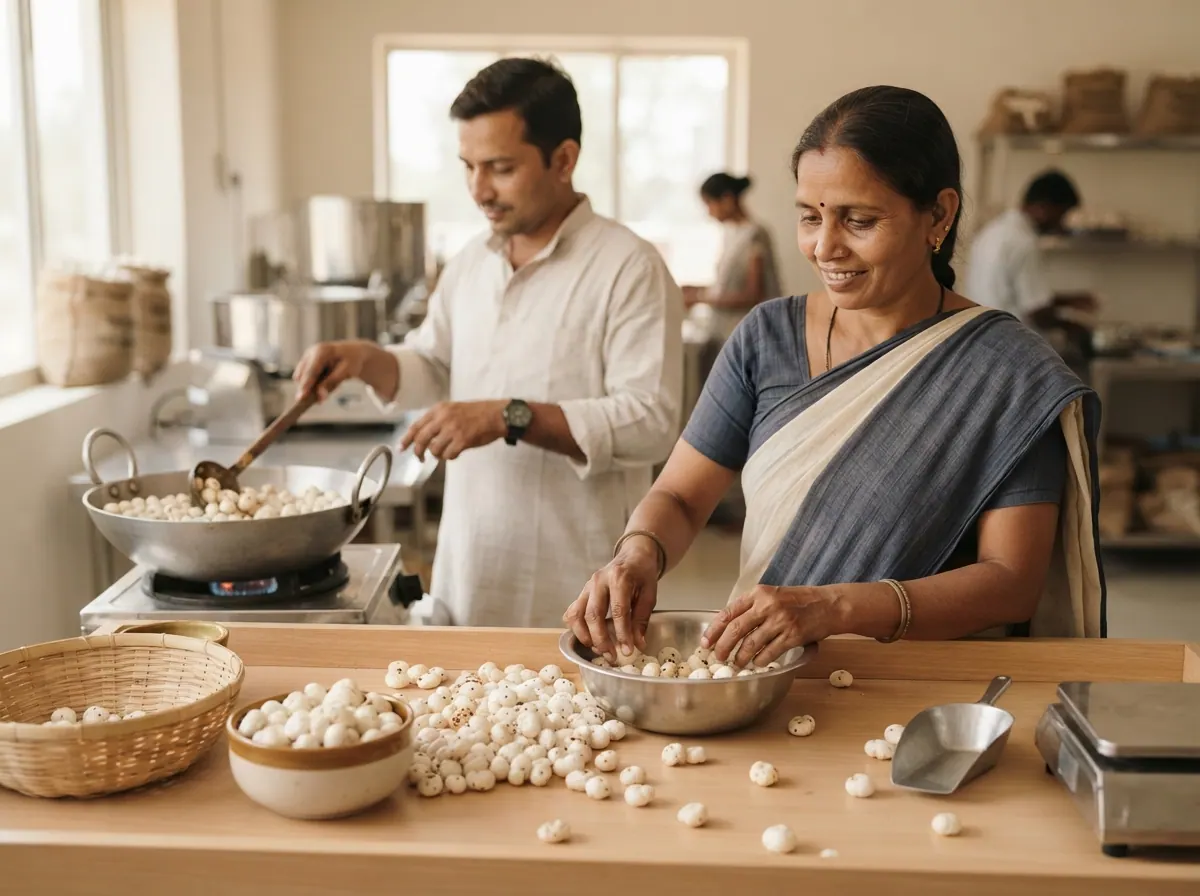
मखाना (फॉक्स नट) की खेती एक एकड़ तालाब या खेत में, पानी का साधन पहले से हो तो, करीब ₹60,000–1.5 लाख से शुरू हो सकती है, और छोटी प्रोसेसिंग और पॉपिंग यूनिट में करीब ₹2.2–4.6 लाख और लगते हैं। चाहिए रुका पानी, बीज, तालाब की तली से कटाई के लिए मज़दूर, बीज सुखाने और छांटने की जगह, भूनने और पॉप करने वाले सधे हाथ, और ऐसे खरीदार जो साफ़, बड़ा, सफ़ेद मखाना अच्छे दाम पर लें। सबसे अच्छा मार्जिन आमतौर पर प्रोसेसिंग में है, कच्चा बीज बेचने में नहीं।
यहां दिए सभी आंकड़े अनुमान हैं। खर्च करने से पहले अपने इलाके के दाम ज़रूर जांच लें।
इसमें कितना खर्च आता है?
| मद | 1 एकड़ में उगाना | छोटी पॉपिंग यूनिट |
|---|---|---|
| बीज या रोपने का माल | ₹10,000–20,000 | – |
| तालाब या खेत की तैयारी, मेड़, पानी | ₹20,000–60,000 | – |
| नाव, जाल, कटाई के औज़ार | ₹10,000–25,000 | – |
| सुखाने का फ़र्श और बोरे | ₹5,000–10,000 | ₹40,000–1 लाख (शेड) |
| बीज ग्रेडर या छलनी | – | ₹25,000–60,000 |
| भूनने और पॉप करने के उपकरण | – | ₹40,000–1.5 लाख |
| पैकिंग, सीलिंग, तौल | – | ₹25,000–50,000 |
| चालू पैसा | ₹15,000–35,000 | ₹90,000–1.5 लाख |
| कुल | करीब ₹60,000–1.5 लाख | करीब ₹2.2–4.6 लाख |
तालाब किराये का हो तो पट्टा जोड़ लें। कटाई के लिए नाव और गोताखोर किराये पर लेते हैं तो वह चालू खर्च है, इसलिए पूछें कि आपके इलाके में क्या चलन है।
मखाना कैसे होता है?
- उगाना। मखाना रुके पानी में उगता है, जिसकी सतह पर बड़े गोल पत्ते तैरते हैं। परंपरागत तालाब विधि में बीज तली में रहते हैं, और पीछे छूटे बीजों से हर साल पौधे आ जाते हैं। उथले खेत वाली विधि भी चलती है, इसलिए स्थानीय किसानों और कृषि दफ़्तर से पूछें कि आपके लिए कौन-सी ठीक है।
- कटाई। काले गोल बीज (जिन्हें गुरी कहते हैं) तालाब की तली से निकाले जाते हैं, आमतौर पर प्रशिक्षित मज़दूर गोता लगाकर, जो कठिन और धीमा काम है।
- सफ़ाई और छंटाई। बीज धोए, सुखाए और आकार से छांटे जाते हैं।
- भूनना और पॉप करना। बीज भूनकर चोट मारी जाती है ताकि खोल से सफ़ेद फूला मखाना (लावा) निकले। इसमें हुनर और जलने से बचने की सावधानी चाहिए, और कच्चे बीज से निकलने वाली मात्रा लोगों के अंदाज़े से काफ़ी कम होती है।
- बिक्री। मखाना ग्रेड के हिसाब से बिकता है, बड़े और ज़्यादा सफ़ेद दानों का सबसे अच्छा दाम मिलता है।
इसमें कितनी कमाई हो सकती है?
मान लें छोटी यूनिट कच्चा बीज खरीदकर पॉप किया मखाना बेचती है, मुख्य सीज़न में महीने में करीब 500 किलो कच्चा बीज चलाती है। ये आंकड़े सतर्क अंदाज़ा हैं।
महीने की आमदनी
- 500 किलो कच्चा बीज × करीब 40% पॉपिंग उपज = 200 किलो मखाना
- 200 किलो × करीब ₹750 प्रति किलो (मिले-जुले ग्रेड, थोक) = ₹1,50,000
महीने का खर्च
- कच्चा बीज: 500 किलो × ₹200 = ₹1,00,000
- दो प्रशिक्षित मज़दूर = ₹20,000
- ईंधन और बिजली = ₹5,000
- पैकिंग: 200 किलो × ₹15 = ₹3,000
- किराया, मरम्मत, बाकी = ₹5,000
- कुल = ₹1,33,000
बचत: ₹1,50,000 − ₹1,33,000 = करीब ₹17,000 महीना।
यह कम है। बीज के दाम बढ़ें या पॉपिंग उपज 35% रह जाए तो profit गायब हो जाता है। अपना बीज उगाएं, बड़े ग्रेड के लिए सावधानी से छांटें, और व्यापारी की जगह दुकानों को पैक्ड मखाना बेचें तो यह बढ़ता है।
शुरू करने से पहले क्या चाहिए?
- पानी जो आपके नियंत्रण में हो। तालाब, खेत या पट्टा, जिसमें बढ़वार के महीनों में पर्याप्त रुका पानी रहे।
- हुनरमंद मज़दूर। कटाई के लिए गोताखोर और पॉपिंग के लिए प्रशिक्षित हाथ। कुछ जगहों में यह काम पीढ़ियों के अभ्यास वाले परिवार करते हैं।
- सुखाने और रखने की जगह। गीला बीज खराब होता है और नम मखाना रंग खो देता है।
- खरीदार। थोक व्यापारी, पैकर और मिठाई या स्नैक बनाने वालों से ग्रेड और दाम की बात करें।
कदम दर कदम
- उगाने वाले इलाके में जाएं और कटाई के समय किसानों के साथ और एक पॉपिंग यूनिट में समय बिताएं।
- अपना मॉडल चुनें: सिर्फ़ उगाना, सिर्फ़ प्रोसेसिंग, या दोनों। एक साथ दोनों से शुरू न करें।
- जल स्रोत तैयार करें, सही गहराई और खरपतवार नियंत्रण के साथ, जैसा स्थानीय किसान बताएं।
- बीज लें भरोसेमंद स्रोत से, सही मौसम में।
- फ़सल की देखभाल करें और पानी का स्तर स्थिर रखें।
- कटाई, सफ़ाई और सुखाई ठीक से करें, बेचने या प्रोसेस करने से पहले।
- पॉपिंग सीखें किसी अनुभवी मज़दूर के साथ, फिर उपकरण खरीदने से पहले छोटा बैच आज़माएं।
- ग्रेड और पैकिंग करें और हर बैच की उपज दर्ज करें।
कौन-से लाइसेंस लगते हैं?
नियम राज्य के हिसाब से बदलते हैं, इसलिए स्थानीय दफ़्तरों से पक्का करें:
- तालाब का उपयोग या पट्टा। बहुत से तालाब समुदाय या सरकार के होते हैं, इसलिए लिखित पट्टा या अनुमति लें।
- बागवानी और मत्स्य योजनाएं। कुछ राज्य विभागों ने मखाना उगाने और प्रोसेसिंग की मदद की है। शर्तें बदलती हैं, इसलिए किसी मदद पर हिसाब टिकाने से पहले ज़िला दफ़्तर से पूछें।
- खाद्य लाइसेंस। मखाना पैक करके बेचने के लिए खाद्य सुरक्षा दफ़्तर में रजिस्ट्रेशन चाहिए, और ब्रांड के लिए सही लेबल और वज़न चाहिए।
- उद्यम और GST। छोटी प्रोसेसिंग यूनिट पर क्या लागू होता है, यह CA से पूछें।
- लोन। बैंक कृषि प्रोसेसिंग के लिए लोन देते हैं। शर्तें अपने बैंक से पक्की करें।
क्या गलत हो सकता है?
- कम पॉपिंग उपज। खराब भुनाई, नम बीज या अनाड़ी मज़दूर से बहुत दाने टूटते हैं और profit घटता है।
- गोता और कटाई में चोट। तालाब का काम कठिन है, और मज़दूरों को उचित मज़दूरी और देखभाल चाहिए।
- बीज के दामों में उतार-चढ़ाव। खराब सीज़न में कच्चा बीज तेज़ी से महंगा हो सकता है, और प्रोसेसिंग का खर्च बिक्री दाम से ऊपर निकल जाता है।
- नम भंडारण। नमी लेने पर मखाना रंग खो देता है और सस्ता बिकता है।
- एक ही व्यापारी को बेचना। आपके पास दूसरा खरीदार न हो तो अकेला व्यापारी कम दाम तय कर सकता है।
- पानी की दिक्कतें। जो तालाब जल्दी सूख जाए या बुरी तरह भर जाए, वह पूरा सीज़न बिगाड़ सकता है।
ये हालात आपके सामने आएँगे
आप क्या करेंगे? हर फ़ैसले की एक क़ीमत है।
शुरुआत
Your village pond is deep and has always grown makhana. A shallow field you own is easier to work but needs more setup.
- Lease the deep pond: Lease cost, harder harvest
- Prepare your shallow field: Setup cost, easier harvest
A trader sells seed cheaply but cannot say where it came from. A grower sells local seed at a higher price.
- Buy from the known grower: Costlier, better sprouting
- Buy from the trader: Cheaper, poor sprouting risk
The pond owner offers it for the season on their word. A written lease costs a small fee and some argument.
- Get a written lease: Fee and effort, safe
- Go on their word: Free, dispute risk
Experienced divers know the pond bottom but charge more. Young workers are cheaper but slower.
- Hire experienced divers: Higher pay, faster harvest
- Hire young workers: Cheaper, more seed missed
You plan a small popping unit. A trained family offers to teach you for a fee for two weeks.
- Pay for the training: Fee and time, skill gained
- Learn by trial: Free, many broken seeds
पहला महीना
Rain is late and the pond is falling. The plants need enough water to grow their big leaves.
- Pump water in: Diesel cost, plants survive
- Wait for rain: Free, weak plants
Weeds spread and block light from the makhana leaves. Clearing them is hard work.
- Hire workers to clear it: Labour cost, healthy crop
- Clear a little yourself: Cheaper, weeds return
Insects are damaging leaves in the warm weather. A spray is available but it may reach the water and fish.
- Ask the agriculture office: Slower, safe advice
- Pick pests off by hand: Slow labour, safe pond
रोज़ का काम
A worker cuts their foot on the thorny stems and cannot work for a week.
- Pay their treatment and wages: Costly, workers stay loyal
- Hire a replacement only: Cheap, workers lose trust
A sudden shower wets two tonnes of seed on the open floor. Damp seed spoils quickly.
- Cover and dry in a shed: Labour, saves most seed
- Leave it in the sun: Free, mould risk
Large seeds pop into bigger makhana and sell for more. Sorting takes labour and a sieve.
- Sort by size: Labour, better price
- Pop them all together: Quick, mixed grades
The only trader who visits offers a rate below what you hoped for. They take the whole stock.
- Accept their offer: Quick cash, lower price
- Find a packer or shop: Time and cost, better price
Your trained poppers say other units pay more. Skilled hands are scarce.
- Raise their pay: Higher cost, they stay
- Keep the same pay: Saves money, some leave
Checking seed moisture before popping could save broken batches. A meter costs a little.
- Buy the meter: Small cost, better yield
- Judge by feel: Free, uneven yield
Rats are eating dried seed in your store. Poison is cheap but can reach other food.
- Seal the store, use traps: Cost and work, safe seed
- Use glue boards, cover store: Cheap, slower
जब मुश्किल आए
Many seeds break or do not puff. Your workers say the seed was a little damp.
- Dry seed longer and retest: Time lost, better yield
- Keep popping as is: No delay, more breakage
A worker burns their hand while striking hot seeds. The pan area has no guard or gloves.
- Pay care, add safety gear: Costly, safer work
- Give gloves now, guard later: Cheap gear, guard waits
A poor harvest pushes the raw seed price up by a quarter. Your sale price has not moved.
- Buy less and wait: Idle workers, no loss
- Buy at the high price: Keeps going, thin margin
Some stored makhana has taken in moisture and lost its white colour. Buyers refuse it at full price.
- Re-dry and repack it: Labour, small price cut
- Sell it as lower grade: Quick, low price
Floodwater breaks the bund and carries some seed away. Part of your crop is lost.
- Rebuild the bund now: Costly, saves what is left
- Wait till water falls: Free, more seed lost
बढ़ाना
Shops in the city ask for neat 250 g packs under a brand. It needs labels, sealing and food registration.
- Start branded packs: Setup and licence, better margin
- Keep selling in bulk: Simple, thin margin
A buyer wants to see your food registration before placing a big order.
- Get registered: Fee and papers, bigger orders
- Apply now, wait for approval: Slow, buyer may leave
Buying seed is costly and its price swings. A second pond could give your own seed, with more work.
- Lease another pond: Cost and work, steadier seed
- Keep buying seed: Simple, price risk
A supplier shows a machine that pops faster with fewer workers. It costs a lot and still needs skill.
- Buy the machine: Costly, steadier output
- Keep hand popping: Cheaper, slow and tiring
Several small growers offer you their seed each season if you pay on time and in advance.
- Offer a small advance: Cash tied up, steady supply
- Pay at delivery only: Safe, some go elsewhere
Buyers online ask for makhana in small packs. Courier cost and returns need handling.
- Start online selling: Effort and courier cost, better price
- Stay with local shops: Simple, lower price
A loan could double your popping capacity, but your sales so far depend on one or two buyers.
- Take the loan: More capacity, instalments
- Grow from profit: Safer, slower
A wholesaler wants proper tax invoices. Your sales so far have been plain cash slips.
- Register and invoice properly: CA fee, bigger buyers
- Register with a low-cost CA: Smaller fee, bigger buyers
Broken shells pile up. Some people use them as fuel for roasting and some sell them.
- Use them as roasting fuel: Saves fuel, needs a stove change
- Throw them out: No effort, no saving
Nearby farmers ask you to teach them to grow better seed. It takes time but secures supply.
- Hold a training day: Small cost, steadier supply
- Keep your methods private: No cost, tight supply
क्या यह आपके लिए सही है?
मखाना उनके लिए ठीक है जिनके पास भरोसेमंद जल स्रोत है या पट्टे पर मिल सकता है, जो प्रशिक्षित स्थानीय मज़दूरों के साथ काम कर सकते हैं, और जो एक सीज़न कमाई का इंतज़ार कर सकते हैं। जिन्हें ऐसे इलाके में जल्दी बिज़नेस चाहिए जहां रुका पानी नहीं है, या जिनके पास पॉपिंग के हुनरमंद हाथ नहीं हैं, उनके लिए यह कम ठीक है।
एक अच्छी जांच: एक कटाई का सीज़न अनुभवी किसान और प्रोसेसर के साथ बिताएं, फिर मशीन खरीदने से पहले 100 किलो बीज का छोटा ट्रायल चलाएं। अगर आपकी उपज और दाम इन आंकड़ों से मेल खाएं, तो सावधानी से बढ़ाएं।