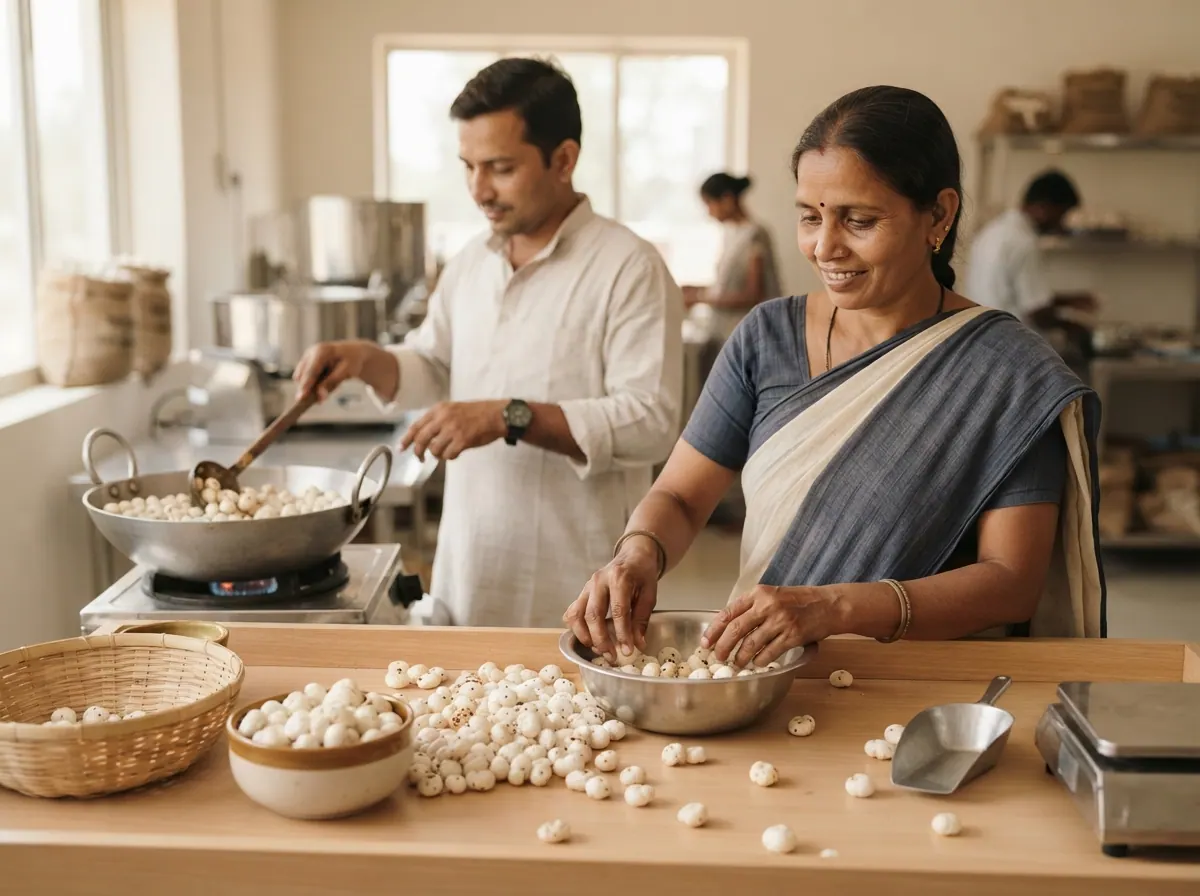
Growing makhana (fox nut) on one acre of pond or field can start at about ₹60,000–1.5 lakh if you already have a water body, and a small processing and popping unit costs about ₹2.2–4.6 lakh more. You need standing water, seed, labour to harvest from the pond bottom, a place to dry and sort the seed, trained hands to roast and pop it, and buyers who pay for clean, large, white makhana. The best margin is usually in processing, not in selling raw seed.
All figures here are estimates. Check prices near you before you spend.
What does it cost?
| Item | Grow on 1 acre | Small popping unit |
|---|---|---|
| Seed or planting material | ₹10,000–20,000 | – |
| Pond or field preparation, bund, water | ₹20,000–60,000 | – |
| Boat, nets, harvest tools | ₹10,000–25,000 | – |
| Drying floor and sacks | ₹5,000–10,000 | ₹40,000–1 lakh (shed) |
| Seed grader or sieves | – | ₹25,000–60,000 |
| Roasting and popping equipment | – | ₹40,000–1.5 lakh |
| Packing, sealing, weighing | – | ₹25,000–50,000 |
| Working money | ₹15,000–35,000 | ₹90,000–1.5 lakh |
| Total | about ₹60,000–1.5 lakh | about ₹2.2–4.6 lakh |
If the pond is leased, add the lease. If you hire boats and divers for harvest, that is a running cost, so ask what is usual in your area.
How does makhana work?
- Growing. Makhana grows in standing water, with big round leaves floating on top. In the traditional pond method the seeds sit at the bottom, and plants come up each year from the seeds left behind. A shallower field method is also used, so ask local growers and the agriculture office which suits you.
- Harvesting. The black round seeds (called gurri) are collected from the pond bottom, usually by trained workers who dive, which is hard and slow work.
- Cleaning and sorting. Seeds are washed, dried and graded by size.
- Roasting and popping. Seeds are roasted and struck so the white puffed makhana (lava) comes out of the shell. This takes skill and care to avoid burns, and the yield from raw seed is much lower than people expect.
- Selling. Makhana is sold by grade, with larger, whiter pieces getting the best price.
How much can it earn?
Take a small unit that buys raw seed and sells popped makhana, running at about 500 kg of raw seed in a month during the main season. These numbers are a cautious guess.
Monthly income
- 500 kg raw seed × about 40% popping yield = 200 kg makhana
- 200 kg × about ₹750 a kg (mixed grades, wholesale) = ₹1,50,000
Monthly costs
- Raw seed: 500 kg × ₹200 = ₹1,00,000
- Two trained workers = ₹20,000
- Fuel and power = ₹5,000
- Packing: 200 kg × ₹15 = ₹3,000
- Rent, repairs, other = ₹5,000
- Total = ₹1,33,000
Left over: ₹1,50,000 − ₹1,33,000 = about ₹17,000 a month.
That is thin. If seed prices rise or the popping yield falls to 35%, the profit disappears. It rises if you grow your own seed, sort carefully for large grades, and sell packed makhana to shops instead of to a trader.
What do you need before you start?
- Water you control. A pond, field or lease with enough standing water through the growing months.
- Skilled labour. Divers for harvest and trained hands for popping. In some places this is done by families with generations of practice.
- A drying and storage place. Wet seed spoils and damp makhana loses colour.
- A buyer. Talk to wholesalers, packers and sweet or snack makers about grade and price.
Step by step
- Visit a growing area and spend time with growers during harvest and with a popping unit.
- Choose your model: grow only, process only, or both. Do not start with both at once.
- Prepare the water body with the right depth and weed control, as local growers advise.
- Get seed from a reliable source in the right season.
- Look after the crop and keep the water level steady.
- Harvest, clean and dry the seed properly before selling or processing.
- Learn popping with an experienced worker, then try a small batch before buying equipment.
- Grade and pack the makhana and track yield from every batch.
Which licences apply?
Rules vary by state, so confirm with local offices:
- Pond use or lease. Many ponds are owned by the community or the government, so get a written lease or permission.
- Horticulture and fisheries schemes. Some state departments have supported makhana growing and processing. Terms change, so ask your district office before you plan around any support.
- Food licences. Packing and selling makhana needs registration with the food safety office, and for brands you will need correct labels and weights.
- Udyam and GST. Ask a CA what applies to a small processing unit.
- Loans. Banks give loans for agri processing. Confirm terms with your bank.
What goes wrong?
- Low popping yield. Poor roasting, damp seed or unskilled workers mean many seeds break and the profit shrinks.
- Dive and harvest injuries. Pond work is hard, and workers need fair pay and care.
- Seed price swings. Raw seed can rise sharply in a poor season, making your processing costs higher than your selling price.
- Damp storage. Makhana loses colour and sells cheap if it takes in moisture.
- Selling to one trader. A single trader can set a low price when you have no other buyer.
- Water problems. A pond that dries early or floods badly can ruin a season.
Situations you will face
What would you do? Each choice costs something.
Getting started
Your village pond is deep and has always grown makhana. A shallow field you own is easier to work but needs more setup.
- Lease the deep pond: Lease cost, harder harvest
- Prepare your shallow field: Setup cost, easier harvest
A trader sells seed cheaply but cannot say where it came from. A grower sells local seed at a higher price.
- Buy from the known grower: Costlier, better sprouting
- Buy from the trader: Cheaper, poor sprouting risk
The pond owner offers it for the season on their word. A written lease costs a small fee and some argument.
- Get a written lease: Fee and effort, safe
- Go on their word: Free, dispute risk
Experienced divers know the pond bottom but charge more. Young workers are cheaper but slower.
- Hire experienced divers: Higher pay, faster harvest
- Hire young workers: Cheaper, more seed missed
You plan a small popping unit. A trained family offers to teach you for a fee for two weeks.
- Pay for the training: Fee and time, skill gained
- Learn by trial: Free, many broken seeds
First month
Rain is late and the pond is falling. The plants need enough water to grow their big leaves.
- Pump water in: Diesel cost, plants survive
- Wait for rain: Free, weak plants
Weeds spread and block light from the makhana leaves. Clearing them is hard work.
- Hire workers to clear it: Labour cost, healthy crop
- Clear a little yourself: Cheaper, weeds return
Insects are damaging leaves in the warm weather. A spray is available but it may reach the water and fish.
- Ask the agriculture office: Slower, safe advice
- Pick pests off by hand: Slow labour, safe pond
Running it
A worker cuts their foot on the thorny stems and cannot work for a week.
- Pay their treatment and wages: Costly, workers stay loyal
- Hire a replacement only: Cheap, workers lose trust
A sudden shower wets two tonnes of seed on the open floor. Damp seed spoils quickly.
- Cover and dry in a shed: Labour, saves most seed
- Leave it in the sun: Free, mould risk
Large seeds pop into bigger makhana and sell for more. Sorting takes labour and a sieve.
- Sort by size: Labour, better price
- Pop them all together: Quick, mixed grades
The only trader who visits offers a rate below what you hoped for. They take the whole stock.
- Accept their offer: Quick cash, lower price
- Find a packer or shop: Time and cost, better price
Your trained poppers say other units pay more. Skilled hands are scarce.
- Raise their pay: Higher cost, they stay
- Keep the same pay: Saves money, some leave
Checking seed moisture before popping could save broken batches. A meter costs a little.
- Buy the meter: Small cost, better yield
- Judge by feel: Free, uneven yield
Rats are eating dried seed in your store. Poison is cheap but can reach other food.
- Seal the store, use traps: Cost and work, safe seed
- Use glue boards, cover store: Cheap, slower
When things go wrong
Many seeds break or do not puff. Your workers say the seed was a little damp.
- Dry seed longer and retest: Time lost, better yield
- Keep popping as is: No delay, more breakage
A worker burns their hand while striking hot seeds. The pan area has no guard or gloves.
- Pay care, add safety gear: Costly, safer work
- Give gloves now, guard later: Cheap gear, guard waits
A poor harvest pushes the raw seed price up by a quarter. Your sale price has not moved.
- Buy less and wait: Idle workers, no loss
- Buy at the high price: Keeps going, thin margin
Some stored makhana has taken in moisture and lost its white colour. Buyers refuse it at full price.
- Re-dry and repack it: Labour, small price cut
- Sell it as lower grade: Quick, low price
Floodwater breaks the bund and carries some seed away. Part of your crop is lost.
- Rebuild the bund now: Costly, saves what is left
- Wait till water falls: Free, more seed lost
Growing
Shops in the city ask for neat 250 g packs under a brand. It needs labels, sealing and food registration.
- Start branded packs: Setup and licence, better margin
- Keep selling in bulk: Simple, thin margin
A buyer wants to see your food registration before placing a big order.
- Get registered: Fee and papers, bigger orders
- Apply now, wait for approval: Slow, buyer may leave
Buying seed is costly and its price swings. A second pond could give your own seed, with more work.
- Lease another pond: Cost and work, steadier seed
- Keep buying seed: Simple, price risk
A supplier shows a machine that pops faster with fewer workers. It costs a lot and still needs skill.
- Buy the machine: Costly, steadier output
- Keep hand popping: Cheaper, slow and tiring
Several small growers offer you their seed each season if you pay on time and in advance.
- Offer a small advance: Cash tied up, steady supply
- Pay at delivery only: Safe, some go elsewhere
Buyers online ask for makhana in small packs. Courier cost and returns need handling.
- Start online selling: Effort and courier cost, better price
- Stay with local shops: Simple, lower price
A loan could double your popping capacity, but your sales so far depend on one or two buyers.
- Take the loan: More capacity, instalments
- Grow from profit: Safer, slower
A wholesaler wants proper tax invoices. Your sales so far have been plain cash slips.
- Register and invoice properly: CA fee, bigger buyers
- Register with a low-cost CA: Smaller fee, bigger buyers
Broken shells pile up. Some people use them as fuel for roasting and some sell them.
- Use them as roasting fuel: Saves fuel, needs a stove change
- Throw them out: No effort, no saving
Nearby farmers ask you to teach them to grow better seed. It takes time but secures supply.
- Hold a training day: Small cost, steadier supply
- Keep your methods private: No cost, tight supply
Is it right for you?
Makhana suits you if you have a reliable water body or can lease one, can work with trained local labour, and can wait a season for income. It suits you less if you want a quick business in a place with no standing water, or if you do not have access to skilled hands for popping.
A good test: spend a harvest season with an experienced grower and a processor, then run a small trial of 100 kg of seed before buying machines. If your yield and price match the numbers, scale up carefully.