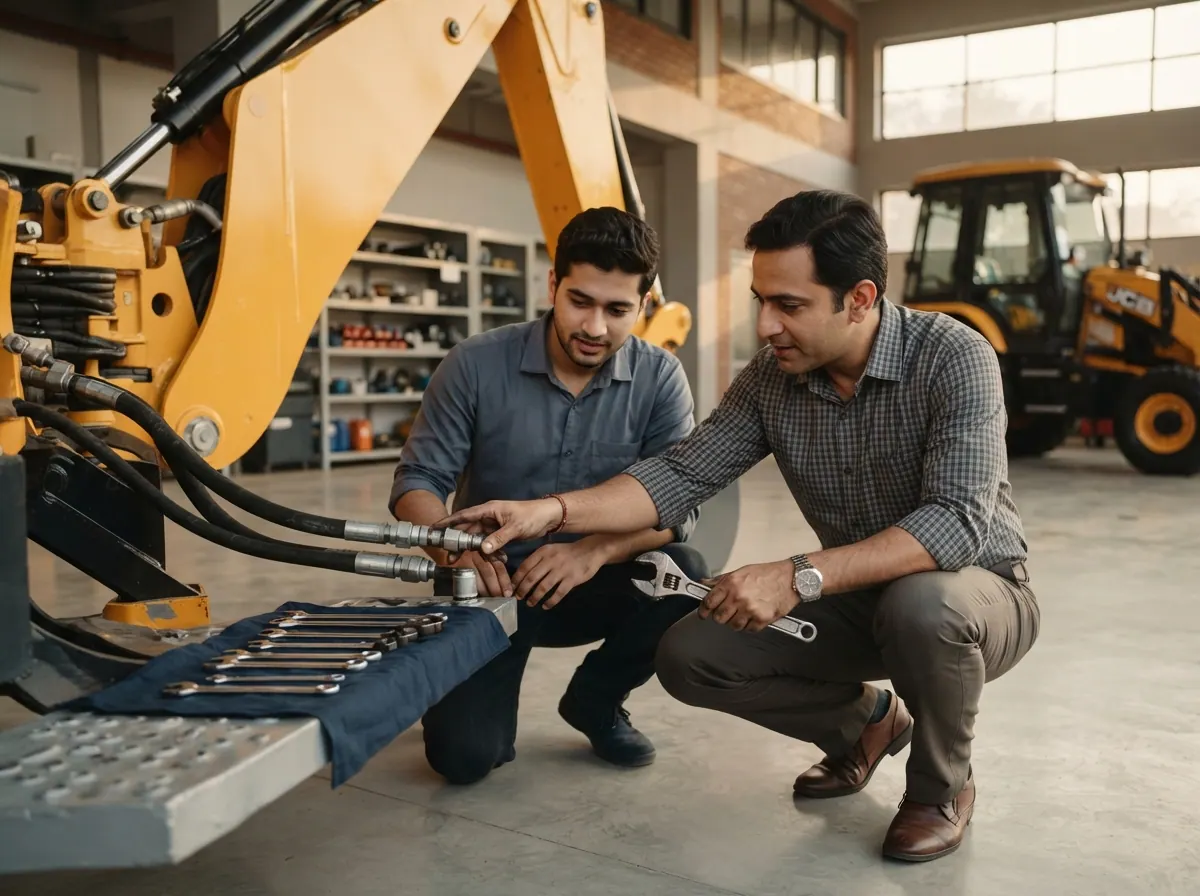
JCB किराये का बिज़नेस यानी आप एक बैकहो लोडर (पीली खुदाई-लोडर मशीन जिसे लोग JCB कहते हैं) खरीदते हैं और ऑपरेटर के साथ उसे बिल्डर, किसान, सड़क और नाली के ठेकेदारों और घर बनाने वालों को घंटे के हिसाब से किराये पर देते हैं। नई मशीन करीब ₹30–40 लाख की, पुरानी करीब ₹12–20 लाख की आती है, और कागज़ व रिज़र्व जोड़कर करीब ₹25–45 लाख मानकर चलें। यह EMI वाला बिज़नेस है। मुनाफा इस पर टिका है कि महीने में इंजन कितने घंटे चलता है और सीट पर कौन बैठा है।
यहां के सभी आंकड़े अनुमान हैं। पैसा लगाने से पहले अपने इलाके के दाम देख लें।
इसमें कितना खर्च आता है?
| चीज़ | अनुमान |
|---|---|
| नई बैकहो लोडर मशीन | ₹30–40 लाख |
| या पुरानी मशीन (कुछ साल पुरानी) | ₹12–20 लाख |
| रजिस्ट्रेशन, रोड टैक्स, बीमा | ₹1–2.5 लाख |
| बकेट के दांत, स्पेयर होज़, टूल किट | ₹30,000–60,000 |
| हाइड्रोलिक ब्रेकर (वैकल्पिक) | ₹2–4 लाख |
| ग्रीसिंग किट, जैक, छोटा शेड या पार्किंग | ₹20,000–50,000 |
| कामकाजी रिज़र्व (डीज़ल, तनख्वाह, मरम्मत) | ₹1–2 लाख |
| कुल (पुरानी से नई, ब्रेकर सहित) | करीब ₹17–50 लाख |
ज़्यादातर लोग 20 से 30 प्रतिशत खुद लगाते हैं और बाकी लोन लेते हैं। लोन की शर्तें अलग-अलग होती हैं, इसलिए दो-तीन बैंकों से तुलना करें और कुल ब्याज पढ़ें। पुरानी मशीन लाखों बचाती है, पर सिर्फ सर्विस रिकॉर्ड और बाहर के मैकेनिक की जांच के साथ ही लें।
इसमें कितनी कमाई हो सकती है?
मान लें ₹30 लाख की मशीन है, ₹10 लाख डाउन पेमेंट और ₹20 लाख का लोन, EMI करीब ₹43,000, रेट ₹1,300 प्रति घंटा (डीज़ल सहित), और डीज़ल खर्च करीब 6 लीटर प्रति घंटा × ₹90 = ₹540 प्रति घंटा।
अच्छा महीना (150 घंटे)
- आमदनी: 150 × ₹1,300 = ₹1,95,000
- डीज़ल: 150 × ₹540 = ₹81,000
- ग्रीसिंग, तेल, घिसावट: 150 × ₹150 = ₹22,500
- ऑपरेटर की तनख्वाह = ₹20,000
- EMI = ₹43,000
- बीमा, टैक्स और छोटे खर्च = ₹5,000
- कुल खर्च = ₹1,71,500
- बचत: ₹1,95,000 − ₹1,71,500 = ₹23,500
सुस्त महीना (80 घंटे, बरसात या निर्माण में मंदी)
- आमदनी: 80 × ₹1,300 = ₹1,04,000
- डीज़ल ₹43,200 + घिसावट ₹12,000 + ऑपरेटर ₹20,000 + EMI ₹43,000 + छोटे खर्च ₹5,000 = ₹1,23,200
- बचत: ₹1,04,000 − ₹1,23,200 = −₹19,200
पूरे साल का हिसाब (7 अच्छे महीने, 5 सुस्त)
- 7 × ₹23,500 = ₹1,64,500
- 5 × −₹19,200 = −₹96,000
- कुल: करीब ₹68,500
₹30 लाख की मशीन के लिए यह ज़्यादा नहीं है। अगर आप खुद चलाएं और ₹20,000 की तनख्वाह बचाएं, तो ₹2.4 लाख और बचते हैं, यानी साल में करीब ₹3.1 लाख, या महीने में ₹25,700। लोन से मशीन भी आपकी बनती जाती है, और लोन खत्म होने पर उतने ही घंटों में बहुत ज़्यादा बचता है। हाइड्रोलिक ब्रेकर या सुस्त महीनों के अतिरिक्त काम घंटे का रेट बढ़ा सकते हैं, लेकिन ब्रेकर लाखों का आता है और मशीन जल्दी घिसता है।
शुरू करने से पहले क्या चाहिए?
- पक्के ग्राहकों की सूची, सिर्फ प्लान नहीं। बिल्डर, प्लॉट मालिक, खेत-तालाब और बोरवेल की साइट, नाली के ठेकेदार और ईंट भट्टे वाले मशीन मालिकों को फोन करते हैं। उनसे पूछें कि क्या देते हैं और कितनी देर से देते हैं।
- भरोसे का कुशल ऑपरेटर, या खुद की ट्रेनिंग। अच्छा ऑपरेटर डीज़ल, बकेट के दांत और हाइड्रोलिक होज़ बचाता है। बुरा तीनों तोड़ता है।
- पास में मैकेनिक और पहुंच में सर्विस सेंटर। हफ्ते भर खड़ी मशीन का मतलब हफ्ते भर की EMI बिना कमाई।
- सुस्त महीनों और मरम्मत का रिज़र्व। हाइड्रोलिक पंप या ट्रांसमिशन की मरम्मत लाखों में जा सकती है।
कदम-दर-कदम
- नई या पुरानी तय करें: दो डीलर और दो पुरानी मशीन बेचने वालों से मिलकर, दोनों से 3 साल के मरम्मत खर्च का अंदाज़ा पूछें।
- ऐसी EMI वाला लोन चुनें जो सुस्त महीने में भी भर सकें, अच्छे महीने में नहीं।
- मशीन का रजिस्ट्रेशन ठीक से कराएं और बीमा लें, जिसमें मशीन का नुकसान और थर्ड-पार्टी जोखिम शामिल हो।
- ऑपरेटर रखें या सिखाएं, और तनख्वाह व डीज़ल का नियम लिखकर तय करें।
- रेट तय करें: घंटे का रेट डीज़ल सहित, या ग्राहक डीज़ल दे तो कम। छोटे काम के लिए 3 से 4 घंटे का न्यूनतम और दूर की साइट के लिए शिफ्टिंग चार्ज जोड़ें।
- हर काम की पर्ची रखें: ग्राहक, साइट, मीटर से शुरू और खत्म का घंटा, डीज़ल और भुगतान।
- ठेकेदारों और प्लॉट डीलरों से दोस्ती रखें। ज़्यादातर काम फोन पर उन्हीं दर्जन भर लोगों से आते हैं।
- सर्विस घंटों के हिसाब से कराएं, अंदाज़े से नहीं। तेल, फिल्टर, ग्रीस और होज़ का लॉग रखें।
कौन से लाइसेंस और कागज़ चाहिए?
- गाड़ी का रजिस्ट्रेशन, रोड टैक्स और बीमा। बैकहो लोडर कंस्ट्रक्शन उपकरण वाहन माने जाते हैं, और नियम राज्य के हिसाब से अलग हैं। RTO में पूछ लें।
- ऑपरेटर का लाइसेंस सही श्रेणी का, और साफ रिकॉर्ड। श्रेणी RTO से पक्की करें।
- GST किराये की आमदनी पर, अगर टर्नओवर सीमा से ऊपर है या ग्राहक बिल मांगे। CA से पूछें।
- काम की अनुमति, जैसे सड़क, पाइपलाइन या केबल के पास खुदाई, जो ग्राहक या स्थानीय विभाग को लेनी पड़ सकती है। ग्राहक पक्का न बताए तो काम शुरू न करें।
- खनन और रेत के नियम। साइट पर मिट्टी या रेत खोदने के लिए सरकारी अनुमति लग सकती है। ग्राहक दिखाए बिना वह काम न लें।
क्या गलत हो सकता है?
- केबल या पाइप टूटना। ज़मीन के नीचे की बिजली केबल, पानी की मेन या गैस लाइन में खुदाई से पैसा जाता है और लोग घायल भी हो सकते हैं। बकेट डालने से पहले ग्राहक से पूछें कि नीचे लाइनें कहां हैं।
- ऑपरेटर का निजी काम। घंटों का पैसा वह रखता है और डीज़ल आपका जलता है। मीटर लॉग और बीच-बीच में ग्राहक को फोन पकड़ लेता है।
- बरसात के बाद खाली हफ्ते। मानसून और निर्माण में सुस्ती में मशीन खड़ी रहती है और EMI चलती रहती है।
- ग्राहक का देर से भुगतान। जो ठेकेदार अपना बिल पास होने के बाद देता है, वह महीनों तक आपका बकाया रख सकता है।
- घंटे और बिल का मेल न होना। बिना मीटर जांच वाली साइट पर रोज़ 2 घंटे का झगड़ा आपका पूरा मार्जिन खा जाता है।
- गलत काम पर हैमर। ब्रेकर का काम ज़्यादा देता है, पर हाइड्रोलिक और बूम पर ज़ोर डालता है।
- रेतीली या गीली मिट्टी में ओवरलोड। मशीन धंस जाती है और खींचने में आधा दिन और जाता है।
ये हालात आपके सामने आएँगे
आप क्या करेंगे? हर फ़ैसले की एक क़ीमत है।
शुरुआत
A three-year-old machine costs lakhs less than new. The seller shows no service book, and the hour meter looks low.
- Buy new from the dealer: Big EMI, warranty and service
- Buy the used machine: Lower EMI, repair risk
A mechanic will check the pump, boom pins and engine for a fee. The seller says another buyer is coming today.
- Pay for the inspection: Costs a day, avoids surprises
- Buy on trust today: Saves the fee, hidden fault risk
A bigger down payment cuts the EMI, but leaves you with little working cash. A small one makes slow months harder.
- Put down 30 percent: Smaller EMI, thin cash reserve
- Put down 20 percent: Bigger EMI, more cash kept
A skilled operator asks for a high wage. You could learn in a few months, but the machine would run less meanwhile.
- Hire the skilled operator: Monthly wage, steady hours
- Learn on the job yourself: No wage, slow work, wear
The machine cannot work on paper until it is registered and insured. An agent offers to rush it, and a client is waiting.
- Wait for proper papers: Lose a week of work
- Pay the agent, wait days: Extra fee, stay legal
Others here charge by the hour and clients argue about idle time. You could add a minimum number of hours per job.
- Hourly with 3-hour minimum: Safe income, small jobs lost
- Plain hourly rate: Easy to sell, short unpaid trips
A breaker lets you take rock and slab-breaking jobs at a higher rate. It also needs strong hoses and wears the machine.
- Buy the breaker: Costs lakhs, higher hourly rate
- Rent a breaker per job: No spend, thin margin on it
पहला महीना
A builder with a big site wants 40 hours of digging now and promises payment after their own bill is passed.
- Take it on credit: Big work, cash may be late
- Ask for advance first: Safer, they may go to others
The plot owner says there is nothing underground. You see a faint trace of a cable at the edge of the pit.
- Stop and have it checked: Lose hours, avoid disaster
- Ask the utility to mark it: Short delay, safe
The tank empties faster than the hour meter explains. The operator says the soil is hard.
- Log fuel each morning: Takes effort, stops leaks
- Accept their explanation: No friction, losses may go on
A client disputes two hours on the bill. The meter shows them, but they say the machine was waiting.
- Cut the two hours: Lose money, keep the client
- Stand by the meter: Full payment, they may leave
The wheels sank on a wet plot. The client wants to continue, and a tow costs half a day of income.
- Hire a tractor to pull it: Cost now, machine unharmed
- Free it with the bucket: Cheaper, strain on the boom
A neighbour says they saw your machine digging somewhere you did not send it. Your hours look low this week.
- Confront them with the log: Tension, may lose them
- Install a GPS tracker: Costs money, stops it quietly
रोज़ का काम
Building work is paused and EMI is due. A farmer offers pond digging at a low rate in wet land.
- Take the pond work: Covers the EMI, hard on machine
- Rest the machine: EMI from savings
A contractor offers 120 hours a month at a lower rate, but pays 45 days late.
- Sign the monthly deal: Steady hours, late payment
- Keep walk-in clients: Better rate, uneven hours
The 500-hour service is due, but three sites want the machine all week. The dealer needs one full day.
- Service it now: Lose a day, machine safe
- Delay till next week: Keep income, engine wear
Hard murram has worn the teeth down. A new set costs a fair amount, and digging gets slower each day.
- Replace the teeth: Cost now, faster digging
- Run them a month more: Saves now, slower, more diesel
A new JCB in the next area charges ₹150 less an hour. Two regular clients asked if you can match it.
- Match the rate: Thin margin, clients stay
- Hold the rate: Better margin, lose some jobs
A trader offers high pay to load sand from a riverbed at night. They say permissions are taken care of.
- Refuse without papers: Lose the money, stay legal
- Ask for the permit copy: Slower, check first
Oil sprayed and work stopped. A mechanic can come in two hours for double pay, or tomorrow at the normal rate.
- Pay for the urgent fix: Costly, client stays happy
- Wait until tomorrow: Cheaper, lose the day
A rival offered them ₹4,000 more a month. They are the best operator you have found, and clients ask for them.
- Raise their wage: Higher cost, keeps the skill
- Let them go, hire new: Lower wage, weaker work
जब मुश्किल आए
A buried municipal pipe burst and a lane is flooding. The client says it was not marked, and the civic office is on its way.
- Own up, offer to share cost: Pay now, record stays honest
- Blame the client: No cost now, legal fight risk
A worker stepped too close and was hurt. They are out of danger, but the family wants compensation.
- Cover the treatment: Costly, right thing to do
- Say the site was at fault: No payout, bad name
Money you expected has not come in. The EMI is due on Friday and a late charge applies.
- Borrow short term: Interest cost, record clean
- Pay the EMI late: Keeps cash, penalty and note
The workshop says it needs an overhaul now. A full rebuild is expensive and the machine will be idle for two weeks.
- Overhaul properly: Big bill, machine good for years
- Patch and keep working: Cheaper, may fail again
They avoid your calls and say the payment is stuck with their own client.
- Take half now, settle: Part money, peace kept
- Send a legal notice: Cost and delay, may recover all
बढ़ाना
You turn away work every week. A second machine means another EMI and another operator to manage.
- Buy a second machine: Big new loan, double the jobs
- Use better planning first: Small cost, tighter schedules
Clients ask you to carry the soil away too. A used tipper costs a lot but earns from the same site visit.
- Buy a used tipper: Another EMI, more income per site
- Tie up with a tipper owner: Small commission, less control
A large builder wants proper invoices and a GST number before giving regular work. It adds paperwork and tax.
- Register for GST: Paperwork, bigger clients
- Stay with cash clients: Simple, smaller jobs only
A municipality wants machines for drain cleaning at a fixed rate, with payment after a long process.
- Quote for the work: Steady work, slow payment
- Skip it: No risk, no steady work
क्या यह आपके लिए ठीक है?
यह उनके लिए ठीक है जो मशीन खुद चला सकते हैं या ऑपरेटर पर बारीकी से नज़र रख सकते हैं, इलाके के बिल्डर और प्लॉट मालिकों को जानते हैं, और सुस्त महीनों में बड़ी EMI संभाल सकते हैं। खुद चलाने वाले मालिक सिर्फ ऑपरेटर रखने वालों से कहीं बेहतर करते हैं।
यह उनके लिए कम ठीक है जो सिर्फ "निवेश" के लिए खरीदकर दूर रहना चाहते हैं, या जहां कुछ बड़ी साइटों के लिए पहले से बहुत मशीनें हैं। लोन पर दस्तखत करने से पहले एक महीना किसी चालू मालिक के साथ रहें और हर घंटा और हर बकाया बिल लिखें। फिर फैसला करें।