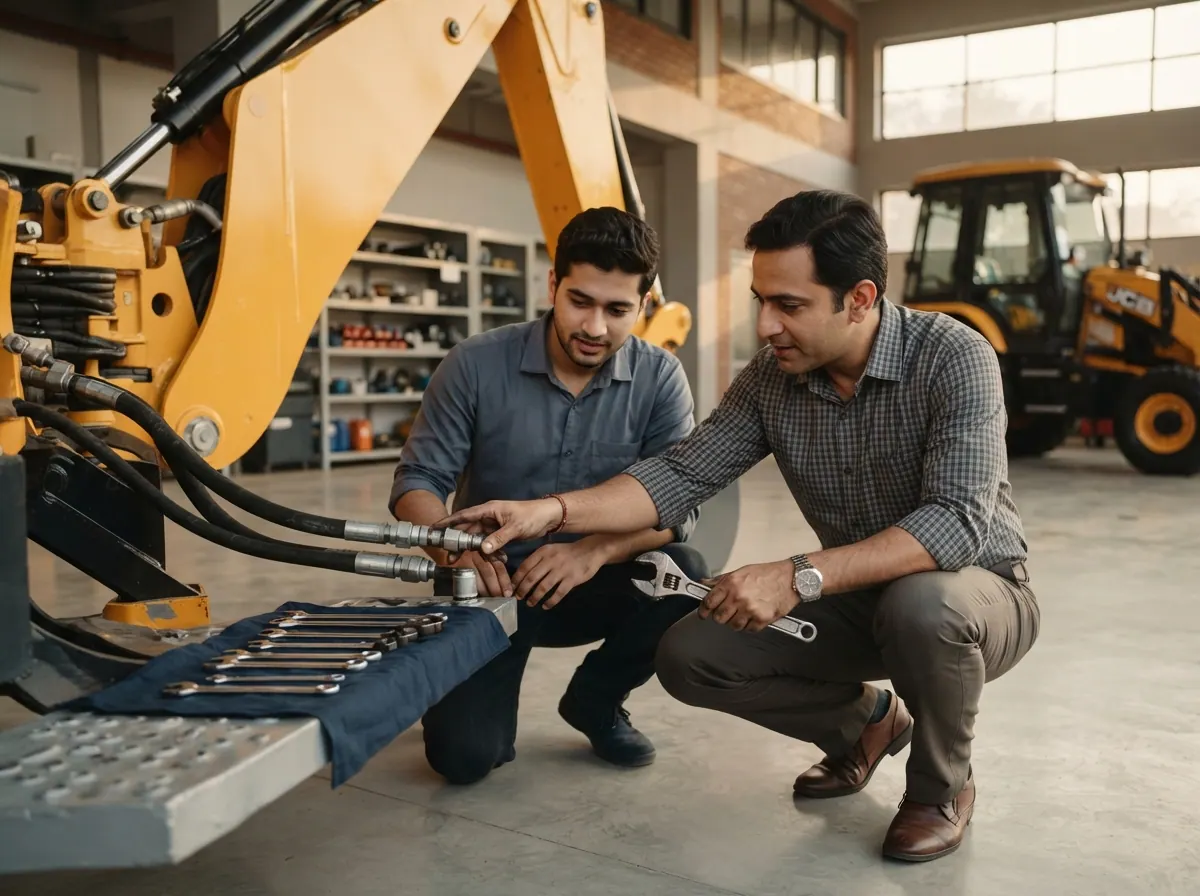
A JCB rental business means you own a backhoe loader (the yellow digger-loader most people call a JCB) and rent it, with an operator, to builders, farmers, road and drain contractors, and house owners at an hourly rate. A new machine costs roughly ₹30–40 lakh, a used one about ₹12–20 lakh, and with papers and a cash reserve you should plan on about ₹25–45 lakh. It is an EMI business. Whether you make money depends on the hours the engine runs each month, and on who is in the seat.
All figures here are estimates. Check prices near you before you spend.
What does it cost?
| Item | Estimate |
|---|---|
| New backhoe loader | ₹30–40 lakh |
| OR used machine (a few years old) | ₹12–20 lakh |
| Registration, road tax, insurance | ₹1–2.5 lakh |
| Bucket teeth, spare hoses, tool kit | ₹30,000–60,000 |
| Hydraulic breaker (optional) | ₹2–4 lakh |
| Greasing kit, jack, small shed or parking | ₹20,000–50,000 |
| Working reserve (diesel, wages, repairs) | ₹1–2 lakh |
| Total (used to new, with breaker) | about ₹17–50 lakh |
Most people put 20 to 30 percent down and take a loan. Loan terms vary, so compare two or three lenders and read the total interest. A used machine saves lakhs, but buy only with service history and an independent mechanic's inspection.
How much can it earn?
Assume a ₹30 lakh machine with ₹10 lakh down and a ₹20 lakh loan, an EMI of about ₹43,000, a rate of ₹1,300 an hour with diesel included, and diesel use of about 6 litres an hour × ₹90 = ₹540 an hour.
A busy month (150 hours)
- Income: 150 × ₹1,300 = ₹1,95,000
- Diesel: 150 × ₹540 = ₹81,000
- Greasing, oil, wear: 150 × ₹150 = ₹22,500
- Operator wage = ₹20,000
- EMI = ₹43,000
- Insurance, tax and small costs = ₹5,000
- Total costs = ₹1,71,500
- Left over: ₹1,95,000 − ₹1,71,500 = ₹23,500
A slow month (80 hours, monsoon or a building slump)
- Income: 80 × ₹1,300 = ₹1,04,000
- Diesel ₹43,200 + wear ₹12,000 + operator ₹20,000 + EMI ₹43,000 + small costs ₹5,000 = ₹1,23,200
- Left over: ₹1,04,000 − ₹1,23,200 = −₹19,200
Over a year (7 busy months, 5 slow)
- 7 × ₹23,500 = ₹1,64,500
- 5 × −₹19,200 = −₹96,000
- Total: about ₹68,500
That is not much for a ₹30 lakh machine. If you operate it yourself and skip the ₹20,000 wage, you keep ₹2.4 lakh more, so about ₹3.1 lakh a year, or ₹25,700 a month. The loan also builds ownership, and once it ends, the same hours leave far more. A hydraulic breaker or extra jobs in slow months can lift the hourly rate, but the breaker costs lakhs and wears the machine faster.
What do you need before you start?
- A list of regular clients, not only a plan. Builders, plot owners, farm pond and borewell sites, drain contractors and brick kiln owners all call machine owners. Ask them what they pay and how late they pay.
- A skilled operator you can trust, or your own training. A good operator saves diesel, bucket teeth and hydraulic hoses. A bad one breaks all three.
- A mechanic nearby, and a service centre within reach. A machine down for a week loses a week of EMI cover.
- A reserve for slow months and repairs. A hydraulic pump or a transmission repair can cost lakhs.
Step by step
- Decide new or used after visiting two dealers and two used-machine sellers, and ask both for a 3-year repair cost estimate.
- Choose a loan with an EMI you can pay in a slow month, not a busy one.
- Register the machine properly and insure it, including damage and third-party risk.
- Hire or train an operator, and set a written wage and diesel rule.
- Fix your rate: per hour with diesel included, or lower with the client giving diesel. Add a minimum of 3 to 4 hours for small jobs and a shifting charge for far sites.
- Keep a trip slip for every job: client, site, start and end hour from the meter, diesel, and payment.
- Make friends with contractors and plot dealers. Most jobs come by phone from the same dozen people.
- Service on hours, not on guesses. Keep a log for oil, filters, grease and hoses.
Which licences and papers apply?
- Vehicle registration, road tax and insurance. Backhoe loaders count as construction equipment vehicles, and rules differ by state. Check at your RTO.
- Operator licence for the right class, and a clean operating record. Confirm the class with the RTO.
- GST on rental income, if your turnover is above the limit or the client wants an invoice. Ask a CA.
- Permission for jobs, such as digging near roads, pipelines or cables, which the client or local authority may need to arrange. Do not start work unless the client confirms.
- Mining and sand rules. Digging soil or sand at a site can need government permission. Never take that job unless the client shows it.
What goes wrong?
- Cable or pipe hit. Digging into a buried power cable, water main or gas line costs money and may hurt people. Ask the client where underground lines are before the bucket goes in.
- Operator takes private jobs, keeps the hour money and burns your diesel. A meter log and a phone call to the client now and then catches it.
- Idle weeks after the rains. The monsoon and a slowdown in building leave an engine sitting while EMI keeps coming.
- Clients who delay payment. A contractor who pays after their own bill clears can owe you for months.
- Hours not matching the bill. A site with no meter-check and a dispute of 2 hours a day will take your whole margin.
- Hammer work on the wrong job. Breaker jobs pay more, and they strain the hydraulics and the boom.
- Overloading on sandy or wet soil. The machine sinks, and a tow costs another half day.
Situations you will face
What would you do? Each choice costs something.
Getting started
A three-year-old machine costs lakhs less than new. The seller shows no service book, and the hour meter looks low.
- Buy new from the dealer: Big EMI, warranty and service
- Buy the used machine: Lower EMI, repair risk
A mechanic will check the pump, boom pins and engine for a fee. The seller says another buyer is coming today.
- Pay for the inspection: Costs a day, avoids surprises
- Buy on trust today: Saves the fee, hidden fault risk
A bigger down payment cuts the EMI, but leaves you with little working cash. A small one makes slow months harder.
- Put down 30 percent: Smaller EMI, thin cash reserve
- Put down 20 percent: Bigger EMI, more cash kept
A skilled operator asks for a high wage. You could learn in a few months, but the machine would run less meanwhile.
- Hire the skilled operator: Monthly wage, steady hours
- Learn on the job yourself: No wage, slow work, wear
The machine cannot work on paper until it is registered and insured. An agent offers to rush it, and a client is waiting.
- Wait for proper papers: Lose a week of work
- Pay the agent, wait days: Extra fee, stay legal
Others here charge by the hour and clients argue about idle time. You could add a minimum number of hours per job.
- Hourly with 3-hour minimum: Safe income, small jobs lost
- Plain hourly rate: Easy to sell, short unpaid trips
A breaker lets you take rock and slab-breaking jobs at a higher rate. It also needs strong hoses and wears the machine.
- Buy the breaker: Costs lakhs, higher hourly rate
- Rent a breaker per job: No spend, thin margin on it
First month
A builder with a big site wants 40 hours of digging now and promises payment after their own bill is passed.
- Take it on credit: Big work, cash may be late
- Ask for advance first: Safer, they may go to others
The plot owner says there is nothing underground. You see a faint trace of a cable at the edge of the pit.
- Stop and have it checked: Lose hours, avoid disaster
- Ask the utility to mark it: Short delay, safe
The tank empties faster than the hour meter explains. The operator says the soil is hard.
- Log fuel each morning: Takes effort, stops leaks
- Accept their explanation: No friction, losses may go on
A client disputes two hours on the bill. The meter shows them, but they say the machine was waiting.
- Cut the two hours: Lose money, keep the client
- Stand by the meter: Full payment, they may leave
The wheels sank on a wet plot. The client wants to continue, and a tow costs half a day of income.
- Hire a tractor to pull it: Cost now, machine unharmed
- Free it with the bucket: Cheaper, strain on the boom
A neighbour says they saw your machine digging somewhere you did not send it. Your hours look low this week.
- Confront them with the log: Tension, may lose them
- Install a GPS tracker: Costs money, stops it quietly
Running it
Building work is paused and EMI is due. A farmer offers pond digging at a low rate in wet land.
- Take the pond work: Covers the EMI, hard on machine
- Rest the machine: EMI from savings
A contractor offers 120 hours a month at a lower rate, but pays 45 days late.
- Sign the monthly deal: Steady hours, late payment
- Keep walk-in clients: Better rate, uneven hours
The 500-hour service is due, but three sites want the machine all week. The dealer needs one full day.
- Service it now: Lose a day, machine safe
- Delay till next week: Keep income, engine wear
Hard murram has worn the teeth down. A new set costs a fair amount, and digging gets slower each day.
- Replace the teeth: Cost now, faster digging
- Run them a month more: Saves now, slower, more diesel
A new JCB in the next area charges ₹150 less an hour. Two regular clients asked if you can match it.
- Match the rate: Thin margin, clients stay
- Hold the rate: Better margin, lose some jobs
A trader offers high pay to load sand from a riverbed at night. They say permissions are taken care of.
- Refuse without papers: Lose the money, stay legal
- Ask for the permit copy: Slower, check first
Oil sprayed and work stopped. A mechanic can come in two hours for double pay, or tomorrow at the normal rate.
- Pay for the urgent fix: Costly, client stays happy
- Wait until tomorrow: Cheaper, lose the day
A rival offered them ₹4,000 more a month. They are the best operator you have found, and clients ask for them.
- Raise their wage: Higher cost, keeps the skill
- Let them go, hire new: Lower wage, weaker work
When things go wrong
A buried municipal pipe burst and a lane is flooding. The client says it was not marked, and the civic office is on its way.
- Own up, offer to share cost: Pay now, record stays honest
- Blame the client: No cost now, legal fight risk
A worker stepped too close and was hurt. They are out of danger, but the family wants compensation.
- Cover the treatment: Costly, right thing to do
- Say the site was at fault: No payout, bad name
Money you expected has not come in. The EMI is due on Friday and a late charge applies.
- Borrow short term: Interest cost, record clean
- Pay the EMI late: Keeps cash, penalty and note
The workshop says it needs an overhaul now. A full rebuild is expensive and the machine will be idle for two weeks.
- Overhaul properly: Big bill, machine good for years
- Patch and keep working: Cheaper, may fail again
They avoid your calls and say the payment is stuck with their own client.
- Take half now, settle: Part money, peace kept
- Send a legal notice: Cost and delay, may recover all
Growing
You turn away work every week. A second machine means another EMI and another operator to manage.
- Buy a second machine: Big new loan, double the jobs
- Use better planning first: Small cost, tighter schedules
Clients ask you to carry the soil away too. A used tipper costs a lot but earns from the same site visit.
- Buy a used tipper: Another EMI, more income per site
- Tie up with a tipper owner: Small commission, less control
A large builder wants proper invoices and a GST number before giving regular work. It adds paperwork and tax.
- Register for GST: Paperwork, bigger clients
- Stay with cash clients: Simple, smaller jobs only
A municipality wants machines for drain cleaning at a fixed rate, with payment after a long process.
- Quote for the work: Steady work, slow payment
- Skip it: No risk, no steady work
Is it right for you?
This suits someone who can operate the machine or supervise one closely, knows builders and plot owners in the area, and can handle a big EMI in slow months. Owner-operators do far better than owners who only hire.
It suits you less if you are buying only for an "investment" and plan to stay away, or if your area already has many machines for the few big sites. Before you sign a loan, ride with a working owner for a month and note every hour and every unpaid bill. Then decide.