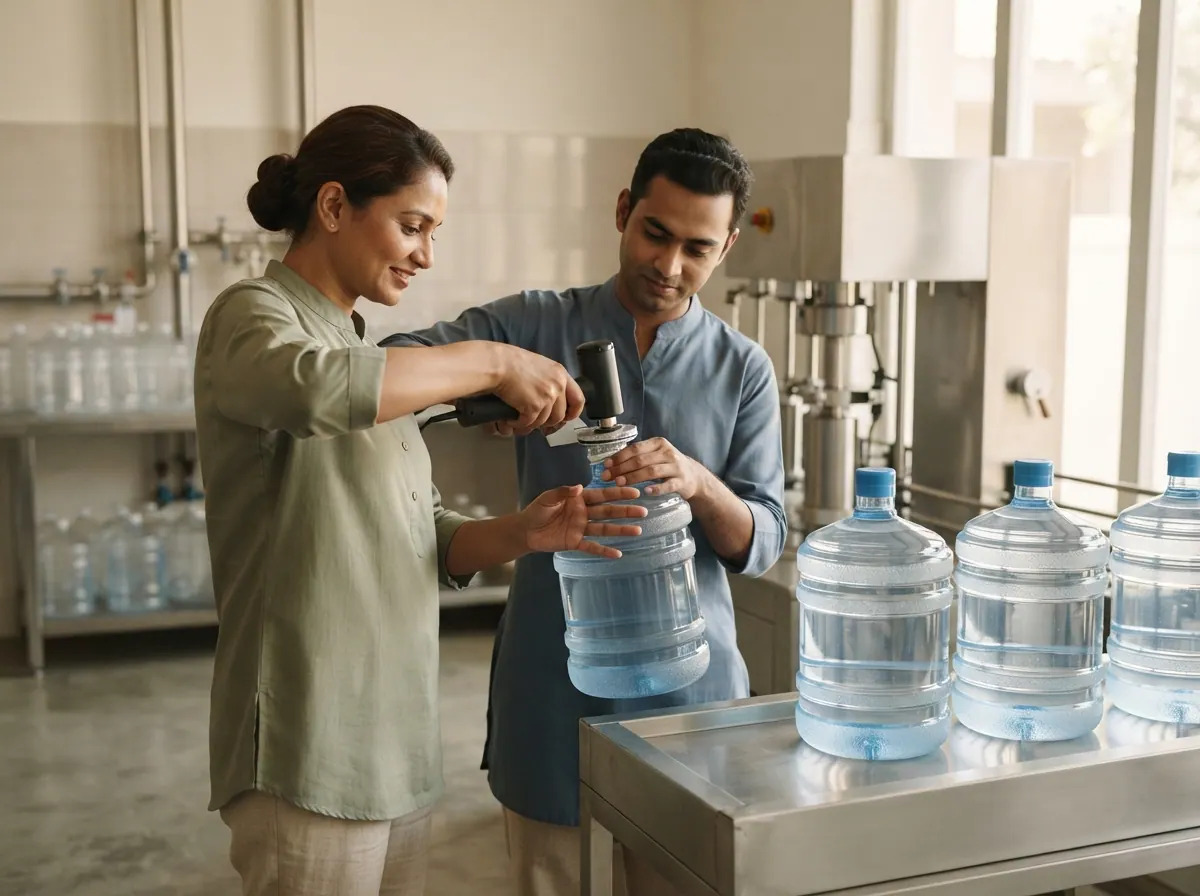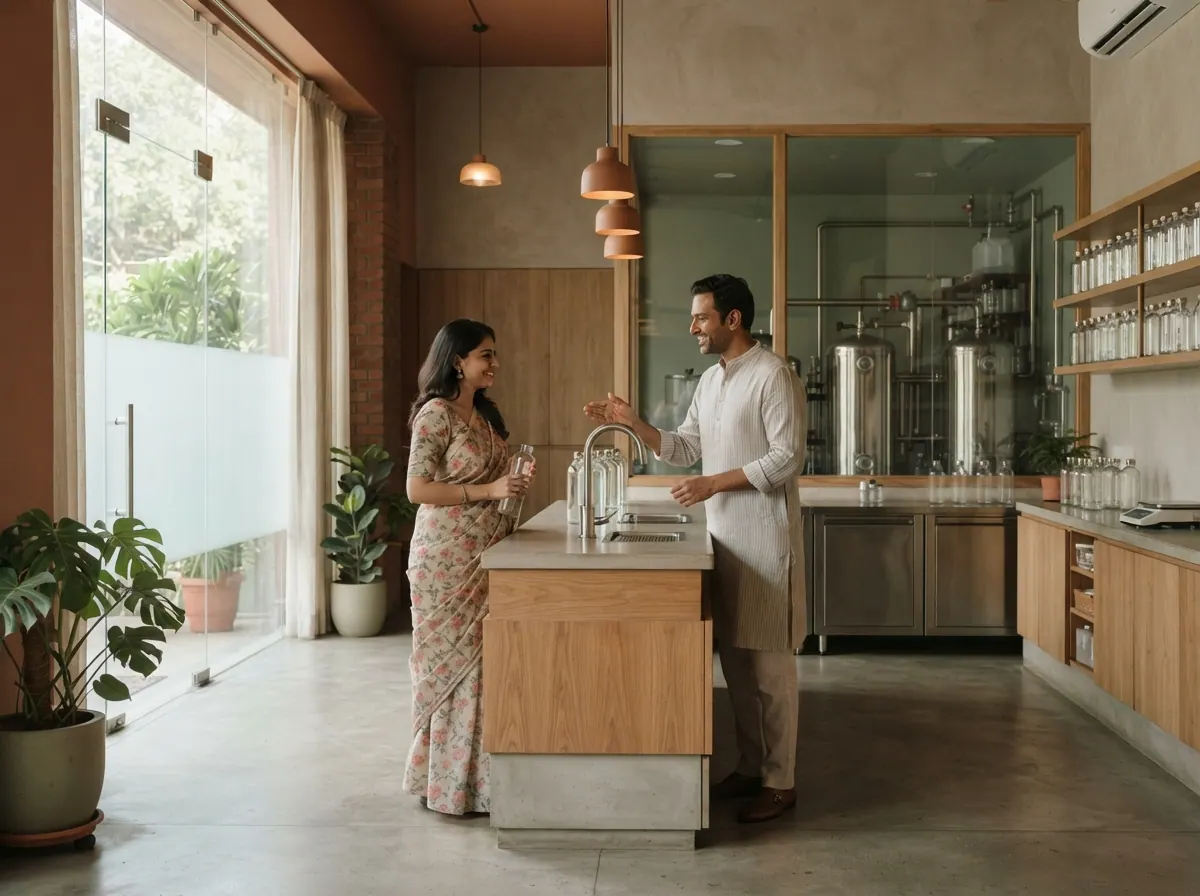
भारत में पैकेज्ड पीने के पानी का प्लांट शुरू करने के लिए आपको पानी का स्रोत, UV या ओज़ोन के साथ RO प्लांट, स्टोरेज टैंक, 20 लीटर के जार या बोतल फ़िलिंग लाइन, डिलीवरी की गाड़ी, फ़ूड और क्वालिटी के सही रजिस्ट्रेशन, और करीब ₹3–25 लाख चाहिए। घरों और दुकानों को 20 लीटर के जार बेचने वाला छोटा रिफ़िलिंग स्टेशन करीब ₹3–6 लाख में शुरू हो सकता है। BIS वाले सील बोतल प्लांट में बहुत ज़्यादा लगता है। यह धंधा स्थिर है, पर मुनाफ़ा इस पर टिका है कि कितने जार लौटते हैं, प्लांट कितना साफ़ है, और आपके डिलीवरी वाले को समय पर पैसा मिलता है या नहीं।
यहां के सारे आंकड़े अंदाज़े हैं। पैसा लगाने से पहले अपने इलाके के दाम देख लें।
कितना खर्च आएगा?
यह छोटे जार प्लांट का हिसाब है, जो घरों, दुकानों और दफ़्तरों को बेचता है:
| चीज़ | अंदाज़ा |
|---|---|
| RO प्लांट, करीब 500–1,000 लीटर प्रति घंटा, UV के साथ | ₹1.5–5 लाख |
| कच्चे पानी का टैंक, साफ़ पानी का टैंक, पाइपिंग | ₹30,000–1 लाख |
| बोरवेल या पानी कनेक्शन का खर्च | ₹30,000–2 लाख |
| 20 लीटर के जार, पहले 500–1,500 | ₹50,000–3 लाख |
| जार धोने और भरने का सेट-अप, ढक्कन | ₹30,000–80,000 |
| डिलीवरी की गाड़ी, पुराना तीन-पहिया या पिकअप | ₹1–3 लाख |
| शेड, फ़र्श, बिजली का लोड बदलना | ₹50,000–2 लाख |
| पानी की जांच और रजिस्ट्रेशन | ₹10,000–50,000 |
| पहले महीनों के लिए चलाने का पैसा | ₹30,000–1 लाख |
| कुल | करीब ₹5–18 लाख |
BIS लाइसेंस के साथ सील बोतल बेचने वाला प्लांट, जिसमें बोतल फ़िलिंग लाइन, लैब और बड़ा हॉल हो, ₹25 लाख या उससे ज़्यादा तक पहुंच सकता है। बहुत से छोटे मालिक पहले जार से शुरू करके अपना बाज़ार समझते हैं।
कितनी कमाई हो सकती है?
छोटे प्लांट का सामान्य महीना, जो 26 दिन में रोज़ करीब 500 जार औसत ₹25 प्रति जार बेचता है:
बिक्री
- 500 जार × 26 दिन = 13,000 जार
- 13,000 × ₹25 = ₹3,25,000
खर्च
- RO, पंप और UV की बिजली = ₹30,000
- ऑपरेटर और दो डिलीवरी हेल्पर = ₹45,000
- गाड़ी का डीज़ल, मरम्मत और टायर = ₹25,000
- जार का नुकसान, ढक्कन, सील और धोने का सामान = ₹20,000
- मेम्ब्रेन, फ़िल्टर और केमिकल = ₹15,000
- शेड का किराया = ₹20,000
- पानी की जांच और रजिस्ट्रेशन = ₹5,000
- प्लांट और गाड़ी के लोन की किस्त = ₹60,000
- दूसरे छोटे खर्च = ₹10,000
- कुल = ₹2,30,000
बचत: ₹3,25,000 − ₹2,30,000 = ₹95,000।
जार और गर्मी पर नज़र रखिए। एक जार करीब ₹100–250 का आता है, और महीने में 100 जार खोने वाला प्लांट सिर्फ़ उन्हें बदलने में करीब ₹10,000–25,000 खर्च करता है। सर्दी में बिक्री एक-तिहाई गिर सकती है, जिससे बिक्री करीब ₹2.2 लाख रह जाएगी, जबकि किराया, तनख़्वाह और लोन की किस्त लगभग वही रहेंगे।
शुरू करने से पहले क्या चाहिए?
- ऐसा पानी का स्रोत जिसकी आपने जांच कराई हो। कठोरता, TDS, आयरन और बैक्टीरिया तय करते हैं कि कैसा ट्रीटमेंट चाहिए। प्लांट खरीदने से पहले लैब रिपोर्ट आपको गलत मशीन से बचाती है।
- बोरवेल या कनेक्शन की इजाज़त, जहां लागू हो। कई इलाकों में व्यावसायिक भूजल इस्तेमाल पर नियम हैं।
- साफ़ काम की जगह। टाइल वाले फ़र्श और नाली वाला बंद शेड, जार धोने की अलग जगह, और ढक्कन और फ़िल्टर रखने की जगह।
- जो जार लौटकर आएं। हर ग्राहक के लिए कितने जार चाहिए, और जार लौटाने के लिए डिपॉज़िट की व्यवस्था सोचिए।
- एक रूट। घर, अपार्टमेंट, दफ़्तर, दुकानें, ढाबे और छोटे इवेंट, हर एक के लिए डिलीवरी का समय और मात्रा अलग होती है।
- प्लांट समझने वाला आदमी। मेम्ब्रेन, UV लैंप और फ़िल्टर समय पर बदलने होते हैं, और किसी को तारीखें लिखनी होती हैं।
कदम दर कदम
- अपने स्रोत के पानी की जांच मान्यता प्राप्त लैब में कराइए, और दो प्लांट सप्लायर से ट्रीटमेंट का सुझाव लिखित में लीजिए।
- लाइसेंस देखिए जो आपके साइज़ पर लागू हों, फ़ूड अथॉरिटी और BIS दफ़्तर से, किसी मशीन का पैसा देने से पहले।
- तीन पास के इलाके घूमिए और गिनिए कि कितने घर और दफ़्तर पहले से जार लेते हैं, कौन डिलीवर करता है, और किस दाम पर।
- प्लांट सेट कीजिए साफ़ क्रम के साथ: कच्चा पानी, ट्रीटमेंट, साफ़ पानी का टैंक, जार धोना, भरना, ढक्कन लगाना, स्टोर, गाड़ी।
- जार का डिपॉज़िट और दाम तय करें घरों, दुकानों और दफ़्तरों के लिए। एक सादे कार्ड पर लिखिए।
- साफ़ पानी की जांच नियमित अंतराल पर कराइए, रिपोर्ट रखिए, और फ़िल्टर और UV बदलने का लॉग रखिए।
- तय रूट पर डिलीवरी कीजिए ताकि ग्राहक जानें कि आप कब आएंगे, और हर चक्कर में जार गिनिए।
- हर महीने हिसाब देखिए: कितने जार बिके, कितने खोए, बिजली का बिल, और हर जार की आपको कितनी लागत है।
कौन-से लाइसेंस लगते हैं?
- FSSAI रजिस्ट्रेशन या लाइसेंस। पैकेज्ड पीने का पानी नियंत्रित खाद्य उत्पाद है। FoSCoS पोर्टल या अपनी फ़ूड अथॉरिटी से पूछिए कि कौन-सी श्रेणी आपके लिए है।
- BIS सर्टिफ़िकेशन। पैकेज्ड पीने के पानी को बेचने से पहले आमतौर पर BIS लाइसेंस और मानक का निशान चाहिए। BIS दफ़्तर से पूछिए कि आपके जार या बोतल के मॉडल पर यह लागू है या नहीं।
- भूजल की इजाज़त। कई इलाकों में व्यावसायिक पानी के लिए बोरवेल के इस्तेमाल पर भूजल प्राधिकरण की इजाज़त चाहिए। स्थानीय स्तर पर पूछिए।
- प्रदूषण नियंत्रण के नियम। RO प्लांट से रिजेक्ट पानी निकलता है, और कुछ राज्य कंसेंट मांगते हैं या निपटान के नियम रखते हैं। अपने प्रदूषण नियंत्रण बोर्ड से पूछिए।
- GST और उद्यम रजिस्ट्रेशन। रेट और रजिस्टर करने का समय CA से पूछिए।
- लेबल और लीगल मेट्रोलॉजी। जांचिए कि आपके जार, ढक्कन और बोतल पर क्या लिखा होना चाहिए, जैसे बैच, तारीख और संपर्क।
क्या गलत हो सकता है?
- गंदे जार और असुरक्षित पानी। एक खराब बैच परिवारों को बीमार कर सकता है और आपका नाम खत्म कर सकता है। जिस जार को धोकर जांचा न हो, उसे कभी न भरें।
- जार का खोना। ग्राहक जार रख लेते हैं, दुकानदार बेच देते हैं, और आपका स्टॉक गायब हो जाता है। डिपॉज़िट लीजिए और रजिस्टर रखिए।
- RO का रिजेक्ट पानी। आने वाले पानी का बड़ा हिस्सा रिजेक्ट बनकर निकलता है। उसकी योजना न हो तो पड़ोसी शिकायत करते हैं।
- बिजली कटना और पंप फ़ेल होना। बैकअप के बिना प्लांट तब डिलीवरी रोक देता है जब गर्मी में मांग सबसे ज़्यादा होती है।
- कठोर या खारा स्रोत का पानी। अगर स्रोत जांच से भी खराब निकले तो मेम्ब्रेन कुछ महीनों में चोक हो सकती है।
- दाम पर मुकाबला। नया प्लांट ₹5 प्रति जार कम में बेचता है, और आपके ग्राहक पूछते हैं कि आपका दाम ज़्यादा क्यों है।
- दुकानों और दफ़्तरों का उधार। महीनों के बकाया बिल वह पैसा फंसा देते हैं जो जार खरीदने और तनख़्वाह देने के लिए चाहिए।
ये हालात आपके सामने आएँगे
आप क्या करेंगे? हर फ़ैसले की एक क़ीमत है।
शुरुआत
A plant seller says any RO works for any water. A lab test costs ₹3,000 and takes a week.
- Test the water first: Small cost, right machine
- Trust the seller: Save a week, risk wrong plant
The bigger plant costs ₹1.5 lakh more but your first customers are only about 100 jars a day.
- Buy the 500 litre plant: Cheaper, may be small later
- Buy the 1,000 litre plant: Room to grow, bigger loan
A neighbour says no permission is needed. Another says the groundwater office stops commercial borewells without it.
- Apply for permission: Fees and waiting
- Buy water from a licensed source: Higher cost, legal supply
New 20-litre jars cost about ₹150 each. A dealer has old jars from closed plants at ₹60 but some are cloudy.
- Buy new jars: Costly, clean look
- Buy refurbished, sanitised jars: Mid cost, cleaned and tested
You are told to get FSSAI first, then think about a BIS licence for bottles. A consultant offers to do all papers for ₹40,000.
- Hire the consultant: Costs more, less running
- Do FSSAI yourself: Cheap, takes your time
A shed in town has higher rent and tight roads. One on the outskirts is cheaper, with a longer delivery run.
- Rent in town: Dearer, quick deliveries
- Rent on the outskirts: Cheaper, more diesel
A used three-wheeler costs ₹90,000. Hiring a tempo per trip is cheaper at first but is not always free.
- Buy the three-wheeler: Own schedule, repair costs
- Hire a tempo per trip: No loan, delays
पहला महीना
Competitors charge ₹30 a jar for homes and ₹20 for shops. Your cost is about ₹17.
- Price homes at ₹28: Good margin, slower sales
- Price homes at ₹22: Faster sales, thin margin
A family says your water tastes different. Your TDS meter shows a high reading on the treated tank.
- Stop and flush the plant: Lose a day, fix cause
- Test and show the TDS reading: Small cost, honest reading
Some jars come back with slime near the neck. Washing each one properly takes extra time and soap.
- Buy a jar washer: Spend, clean jars every time
- Scrub by hand with sanitiser: Slow, labour cost, safe
A tea stall wants 40 jars a month and pays at month end. The stall has paid other suppliers late.
- Give credit with a limit: Sales up, cash stuck
- Ask for cash on delivery: Safe, they may leave
The booster pump stopped during a hot week. A new one costs ₹12,000 and arrives in two days.
- Buy locally at higher price: Costs more, quick fix
- Wait for the cheaper pump: Two days of no supply
A new plant offers one free jar on every ten to your customers. Two of your homes ask about it.
- Match with a small offer: Costs margin, keeps homes
- Stay with quality: Hold price, lose a few
रोज़ का काम
April brings calls for double the usual jars. Your jars and the washing line can hardly cope.
- Buy 300 more jars: Cash now, more sales
- Ration to old customers: Stay clean, lose new ones
Cold weather halves orders at some offices. Wages and the loan instalment stay the same.
- Push marketing to homes: Costs money, steadier orders
- Cut one helper: Saves wages, slower route
An officer collects a water sample for testing. You have not had your own lab report for four months.
- Do your own test today: Fee now, you know the status
- Wait for the officer's report: Free, anxious wait
Output has dropped by a third. A new membrane costs ₹8,000 and the water has more iron than you tested.
- Add an iron filter and replace: Costly, fixes root cause
- Just replace the membrane: Cheaper, may choke again
Stock count shows jars missing from an apartment complex and two shops. Some have been sold as storage drums.
- Start a jar deposit system: Customers grumble, losses fall
- Buy replacements quietly: Costly, losses repeat
Your RO drain runs onto the lane and a neighbour complains to the local office.
- Build a tank and reuse it: Spend now, peace later
- Direct it to the drain: Cheap, complaint remains
A caterer wants 600 jars in two days for a wedding, at a lower rate than usual.
- Accept and rush production: Big sale, regular jars delayed
- Accept only 300 jars: Safe, smaller sale
Offices want small bottles for meetings. A bottle line and BIS licence will take months and about ₹8 lakh.
- Start the licence process: Big spend, new market
- Buy bottles and resell: Quick margin, small profit
A housing colony of 120 flats wants jars delivered daily. Your route is already full and you have no spare vehicle.
- Hire a second van and driver: Cost now, big new market
- Deliver on alternate days: No extra cost, some leave
जब मुश्किल आए
Two homes say a child had stomach trouble after drinking your water. You cannot be sure it was the water.
- Recall jars and test: Costs money, protects people
- Pause sales, test every batch: Lose sales, protects people
After a storm, your area has no power for three days. Customers are calling for jars.
- Hire a generator: ₹9,000 for diesel and hire
- Close till power returns: Free, customers go elsewhere
Your main delivery man joined a rival plant and is calling your best customers.
- Visit top customers yourself: Tiring, keeps loyal ones
- Give discounts to all: Costly, keeps volume
An office has taken jars for four months and has not paid. They say the accounts head is on leave.
- Stop supply until paid: May get paid, may lose them
- Keep supplying: Keep the client, money stuck
Three customers found jar caps loose and water leaked on the floor. A cheaper cap supplier gave you a weak batch.
- Switch to the better caps: Higher cost per jar, no leaks
- Tighten each by hand: Free, slow, leaks continue
बढ़ाना
A town 30 km away has no good supplier. A second plant needs another ₹6 lakh and a second route.
- Open the second plant: Big spend, new town
- Deliver there from here: Cheaper, high diesel cost
A hotel will buy 800 jars a month at ₹20 each, but asks for 45 days of credit.
- Accept the contract: Big volume, cash waits
- Ask for a shorter credit: Safer, may lose it
Apartments ask for treated water by tanker. It needs a tanker, a licence check and a new route.
- Buy a small tanker: New income, costly vehicle
- Stay with jars only: Focused, no new risk
क्या यह आपके लिए ठीक है?
वॉटर प्लांट आपके लिए ठीक है अगर आपको नियमित दिनचर्या पसंद है, सफ़ाई में सावधान हैं, और सबसे गर्म हफ़्तों में भी रोज़ डिलीवरी संभालने को तैयार हैं। यह कम margin और बार-बार आने वाले ग्राहकों का धंधा है, जहां ग्राहक वह परिवार है जो आपका पानी पीता है।
अगर आपको जल्दी profit चाहिए या जार और भुगतान के पीछे भागना पसंद नहीं, तो यह कम ठीक बैठेगा। पहले यह कीजिए: दो हफ़्ते एक इलाके के उन घरों और दफ़्तरों की सूची बनाइए जो जार लेते हैं, उनसे पूछिए कि क्या देते हैं और क्या शिकायत है, और एक पानी के स्रोत की जांच कराइए। अगर हिसाब टिकता है, तो आपके पास सप्लायर के पास ले जाने लायक बिज़नेस प्लान है।