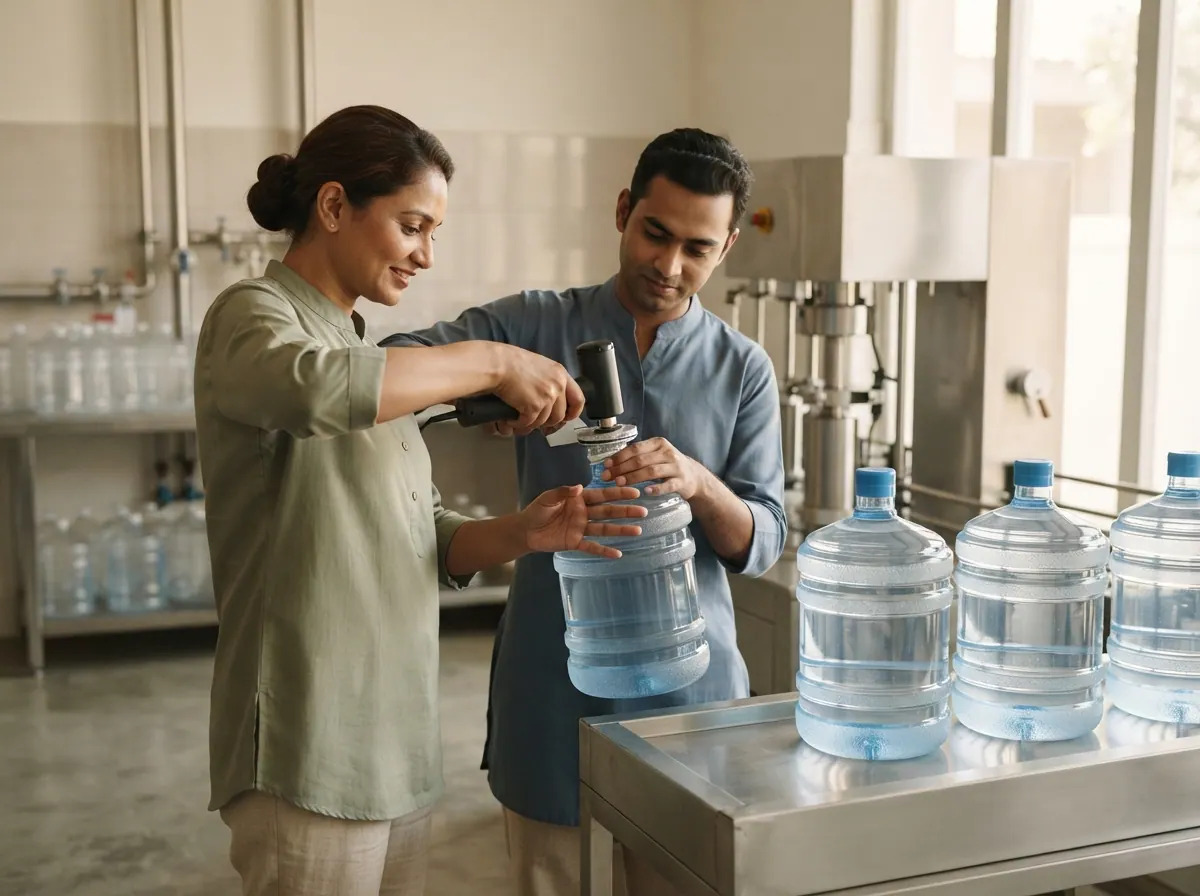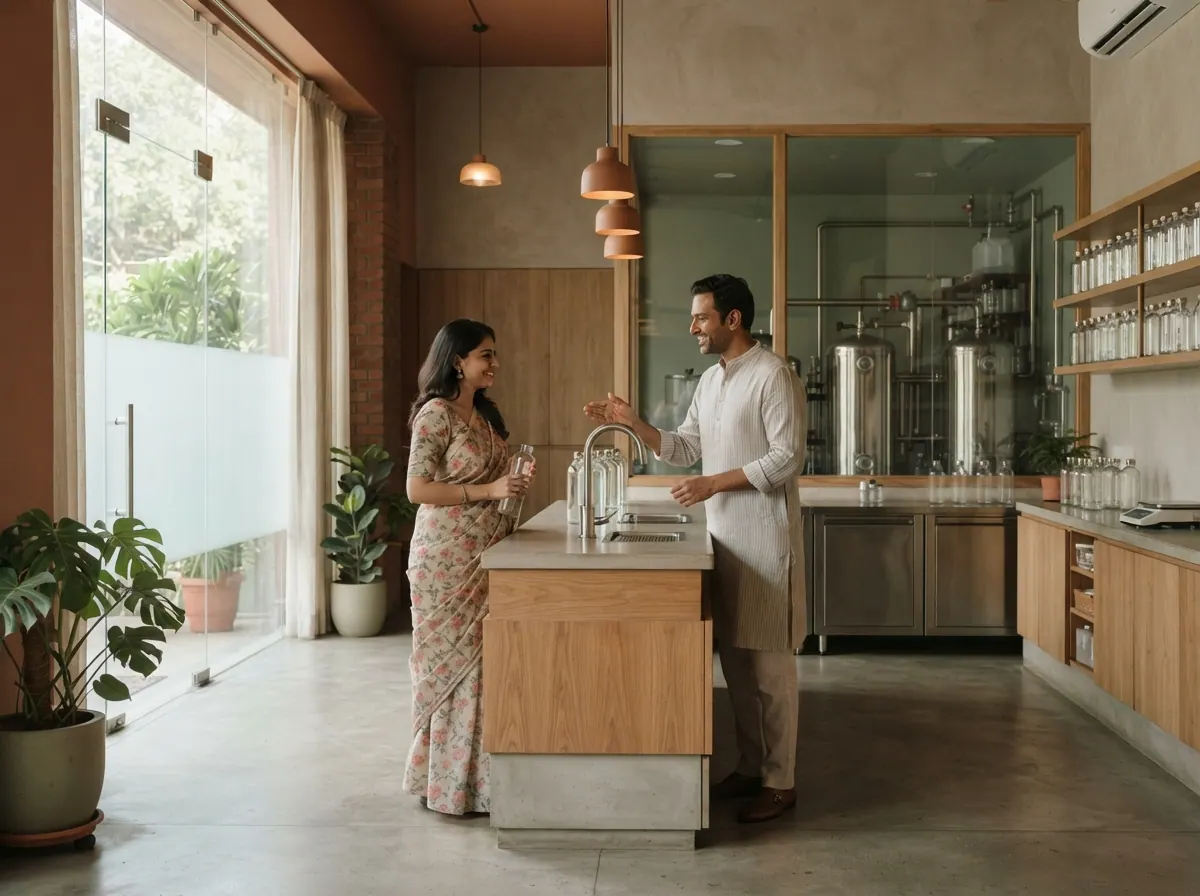
To start a packaged drinking water plant business in India you need a water source, an RO plant with UV or ozone treatment, storage tanks, 20-litre jars or a bottle-filling line, a delivery vehicle, the right food and quality registrations, and about ₹3–25 lakh. A small refilling station selling 20-litre jars to homes and shops can start near ₹3–6 lakh. A BIS-certified sealed-bottle plant costs much more. The business is steady, but the profit sits in how many jars come back, how clean your plant is, and how often your delivery boy gets paid on time.
All figures here are estimates. Check prices near you before you spend.
What does it cost?
This is for a small jar plant, selling to homes, shops and offices:
| Item | Estimate |
|---|---|
| RO plant, around 500–1,000 litres an hour, with UV | ₹1.5–5 lakh |
| Raw water tank, treated water tank, piping | ₹30,000–1 lakh |
| Borewell or water connection costs | ₹30,000–2 lakh |
| 20-litre jars, first 500–1,500 | ₹50,000–3 lakh |
| Jar washing and filling set-up, caps | ₹30,000–80,000 |
| Delivery vehicle, used three-wheeler or pickup | ₹1–3 lakh |
| Shed, flooring, electrical load changes | ₹50,000–2 lakh |
| Water tests and registrations | ₹10,000–50,000 |
| Working money for the first months | ₹30,000–1 lakh |
| Total | about ₹5–18 lakh |
A plant that sells sealed bottles with a BIS licence, a bottle filling line, a lab and a bigger hall can reach ₹25 lakh or more. Many small owners start with jars to learn their market first.
How much can it earn?
Here is a normal month for a small plant selling about 500 jars a day across 26 days at an average of ₹25 a jar:
Sales
- 500 jars × 26 days = 13,000 jars
- 13,000 × ₹25 = ₹3,25,000
Costs
- Electricity for RO, pumps and UV = ₹30,000
- Operator and two delivery helpers = ₹45,000
- Vehicle diesel, repairs and tyres = ₹25,000
- Jar losses, caps, seals and washing supplies = ₹20,000
- Membranes, filters and chemicals = ₹15,000
- Rent for the shed = ₹20,000
- Water tests and registrations = ₹5,000
- Instalment on plant and vehicle loan = ₹60,000
- Other small costs = ₹10,000
- Total = ₹2,30,000
Left over: ₹3,25,000 − ₹2,30,000 = ₹95,000.
Watch jars and summer. A jar costs about ₹100–250 and a plant that loses 100 jars a month spends about ₹10,000–25,000 just replacing them. Sales may fall by a third in winter, which would cut your sales to about ₹2.2 lakh while the rent, wages and loan instalment barely change.
What do you need before you start?
- A water source that you have tested. Hardness, TDS, iron and bacteria decide what treatment you need. A lab report before you buy the plant saves you from a wrong machine.
- Permission for the borewell or connection where it applies. Many areas regulate commercial groundwater use.
- A clean working area. A closed shed with a tiled floor, a drain, a separate jar washing area and a place for storing caps and filters.
- Jars that come back. Plan how many jars you need for each customer, and a deposit system so they return.
- A route. Homes, apartments, offices, shops, dhabas and small events each need different delivery times and quantities.
- A person who understands the plant. Membranes, UV lamps and filters need changing on a schedule, and somebody must write down the dates.
Step by step
- Test your source water in a recognised lab, and ask two plant suppliers for treatment suggestions in writing.
- Check the licences that apply for your size, with the food authority and the BIS office, before you pay for any machine.
- Walk three nearby areas and count how many households and offices already buy jars, who delivers, and at what price.
- Set up the plant with a clean flow: raw water, treatment, treated water tank, jar washing, filling, capping, store, vehicle.
- Set the jar deposit and price for homes, shops and offices. Write them on a simple card.
- Test treated water at regular intervals, keep the reports, and keep a log of filter and UV changes.
- Deliver on a fixed route so customers know when to expect you, and count jars on every trip.
- Review the books every month: jars sold, jars lost, power bill, and what each jar costs you.
Which licences apply?
- FSSAI registration or licence. Packaged drinking water is a regulated food product. Ask on the FoSCoS portal or at your food authority which category fits you.
- BIS certification. Packaged drinking water generally needs a BIS licence and the standard mark before it can be sold. Ask the BIS office whether your jar or bottle model needs it.
- Groundwater permission. In many areas, borewell use for commercial water needs permission from the groundwater authority. Check locally.
- Pollution control rules. RO plants release reject water, and some states ask for a consent or have rules on disposal. Ask your pollution control board.
- GST and Udyam registration. Ask a CA about the rate and when to register.
- Labels and legal metrology. Check what your jars, caps and bottles must show, such as batch, date and contact details.
What goes wrong?
- Dirty jars and unsafe water. A bad batch can make families ill and end your name. Never fill a jar that you have not washed and checked.
- Lost jars. Customers keep jars, shops sell them, and your stock vanishes. Take a deposit and keep a register.
- RO reject water. A large share of the intake comes out as reject. Without a plan for it, the neighbours complain.
- Power cuts and pump failure. A plant with no backup stops delivery when summer demand is highest.
- Hard or salty source water. Your membrane may choke in a few months when the source is worse than the test.
- Competition on price. A new plant undercuts you by ₹5 a jar, and your customers ask why.
- Credit with shops and offices. Months of unpaid bills tie up the money you need to buy jars and pay wages.
Situations you will face
What would you do? Each choice costs something.
Getting started
A plant seller says any RO works for any water. A lab test costs ₹3,000 and takes a week.
- Test the water first: Small cost, right machine
- Trust the seller: Save a week, risk wrong plant
The bigger plant costs ₹1.5 lakh more but your first customers are only about 100 jars a day.
- Buy the 500 litre plant: Cheaper, may be small later
- Buy the 1,000 litre plant: Room to grow, bigger loan
A neighbour says no permission is needed. Another says the groundwater office stops commercial borewells without it.
- Apply for permission: Fees and waiting
- Buy water from a licensed source: Higher cost, legal supply
New 20-litre jars cost about ₹150 each. A dealer has old jars from closed plants at ₹60 but some are cloudy.
- Buy new jars: Costly, clean look
- Buy refurbished, sanitised jars: Mid cost, cleaned and tested
You are told to get FSSAI first, then think about a BIS licence for bottles. A consultant offers to do all papers for ₹40,000.
- Hire the consultant: Costs more, less running
- Do FSSAI yourself: Cheap, takes your time
A shed in town has higher rent and tight roads. One on the outskirts is cheaper, with a longer delivery run.
- Rent in town: Dearer, quick deliveries
- Rent on the outskirts: Cheaper, more diesel
A used three-wheeler costs ₹90,000. Hiring a tempo per trip is cheaper at first but is not always free.
- Buy the three-wheeler: Own schedule, repair costs
- Hire a tempo per trip: No loan, delays
First month
Competitors charge ₹30 a jar for homes and ₹20 for shops. Your cost is about ₹17.
- Price homes at ₹28: Good margin, slower sales
- Price homes at ₹22: Faster sales, thin margin
A family says your water tastes different. Your TDS meter shows a high reading on the treated tank.
- Stop and flush the plant: Lose a day, fix cause
- Test and show the TDS reading: Small cost, honest reading
Some jars come back with slime near the neck. Washing each one properly takes extra time and soap.
- Buy a jar washer: Spend, clean jars every time
- Scrub by hand with sanitiser: Slow, labour cost, safe
A tea stall wants 40 jars a month and pays at month end. The stall has paid other suppliers late.
- Give credit with a limit: Sales up, cash stuck
- Ask for cash on delivery: Safe, they may leave
The booster pump stopped during a hot week. A new one costs ₹12,000 and arrives in two days.
- Buy locally at higher price: Costs more, quick fix
- Wait for the cheaper pump: Two days of no supply
A new plant offers one free jar on every ten to your customers. Two of your homes ask about it.
- Match with a small offer: Costs margin, keeps homes
- Stay with quality: Hold price, lose a few
Running it
April brings calls for double the usual jars. Your jars and the washing line can hardly cope.
- Buy 300 more jars: Cash now, more sales
- Ration to old customers: Stay clean, lose new ones
Cold weather halves orders at some offices. Wages and the loan instalment stay the same.
- Push marketing to homes: Costs money, steadier orders
- Cut one helper: Saves wages, slower route
An officer collects a water sample for testing. You have not had your own lab report for four months.
- Do your own test today: Fee now, you know the status
- Wait for the officer's report: Free, anxious wait
Output has dropped by a third. A new membrane costs ₹8,000 and the water has more iron than you tested.
- Add an iron filter and replace: Costly, fixes root cause
- Just replace the membrane: Cheaper, may choke again
Stock count shows jars missing from an apartment complex and two shops. Some have been sold as storage drums.
- Start a jar deposit system: Customers grumble, losses fall
- Buy replacements quietly: Costly, losses repeat
Your RO drain runs onto the lane and a neighbour complains to the local office.
- Build a tank and reuse it: Spend now, peace later
- Direct it to the drain: Cheap, complaint remains
A caterer wants 600 jars in two days for a wedding, at a lower rate than usual.
- Accept and rush production: Big sale, regular jars delayed
- Accept only 300 jars: Safe, smaller sale
Offices want small bottles for meetings. A bottle line and BIS licence will take months and about ₹8 lakh.
- Start the licence process: Big spend, new market
- Buy bottles and resell: Quick margin, small profit
A housing colony of 120 flats wants jars delivered daily. Your route is already full and you have no spare vehicle.
- Hire a second van and driver: Cost now, big new market
- Deliver on alternate days: No extra cost, some leave
When things go wrong
Two homes say a child had stomach trouble after drinking your water. You cannot be sure it was the water.
- Recall jars and test: Costs money, protects people
- Pause sales, test every batch: Lose sales, protects people
After a storm, your area has no power for three days. Customers are calling for jars.
- Hire a generator: ₹9,000 for diesel and hire
- Close till power returns: Free, customers go elsewhere
Your main delivery man joined a rival plant and is calling your best customers.
- Visit top customers yourself: Tiring, keeps loyal ones
- Give discounts to all: Costly, keeps volume
An office has taken jars for four months and has not paid. They say the accounts head is on leave.
- Stop supply until paid: May get paid, may lose them
- Keep supplying: Keep the client, money stuck
Three customers found jar caps loose and water leaked on the floor. A cheaper cap supplier gave you a weak batch.
- Switch to the better caps: Higher cost per jar, no leaks
- Tighten each by hand: Free, slow, leaks continue
Growing
A town 30 km away has no good supplier. A second plant needs another ₹6 lakh and a second route.
- Open the second plant: Big spend, new town
- Deliver there from here: Cheaper, high diesel cost
A hotel will buy 800 jars a month at ₹20 each, but asks for 45 days of credit.
- Accept the contract: Big volume, cash waits
- Ask for a shorter credit: Safer, may lose it
Apartments ask for treated water by tanker. It needs a tanker, a licence check and a new route.
- Buy a small tanker: New income, costly vehicle
- Stay with jars only: Focused, no new risk
Is it right for you?
A water plant suits you if you like regular routine, are careful about cleanliness, and are happy to manage deliveries every day, including the hottest weeks. It is a business of small margins and repeat customers, where the customer is a household drinking the water.
It suits you less if you want quick profit or dislike chasing jars and payments. Try this first: spend two weeks listing the households and offices in one area that buy jars, ask them what they pay and what they complain about, and test one source of water. If the numbers hold, you have a business plan worth taking to a supplier.