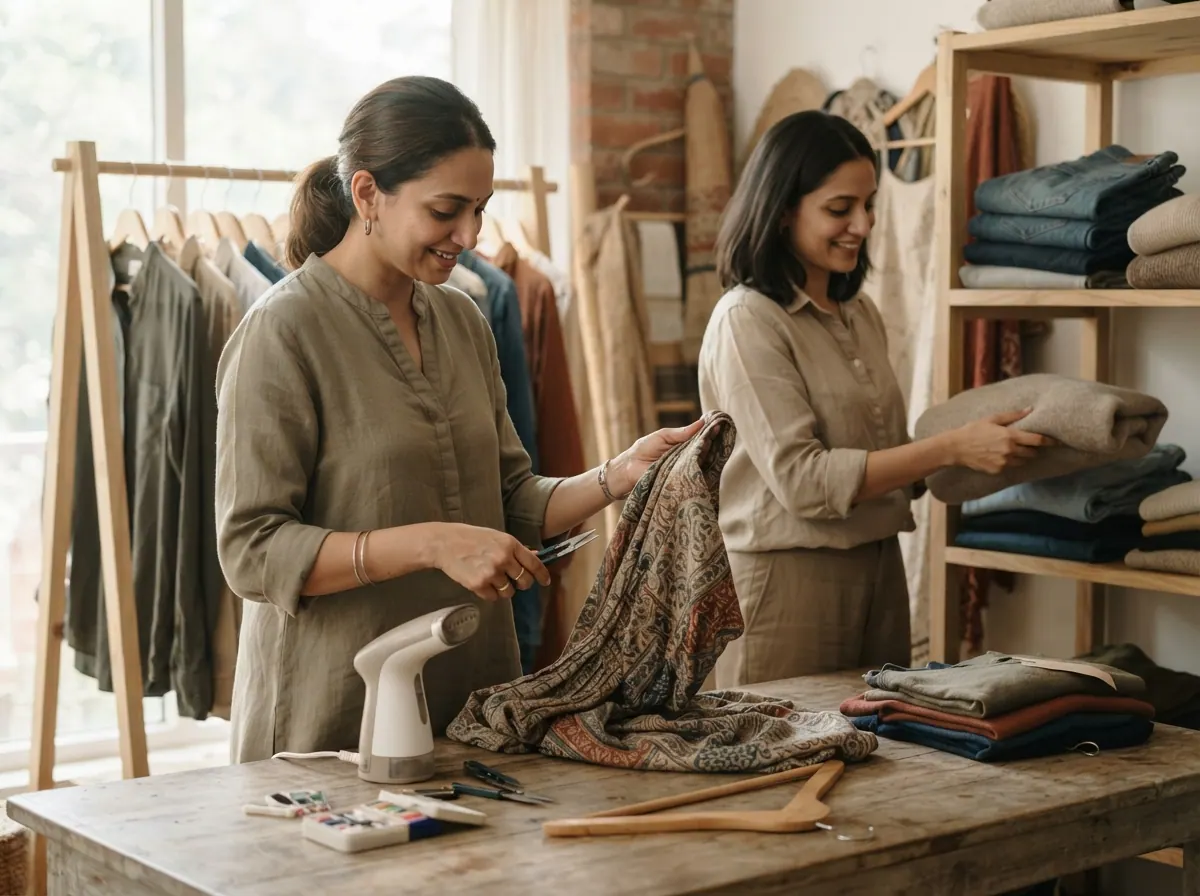
भारत में थ्रिफ्ट स्टोर शुरू करने के लिए आपको सेकंड हैंड कपड़ों का सोर्स, उन्हें धोने और स्टीम करने का तरीका, दिखाने या फ़ोटो खींचने की जगह और करीब ₹20,000–2 लाख चाहिए। मुनाफ़ा सस्ते में लॉट खरीदने, अच्छे पीस छाँटने और हर पीस सही दाम पर बेचने से आता है, ज़्यादातर इंस्टाग्राम, WhatsApp, स्टॉल और छोटी दुकानों के ज़रिए।
यहाँ दिए सारे आँकड़े अंदाज़े हैं। पैसा लगाने से पहले अपने यहाँ के भाव देख लें।
खर्चा कितना आता है?
| सामान | इंस्टाग्राम थ्रिफ्ट पेज | छोटी दुकान |
|---|---|---|
| कपड़ों के पहले लॉट (सैकड़ों पीस) | ₹15,000–40,000 | ₹40,000–80,000 |
| गारमेंट स्टीमर, प्रेस, धुलाई और सुखाने का सामान | ₹5,000–12,000 | ₹8,000–18,000 |
| हैंगर, रैक, आईना, मैनिकिन | ₹3,000–10,000 | ₹20,000–50,000 |
| फ़ोन ट्राइपॉड, लाइट, टैग, नापने का फ़ीता | ₹3,000–8,000 | ₹3,000–8,000 |
| पैकिंग और डिलीवरी बैग | ₹2,000–5,000 | ₹4,000–10,000 |
| दुकान का एडवांस और साइनबोर्ड | नहीं | ₹30,000–70,000 |
| ऐड और रिटर्न के लिए चालू कैश | ₹5,000–15,000 | ₹15,000–30,000 |
| कुल | करीब ₹35,000–90,000 | करीब ₹1.2–2 लाख |
अपनी अलमारी, दोस्तों और स्वैप इवेंट से कपड़े लेकर कम में भी शुरू कर सकते हैं, पर लॉट के हिसाब से खरीदते ही आँकड़े तेज़ी से बढ़ते हैं। कई लोग इंस्टाग्राम पेज से शुरू करके बाद में स्टॉल या छोटी दुकान जोड़ते हैं।
कमाई कितनी हो सकती है?
एक छोटे ऑनलाइन थ्रिफ्ट सेलर का एक महीना, जो लॉट खरीदकर छाँटता, साफ़ करता, फ़ोटो खींचता और भेजता है, एक पार्ट-टाइम हेल्पर के साथ।
खरीद और बिक्री
- करीब 600 पीस करीब ₹70 में खरीदे = ₹42,000
- बिकने लायक 70% रखे: 420 पीस
- 420 पीस × करीब ₹300 बेचे = ₹1,26,000
खर्चे
- खरीदे कपड़े = ₹42,000
- धुलाई, स्टीम और छोटी मरम्मत, करीब ₹15 × 420 = ₹6,300
- पैकिंग और डिलीवरी = ₹10,000
- इंस्टाग्राम ऐड = ₹10,000
- पार्ट-टाइम हेल्पर = ₹8,000
- स्टोर रूम का किराया = ₹6,000
- टैग, लाइट और छोटा सामान = ₹2,000
- कुल = ₹84,300
बचत: ₹1,26,000 − ₹84,300 = करीब ₹41,700 महीना, मालिक की पगार से पहले।
यह मानकर है कि सब बिक जाता है। न बिके पीस मरा हुआ पैसा बन जाते हैं, रिटर्न में दोनों तरफ़ की शिपिंग लगती है, और एक खराब लॉट पूरे महीने को घाटे में ले जा सकता है। मार्कडाउन का नियम रखें, जैसे तीन हफ़्ते बाद दाम घटाना।
शुरू करने से पहले क्या चाहिए?
- कपड़ों की नज़र। अच्छे ब्रांड, कपड़े, सिलाई और ट्रेंड जानें, और यह भी कि आपके खरीदार क्या पसंद करते हैं, चाहे कॉलेज वियर हो, ऑफ़िस वियर, डेनिम या एथनिक।
- भरोसेमंद सोर्स। पक्का करने से पहले दो-तीन विक्रेताओं से छोटा लॉट लें और तुरंत छाँटें।
- सफ़ाई। हर पीस धुला या स्टीम किया हो, दाग, बदबू और छेद देखे गए हों, और ठीक किया या छाँट दिया गया हो। अंदर के कपड़े न बेचें।
- फ़ोटो और नाप। ऑनलाइन खरीदार साफ़ फ़ोटो और साइज़ से तय करते हैं, इसलिए रोशनी, साफ़ बैकग्राउंड और नापने का फ़ीता इस्तेमाल करें।
- रिटर्न का नियम। साफ़ बताएँ कि रिटर्न होगा या नहीं, क्योंकि पुराने कपड़ों का रिटर्न महँगा पड़ता है।
कदम दर कदम
- अपनी स्टाइल चुनें। कॉलेज स्ट्रीटवियर, डेनिम और जैकेट, ब्रांडेड फ़ॉर्मल, बच्चों के कपड़े या साड़ी और एथनिक अलग-अलग बाज़ार हैं।
- छोटा पहला लॉट खरीदें। तुरंत बेचने, मरम्मत और फेंकने के ढेर में छाँटें, और बिकने लायक असली हिस्सा लिख लें।
- सब कुछ साफ़ और स्टीम करें, और जल्दी हो तो ढीले बटन और हेम ठीक करें।
- हर पीस का दाम तय करें जो आपने दिया, बेचने में कितना लगेगा, और ऑनलाइन और स्टॉल पर मिलते-जुलते पीस के हिसाब से।
- फ़ोटो और नाप लें, पोस्ट पर छाती, लंबाई और कमर लिखकर।
- बैच में ड्रॉप करें, जैसे तय समय पर साप्ताहिक ड्रॉप, और फ़ॉलोअर्स को बताएँ।
- साफ़-सुथरी पैकिंग और तेज़ शिपिंग। अच्छी पैक की हुई पार्सल दोबारा खरीदार लाती है।
- पॉप-अप स्टॉल लगाएँ कॉलेज फ़ेस्ट, वीकेंड मार्केट या कैफ़े इवेंट में, बाकी माल बेचने और फ़ॉलोअर्स बढ़ाने के लिए।
कौन से लाइसेंस लगते हैं?
नियम आपके शहर और बेचने के तरीके पर निर्भर हैं, इसलिए स्थानीय दफ़्तर से पूछें:
- दुकान या ट्रेड की इजाज़त अगर दुकान या नियमित स्टॉल चलाएँ।
- GST टर्नओवर और बेचने के तरीके पर निर्भर है। मार्केटप्लेस भी माँग सकते हैं। CA से सलाह लें।
- उद्यम रजिस्ट्रेशन का आवेदन मुफ़्त है और लोन में मदद करता है।
- इंपोर्ट। भारत में पुराने कपड़े इंपोर्ट करने के नियम सख़्त हैं। ऐसे सोर्स से खरीदें जिन्हें जाँच सकें, बिल रखें, और इंपोर्ट लॉट का सौदा करने से पहले CA या स्थानीय ट्रेड दफ़्तर से पूछें।
- सफ़ाई और ईमानदारी। जो बेचें उसे साफ़ करें, और पोस्ट में खामियाँ ईमानदारी से बताएँ।
क्या गलत हो सकता है?
- ज़्यादा न बिकने वाला स्टॉक। बंडल तब तक सस्ता लगता है जब तक उसका आधा हिस्सा दाग, छेद या ऐसी बदबू वाला न निकले जो धुलने पर न जाए।
- ज़्यादा या कम दाम। ज़्यादा दाम पर पीस पड़े रहते हैं। बहुत कम दाम पर आप मुफ़्त में काम करते हैं।
- रिटर्न और झगड़े। गलत साइज़ या छूटा हुआ दाग मतलब रिफ़ंड और शिपिंग का नुकसान।
- कमज़ोर फ़ोटो। बिस्तर पर अँधेरे में खींची फ़ोटो से अच्छी जैकेट नहीं बिकती।
- कम फ़ॉलोअर्स। कुछ सौ फ़ॉलोअर्स वाला पेज महीने में सौ पीस नहीं बेच सकता। ऐड और स्टॉल में पैसा लगता है, इसलिए उसकी योजना बनाएँ।
- ट्रेंड देर से पकड़ना। पिछले सीज़न में चली स्टाइल अब न बिके।
- स्टोरेज का नुकसान। सीलन वाले कमरे में फफूँद और बदबू आती है, जो स्टॉक बिगाड़ देती है।
ये हालात आपके सामने आएँगे
आप क्या करेंगे? हर फ़ैसले की एक क़ीमत है।
शुरुआत
A seller offers 1,000 pieces at a low rate per piece. A smaller lot of 300 costs more per piece but is safer.
- Buy the 1,000-piece bale: Cheaper each, cash locked
- Buy the 300-piece lot: Higher rate, safer cash
Half the pieces smell of damp storage. The seller says washing will fix it.
- Wash and dry everything: Costs soap and time, cleaner stock
- Sort first, wash only the best: Cheaper, lose the weak pieces
A steamer is faster and gives a fresher finish on jackets. A plain iron costs far less.
- Buy a steamer: Costs more, faster finish
- Use an iron: Cheap, slow on bulky pieces
A tripod, light and a plain background cost a few thousand. Bed photos are free but look messy.
- Set up light and background: Costs now, better sales
- Shoot on the bed: Free, looks untidy
A damp store room is free at home. A small dry room nearby costs monthly rent.
- Rent a small dry room: Monthly rent, no mould
- Dry it with a dehumidifier: Small cost, mould kept away
College buyers love denim and jackets. Office buyers pay more for branded formals but buy less often.
- Focus on denim and jackets: Fast sales, lower prices
- Focus on branded formals: Higher prices, slower sales
पहला महीना
Out of one hundred pieces, fifteen have stains that stay after washing. The seller will not refund.
- Discard them, keep a log: Lose cash, clean store
- Offer them as craft or rag lots: Small cash, no brand damage
Posting daily is tiring. A weekly drop at a fixed time builds excitement but sells in a rush.
- Do weekly drops: Rushed sales, less effort
- Post pieces daily: Steady, more work
A buyer wants to return a jacket. The post listed the size but not the chest measurement.
- Refund and add measurements: Lose the sale, fewer returns
- Offer store credit: Keep the sale, buyer returns item
A good branded shirt could sell for ₹600 slowly or ₹350 fast. Your cash is thin.
- Price at ₹600: Better margin, may sit
- Price at ₹350: Quick money, lower margin
A buyer from another city wants cash on delivery for a ₹900 order. Returns by courier cost both ways.
- Take only advance payment: Safe, lose some buyers
- Allow cash on delivery: More sales, return risk
रोज़ का काम
A college fest gives you a table for a fee. You would take 200 pieces and a helper for two days.
- Take the stall: Fee and effort, quick sales
- Skip it, stay online: No fee, fewer new followers
One styling video goes viral and orders flood in for pieces you sold out.
- Buy more of the same style: Costs cash, riding the trend
- Sell what you have, move on: No new spend, miss the wave
A pile of ethnic pieces has not sold. They are good quality, but the season has passed.
- Mark them down 40%: Cash back, thin margin
- Hold for next season: Margin kept, cash locked
A supplier has a lot with many brand tags. It costs double the usual lot, but the pieces look good.
- Buy the branded lot: Higher cost, better prices
- Stay with the normal lot: Lower cost, plainer pieces
A pricey shirt has a brand tag with spelling that looks wrong. Buyers pay extra for brands.
- List it with no brand claim: Lower price, honest post
- Remove the tag and list plain: Safer, lower price
Three orders go missing in a week. Buyers want refunds.
- Refund and switch courier: Costs money, better service
- Wait and keep the courier: No spend, buyers annoyed
Parents ask for second-hand kidswear. It sells fast but needs extra washing and safety checks.
- Add a kidswear section: Extra work, steady buyers
- Stay with adult wear: No change, one market
जब मुश्किल आए
A lot of 500 pieces turns out to have only 150 you can sell. The wholesaler will not take any back.
- Write off the rest: Big loss, clean books
- Sell the rest as rag lots: Some cash back, effort
After heavy rain, a stack of jackets has mould spots and a strong smell.
- Wash, dry and discard the worst: Costs stock, saves the rest
- Discard all mouldy pieces: Bigger loss, a clean reset
A buyer posts a story showing a small hole on a dress you sold. Followers are watching.
- Refund and thank them: Lose the sale, build trust
- Say it was shown in the post: Only works if it was
A reseller messages for ten pieces and wants half price on all. Your margin is already modest.
- Give a 15% bundle discount: Sells ten, thinner margin
- Hold your prices: Margin kept, likely no sale
The page is locked for a week by the platform. Orders were your main income.
- Sell on WhatsApp and a stall: Work and a stall fee
- Wait for the page: No spend, no sales
A buyer sends a UPI screenshot and asks for the parcel. The money has not reached your account.
- Ship only after money lands: Slower, protects cash
- Ship on the screenshot: Fast, risk of loss
One in five parcels comes back. Courier costs both ways eat the margin.
- Add measurements, strict return rule: Fewer buyers, fewer returns
- Keep it easy to return: Buyers trust, margin thin
बढ़ाना
Followers ask to try clothes in person. A small shop costs rent, racks and a helper.
- Open a small shop: Rent and fit-out, walk-in sales
- Do monthly pop-ups instead: Lower cost, limited reach
You spend days sorting, washing and shooting. A helper would free you to source and sell.
- Hire a full-time helper: Monthly pay, more output
- Keep doing it yourself: Saves pay, slows growth
A tailor offers to turn old jeans into bags and jackets. They sell at higher prices but cost labour.
- Launch an upcycled line: Labour cost, higher price
- Keep selling as found: No spend, lower margin
A fashion club wants monthly pop-ups and a shared page. They want half the stall fee waived.
- Agree to the tie-up: Steady events, lower fee
- Pay full fee when you attend: Flexible, fewer events
People ask you to list their pre-owned clothes and keep a cut of each sale. It needs a clear commission rule.
- Start consignment: No stock cost, more work
- Buy outright only: More control, more cash needed
क्या यह आपके लिए सही है?
थ्रिफ्ट स्टोर आपके लिए ठीक है अगर आपको फ़ैशन और छाँटना पसंद है, सफ़ाई और फ़ोटो में धैर्य रखते हैं, और रोज़ की छोटी बिक्री में सहज हैं। अगर बिना मेहनत का बिज़नेस चाहिए, या रिटर्न और न बिके स्टॉक नहीं सँभाल सकते, तो कम सही है।
एक अच्छा टेस्ट: बड़ा लॉट खरीदने से पहले दोस्तों, इंस्टाग्राम पेज या स्टॉल से पचास पीस बेचें। अपना बिकने लायक हिस्सा और रिटर्न लिखें, और आँकड़े टिकें तभी बढ़ाएँ।