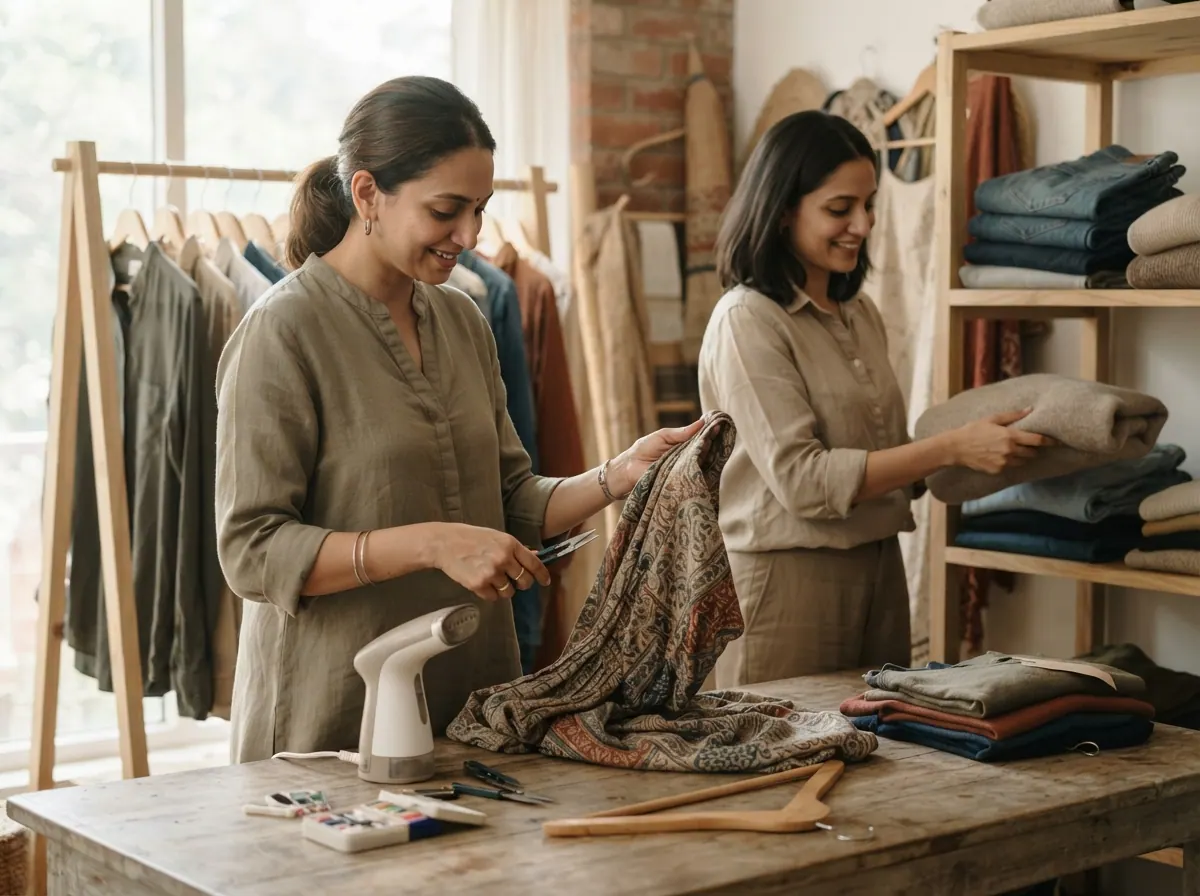
To start a thrift store in India you need a source of second-hand clothes, a way to wash and steam them, a place to display or photograph them, and about ₹20,000–2 lakh. The profit comes from buying lots cheaply, picking out the pieces that are good, and selling each one at the right price, mostly through Instagram, WhatsApp, stalls and small shops.
All figures here are estimates. Check prices near you before you spend.
What does it cost?
| Item | Instagram thrift page | Small shop |
|---|---|---|
| First lots of clothes (hundreds of pieces) | ₹15,000–40,000 | ₹40,000–80,000 |
| Garment steamer, iron, washing and drying supplies | ₹5,000–12,000 | ₹8,000–18,000 |
| Hangers, rack, mirror, mannequin | ₹3,000–10,000 | ₹20,000–50,000 |
| Phone tripod, light, tags, measuring tape | ₹3,000–8,000 | ₹3,000–8,000 |
| Packaging and delivery bags | ₹2,000–5,000 | ₹4,000–10,000 |
| Shop advance and signboard | none | ₹30,000–70,000 |
| Working cash for ads and returns | ₹5,000–15,000 | ₹15,000–30,000 |
| Total | about ₹35,000–90,000 | about ₹1.2–2 lakh |
You can start with less if you source from your own wardrobe, friends and swap events, but the numbers go up quickly once you buy by the lot. Many beginners begin as an Instagram page and add a stall or small shop later.
How much can it earn?
Here is a month for a small online thrift seller who buys lots, sorts, cleans, photographs and ships, with one part-time helper.
Buying and selling
- Buy about 600 pieces at about ₹70 each = ₹42,000
- Keep the 70% that are sellable: 420 pieces
- Sell 420 pieces × about ₹300 = ₹1,26,000
Costs
- Clothes bought = ₹42,000
- Washing, steaming and small repairs, about ₹15 × 420 = ₹6,300
- Packing and delivery = ₹10,000
- Instagram ads = ₹10,000
- Part-time helper = ₹8,000
- Storage room rent = ₹6,000
- Tags, light and small items = ₹2,000
- Total = ₹84,300
Left over: ₹1,26,000 − ₹84,300 = about ₹41,700 a month, before the owner's pay.
This assumes that everything sells. Unsold pieces sit as dead money, returns cost shipping both ways, and a bad lot can pull one month to a loss. Keep a rule for markdowns, for example a price cut after three weeks.
What do you need before you start?
- An eye for clothes. Know good brands, fabrics, stitching and trends, and what your buyers like, whether it is college wear, office wear, denim or ethnic.
- A trusted source. Buy a small lot from two or three sellers before you commit, and sort at once.
- Cleaning. Every piece should be washed or steamed, checked for stains, smell and holes, and repaired or rejected. Do not sell inner wear.
- Photos and measurements. Online buyers decide from a clear photo and size details, so use light, a clean background and a measuring tape.
- Return rules. State whether returns are allowed, since used clothing returns are costly.
Step by step
- Choose your style. College streetwear, denim and jackets, branded formals, kidswear or saree and ethnic pieces are different markets.
- Buy a small first lot. Sort at once into sell, repair, and discard piles, and note your actual sellable share.
- Clean and steam everything, and fix loose buttons and hems when it is quick.
- Price each piece from what you paid, how much it will cost to sell, and similar items online and in stalls.
- Photograph and measure, with chest, length and waist written on the post.
- Drop in batches, for example a weekly drop at a fixed time, and tell your followers.
- Pack neatly and ship fast. A well packed parcel brings repeat buyers.
- Try a pop-up stall at a college fest, weekend market or cafe event to sell the rest and gain followers.
Which licences apply?
Rules depend on your city and how you sell, so ask locally:
- Shop or trade permission if you run a shop or a regular stall.
- GST depends on turnover and on how you sell. Marketplaces may also ask for it. A CA can advise.
- Udyam registration is free to apply and helps with loans.
- Imports. Rules for importing used clothing are strict in India. Buy from sources you can check, keep bills, and ask your CA or local trade office before dealing in imported lots.
- Hygiene and honesty. Clean what you sell, and describe flaws honestly in the post.
What goes wrong?
- Too much unsellable stock. A bale looks cheap until half of it has stains, holes or a smell that will not wash out.
- Overpricing or underpricing. Priced too high, pieces sit. Priced too low, you work for nothing.
- Returns and disputes. A wrong size or a stain you missed means refund and shipping lost.
- Weak photos. A dark picture on a bed does not sell a good jacket.
- Slow followers. A page with a few hundred followers cannot sell a hundred pieces a month. Ads and stalls cost money, so plan for them.
- Buying trends too late. A style that was in demand last season may not sell now.
- Storage damage. Damp rooms bring mould and smell, which ruin stock.
Situations you will face
What would you do? Each choice costs something.
Getting started
A seller offers 1,000 pieces at a low rate per piece. A smaller lot of 300 costs more per piece but is safer.
- Buy the 1,000-piece bale: Cheaper each, cash locked
- Buy the 300-piece lot: Higher rate, safer cash
Half the pieces smell of damp storage. The seller says washing will fix it.
- Wash and dry everything: Costs soap and time, cleaner stock
- Sort first, wash only the best: Cheaper, lose the weak pieces
A steamer is faster and gives a fresher finish on jackets. A plain iron costs far less.
- Buy a steamer: Costs more, faster finish
- Use an iron: Cheap, slow on bulky pieces
A tripod, light and a plain background cost a few thousand. Bed photos are free but look messy.
- Set up light and background: Costs now, better sales
- Shoot on the bed: Free, looks untidy
A damp store room is free at home. A small dry room nearby costs monthly rent.
- Rent a small dry room: Monthly rent, no mould
- Dry it with a dehumidifier: Small cost, mould kept away
College buyers love denim and jackets. Office buyers pay more for branded formals but buy less often.
- Focus on denim and jackets: Fast sales, lower prices
- Focus on branded formals: Higher prices, slower sales
First month
Out of one hundred pieces, fifteen have stains that stay after washing. The seller will not refund.
- Discard them, keep a log: Lose cash, clean store
- Offer them as craft or rag lots: Small cash, no brand damage
Posting daily is tiring. A weekly drop at a fixed time builds excitement but sells in a rush.
- Do weekly drops: Rushed sales, less effort
- Post pieces daily: Steady, more work
A buyer wants to return a jacket. The post listed the size but not the chest measurement.
- Refund and add measurements: Lose the sale, fewer returns
- Offer store credit: Keep the sale, buyer returns item
A good branded shirt could sell for ₹600 slowly or ₹350 fast. Your cash is thin.
- Price at ₹600: Better margin, may sit
- Price at ₹350: Quick money, lower margin
A buyer from another city wants cash on delivery for a ₹900 order. Returns by courier cost both ways.
- Take only advance payment: Safe, lose some buyers
- Allow cash on delivery: More sales, return risk
Running it
A college fest gives you a table for a fee. You would take 200 pieces and a helper for two days.
- Take the stall: Fee and effort, quick sales
- Skip it, stay online: No fee, fewer new followers
One styling video goes viral and orders flood in for pieces you sold out.
- Buy more of the same style: Costs cash, riding the trend
- Sell what you have, move on: No new spend, miss the wave
A pile of ethnic pieces has not sold. They are good quality, but the season has passed.
- Mark them down 40%: Cash back, thin margin
- Hold for next season: Margin kept, cash locked
A supplier has a lot with many brand tags. It costs double the usual lot, but the pieces look good.
- Buy the branded lot: Higher cost, better prices
- Stay with the normal lot: Lower cost, plainer pieces
A pricey shirt has a brand tag with spelling that looks wrong. Buyers pay extra for brands.
- List it with no brand claim: Lower price, honest post
- Remove the tag and list plain: Safer, lower price
Three orders go missing in a week. Buyers want refunds.
- Refund and switch courier: Costs money, better service
- Wait and keep the courier: No spend, buyers annoyed
Parents ask for second-hand kidswear. It sells fast but needs extra washing and safety checks.
- Add a kidswear section: Extra work, steady buyers
- Stay with adult wear: No change, one market
When things go wrong
A lot of 500 pieces turns out to have only 150 you can sell. The wholesaler will not take any back.
- Write off the rest: Big loss, clean books
- Sell the rest as rag lots: Some cash back, effort
After heavy rain, a stack of jackets has mould spots and a strong smell.
- Wash, dry and discard the worst: Costs stock, saves the rest
- Discard all mouldy pieces: Bigger loss, a clean reset
A buyer posts a story showing a small hole on a dress you sold. Followers are watching.
- Refund and thank them: Lose the sale, build trust
- Say it was shown in the post: Only works if it was
A reseller messages for ten pieces and wants half price on all. Your margin is already modest.
- Give a 15% bundle discount: Sells ten, thinner margin
- Hold your prices: Margin kept, likely no sale
The page is locked for a week by the platform. Orders were your main income.
- Sell on WhatsApp and a stall: Work and a stall fee
- Wait for the page: No spend, no sales
A buyer sends a UPI screenshot and asks for the parcel. The money has not reached your account.
- Ship only after money lands: Slower, protects cash
- Ship on the screenshot: Fast, risk of loss
One in five parcels comes back. Courier costs both ways eat the margin.
- Add measurements, strict return rule: Fewer buyers, fewer returns
- Keep it easy to return: Buyers trust, margin thin
Growing
Followers ask to try clothes in person. A small shop costs rent, racks and a helper.
- Open a small shop: Rent and fit-out, walk-in sales
- Do monthly pop-ups instead: Lower cost, limited reach
You spend days sorting, washing and shooting. A helper would free you to source and sell.
- Hire a full-time helper: Monthly pay, more output
- Keep doing it yourself: Saves pay, slows growth
A tailor offers to turn old jeans into bags and jackets. They sell at higher prices but cost labour.
- Launch an upcycled line: Labour cost, higher price
- Keep selling as found: No spend, lower margin
A fashion club wants monthly pop-ups and a shared page. They want half the stall fee waived.
- Agree to the tie-up: Steady events, lower fee
- Pay full fee when you attend: Flexible, fewer events
People ask you to list their pre-owned clothes and keep a cut of each sale. It needs a clear commission rule.
- Start consignment: No stock cost, more work
- Buy outright only: More control, more cash needed
Is it right for you?
A thrift store suits you if you enjoy fashion and sorting, are patient with cleaning and photographing, and are comfortable with small daily sales. It suits you less if you want a no-hands-on business, or if you cannot handle returns and unsold stock.
A good test: sell fifty pieces through friends, an Instagram page or a stall before buying a big lot. Record your sellable share and your returns, then scale up only if the numbers hold.