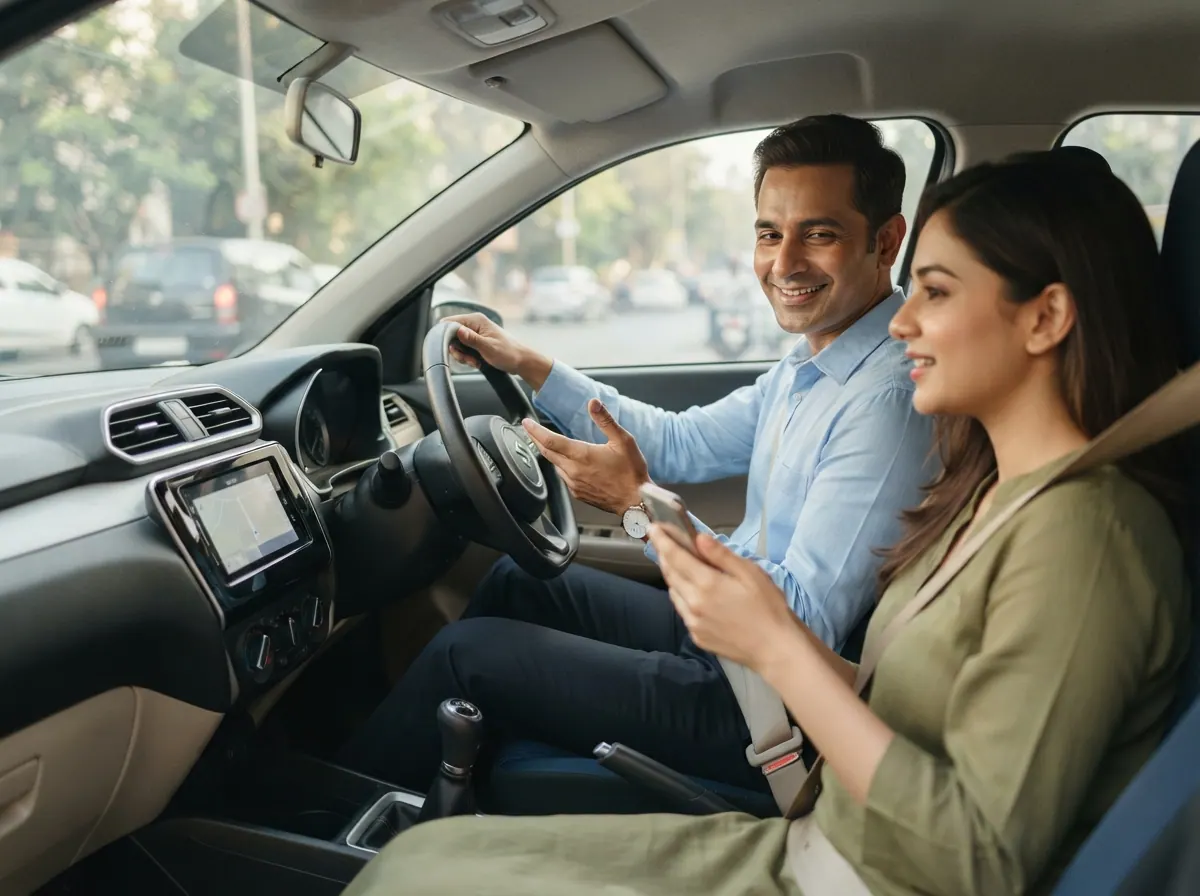
टैक्सी बिज़नेस का मतलब है कि आपके पास किराए के लिए रजिस्टर्ड गाड़ी है और आप राइड ऐप, सीधे ग्राहकों या दोनों से प्रति किलोमीटर या प्रति ट्रिप कमाते हैं। एक कैब करीब ₹6–12 लाख की पड़ती है, और खुद चलाने वाला मालिक लोन कैसे गिनें इस हिसाब से महीने का करीब ₹18,000 से ₹39,000 घर ले जा सकता है। यह गाड़ी के साथ एक नौकरी है, घर बैठे का निवेश नहीं, और घंटे ही सब तय करते हैं।
यहाँ सारे आँकड़े अंदाज़े हैं। पैसा लगाने से पहले अपने इलाके के भाव ज़रूर देखें।
खर्चा कितना आता है?
शहर में चलने वाली एक CNG सेडान के लिए:
| चीज़ | अंदाज़ा |
|---|---|
| गाड़ी (नई CNG हैचबैक करीब ₹7 लाख, नई सेडान ऑन-रोड ₹8.2–8.9 लाख, या पुरानी) | ₹4.7–8.9 लाख |
| CNG किट, अगर गाड़ी में नहीं है | ₹40,000–60,000 |
| कमर्शियल रजिस्ट्रेशन, परमिट, फिटनेस | ₹15,000–30,000 |
| कमर्शियल इंश्योरेंस, पहला साल | ₹30,000–50,000 |
| सीट कवर, फोन होल्डर, GPS, यूनिफॉर्म | ₹10,000–20,000 |
| ड्राइवर बैज, पुलिस वेरिफिकेशन के कागज़ | ₹5,000–10,000 |
| फ्यूल और पहले महीने का चालू पैसा | ₹40,000–80,000 |
| कुल | करीब ₹6.1–11.4 लाख |
ज़्यादातर मालिक ₹1.5–2 लाख डाउन पेमेंट देते हैं और बाकी लोन लेते हैं। डीलर और बैंक के पास कमर्शियल गाड़ी के लोन होते हैं, और कुछ परमिट या प्लेटफॉर्म ऑनबोर्डिंग का लेटर माँगते हैं। ऐसी गाड़ी चुनें जिसका सर्विस सेंटर पास हो और एयरपोर्ट के सामान के लिए अच्छी डिक्की हो।
कमाई कितनी हो सकती है?
मान लें शहर में CNG कैब, 26 काम के दिन, रोज़ 200 किमी जिसमें 160 किमी पैसे वाला, और ऐप पर ₹18 प्रति पैसे वाला किलोमीटर। शहर की तय दरें ₹22–24 प्रति किमी हैं, पर ऐप के किराए इससे कम चलते हैं। प्लेटफॉर्म करीब 20% लेता है, यह अंदाज़ा है (2025 के एग्रीगेटर नियम कहते हैं कि आपको कम से कम 80% मिलना चाहिए, और कुछ ऐप 25% लेते थे), तो मौजूदा दर देख लें। CNG करीब ₹4 प्रति किलोमीटर।
खुद चलाने वाले मालिक का एक महीना
- किराया: 160 किमी × ₹18 = ₹2,880 रोज़
- प्लेटफॉर्म कट: 20% = ₹576
- CNG: 200 किमी × ₹4 = ₹800
- रोज़ का नकद: ₹2,880 − ₹576 − ₹800 = ₹1,504
- महीने का नकद: ₹1,504 × 26 = ₹39,104
हर महीने के तय खर्चे, ₹6 लाख के लोन पर
- EMI = ₹13,000
- कमर्शियल इंश्योरेंस और परमिट, साल भर में बाँटकर = ₹4,000
- सर्विस, टायर, धुलाई = ₹3,000
- पार्किंग, चालान और छोटे खर्चे = ₹1,000
- कुल: ₹21,000
बचा क्या
- खुद चलाएँ: ₹39,104 − ₹21,000 = ₹18,104, आपकी ड्राइविंग के ऊपर
- ₹25,000 पर ड्राइवर रखें: ₹18,104 − ₹25,000 = −₹6,896
पहला आँकड़ा सही पढ़ें: आपकी अपनी ड्राइविंग की मज़दूरी ₹39,104 में ही है, इसलिए ₹18,104 बस वो है जो EMI के बाद गाड़ी जोड़ती है। पाँच साल में EMI खत्म हो तो ₹13,000 महीना वापस आ जाता है। एयरपोर्ट पिकअप, ऑफिस कॉन्ट्रैक्ट और आउटस्टेशन ट्रिप जोड़ें जो दिन के हिसाब से मिलते हैं, तो प्रति किलोमीटर कमाई बढ़ती है। ड्राइवर वाली कैब तभी चलती है जब पक्के और अच्छे पैसे वाले ट्रिप हों।
शुरू करने से पहले क्या चाहिए?
- गाड़ी की क्लास का ड्राइविंग लाइसेंस, और जो बैज या कागज़ आपका राज्य कमर्शियल ड्राइवर से माँगता है।
- साफ रिकॉर्ड। कई ऐप पुलिस वेरिफिकेशन और गाड़ी की जाँच माँगते हैं।
- पूरे डेटा वाला फोन और अच्छा माउंट। नेविगेशन और राइड रिक्वेस्ट दिन भर चलते हैं।
- बचत का सहारा। मरम्मत, एक खाली महीना और पहला इंश्योरेंस बिल पहले मुनाफे से पहले आ जाते हैं।
- घंटों की योजना। जानें कि आपके शहर में कौन से घंटे पैसा देते हैं: सुबह की ऑफिस भीड़, एयरपोर्ट के फेरे, शाम।
कदम-दर-कदम
- एक हफ्ता सवारी बनकर चलें, या किसी काम करते ड्राइवर के साथ बैठें, और गिनें कि पैसे वाले किलोमीटर कितने हैं और खाली कितने।
- गाड़ी चलाने के खर्चे के हिसाब से चुनें, नाम के हिसाब से नहीं। ज़्यादा चलने वाली गाड़ी में CNG या डीज़ल आमतौर पर पेट्रोल से सस्ता पड़ता है।
- डीलर को पैसे देने से पहले RTO से परमिट और रजिस्ट्रेशन के नियम पूछें। पूछें कि किराए के लिए गाड़ी को कौन सी प्लेट, परमिट और फिटनेस के कागज़ चाहिए।
- दो-तीन लोन ऑफर की तुलना करें, सिर्फ EMI नहीं, कुल ब्याज देखकर।
- डैशकैम लगाएँ और ट्रिप बुक रखें, हर ट्रिप, फ्यूल और खर्चा लिखें।
- पहले एक ऐप से जुड़ें, और अपनी असली कमाई प्रति घंटा देखें। फिर सीधे ग्राहक जोड़ें।
- सीधे फोन करने वालों की लिस्ट बनाएँ: होटल, ऑफिस, शादी वाले परिवार, पास का रेलवे स्टेशन या एयरपोर्ट। हर माँगने वाली सवारी को कार्ड दें।
- समय पर सर्विस कराएँ और गाड़ी साफ रखें। रेटिंग और बार-बार आने वाले ग्राहक इसी पर टिके हैं।
कौन से लाइसेंस और कागज़ लगते हैं?
- गाड़ी का कमर्शियल रजिस्ट्रेशन, आमतौर पर परमिट और फिटनेस सर्टिफिकेट के साथ, RTO से। पाँच सीट से कम की कार के लिए ऑल-इंडिया टूरिस्ट परमिट ₹20,000 साल का है।
- सही क्लास का ड्राइविंग लाइसेंस, और राज्य माँगे तो ड्राइवर बैज या वैसे कागज़।
- कमर्शियल इंश्योरेंस। प्राइवेट कार की पॉलिसी आमतौर पर किराए की सवारी को कवर नहीं करती, और प्राइवेट कार को किराए पर चलाना गैरकानूनी है: गाड़ी ज़ब्त हो सकती है, ₹10,000 जुर्माना लग सकता है और इंश्योरेंस क्लेम नकारा जा सकता है।
- प्लेटफॉर्म की ऑनबोर्डिंग जाँच, पुलिस वेरिफिकेशन समेत, अगर ऐप से जुड़ें।
- GST और इनकम टैक्स। अपनी प्लेटफॉर्म कमाई और कार लोन का हिसाब CA से पूछें।
- एयरपोर्ट या रेलवे स्टेशन की एंट्री के लिए अक्सर अलग पास या बुकिंग लगती है। स्थानीय दफ्तर से पूछें।
क्या गलत हो सकता है?
- प्लेटफॉर्म का कट और बदलते रेट। भाव आप तय नहीं करते, और रेट बदलने से महीने का मुनाफा उड़ सकता है।
- खाली दौड़। लंबा इंतज़ार और बेकार ट्रिप कुछ नहीं लौटाते, और फ्यूल फिर भी भरना पड़ता है।
- अपने लिए चलाने वाला ड्राइवर। रखा हुआ ड्राइवर कैश ट्रिप बही से बाहर रख सकता है या गाड़ी बिगाड़ सकता है।
- एक्सीडेंट या खराबी। गैराज में एक हफ्ता मतलब बिना कमाई के एक हफ्ते की EMI।
- चालान और पार्किंग। कमर्शियल प्लेट पर जुर्माने जुड़ते जाते हैं।
- सस्ते किराए की जंग। नए ऐप और ड्राइवर रेट गिराते हैं, और पुराने ड्राइवर कम पैसे में ज़्यादा घंटे चलाते हैं।
- रात का जोखिम। देर रात के ट्रिप असुरक्षित हो सकते हैं, और कुछ मालिक उन्हें बंद कर देते हैं।
ये हालात आपके सामने आएँगे
आप क्या करेंगे? हर फ़ैसले की एक क़ीमत है।
शुरुआत
CNG costs far less per kilometre, but takes boot space and queues at the pump. Petrol is easier and costs more every day.
- Buy a CNG car: Cheaper running, boot space lost
- Buy a petrol car: Easier, higher fuel bills
A new compact sedan carries a bigger EMI. A used one costs less, but nobody knows how hard it was driven.
- Buy new: Large EMI, warranty and looks
- Buy used: Smaller EMI, repair risk
The dealer says you can register it as private first and change later. The RTO says hire cars need commercial papers from the start.
- Register as commercial now: Higher cost, papers right
- Register as private first: Cheaper now, cannot take hire
A larger down payment lowers the EMI. A smaller one keeps savings in hand for repairs and slow weeks.
- Pay a big down payment: Lower EMI, thin savings
- Pay the minimum, borrow more: Higher EMI, cash in hand
An app gives rides on day one but takes a cut and fixes the fare. Direct customers pay better but take months to find.
- Join the app first: Rides now, lower fares
- Build direct customers: Slow start, better fares
Apps and some customers like a recording in the car. It costs money and passengers may feel watched.
- Fit dashcam and tracker: Costly, safer in disputes
- Skip it: Saves money, no proof
Airport runs pay well but mean long waits in the queue. City rides are shorter and steady, with more empty running.
- Work the airport queue: Big fares, long waits
- Stay with city rides: Steady, smaller fares
पहला महीना
A request comes at midnight from a lonely stretch. It pays double, but you are tired and the road is dark.
- Take the ride: Double fare, real risk
- Decline politely: Safe, no extra income
A few passengers marked you low because you took a wrong turn. The app may send you fewer rides.
- Offer water, mints, a clean car: Small spend, ratings climb
- Ignore it: No cost, fewer rides
A passenger argues the meter fare is too high after a detour caused by traffic. You have no way to prove it.
- Accept the lower fare: Lose money, keep the peace
- Insist on the full fare: Keep money, bad rating likely
You waited at a station for a fare and fuel was spent. Other drivers are moving to a busier spot across town.
- Move to the busier spot: Fuel used, better chance
- Keep waiting: Saves fuel, rides uncertain
A small hotel wants you on call for its guests at a fixed rate. The rate is a little below app fares.
- Accept the tie-up: Steady trips, lower rate
- Stay free to choose rides: Higher fares, uncertain
You stopped where a no-parking board was hidden by a tree. The fine is ₹1,000 on your commercial plate.
- Pay the fine at once: Costs money, record clean
- Ignore until later: Cash saved, fine grows
रोज़ का काम
The app lowered its per-kilometre rate and raised its cut. Your daily cash is lower for the same hours.
- Drive longer hours: Make up money, tired and risky
- Shift to direct customers: Effort now, better rates
A wedding family wants the car for four days at a fixed daily rate. The days are long, and other rides would be missed.
- Take the wedding booking: Big money, no app rides
- Stay with regular rides: Smaller steady income
A family wants a two-day trip to a hill station. You earn more per day, but tolls, parking and wear come from your pocket.
- Quote a fair outstation rate: Good money, long drive
- Quote low to win it: Win the trip, thin profit
The car has run 90,000 km and the mechanic says tyres and brake pads are almost gone. A cheap local set is also on offer.
- Fit good branded tyres and pads: Big bill, safe for years
- Fit cheap local ones: Smaller bill, wears faster
A comprehensive policy for a commercial car costs more than third-party only. An agent offers the cheaper one.
- Take comprehensive cover: Higher premium, protected
- Third-party only: Cheaper, your car unprotected
A small company offers a monthly contract for staff pickups at a fixed price. It is steady money but lower per kilometre.
- Sign the contract: Steady money, limited hours
- Stay on open rides: Freedom, uncertain income
Several riders mentioned a smell and sticky seats. A proper interior wash costs more than the usual outside rinse.
- Deep clean every month: Small cost, better ratings
- Keep rinsing outside: Cheap, ratings slip
Your cousin offers to drive the night shift for a share of the fare. You would rest, but trust is the issue.
- Let cousin drive nights: More hours worked, trust risk
- Drive all shifts yourself: No wage paid, tired
जब मुश्किल आए
An auto-rickshaw touched your car's side in traffic. The driver wants cash on the spot, and the car needs paint.
- Claim through insurance: Slow, paperwork, clean record
- Settle in cash now: Quick, costs more
A hot afternoon trip ended with steam from the bonnet. The repair shop says a week and ₹18,000, and EMI is due.
- Repair properly: Costly, a week without income
- Cheap patch and drive on: Cheaper, may fail again
A passenger claims you took a longer route and went to the police station. You have no dashcam recording.
- Cooperate, show trip records: Time lost, record clean
- Refund the whole fare: Quick end, money lost
Rain and a rail strike cut your trips by half. The lender will charge a penalty if you are late.
- Borrow to pay on time: Interest cost, record clean
- Pay the EMI late: Keep cash, penalty and record
Your hired driver's trip book shows fewer trips than the fuel suggests. A customer mentioned a cash ride.
- Fit tracker, check trips: Cost, driver feels watched
- Warn and carry on: No cost, losses may continue
बढ़ाना
You turn down trips every week. A second cab needs a driver you trust, and a second EMI whether rides come or not.
- Buy a second cab: Big EMI, more trips at once
- Keep one and raise rates: Safer, limited growth
A travel agent offers weekly airport transfers at a lower fixed rate. You get steady bookings and lose some freedom.
- Accept the agent's work: Steady trips, lower rate
- Stay independent: Better rate, uncertain
An electric cab costs little per kilometre, but charging points are few and the price is high. Some apps favour them.
- Buy an electric cab: High price, low running cost
- Stay with CNG: Known costs, no new risk
Repeat customers keep asking for your number. A printed card and WhatsApp group would bring direct bookings, but they take time.
- Print cards, run a WhatsApp group: Small cost, direct bookings grow
- Rely on the app only: No effort, no loyal base
क्या यह आपके लिए ठीक है?
यह आपके लिए ठीक है अगर आप रोज़ 10 घंटे चला सकते हैं, अपने शहर की सड़कें जानते हैं और अनजान लोगों से तमीज़ से बात करना पसंद है। अगर आप सिर्फ ऐप के पिंग का इंतज़ार करने के बजाय सीधे ग्राहक बना सकते हैं, तो और अच्छा।
यह कम ठीक है अगर आप बिना चलाए आमदनी चाहते हैं, या पहले साल में उधार पर पाँच कैब रखने की उम्मीद है। खरीदने से पहले एक महीना किसी काम करते कैब ड्राइवर के साथ चलें या बैठें, और उसके किराए, इंतज़ार और फ्यूल का हिसाब लिखें। उसी लॉग से पता चलेगा कि मालिक का असली मुनाफा क्या है।