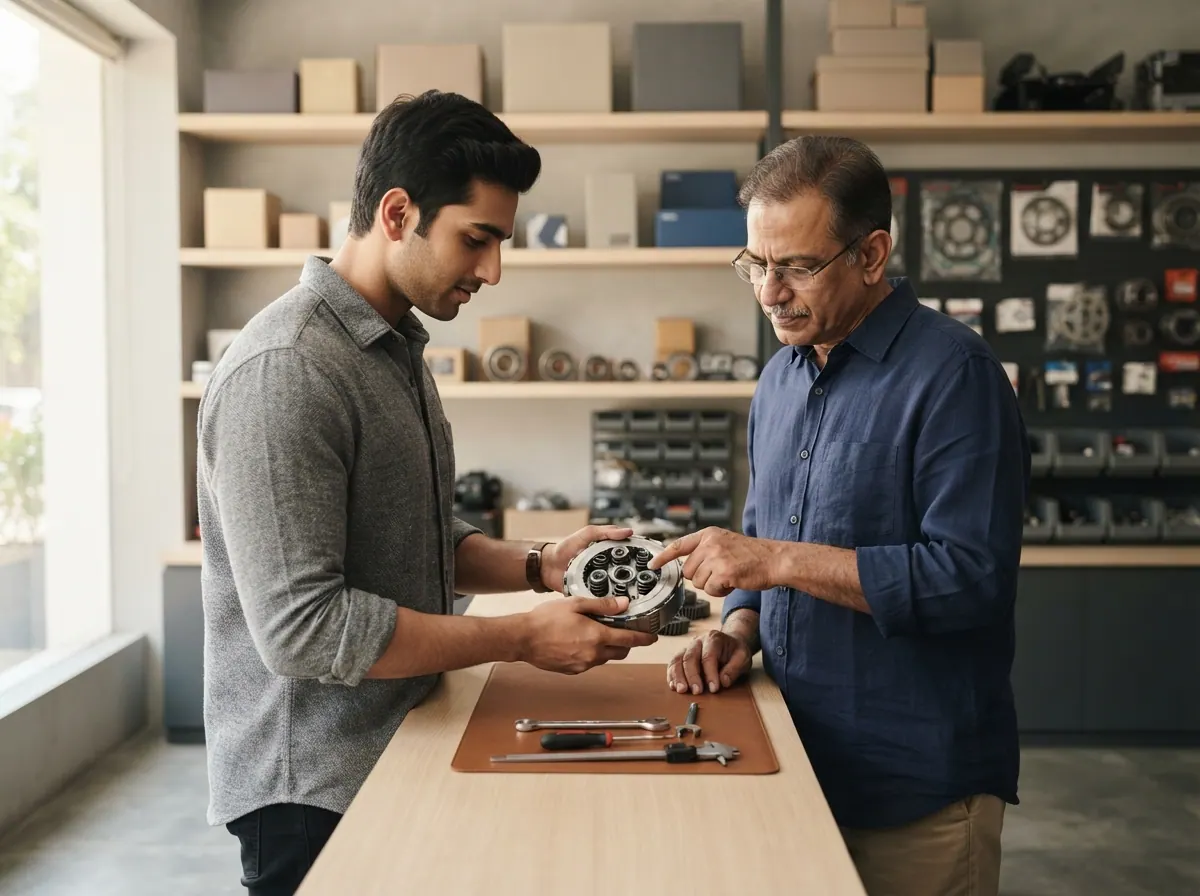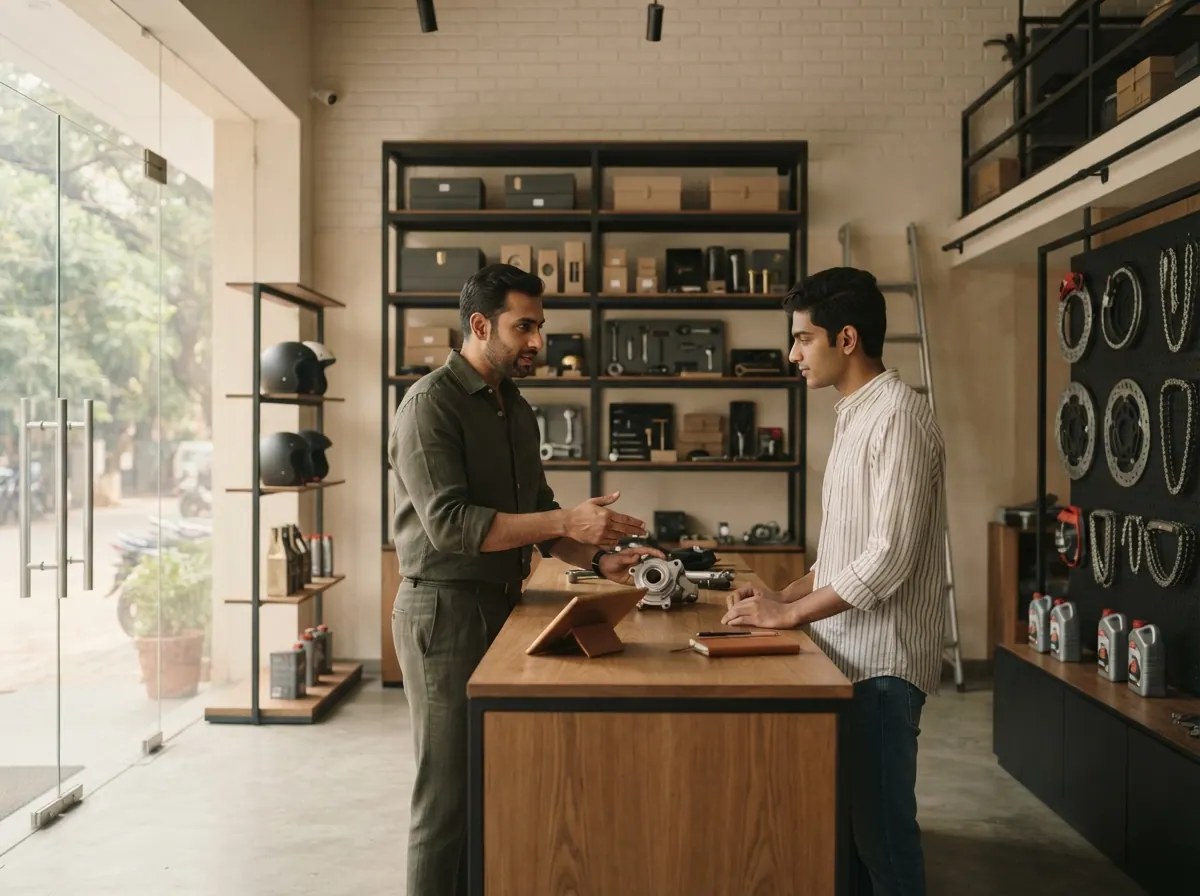
भारत में स्पेयर पार्ट्स की दुकान शुरू करने के लिए आपको गैराज के पास या भीड़ वाली सड़क पर जगह, पार्ट नंबर की कैटलॉग, कुछ डिस्ट्रीब्यूटर जो बिल और उधार दें, और छोटी दो-पहिया दुकान के लिए लगभग ₹3.5–4 लाख या कार, ऑयल, बैटरी और टायर वाली बड़ी दुकान के लिए ₹14–15 लाख चाहिए। ज़्यादातर पैसा माल में बैठता है, और आपके सबसे अच्छे ग्राहक मैकेनिक होते हैं जो रोज़ ख़रीदते हैं और बाद में चुकाते हैं।
यहाँ दिए सारे आँकड़े अंदाज़े हैं। खर्च करने से पहले अपने इलाके के रेट देख लें।
इसमें कितना खर्च आता है?
| मद | छोटी दुकान (बाइक) | बड़ी दुकान (बाइक और कार) |
|---|---|---|
| दो-पहिया पार्ट्स (फ़िल्टर, ब्रेक पैड, चेन, क्लच प्लेट, केबल, बल्ब) | ₹1.6 लाख | ₹5 लाख |
| कार पार्ट्स (फ़िल्टर, पैड, बेल्ट, बल्ब, वाइपर) | ₹50,000 | ₹3 लाख |
| इंजन ऑयल और लुब्रिकेंट | ₹40,000 | ₹1.5 लाख |
| टायर और बैटरी | — | ₹1.5 लाख |
| रैक, काउंटर, पार्ट के डिब्बे | ₹40,000 | ₹1 लाख |
| साइनबोर्ड, कैटलॉग सॉफ़्टवेयर, बिलिंग | ₹15,000 | ₹40,000 |
| किराये की एडवांस (डिपॉज़िट) | ₹50,000 | ₹1.5 लाख |
| शुरुआती महीनों के लिए नकद | ₹25,000 | ₹60,000 |
| कुल | लगभग ₹3.8 लाख | लगभग ₹14.5 लाख |
दो-पहिया पार्ट्स जल्दी बिकते हैं और कम पैसे में आते हैं, इसलिए कई लोग वहीं से शुरू करते हैं और कार पार्ट्स बाद में जोड़ते हैं। टायर और बैटरी पैसा रोकते हैं, इसलिए तभी जोड़ें जब पक्के ग्राहक बार-बार माँगें।
कमाई कितनी हो सकती है?
मान लीजिए दुकान महीने में लगभग ₹5 लाख की बिक्री करती है। यह उदाहरण है, वादा नहीं।
ग्रॉस मार्जिन
- बिक्री: ₹5,00,000
- लगभग 20% औसत मार्जिन: ₹5,00,000 × 0.20 = ₹1,00,000
हर महीने का खर्च
- किराया = ₹20,000
- एक हेल्पर = ₹12,000
- बिजली और फ़ोन = ₹4,000
- डेड स्टॉक, वापसी और छोटे डूबे पैसे = ₹10,000
- ढुलाई और पार्सल चार्ज = ₹4,000
- कुल = ₹50,000
बचत: ₹1,00,000 − ₹50,000 = लगभग ₹50,000 महीना।
आम परेशानी मार्जिन नहीं, उधार और डेड स्टॉक है। अगर गैराज पर ₹1.5 लाख बकाया हैं और ₹40,000 के पार्ट उस बाइक मॉडल के हैं जो बनना बंद हो गया, तो बिक्री अच्छी दिखने पर भी आपका नकद फँसा रहता है।
शुरू करने से पहले क्या चाहिए?
- गैराज के पास की जगह। दो-पहिया और कार के मैकेनिक सुबह और दोपहर के खाने के समय ख़रीदते हैं। गैराज की भीड़ या सर्विस रोड के पास की दुकान शांत गली से बेहतर चलती है।
- पार्ट नंबर की जानकारी। जानें कि आपके इलाके में कौन-से मॉडल चलते हैं, और आम मरम्मत के पार्ट नंबर सीखें।
- बिल देने वाले डिस्ट्रीब्यूटर। पूछें कि हर ब्रांड कौन सप्लाई करता है और कितना उधार देता है।
- उधार के लिए पैसा। पहले तय करें कि गैराज पर कितना बकाया छोड़ सकते हैं।
- पार्ट जल्दी ढूँढने का तरीक़ा। कैटलॉग या सॉफ़्टवेयर अंदाज़े से बचाता है, यानी कम गलत पार्ट।
कदम-दर-कदम
- किसी चलती पार्ट्स की दुकान के पास एक हफ़्ता बिताएँ और लिखें कि कौन-से 80 पार्ट रोज़ बिकते हैं।
- अपना फ़ोकस चुनें: दो-पहिया पार्ट्स, कार पार्ट्स, या सड़क पर चल रही गाड़ियों के हिसाब से मिला-जुला।
- दुकान चुनें गैराज के पास या ऐसी भीड़ वाली सड़क पर जहाँ गाड़ियाँ ख़राब होती हैं।
- 2–3 डिस्ट्रीब्यूटर के साथ खाता खोलें, और जेनुइन और आफ़्टरमार्केट की लिस्ट अलग रखें।
- पहले तेज़ बिकने वाला माल रखें: ऑयल फ़िल्टर, एयर फ़िल्टर, ब्रेक पैड और शू, क्लच प्लेट, चेन और स्प्रॉकेट, केबल, बल्ब, स्पार्क प्लग, चलते मॉडल की बैटरी।
- कैटलॉग इस्तेमाल करें। पार्ट देने से पहले पार्ट नंबर जाँचें।
- लोकल मैकेनिकों से मिलें और उनके पहले कुछ ऑर्डर पर ठीक रेट दें।
माल क्या रखना है, यह कैसे तय करें?
अपनी सड़क की गाड़ियों से शुरू करें। एक सुबह किसी गैराज के बाहर खड़े होकर गिनें कि कौन-सी बाइक और कारें आती हैं। कई शहरों में इसका मतलब कुछ चलती कम्यूटर बाइक मॉडल और मुट्ठी भर हैचबैक कारें होता है, इसलिए हर चीज़ की पतली रेंज रखने से पहले इनके फ़िल्टर, पैड, चेन, क्लच प्लेट और बल्ब गहराई से रखें। हर उस पार्ट की कॉपी रखें जिसके लिए ग्राहक को लौटाना पड़ा। जब तीन ग्राहक एक ही पार्ट माँगें, तो मँगा लें। हर तिमाही पुराना स्टॉक जाँचें और धीमा माल मॉडल बंद होने से पहले छूट पर निकाल दें, वरना कोई नहीं लेगा।
कौन-से लाइसेंस लगते हैं?
हर बात लोकल दफ़्तर से पक्की कर लें, क्योंकि नियम राज्य के हिसाब से बदलते हैं:
- शॉप एंड एस्टैब्लिशमेंट रजिस्ट्रेशन, नगर निगम या श्रम विभाग में।
- GST, जहाँ बिक्री सीमा पार करे, और टैक्स इनवॉइस पर ख़रीदने के लिए।
- ट्रेड लाइसेंस, कुछ शहरों में स्थानीय निकाय से।
- बैटरी और ऑयल। अगर आप पुरानी बैटरी या इस्तेमाल हुआ ऑयल लेते हैं, तो जमा करने और निपटाने के नियम पूछें।
क्या गलत हो सकता है?
- नकली या घटिया ब्रेक और क्लच पार्ट। ब्रांडेड सुरक्षा पार्ट की सस्ती नकल फ़ेल हो सकती है, और बिल पर आपका नाम होता है।
- गलत पार्ट बिकना। फ़िट न होने वाला पार्ट वापसी और एक मैकेनिक के खोने की वजह बनता है।
- डेड स्टॉक। जब कंपनी कोई मॉडल बंद या अपडेट करती है, तो पुराने पार्ट आपकी शेल्फ़ पर पड़े रहते हैं।
- उधार जो लौटता नहीं। गैराज कभी-कभी महीनों बकाया रखते हैं।
- ऑनलाइन दाम। ग्राहक छोटे पार्ट की ऐप के दाम से तुलना करते हैं।
- बरसात का नुकसान। पानी से ब्रेक डिस्क, चेन और बेयरिंग में जंग लग सकता है।
ये हालात आपके सामने आएँगे
आप क्या करेंगे? हर फ़ैसले की एक क़ीमत है।
शुरुआत
Bike parts turn over fast with small money. Car parts earn more per sale but need bigger stock and a wider catalogue.
- Start with bike parts: Lower stock, quick turns
- Add car parts from day one: Big stock, bigger bills
Genuine parts carry a company name and a thin margin. Good aftermarket brands cost less and mechanics often prefer them.
- Stock mostly genuine: Costly, trusted by owners
- Stock good aftermarket brands: Cheaper, more mechanic sales
A shop inside the garage lane has mechanics at the door but little else. A main road shop gets walk-ins and bike owners.
- Rent in the garage lane: Mechanic orders, narrow lane
- Rent on the main road: More walk-ins, high rent
A big-city parts market has more choice and lower prices, but a long trip and no easy returns.
- Make the trip, buy big: Cheaper stock, hard to return
- Use local distributors: Dearer, easier returns
Finding the right part number from thick paper books is slow. Parts software costs money and takes time to learn.
- Buy catalogue software: Cost, fewer wrong parts
- Use paper catalogues: Cheap, slower and riskier
Oil sells every service but ties up money in many grades and brands, and customers bargain hard.
- Stock three main brands: Cash locked, repeat sales
- Stock one brand only: Lower risk, limited choice
Batteries sell at good prices but warranty claims mean paperwork, delays and unhappy customers.
- Stock one trusted battery brand: Spend, claim handling needed
- Skip batteries for now: No risk, miss some sales
पहला महीना
A mechanic opened a clutch plate kit and found it does not fit the model. You looked it up in a hurry.
- Exchange and own the mistake: Small loss, trust kept
- Say they should have checked: No loss, mechanic leaves
Two mechanics say they will send customers to you if you pay them 10% on every part bill.
- Agree to 10%: More customers, margin cut
- Offer a trade discount: Cheaper, weaker pull
A customer needs a part for a less common model. Your distributor can bring it in four days.
- Order it for the customer: Wait, builds loyalty
- Send them to another shop: No cost, lose the sale
A busy garage wants ₹20,000 of parts now and will pay in 15 days, after the customers pay it.
- Give the credit: Big sale, money may be late
- Ask for half now: Safer, may go elsewhere
A customer returns a battery that has stopped holding charge. The warranty claim with the company takes weeks.
- Replace it now, claim later: Cash out now, goodwill
- Ask the customer to wait: No cost, a cross customer
A customer buying filters, plugs and oil together asks for 12% off the whole bill.
- Give 8% on the kit: Small loss, repeat buyer
- Hold the full price: Keep margin, lose them
रोज़ का काम
Rain brings brake pad, wiper, bulb and chain repairs. Last year you ran out by the second week.
- Stock heavily before rains: Cash locked, ready for rush
- Stock a moderate lot: Safer, may run short
The maker stopped a popular bike model. You hold ₹40,000 of parts for it and no new buyers are coming.
- Clear stock at a discount: Loss, free your cash
- Hold for old bike owners: Cash stays locked
A large garage wants every part from you, at a trade price, and will pay on the last day of the month.
- Take the account: Big sales, slow payment
- Ask for payment every 10 days: Safer, they may refuse
Customers show you app prices for bulbs, filters and chain sets, some below your buying price.
- Match on a few popular parts: Lose margin, hold footfall
- Hold price, offer fitting advice: Keep margin, lose price hunters
A small fleet owner wants filters, pads and oil on a monthly contract. They pay after 30 days.
- Sign the contract: Steady orders, wait for money
- Supply only on payment: Safer, fewer orders
Before Diwali, riders buy mirrors, seat covers, lights and horns. Items are cheap but sell in bulk for a week.
- Stock an accessories rack: Spend, fast festival sales
- Skip accessories: No spend, quieter week
Several customers with electric scooters ask for tyres, brake pads and chargers you do not carry.
- Stock common EV parts: Spend, new customers
- Stay with petrol vehicles: No spend, miss a trend
Mechanics are too busy to come in. They ask if a boy can bring parts to their garage within minutes.
- Hire a delivery boy: Wages and fuel, more orders
- Ask them to send someone: No cost, slower service
जब मुश्किल आए
A trader offers famous-brand brake pads at half the dealer price. There is no bill, and the box printing looks slightly off.
- Refuse, stay with the distributor: Full cost, safe name
- Send a sample to the brand: Delay, a clear answer
A rider had a minor crash and says the brake pads you sold failed. Your bill and batch are on record.
- Inspect with the company, help: Time and cost, honest answer
- Deny and refuse to talk: No cost, trust damaged
A garage is two months late and says customers have not paid it. It still wants parts today.
- Stop supply until it pays: Lose the garage, protect cash
- Give a small lot on credit: More owed, garage stays
A year of slow parts for old models sits at the back. They have not moved and block space for new stock.
- Sell the lot to scrap: Loss, space for new stock
- Keep it and wait: Cash locked, shelf blocked
A flooded drain sent water over the bottom racks. Chains, discs and bearings are starting to rust.
- Oil, clean, discard the rusty ones: Costly, honest stock
- Sell the lightly rusted ones cheap: Less loss, a weak name
Small high-value parts disappear when the counter is crowded. A helper or a customer may be taking them.
- Add a camera, move small parts: Cost, fewer losses
- Warn the helper only: Free, losses may continue
बढ़ाना
Car owners ask for seat covers, mats, music systems and horns. They give better margins but need floor space.
- Add an accessories section: Spend, higher margin
- Stay with parts only: Focused, smaller bills
Small shops in nearby towns want to buy from you in bulk. They ask for a lower rate and a month to pay.
- Start wholesale with advance: Volume, wait or risk
- Stay with retail: Simple, slower growth
Mechanics send part names and photos on WhatsApp and want quick delivery. It needs a catalogue and a runner.
- Build the catalogue and delivery: Cost, wider customer base
- Keep it over the counter: No spend, no extra reach
क्या यह आपके लिए ठीक है?
स्पेयर पार्ट्स की दुकान आपके लिए ठीक है अगर आपको मॉडल नंबर सीखना पसंद है, मैकेनिकों से सख़्ती से निपट सकते हैं, और धीमे पैसे के साथ धैर्य रख सकते हैं। अगर आपको तेज़ नकद चाहिए, या उधार को ना कहना आपको मुश्किल लगता है, तो कम जँचेगा।
एक अच्छा टेस्ट: किसी पार्ट्स की दुकान के काउंटर के पीछे दो हफ़्ते बिताएँ। देखें कि कितने ग्राहक मैकेनिक हैं, कितना उधार है, और कितनी बार कोई ऐसा पार्ट माँगने आता है जो स्टॉक में नहीं होता। अगर यह सब आप सँभाल सकते हैं, तो दो-पहिया पार्ट्स से शुरू करें और कार तब जोड़ें जब पक्के ग्राहक माँगें।