भारत में झींगा फ़ार्म शुरू करने के लिए आपको साफ़ खारे पानी के स्रोत के पास सही ज़मीन, एयरेटर वाला लाइनर लगा तालाब, रजिस्टर्ड हैचरी का बीज, कोस्टल एक्वाकल्चर अथॉरिटी में registration, और एक एकड़ के लिए पहली फ़सल समेत करीब ₹7–10 लाख या पांच एकड़ के लिए ₹25–30 लाख चाहिए। फ़सल सही निकले तो अच्छी कमाई हो सकती है, लेकिन तालाब में एक बीमारी लगाई हुई पूरी रकम बहा सकती है। उधार के पैसे और बिना अनुभव के यह काम शुरू न करें।
यहां के सारे आंकड़े अंदाज़े हैं। पैसा लगाने से पहले अपने इलाके के दाम और नियम देख लें।
कितना खर्च आता है?
| चीज़ | 1 एकड़ | 5 एकड़ |
|---|---|---|
| तालाब की खुदाई और HDPE लाइनर | ₹2–4 लाख | ₹8–14 लाख |
| पैडलव्हील एयरेटर | ₹1–1.5 लाख | ₹4–6 लाख |
| इनलेट, आउटलेट, जलाशय, फ़िल्टर | ₹50,000–1 लाख | ₹2–3 लाख |
| जनरेटर या बिजली कनेक्शन | ₹50,000–1 लाख | ₹1.5–2.5 लाख |
| पानी जांच किट, जाल, छोटे औज़ार | ₹20,000–40,000 | ₹50,000–1 लाख |
| पहली फ़सल: बीज, चारा, बिजली, मज़दूरी | ₹3–3.5 लाख | ₹12–15 लाख |
| कुल | करीब ₹7–10 लाख | करीब ₹25–30 लाख |
ज़मीन किराये की हो तो किराया जोड़ें। लाइनर और एयरेटर कई फ़सल चलते हैं, पर चारा और बिजली हर फ़सल में फिर देने पड़ते हैं।
कौन-सा झींगा पालें?
- पैसिफ़िक व्हाइट झींगा (वन्नामेई): भारत में मुख्य पाला जाने वाला झींगा, रजिस्टर्ड हैचरी का बीज और तेज़ फ़सल।
- टाइगर झींगा (मोनोडोन): बड़ा और धीमा झींगा, कुछ इलाकों में पाला जाता है, ज़्यादातर कम घनत्व में।
बीज सिर्फ़ अथॉरिटी में registered हैचरी से लें, और तालाब में डालने से पहले उनकी जांच रिपोर्ट मांगें जिसमें आम बीमारियों की जांच दिखे।
कमाई कितनी हो सकती है?
एक एकड़ की अच्छी फ़सल, फिर साल भर का हिसाब। ये उदाहरण के आंकड़े हैं।
एक फ़सल, एक एकड़
- बीज: 50,000 पोस्ट-लार्वा
- करीब 75% बचे = 37,500 झींगे
- करीब 30 झींगे प्रति किलो = करीब 1,250 किलो
- 1,250 किलो × करीब ₹320 किलो = ₹4,00,000
उस फ़सल का खर्च
- बीज: 50,000 × करीब ₹0.5 = ₹25,000
- चारा: 1,250 किलो झींगा × प्रति किलो करीब 1.4 किलो चारा × करीब ₹90 = करीब ₹1,57,500
- एयरेटर की बिजली और डीज़ल = करीब ₹50,000
- प्रोबायोटिक और मिनरल = करीब ₹30,000
- चार महीने की मज़दूरी = करीब ₹60,000
- निकासी, बर्फ़, ढुलाई और जांच = करीब ₹15,000
- कुल = करीब ₹3,37,500
फ़सल से बचत: ₹4,00,000 − ₹3,37,500 = करीब ₹62,500।
साल में दो फ़सल हों तो करीब ₹1,25,000 साल, यानी करीब ₹10,000 महीना। फ़सल फ़ेल हुई तो ₹3,37,500 का ज़्यादातर हिस्सा गया। दाम ₹30 किलो गिरे तो profit लगभग आधा रह जाता है।
शुरू करने से पहले क्या चाहिए?
- अच्छा पानी का स्रोत। सही खारेपन वाला खारा पानी, और मीठे पानी तक पहुंच, नालों या फ़ैक्टरी से दूर।
- Registration। कोस्टल एक्वाकल्चर अथॉरिटी और अपने मत्स्य दफ़्तर से पूछें।
- प्रशिक्षण। एक फ़सल किसी अनुभवी किसान के साथ बिताएं। खारापन, pH, ऑक्सीजन और अमोनिया जैसी पानी की जांच रोज़ का काम है।
- खरीदार। स्थानीय व्यापारी, प्रोसेसर और निर्यातक तय count और दाम पर खरीदते हैं। निकासी से पहले उन्हें जान लें।
- पूरी फ़सल का पैसा। निकासी तक चारे और बिजली का खर्च न उठा सकें तो शुरू न करें।
कदम दर कदम
- एक फ़सल किसी के फ़ार्म पर काम करें और निकासी व फ़ेल फ़सल दोनों देखें।
- Registration के नियम अथॉरिटी और मत्स्य दफ़्तर से पता करें।
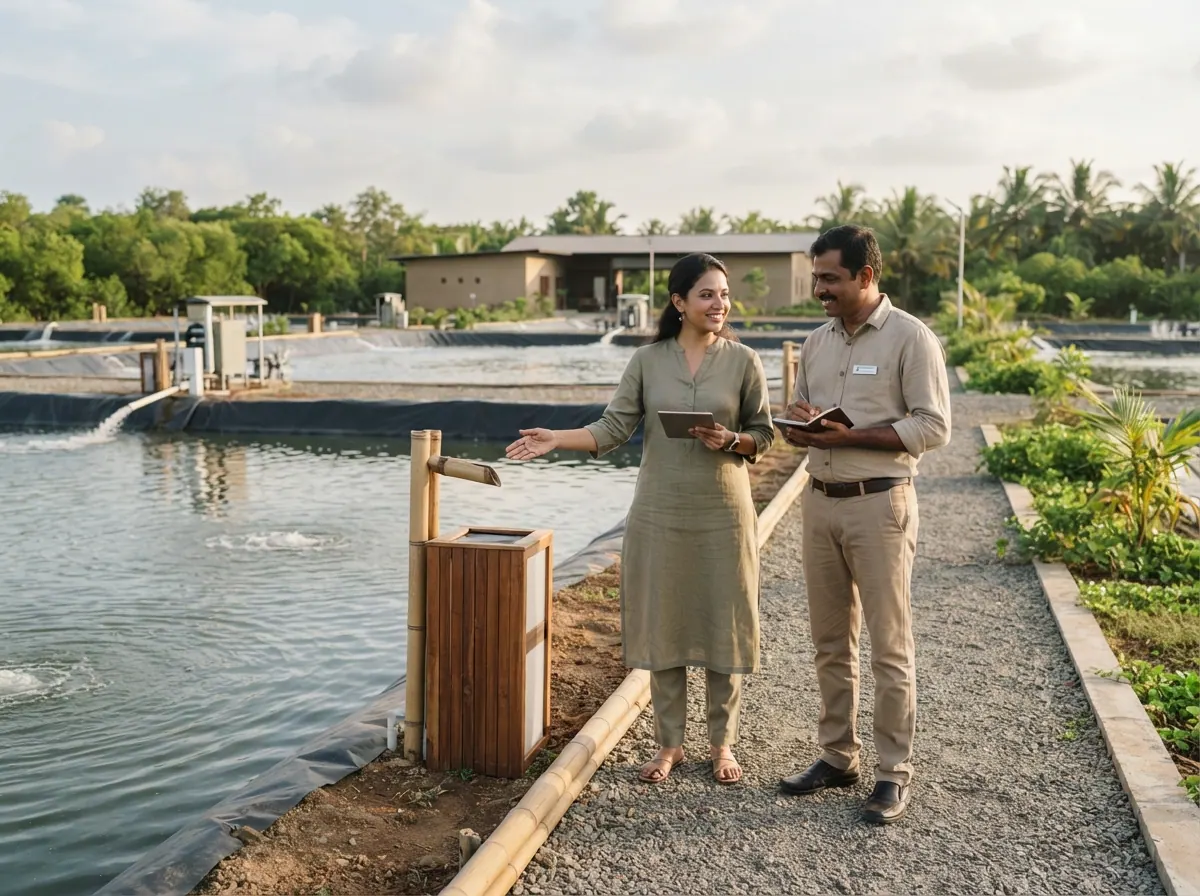
- तालाब बनाएं: लाइनर, ढलान और नाली के साथ, और बताए अनुसार सुखाकर उपचार करें।
- पानी भरें और तैयार करें: फ़िल्टर लगाकर, और बीज डालने से पहले बैठने दें।
- रजिस्टर्ड हैचरी का बीज डालें, उनकी जांच रिपोर्ट देखने के बाद।
- दिन में कई बार थोड़ा-थोड़ा चारा दें, और बर्बादी से बचने के लिए चेक ट्रे इस्तेमाल करें।
- रोज़ पानी जांचें और बताए अनुसार एयरेटर चलाएं।
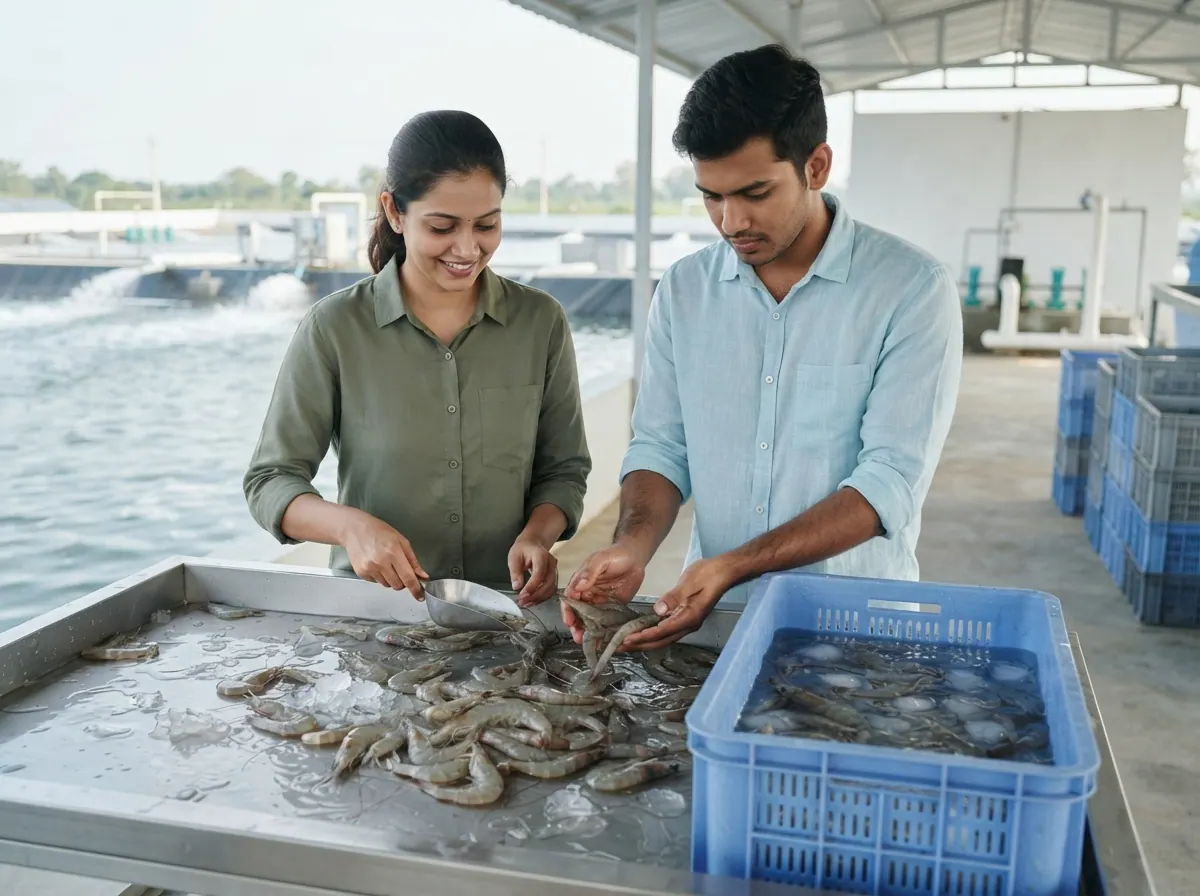
- खरीदार के चाहे साइज़ पर निकासी करें और बर्फ़ व ढुलाई तैयार रखें।
कौन-से लाइसेंस लगते हैं?
- कोस्टल एक्वाकल्चर अथॉरिटी: तटीय झींगा फ़ार्म को आम तौर पर अथॉरिटी में registration चाहिए। अभी की प्रक्रिया और फ़ीस देखें।
- ज़मीन और पानी: खारा पानी लेने, ज़मीन के इस्तेमाल और पानी बाहर छोड़ने पर स्थानीय नियम हैं।
- हैचरी का बीज: रजिस्टर्ड हैचरी का बीज ही लें।
- Loan और योजनाएं: मत्स्य विभाग और बैंक मछली पालन में मदद दे सकते हैं। नियम बदलते हैं, उनसे पूछें।
- एंटीबायोटिक और केमिकल: कई प्रतिबंधित हैं और निर्यात के खरीदार अवशेष जांचते हैं। मत्स्य दफ़्तर जो अनुमति दे, वही मानें।
- टैक्स: अपनी बिक्री पर टैक्स कैसे लगेगा, CA से पूछें।
क्या गलत हो सकता है?
- बीमारी। व्हाइट स्पॉट वायरस, EHP और जल्दी मौत की समस्याएं जानी-पहचानी हैं। सस्ता या बिना जांच का बीज जोखिम बढ़ाता है।
- खराब पानी। रात में कम ऑक्सीजन, ज़्यादा अमोनिया और अचानक बारिश कुछ दिनों में तालाब बिगाड़ सकती है।
- ज़्यादा चारा। बचा चारा पानी खराब करता है। ट्रे देखें और चारा घटाएं।
- प्रतिबंधित दवाएं। अवशेष से माल लौट सकता है, और बिक्री व साख दोनों जाती हैं।
- दाम गिरना। निकासी के समय दाम गिरे तो profit मिट सकता है।
- बिजली जाना। रात में एयरेटर बंद हों तो फ़सल मर सकती है। जनरेटर तैयार रखें।
ये हालात आपके सामने आएँगे
आप क्या करेंगे? हर फ़ैसले की एक क़ीमत है।
शुरुआत
A neighbour never registered the pond. The authority process takes time and costs fees.
- Register with the authority: Fees and wait, legal farm
- Dig now, register later: Faster start, trouble later
A lined pond is cleaner and easier to manage. A plain earth pond costs less but holds disease and mud.
- Line the pond: Costly, easier water control
- Keep earth bottom: Cheaper, harder cleaning
A registered hatchery shows a test report. A trader offers seed at half the price, no papers.
- Buy tested hatchery seed: Higher price, cleaner start
- Buy cheap trader seed: Low price, disease risk
An expert says four per acre. A mechanic says two are enough to save money and power.
- Install four aerators: Costly, safer oxygen
- Install two aerators: Cheaper, risk at night
Local power cuts often last hours at night. A generator costs money and diesel.
- Buy a generator: Costly, aerators keep running
- Rely on grid power: Cheap, night crash risk
A farmer offers to let you work a crop for low pay. Your pond is nearly ready and you feel late.
- Work the crop first: Lose months, learn the work
- Start stocking now: Faster, mistakes likely
The pond bottom is still damp from the last rain. Stocking now saves a week.
- Dry it fully and treat: Delay, cleaner bottom
- Stock the damp pond: Quick, higher disease risk
पहला महीना
The hatchery suggests a safe density. A neighbour stocks double and promises double profit.
- Stock at safe density: Lower output, lower risk
- Stock heavily like the neighbour: More shrimp, high crash risk
Shrimp look hungry and the helper wants to add more feed. Check trays take time every meal.
- Use check trays, adjust feed: Time, less waste
- Feed by habit: Easy, water goes bad
Before dawn, shrimp swim near the edge and oxygen is low.
- Run all aerators, cut feed: Power cost, saves shrimp
- Wait for sunrise: No cost, mortality risk
Buying a test kit costs money. A neighbour says colour is enough.
- Buy a salinity and pH kit: Cost now, early warnings
- Judge by colour: Free, miss early signs
A storm lowers the pond salinity and the shrimp look stressed.
- Adjust water as advised: Work and cost, calmer shrimp
- Leave it to settle: Free, stress and deaths
रोज़ का काम
Your feed dealer raises price just as shrimp grow fastest.
- Buy a brand tested earlier: Costly, stable growth
- Switch to a cheaper brand: Saves cost, growth unclear
A dealer says the product prevents all disease. It costs a lot.
- Ask your adviser first: Fee, avoid wasted money
- Buy the full course: High cost, no proof
You can cast a net to weigh a sample. It takes time but shows real growth.
- Sample every week: Time, better feed decisions
- Guess from appearance: No time, wrong feed
Waste gathers in the middle of the pond and smells bad.
- Siphon the sludge: Labour, healthier pond
- Ignore it: Free, disease risk
The buyer pays for 40 count today. Waiting two weeks gives bigger shrimp, but disease is spreading nearby.
- Harvest now: Cash in, smaller shrimp
- Wait two weeks: More size, risk and feed
A truck is booked, but ice is short on harvest day.
- Pay extra for ice: Cost, fresh shrimp
- Delay harvest to next day: Lost day, feed and risk
A trader pays quickly at a lower price. A processor pays more but after thirty days.
- Take the trader's cash: Fast cash, lower price
- Wait for the processor: Higher price, slow money
The electricity bill is much higher than planned. Aerators run most of the night.
- Run aerators only as needed: Watch oxygen, saves power
- Keep all running all night: Safer oxygen, high bill
जब मुश्किल आए
Dead shrimp show white spots on shells. Neighbours' ponds are affected too.
- Harvest early, tell the officer: Loss, protects neighbours
- Treat and hope: Chemicals cost, outbreak risk
Shrimp eat but stay small. A lab test points to EHP.
- Pay for a lab test: Fee, informed decision
- Wait and feed more: Feed cost, no gain
The dealer says it clears disease fast. Export buyers test for residues.
- Refuse and call the officer: Lost time, stay clean
- Ask the adviser for allowed fixes: Fee, legal options
Grid power fails at midnight and the generator has no fuel pump.
- Hire a nearby generator: Hire cost, shrimp saved
- Splash water by hand: Free, tiring, losses
A storm warning says to expect floods. Ponds may overflow and wash out stock.
- Harvest early, secure farm: Lower size, saves income
- Stay and strengthen bunds: Costs work, risk loss
Your landlord asks for a large rise at the next renewal.
- Pay the new lease: Higher fixed cost
- Look for other land: Time lost, new setup
बढ़ाना
Your first crop worked. More ponds mean more income and more risk.
- Build a second lined pond: Costly, more output
- Improve the first pond: Cheaper, steady
Treated reservoir water lowers disease risk but takes land.
- Build a reservoir: Land and cost, safer water
- Skip it: Land stays productive, risk
The bank will lend for more ponds if your registration and records are in order.
- Prepare papers with a CA: Fees, access to credit
- Grow from profits: No interest, slower
A group of local farmers buys feed in bulk and splits the saving.
- Join the group: Money upfront, lower rates
- Buy alone: No commitment, higher rates
क्या यह आपके लिए सही है?
झींगा पालन उनके लिए ठीक है जिनके पास तट के पास ज़मीन और पानी है, जो रोज़ तालाब देख सकते हैं, और जो एक फ़सल खोने का जोखिम उठा सकते हैं। उनके लिए कम ठीक है जो नुकसान सह नहीं सकते या खेती में नए हैं।
एक अच्छा तरीका: एक पूरी फ़सल किसी झींगा फ़ार्म पर काम करें, पानी की जांच और निकासी समेत। फिर भी आगे बढ़ना चाहें तो एक एकड़ से शुरू करें और खुद एक अच्छी फ़सल लेने के बाद ही बढ़ें।