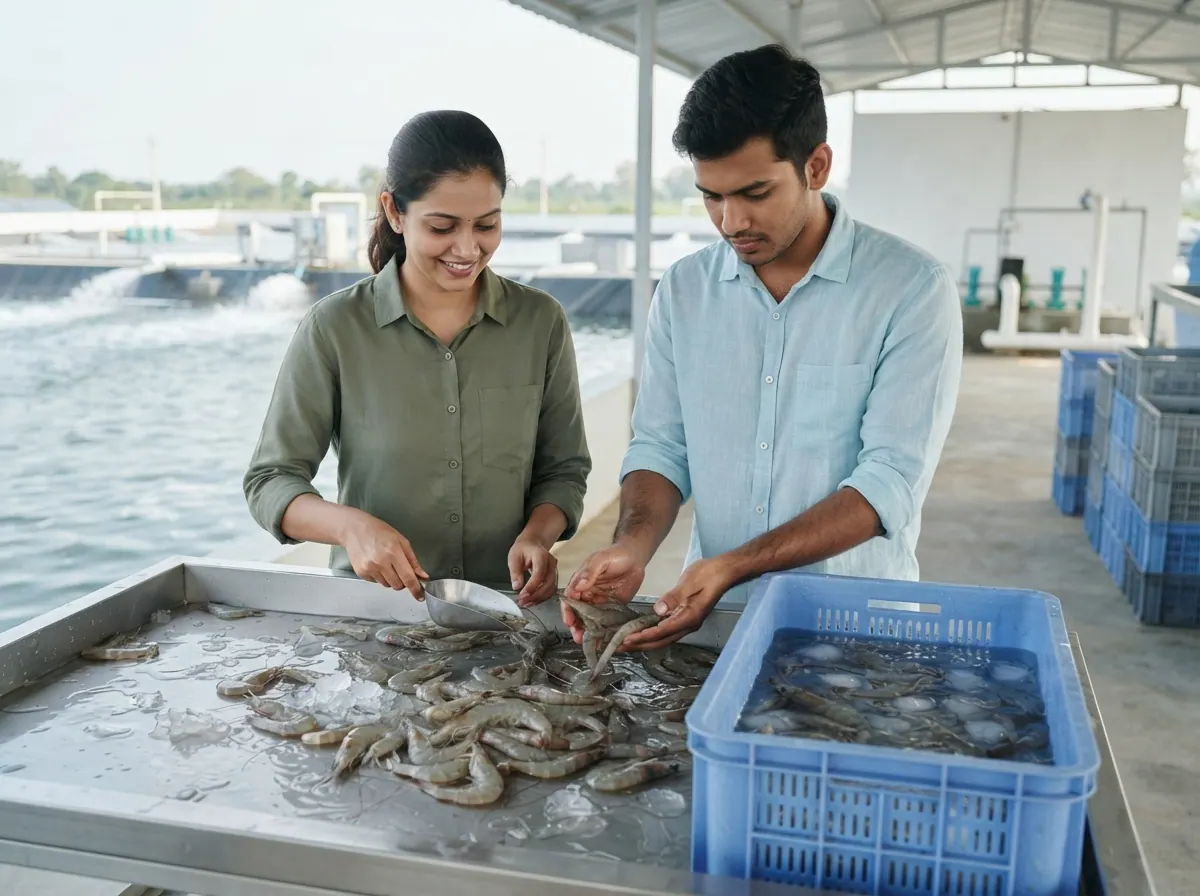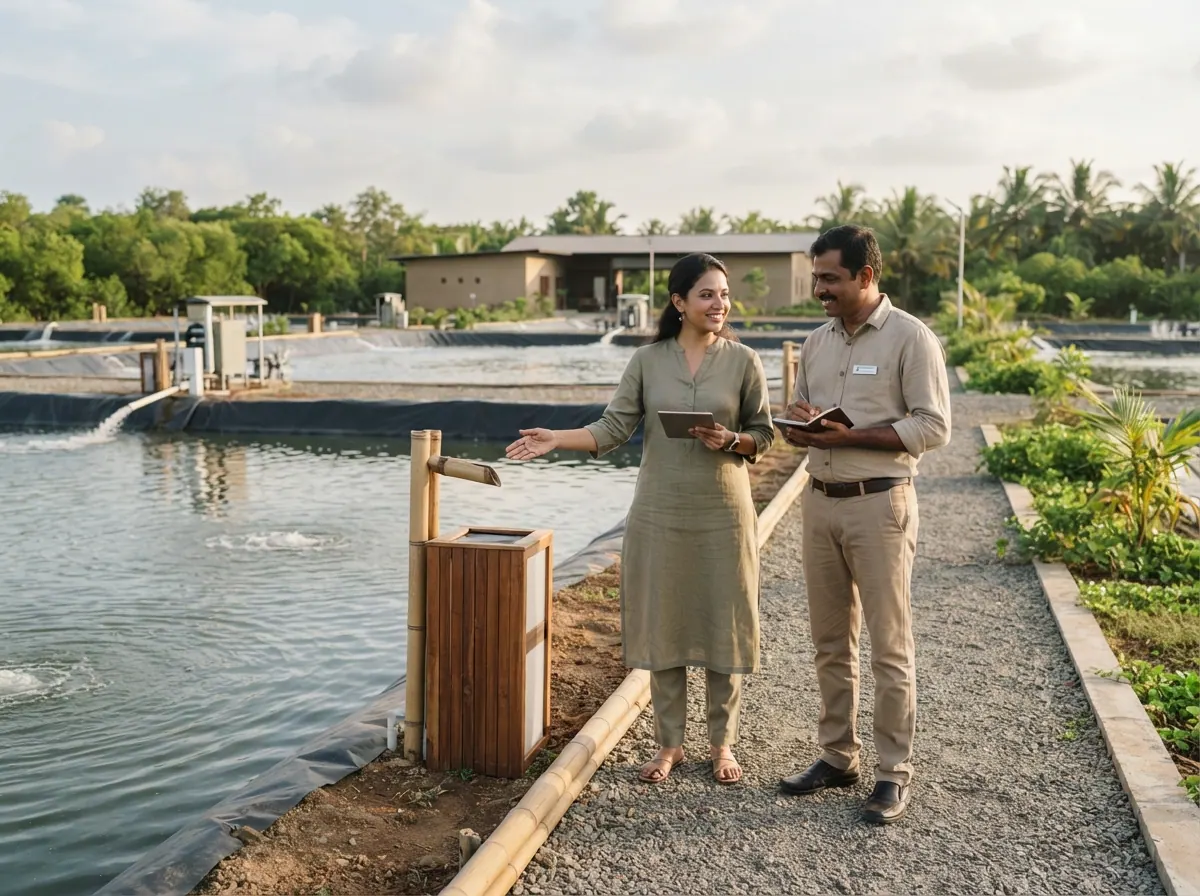
To start a shrimp farm in India you need suitable land near a clean brackish water source, a lined pond with aerators, seed from a registered hatchery, registration with the Coastal Aquaculture Authority, and about ₹7–10 lakh for one acre including the first crop, or ₹25–30 lakh for five acres. It can pay well when a crop works, but a single disease outbreak in the pond can wipe out the money you put in. This is not a trade to start with borrowed money and no experience.
All figures here are estimates. Check prices and rules near you before you spend.
What does it cost?
| Item | 1 acre | 5 acres |
|---|---|---|
| Pond digging and HDPE lining | ₹2–4 lakh | ₹8–14 lakh |
| Paddlewheel aerators | ₹1–1.5 lakh | ₹4–6 lakh |
| Inlet, outlet, reservoir, filters | ₹50,000–1 lakh | ₹2–3 lakh |
| Generator or power connection | ₹50,000–1 lakh | ₹1.5–2.5 lakh |
| Water testing kit, nets, small tools | ₹20,000–40,000 | ₹50,000–1 lakh |
| First crop: seed, feed, power, labour | ₹3–3.5 lakh | ₹12–15 lakh |
| Total | about ₹7–10 lakh | about ₹25–30 lakh |
If you rent land, add the lease. The lining and aerators last several crops, but feed and power are paid again every crop.
Which shrimp should you farm?
- Pacific white shrimp (vannamei): the main farmed shrimp in India, with seed from registered hatcheries and a fast crop.
- Tiger shrimp (monodon): a larger, slower shrimp, farmed in some areas, more often in lower-density systems.
Buy seed only from a hatchery registered with the authority, and ask for a test report that shows it was checked for common diseases before you stock the pond.
How much can it earn?
Here is one acre in a good crop, then spread over a year. These are example numbers.
One crop, one acre
- Seed: 50,000 post-larvae
- Survival of about 75% = 37,500 shrimp
- At about 30 shrimp to the kg = about 1,250 kg
- 1,250 kg × about ₹320 a kg = ₹4,00,000
Costs in that crop
- Seed: 50,000 × about ₹0.5 = ₹25,000
- Feed: 1,250 kg shrimp × about 1.4 kg feed per kg × about ₹90 = about ₹1,57,500
- Power and diesel for aerators = about ₹50,000
- Probiotics and minerals = about ₹30,000
- Labour for four months = about ₹60,000
- Harvest, ice, transport and tests = about ₹15,000
- Total = about ₹3,37,500
Left over from the crop: ₹4,00,000 − ₹3,37,500 = about ₹62,500.
With two crops a year, that is about ₹1,25,000 a year, or about ₹10,000 a month. If a crop fails, you lose most of ₹3,37,500. If the price drops by ₹30 a kg, the profit nearly halves.
What do you need before you start?
- A good water source. Brackish water with the right salinity, and fresh water access, away from drains or industry.
- Registration. Check with the Coastal Aquaculture Authority and your fisheries office.
- Training. Spend a crop with an experienced farmer. Water tests such as salinity, pH, oxygen and ammonia are a daily job.
- A buyer. Local traders, processors and exporters buy at a set count and price. Know them before harvest.
- Money for the full crop. Do not start if you cannot cover feed and power until harvest.
Step by step
- Work one crop on someone's farm and see a harvest and a failure.
- Check registration rules with the authority and fisheries office.
- Build the pond with a lining, slope, and a drain, and let it dry and be treated as advised.
- Fill and prepare the water with filters, and let it settle before stocking.
- Stock seed from a registered hatchery, after you have checked their test report.
- Feed in small amounts, several times a day, using check trays to avoid waste.
- Test water daily and run aerators as advised.
- Harvest at the size your buyer wants and have ice and transport ready.
Which licences apply?
- Coastal Aquaculture Authority: coastal shrimp farms generally need registration with the authority. Check the current process and fee.
- Land and water: local rules apply to taking brackish water, land use and discharge.
- Hatchery seed: use seed from registered hatcheries.
- Loans and schemes: the fisheries department and banks may offer help for aquaculture. Rules change, so check with them.
- Antibiotics and chemicals: many are banned, and export buyers test for residues. Follow what the fisheries office allows.
- Tax: ask a CA how your sales are treated.
What goes wrong?
- Disease. White spot virus, the microsporidian EHP, and early mortality problems are well known. Cheap or untested seed raises the risk.
- Bad water. Low oxygen at night, high ammonia and sudden rain can crash a pond within days.
- Overfeeding. Waste feed turns the pond bad. Check trays and cut feed.
- Banned drugs. Residues can lead to a rejected load, with loss of both sale and reputation.
- Price drops. A fall in price at harvest can erase the profit.
- Power failure. Aerators stopping at night can kill a crop. Keep a generator ready.
Situations you will face
What would you do? Each choice costs something.
Getting started
A neighbour never registered the pond. The authority process takes time and costs fees.
- Register with the authority: Fees and wait, legal farm
- Dig now, register later: Faster start, trouble later
A lined pond is cleaner and easier to manage. A plain earth pond costs less but holds disease and mud.
- Line the pond: Costly, easier water control
- Keep earth bottom: Cheaper, harder cleaning
A registered hatchery shows a test report. A trader offers seed at half the price, no papers.
- Buy tested hatchery seed: Higher price, cleaner start
- Buy cheap trader seed: Low price, disease risk
An expert says four per acre. A mechanic says two are enough to save money and power.
- Install four aerators: Costly, safer oxygen
- Install two aerators: Cheaper, risk at night
Local power cuts often last hours at night. A generator costs money and diesel.
- Buy a generator: Costly, aerators keep running
- Rely on grid power: Cheap, night crash risk
A farmer offers to let you work a crop for low pay. Your pond is nearly ready and you feel late.
- Work the crop first: Lose months, learn the work
- Start stocking now: Faster, mistakes likely
The pond bottom is still damp from the last rain. Stocking now saves a week.
- Dry it fully and treat: Delay, cleaner bottom
- Stock the damp pond: Quick, higher disease risk
First month
The hatchery suggests a safe density. A neighbour stocks double and promises double profit.
- Stock at safe density: Lower output, lower risk
- Stock heavily like the neighbour: More shrimp, high crash risk
Shrimp look hungry and the helper wants to add more feed. Check trays take time every meal.
- Use check trays, adjust feed: Time, less waste
- Feed by habit: Easy, water goes bad
Before dawn, shrimp swim near the edge and oxygen is low.
- Run all aerators, cut feed: Power cost, saves shrimp
- Wait for sunrise: No cost, mortality risk
Buying a test kit costs money. A neighbour says colour is enough.
- Buy a salinity and pH kit: Cost now, early warnings
- Judge by colour: Free, miss early signs
A storm lowers the pond salinity and the shrimp look stressed.
- Adjust water as advised: Work and cost, calmer shrimp
- Leave it to settle: Free, stress and deaths
Running it
Your feed dealer raises price just as shrimp grow fastest.
- Buy a brand tested earlier: Costly, stable growth
- Switch to a cheaper brand: Saves cost, growth unclear
A dealer says the product prevents all disease. It costs a lot.
- Ask your adviser first: Fee, avoid wasted money
- Buy the full course: High cost, no proof
You can cast a net to weigh a sample. It takes time but shows real growth.
- Sample every week: Time, better feed decisions
- Guess from appearance: No time, wrong feed
Waste gathers in the middle of the pond and smells bad.
- Siphon the sludge: Labour, healthier pond
- Ignore it: Free, disease risk
The buyer pays for 40 count today. Waiting two weeks gives bigger shrimp, but disease is spreading nearby.
- Harvest now: Cash in, smaller shrimp
- Wait two weeks: More size, risk and feed
A truck is booked, but ice is short on harvest day.
- Pay extra for ice: Cost, fresh shrimp
- Delay harvest to next day: Lost day, feed and risk
A trader pays quickly at a lower price. A processor pays more but after thirty days.
- Take the trader's cash: Fast cash, lower price
- Wait for the processor: Higher price, slow money
The electricity bill is much higher than planned. Aerators run most of the night.
- Run aerators only as needed: Watch oxygen, saves power
- Keep all running all night: Safer oxygen, high bill
When things go wrong
Dead shrimp show white spots on shells. Neighbours' ponds are affected too.
- Harvest early, tell the officer: Loss, protects neighbours
- Treat and hope: Chemicals cost, outbreak risk
Shrimp eat but stay small. A lab test points to EHP.
- Pay for a lab test: Fee, informed decision
- Wait and feed more: Feed cost, no gain
The dealer says it clears disease fast. Export buyers test for residues.
- Refuse and call the officer: Lost time, stay clean
- Ask the adviser for allowed fixes: Fee, legal options
Grid power fails at midnight and the generator has no fuel pump.
- Hire a nearby generator: Hire cost, shrimp saved
- Splash water by hand: Free, tiring, losses
A storm warning says to expect floods. Ponds may overflow and wash out stock.
- Harvest early, secure farm: Lower size, saves income
- Stay and strengthen bunds: Costs work, risk loss
Your landlord asks for a large rise at the next renewal.
- Pay the new lease: Higher fixed cost
- Look for other land: Time lost, new setup
Growing
Your first crop worked. More ponds mean more income and more risk.
- Build a second lined pond: Costly, more output
- Improve the first pond: Cheaper, steady
Treated reservoir water lowers disease risk but takes land.
- Build a reservoir: Land and cost, safer water
- Skip it: Land stays productive, risk
The bank will lend for more ponds if your registration and records are in order.
- Prepare papers with a CA: Fees, access to credit
- Grow from profits: No interest, slower
A group of local farmers buys feed in bulk and splits the saving.
- Join the group: Money upfront, lower rates
- Buy alone: No commitment, higher rates
Is it right for you?
Shrimp farming suits you if you have access to land and water near the coast, can watch the pond every day, and can accept losing a crop. It suits you less if you cannot afford a failure or if you are new to farming.
A good test: spend one full crop working on a shrimp farm, including water tests and harvest. If you still want to go ahead, start with one acre and grow only after you have taken a good crop yourself.