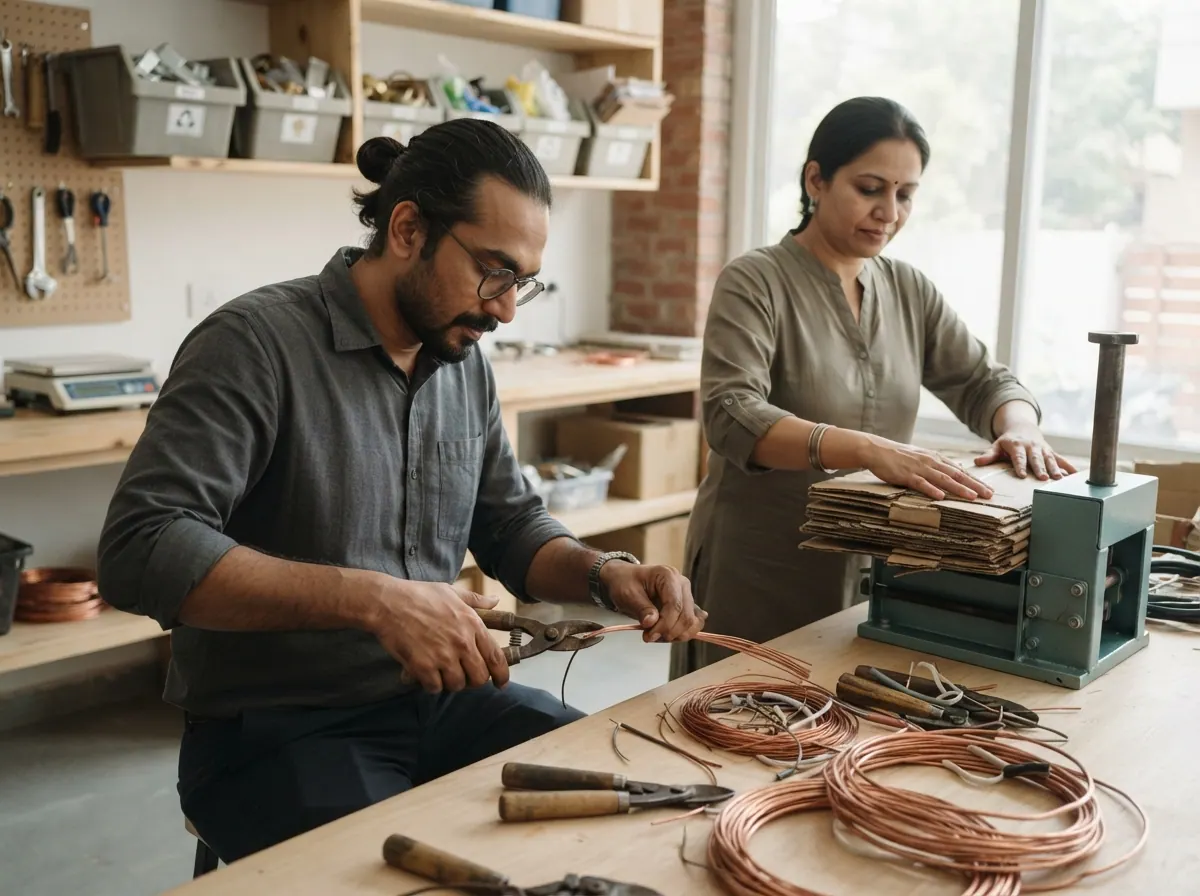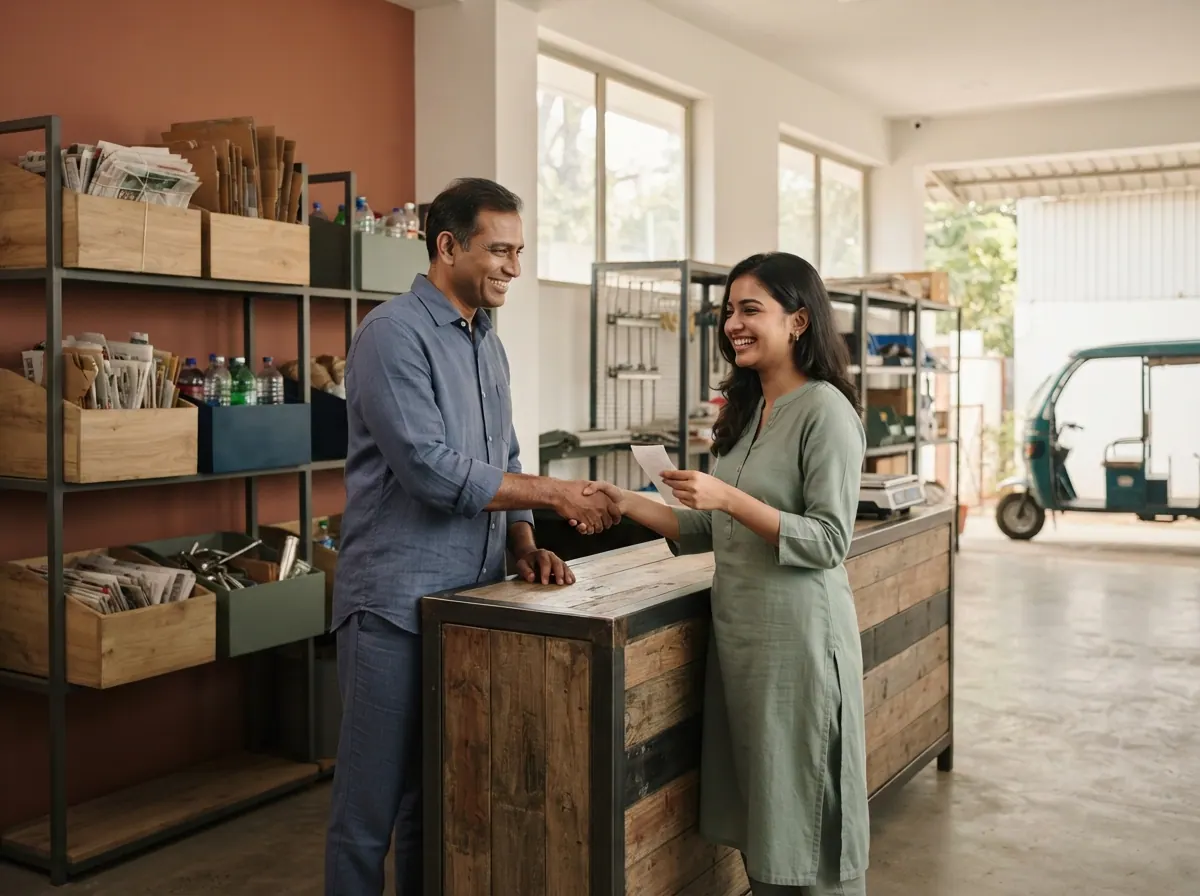
भारत में कबाड़ का बिज़नेस शुरू करने के लिए आपको गोदाम या यार्ड, सही तराज़ू, रोज़ की खरीद का पैसा, और हर माल के लिए एक खरीदार चाहिए। छोटे गोदाम में करीब ₹75,000 से ₹1.7 लाख लगेंगे, और गाड़ी व बड़े यार्ड के साथ ₹3 से ₹4.8 लाख। हर किलो पर कुछ ही रुपये का फ़ायदा होता है, इसलिए यह बिज़नेस volume, ईमानदार तौल और हर माल का रेट जानने का है।
यहां के सारे आंकड़े अंदाज़े हैं। पैसा लगाने से पहले अपने इलाके के दाम देख लें।
कितना खर्च आएगा?
| चीज़ | छोटा गोदाम | गाड़ी के साथ बड़ा यार्ड |
|---|---|---|
| प्लेटफ़ॉर्म तराज़ू और छोटा काउंटर तराज़ू | ₹12,000–20,000 | ₹25,000–40,000 |
| गोदाम का डिपॉज़िट और किराया advance | ₹25,000–60,000 | ₹60,000–1.2 लाख |
| पुरानी छोटी माल गाड़ी | ज़रूरत पर किराये से | ₹1–1.5 लाख |
| पहले हफ़्तों की खरीद का पैसा | ₹30,000–80,000 | ₹1–1.5 लाख |
| दस्ताने, जूते, extinguisher, first-aid | ₹5,000–8,000 | ₹10,000–15,000 |
| बोरे, तिरपाल, फ़ोन, साइनबोर्ड | ₹3,000–5,000 | ₹5,000–10,000 |
| कुल | करीब ₹75,000–1.7 लाख | करीब ₹3–4.8 लाख |
आपका खरीद का पैसा ही सबसे पहले खत्म होता है। कबाड़ खरीदते समय नकद देना पड़ता है, पर आपका बड़ा खरीदार हफ़्ते भर बाद पैसे दे सकता है।
क्या खरीदेंगे और बेचेंगे?
- कागज़ और गत्ता (रद्दी)। दुकानों और ऑफ़िसों से आसानी से मिलता है, पर हल्का है, इसलिए मात्रा चाहिए। इसे सूखा रखें।
- लोहा और स्टील। भारी होता है, इसलिए हर लोड में ज़्यादा पैसा देता है। मोटाई के हिसाब से छांटें।
- प्लास्टिक। किस्म के हिसाब से छांटें, क्योंकि मिला हुआ प्लास्टिक कम दाम पाता है।
- एल्यूमिनियम, तांबा और पीतल। प्रति किलो दाम ज़्यादा, और ग्रेडिंग की गलती यहीं सबसे महंगी पड़ती है।
- पुराने उपकरण और e-waste। सावधानी से संभालें, क्योंकि इसमें कानूनी नियम और खतरनाक पुर्ज़े होते हैं।
आपके सबसे अच्छे ग्राहक दुकानें, ऑफ़िस, फ़ैक्टरियां और सोसाइटियां हैं जो आपसे नियमित पिकअप कराती हैं।
कितनी कमाई हो सकती है?
मान लीजिए छोटा गोदाम है जो रोज़ करीब 500 किलो मिला-जुला माल संभालता है।
Margin
- महीने में 15,000 किलो खरीदा और बेचा
- औसत खरीद रेट करीब ₹18 किलो, औसत बिक्री रेट करीब ₹22 किलो
- Margin = ₹4 × 15,000 = ₹60,000
महीने का खर्च
- एक हेल्पर = ₹12,000
- गोदाम का किराया = ₹10,000
- लोडर किराया और पेट्रोल = ₹8,000
- बिजली और छोटी मरम्मत = ₹2,000
- नमी, छंटाई के कचरे और तौल के फ़र्क से नुकसान = ₹3,000
- कुल = ₹35,000
बचत: ₹60,000 − ₹35,000 = करीब ₹25,000 महीना।
महीने में 7,000 किलो पर margin सिर्फ़ ₹28,000 रह जाता है, और वही खर्च नुकसान में बदल जाते हैं। ऊपर का हिसाब मानकर चलता है कि आपका खरीदार समय पर पैसे देता है और आपके रेट सही हैं, जो हमेशा नहीं होता।
शुरू करने से पहले क्या चाहिए?
- गोदाम जिसका गेट गाड़ी के लिए चौड़ा हो, और सूखा फ़र्श। किराया आपके सबसे बड़े खर्चों में है।
- हर माल के लिए खरीदार। दो बड़े डीलर या recycling यूनिट से मिलें और उनके साप्ताहिक रेट और भुगतान की शर्तें पूछें।
- सत्यापित तराज़ू। ग्राहक कांटा देखते हैं, और शक वाला तराज़ू आपकी नियमित पिकअप खत्म कर देता है।
- सुरक्षा की बुनियाद। दस्ताने, जूते, डॉक्टर से टिटनेस का टीका, और extinguisher।
कदम-दर-कदम
- एक चालू कबाड़ी के साथ हफ़्ता बिताएं। ग्रेडिंग, रेट और खराब माल पहचानना सीखें।
- गोदाम ढूंढें भीड़ वाले घरों से दूर, आग और शोर की वजह से।
- तराज़ू खरीदें और उसे सत्यापित कराएं legal metrology नियमों के तहत। अपने स्थानीय दफ़्तर से पूछें कैसे।
- बेचने वाले ढूंढें: दुकानें, ऑफ़िस, छोटी फ़ैक्टरियां और सोसाइटियां।
- रोज़ के खरीद रेट तय करें और बोर्ड पर लिखें।
- खरीदते समय छांटें ताकि आपके गट्ठर साफ़ हों और पूरा रेट मिले।
- पूरे लोड में बेचें और हर तौल और भुगतान का रिकॉर्ड रखें।
कौन-से लाइसेंस लगते हैं?
- दुकान या ट्रेड लाइसेंस स्थानीय निकाय से। नियम शहर के हिसाब से अलग हैं।
- GST, अगर आपके turnover पर लागू हो। CA से पूछें।
- तराज़ू का सत्यापन legal metrology नियमों के तहत।
- प्रदूषण और आग। कागज़ या प्लास्टिक के ढेर वाले गोदाम को स्थानीय फ़ायर या प्रदूषण मंज़ूरी चाहिए हो सकती है। नगर निगम दफ़्तर से पूछें।
- e-waste और पुरानी बैटरी के लिए खास नियम और अनुमतियां हैं। इन्हें खरीदने से पहले राज्य के प्रदूषण नियंत्रण बोर्ड से पूछें।
क्या गलत हो सकता है?
- कागज़ में नमी। गीला गत्ता भारी तौलता है, पर आपका खरीदार कटौती कर देता है, और गीला माल सड़ जाता है।
- माल जमा करने के बाद रेट गिरना। किसी एक धातु का ज़्यादा स्टॉक आपका पैसा फंसा सकता है।
- गोदाम में आग। कागज़ और प्लास्टिक तेज़ी से जलते हैं, इसलिए माल को बिजली के तारों से दूर रखें।
- मिला या छुपा हुआ माल। मिली हुई धातु के बोरे में कुछ और छुपा हो तो कांटे पर नुकसान हो सकता है।
- खतरनाक चीज़ें। गैस सिलेंडर, बैटरी और पुराने केमिकल के ड्रम खतरनाक हो सकते हैं। जो संभाल न सकें, वह न खरीदें।
- देर से पैसा देने वाला खरीदार। अगर एक डीलर आपका पैसा हफ़्तों रोके तो आपकी रोज़ की खरीद रुक जाती है।
ये हालात आपके सामने आएँगे
आप क्या करेंगे? हर फ़ैसले की एक क़ीमत है।
शुरुआत
An old dealer offers to let you watch their godown for a week. They want a small fee for their time.
- Pay and learn grading: Fee, fewer buying mistakes
- Start buying straight away: No fee, learn by mistakes
One godown is cheap but has a narrow lane. Another has a wide gate and costs more rent.
- Rent the wide-gate godown: Higher rent, easy loading
- Take the cheap narrow one: Lower rent, slow loading
A friend sells a used platform scale at half price. It has not been verified and the needle sometimes drifts.
- Buy a new verified scale: Costly, customers trust you
- Take the used scale and get it checked: Cheaper, repair cost possible
Sellers want cash the same day. More cash buys more scrap, but money sits in stock until your dealer pays.
- Keep a larger cash float: More buying, cash gets tied
- Keep a small float: Safer, miss some loads
Stacks of paper and plastic burn fast. A good extinguisher and a sand bucket cost money you have not yet earned.
- Buy extinguishers and fit them: Costs now, safer godown
- Ask the fire office first: Delay, learn real needs
One dealer pays a bit more but pays after 10 days. The other pays less but pays on the spot.
- Sell to the higher rate dealer: More money, cash delayed
- Sell to the cash dealer: Lower rate, steady cash
पहला महीना
Sellers keep comparing your price to the next kabadi. A clear board is honest but means you cannot haggle quietly.
- Put up a rate board: Builds trust, less haggling room
- Quote by person: Flexible, people suspect you
A leaking roof wet the bundles overnight. Your buyer will cut weight for moisture.
- Dry it in sun, lose a few days: Time lost, less cut
- Fix the roof properly: Costs money, future stock safe
You find a sealed paint drum with liquid in a mixed-metal bag. The seller says it is empty.
- Refuse the drum, return it: Lose the sale, stay safe
- Pay a handler to take it away: Costs money, safe disposal
A housing society wants you to collect old newspapers and bottles every Sunday. They want a fixed rate for a month.
- Agree and send a pickup: Regular supply, transport cost
- Ask them to bring it: No cost, they will say no
Sorting paper, plastic and metal takes hours. A helper's wage cuts into your thin margin.
- Hire a helper: Wage each month, cleaner sorting
- Sort it yourself: No wage, fewer pickups
A regular seller claims your scale reads 2 kg short. Others in the lane are listening.
- Weigh again in front of them: Takes time, proves honesty
- Dismiss the complaint: Saves time, rumours spread
रोज़ का काम
You hold 3 tonnes of iron. The dealer's weekly rate drops, and could drop more.
- Sell now at the lower rate: Lose margin, free cash
- Hold for a better rate: May recover, cash stays locked
A factory offers regular bulk purchases, but only with a proper invoice. You have not registered.
- Register for GST with a CA: Fees and paperwork, bigger buyer
- Stay with cash buyers: Simple, smaller market
Loose cardboard takes space and loads badly. A second-hand baler would pack it tight but costs a lot.
- Buy a used baler: Costly, better rate per load
- Bundle by hand: Cheap, slow and bulky
Homes clear out old newspapers and boxes before Diwali. Sellers queue up, and paper rates may dip because everyone has stock.
- Buy all you can, store it: Cash tied up, rate may recover
- Buy only what you can sell: Safer, miss some volume
Hiring a loader every pickup is costly. A used goods vehicle needs a big payment and a driver.
- Buy a used goods vehicle: Big spend, saves each trip
- Keep hiring loaders: No big spend, costs each trip
A helper cut their hand on sharp sheet metal without gloves. It needs stitches.
- Pay treatment and buy gloves for all: Costs money, fewer accidents
- Pay only the treatment: Cheaper, risk remains
Shops near you would sell more if you collected from the door. Pickup costs fuel and time every day.
- Offer free door pickup: Costs fuel, more supply
- Buy only at the godown: No cost, less supply
जब मुश्किल आए
A big dealer owes you ₹60,000 and keeps promising next week. Your daily buying money is running short.
- Stop supplying until they pay: Pressure them, lose their loads
- Keep supplying, wait: Keeps the buyer, tight cash
A stranger offers a lot of fresh-cut copper cable at a cheap rate. They cannot say where it came from.
- Refuse and send them away: Lose the deal, stay clean
- Ask for ID and a bill first: Slower, protects you
An office wants to give you 40 old computers and monitors. You have no authorisation for e-waste.
- Decline and name an authorised recycler: No income, you stay legal
- Ask the pollution board first: Slow, learn real rules
A garage wants to sell 30 old vehicle batteries. You have no safe place to store them.
- Build a safe battery area: Costs money, new income
- Turn the batteries away: No cost, lose a seller
A worker used a cutter near the paper pile and a spark flew. No fire, but it was close.
- Move the cutting area away: Time and cost, safer godown
- Tell workers to be careful: No cost, same risk remains
Trucks and metal dropping in the lane start at 6 am. Neighbours go to the local office.
- Change timings and build a wall: Costs money, keeps your site
- Ignore the complaint: No cost, risk of notice
बढ़ाना
A magnet and a small bench help you separate copper, brass and steel. Better sorting sells at better rates.
- Set up a sorting bench: Costs money, better rates
- Sell mixed metal: Easy, lower rate
A recycling unit says it will pay more if you deliver 5 tonnes at a time, with a clear quality check.
- Aim for full loads: Better rate, need more stock
- Stay with local dealers: Easy, lower rate
A factory wants one party to buy all its metal waste each month. They want a deposit and a written agreement.
- Sign with a deposit: Big supply, locked money
- Buy lot by lot: Flexible, no assured supply
A busy market area wants a collection point. It needs rent, a scale, and someone you trust.
- Open the second point: Costly, more supply
- Keep one yard: Safer, less growth
You have been trusting memory. A register or app takes daily time but shows where money leaks.
- Keep a daily register: Time each day, clear picture
- Keep trusting memory: No time, leaks stay hidden
क्या यह आपके लिए ठीक है?
यह बिज़नेस उसके लिए ठीक है जो गंदगी, भारी उठाने-रखने और रोज़ मोलभाव में सहज हो, और सही रिकॉर्ड रखे। अगर आप साफ़, शांत काम चाहते हैं, या उन दिनों के लिए पैसा अलग नहीं रख सकते जब खरीदार देर से देता है, तो कम ठीक है।
एक अच्छा टेस्ट: किसी मौजूदा गोदाम में एक हफ़्ता बिताएं। अगर आप ग्रेड पहचान लेते हैं और मोलभाव संभाल लेते हैं, तो छोटा शुरू करें, दुकानों और सोसाइटियों से नियमित पिकअप बनाएं, और यार्ड बढ़ाने से पहले volume बढ़ाएं।