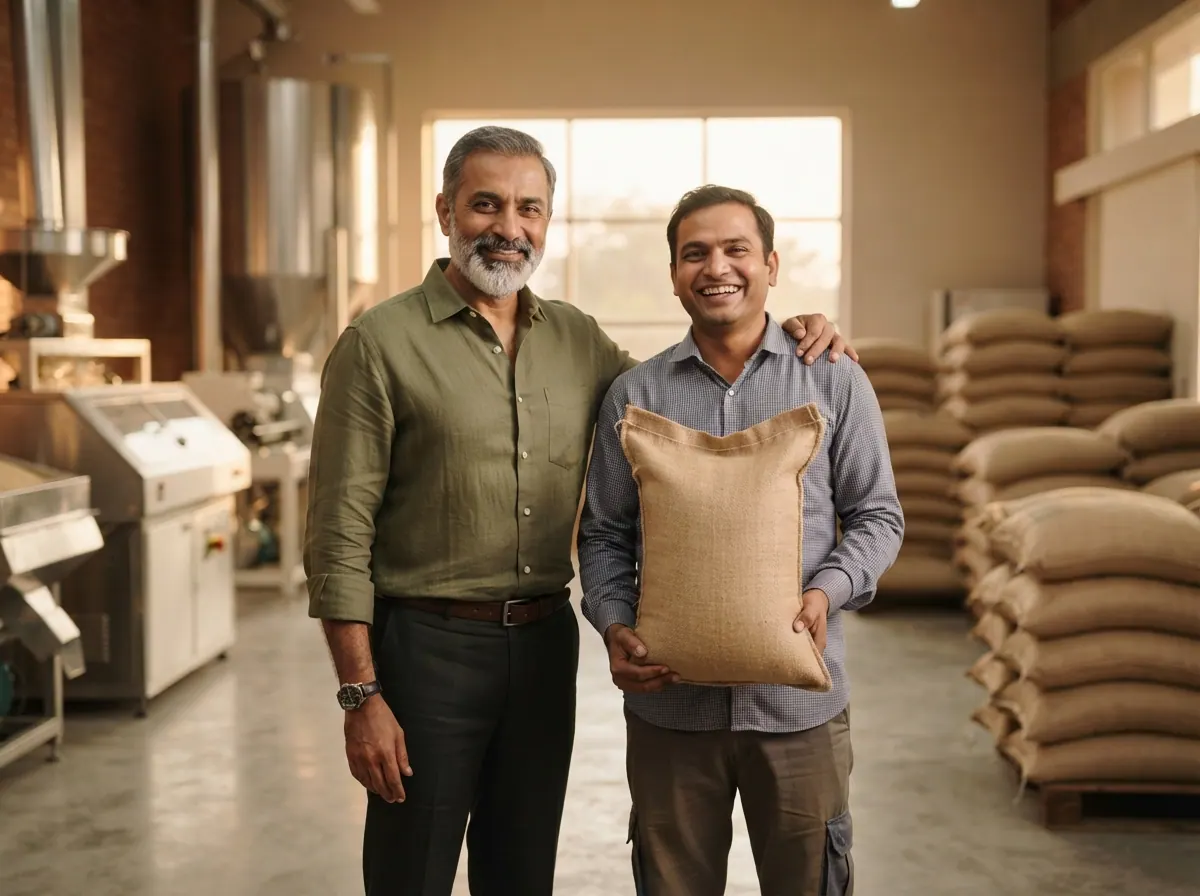
भारत में राइस मिल शुरू करने के लिए पक्के फ़र्श वाला शेड, थ्री-फ़ेज़ बिजली, मिलिंग मशीनों का सेट (शेलर, सेपरेटर, व्हाइटनर और पॉलिशर), वेब्रिज या तराज़ू, धान के लिए working capital और छोटी मिल के लिए करीब ₹10–20 लाख चाहिए। बड़ी मिल में करीब ₹30–50 लाख लगते हैं। यह काम मात्रा में बड़ा और margin में पतला है, इसलिए टूट, बिजली और समय में जो बचाएँगे वही आपकी कमाई है।
यहाँ सब आँकड़े अंदाज़े हैं। पैसा लगाने से पहले अपने इलाके के भाव पूछ लें।
कितना खर्च आएगा?
| चीज़ | छोटी मिल | बड़ी मिल |
|---|---|---|
| मिलिंग मशीनें: शेलर, सेपरेटर, व्हाइटनर, पॉलिशर | ₹4–8 लाख | ₹10–20 लाख |
| एलिवेटर, हॉपर, पाइप | ₹1–2 लाख | ₹3–6 लाख |
| शेड और फ़र्श | ₹3–5 लाख | ₹6–12 लाख |
| बिजली कनेक्शन, ट्रांसफ़ॉर्मर, पैनल | ₹1.5–3 लाख | ₹3–6 लाख |
| वेब्रिज या प्लेटफ़ॉर्म तराज़ू | ₹50,000–1 लाख | ₹3–4 लाख |
| धान का स्टॉक (working capital) | ₹3–6 लाख | ₹10–20 लाख |
| बोरे, लोडिंग और छोटे औज़ार | ₹50,000–1 लाख | ₹2–3 लाख |
| लाइसेंस और तैयारी | ₹50,000–1 लाख | ₹1–2 लाख |
| कुल | करीब ₹10–20 लाख | करीब ₹30–50 लाख |
पारबॉइलिंग के बॉयलर और ड्रायर में एक बड़ी रकम और लग सकती है। मशीन बनाने वालों से अपने इलाके के धान पर डेमो माँगें और सैंपल में टूट जाँचें।
राइस मिल कमाती कहाँ से है?
- चावल: मुख्य उत्पाद, 25 या 50 किलो के बोरों में थोक व्यापारियों, दुकानों और संस्थाओं को।
- टूटा चावल: कम दाम पर बिकता है, इसलिए टूट का हर प्रतिशत आपको खटकता है।
- चोकर: तेल निकालने वालों या चारा बनाने वालों को।
- भूसी: ईंधन या पशु बिछावन के लिए, और कभी मिल के अपने इस्तेमाल में जलाई जाती है।
- जॉब मिलिंग: किसान और व्यापारी अपने धान की पिसाई के लिए प्रति क्विंटल चार्ज देते हैं।
ज़्यादातर छोटी मिलें जॉब मिलिंग के साथ थोड़ा अपना धान खरीदकर व्यापार करती हैं, क्योंकि धान खरीदने में बहुत पैसा फँसता है।
कितनी कमाई हो सकती है?
एक छोटी मिल जो महीने में 100 टन धान पीसती है और अपना चावल बेचती है।
बिक्री
- चावल: 1,00,000 किलो का करीब 66% = 66,000 किलो × ₹36 = ₹23,76,000
- चोकर: 6,000 किलो × ₹20 = ₹1,20,000
- भूसी: 20,000 किलो × ₹3 = ₹60,000
- कुल = ₹25,56,000
हर महीने का खर्च
- धान: 1,00,000 किलो × ₹22 = ₹22,00,000
- बिजली: ₹70,000
- छह कारीगर × ₹14,000: ₹84,000
- बोरे: ₹27,000
- लोडिंग और ढुलाई: ₹40,000
- working capital पर ब्याज: ₹40,000
- मरम्मत और पुर्ज़े: ₹20,000
- कुल = ₹24,81,000
बचत: ₹25,56,000 − ₹24,81,000 = करीब ₹75,000 महीना।
यह बिक्री का करीब 3% है, जो इस काम के लिए सामान्य है। खरीद या चावल के दाम में ₹1 किलो का फ़र्क़ पूरे महीने को पलट सकता है। सिर्फ़ जॉब मिलिंग करें तो जोखिम कम है, पर महीने की कमाई भी कम है।
शुरू करने से पहले क्या चाहिए?
- धान की भरोसेमंद सप्लाई किसानों या मंडी से, और धान की कमी वाले महीनों की योजना।
- स्थिर वोल्टेज की थ्री-फ़ेज़ बिजली। राइस मिल भारी लोड खींचती है।
- ऐसी जगह जहाँ ट्रक आ सके, और ट्रकों के रुकने-मुड़ने की जगह।
- धूल और भूसी की योजना, क्योंकि यह पड़ोस के घरों में उड़ती है।
- Working capital। धान सबसे बड़ा खर्च है, इसलिए कई मिलें बैंक की कैश क्रेडिट लिमिट इस्तेमाल करती हैं।
कदम-दर-कदम
- अपने साइज़ की दो-तीन चालू मिलें देखें और पूछें कि एक क्विंटल धान से कितना चावल निकलता है, कितना टूटता है और जॉब वर्क से क्या कमाते हैं।
- ज़मीन चुनें और इजाज़तें जाँचें मशीनें खरीदने से पहले।
- बिजली कनेक्शन के लिए जल्दी अर्ज़ी दें, क्योंकि समय लग सकता है।
- प्रशिक्षित फ़िटर के साथ मशीनें लगाएँ और अपने इलाके के धान से ट्रायल चलाएँ।
- चावल का अपना मानक तय करें: सफ़ेदी, टूट और नमी। हर लॉट जाँचें और सैंपल रखें।
- जॉब मिलिंग का चार्ज तय करें और लिखकर लगाएँ ताकि किसान रेट जानें।
- चोकर और भूसी के खरीदार पहले ढूँढें इससे पहले कि ढेर लग जाए।
कौन से लाइसेंस लगते हैं?
- FSSAI रजिस्ट्रेशन या लाइसेंस बेचे जाने वाले चावल के लिए।
- यूनिट का रजिस्ट्रेशन स्थानीय उद्योग दफ़्तर में, और लोन व योजनाओं के लिए उद्यम रजिस्ट्रेशन।
- बिजली की मंज़ूरी आपके लोड के लिए।
- प्रदूषण बोर्ड की सहमति धूल और भूसी की वजह से अक्सर चाहिए। अपने राज्य के दफ़्तर से पूछें।
- फ़ैक्टरी और श्रम नियम मज़दूरों की संख्या पर निर्भर करते हैं। श्रम दफ़्तर से पूछें।
- वज़न और माप: वेब्रिज और तराज़ू की आम तौर पर जाँच और मोहर चाहिए।
- सरकारी मिलिंग का काम: कुछ राज्यों में मिलें सरकारी एजेंसियों के लिए धान की पिसाई करती हैं। शर्तों के लिए अपने राज्य के नागरिक आपूर्ति विभाग से पूछें।
- GST: CA से पूछें।
क्या-क्या गड़बड़ हो सकती है?
- टूट। गीला या ठीक से न सूखा धान मशीन में चटक जाता है और सस्ते टूटे चावल में बदल जाता है।
- धान के भाव में उतार-चढ़ाव, ख़ासकर ख़रीद के मौसम के बाद।
- बिजली कटना और वोल्टेज गिरना, जिससे लाइन रुकती है और मोटर जलती है।
- उधार धान खरीदना और उधार चावल बेचना। पैसा दोनों सिरों पर फँसता है।
- भूसी और चोकर का ढेर, जो चूहों और शिकायतों को बुलाता है।
- एक लॉट में मिली हुई किस्में, जिससे चावल असमान दिखता है और कम दाम मिलता है।
ये हालात आपके सामने आएँगे
आप क्या करेंगे? हर फ़ैसले की एक क़ीमत है।
शुरुआत
A huller costs little but breaks a lot of rice. A sheller with whitener and polisher costs several times more.
- Buy the modern line: Costly, less breakage
- Start with the huller: Cheaper, more broken rice
Land inside the village is cheap but trucks cannot turn. A plot on the highway costs much more.
- Buy the highway plot: Costly, easy trucking
- Buy the village plot: Cheaper, hard truck access
The power office says your load needs a transformer and that may take months. A diesel set could run the mill meanwhile.
- Rent a diesel set: High fuel cost, start sooner
- Wait for the transformer: No cost, idle machines
Farmers offer paddy now at a fair rate but want cash on delivery. A trader offers credit at a higher price.
- Buy direct for cash: Better price, cash tied up
- Buy from the trader on credit: Cash free, dearer paddy
Husk dust is blowing towards houses. The pollution board's consent needs a dust arrangement.
- Fit dust collectors, apply: Costly, a clean file
- Apply and delay the fitting: Saves money, complaint risk
A bank will give working capital if you show stock records and insurance. Interest runs every month.
- Take the cash credit: Interest cost, more paddy
- Run on own money: No interest, small buying
पहला महीना
A farmer brings paddy with high moisture. Milling it will break a lot of grain.
- Dry it for two days first: Delay, less breakage
- Mill it at a lower rate: Quick, more broken rice
A wholesaler says one lot has too much broken rice. The polisher setting may be too tight.
- Call the fitter to reset: Visit cost, steady quality
- Sell the lot cheaper: Quick, a lasting loss
A farmer says the paddy weight does not match their own count. Others at the gate are watching.
- Re-weigh on a checked scale: Time lost, builds trust
- Close the matter by paying: Costs money, shows doubt
The bran store is full and trucks of paddy are waiting to unload. The oil extractor offers a low rate.
- Sell the bran cheap: Clears space, low price
- Build extra storage: Cost, better price later
रोज़ का काम
A fast rise in paddy rates squeezes your margin. Your wholesalers have agreed on a rice rate.
- Ask for a higher rice rate: Margin holds, lose some buyers
- Hold the rate: Buyers stay, margin gone
A wholesaler will buy all your rice but pays after 45 days. Your paddy is paid in cash.
- Accept 45-day credit: A sure buyer, cash waits
- Sell in smaller lots for cash: Cash safe, slower sales
A farmers' group wants their paddy milled for a charge per quintal. It keeps machines busy but earns less than your own rice.
- Take job work in slack weeks: Steady charges, low risk
- Use all capacity for own rice: More upside, more risk
A brick kiln offers a steady price for husk. A boiler user nearby offers slightly more but wants delivery.
- Sell to the kiln: Easy, lower price
- Deliver to the boiler user: Truck cost, better price
Rats have torn some bags and weevils are in a paddy stack. A pest service is costly.
- Hire pest control, restack: Costly, safe stock
- Use traps and fresh bags: Cheaper, risk remains
A buyer wants aromatic rice with less than a set limit of broken grains. Your line is set for common paddy.
- Fine-tune the line, take a lot: Cost, a better price
- Decline, keep common rice: No cost, no premium
A feed maker and a snack maker both want your broken rice. One pays more but wants it cleaned and bagged.
- Clean, bag for snack maker: Labour, a better price
- Sell as is to feed maker: Easy, lower price
जब मुश्किल आए
A shaft bearing fails with trucks of paddy outside. The fitter says two days, and spares are in another town.
- Pay for urgent spares and repair: Costly, back in two days
- Wait for regular spares: Cheaper, a week lost
A low-voltage spell burns the sheller motor. The panel has no protection.
- Rewind and fit a protector: Cost, protected from now
- Rewind the motor only: Cheaper, risk remains
Families nearby complain about dust on their roofs. A panchayat member visits.
- Add a cyclone collector: Costly, cleaner air
- Plant trees, wet the yard: Cheap, partial help
A smoking husk heap is found at dawn. Workers put it out, but it was close to the godown.
- Move the heap, fit extinguishers: Cost, a safer yard
- Wet the heap and watch it: Cheap, risk remains
A cheque of ₹3 lakh from a wholesaler bounces, and they ask for another lot to settle all together.
- Stop supply until cleared: Safe, may lose the buyer
- Send a small lot: More at risk, buyer stays
A big buyer rejects a truck because grains look yellowed. The paddy was stored too long in a damp stack.
- Take it back, sell cheaper elsewhere: Loss, trust kept
- Sell it to a low-grade buyer: Bigger loss, clean name
बढ़ाना
A colour sorter removes discoloured grains and raises the rice price. It costs a lot.
- Install the colour sorter: Heavy cost, premium rice
- Hand-sort a premium lot: Cheap, slow and small
Wholesalers in another state want parboiled rice. A boiler, tanks and dryer cost a lot.
- Build the parboiling unit: Heavy cost, new market
- Stay with raw rice: No cost, one market
Shops will pay more for branded small bags than for 50 kg sacks. You would need a packing machine and printing.
- Start a branded line: Machine and print cost
- Keep selling in sacks: No cost, lower margin
An installer offers a rooftop system that cuts the power bill. It is a big spend and pays back slowly.
- Install rooftop solar: Big spend, lower bills later
- Shift heavy runs to off-peak: Small saving, free
Bran sells cheaply to others. A small bran oil unit would give more value but needs a licence and a trained team.
- Keep selling bran: No cost, low value
- Tie up with an oil extractor: Contract, a steadier price
Paddy supply is strong, but your line runs at its limit. A second line needs a shed extension and more working capital.
- Add the second line: Heavy cost, larger volume
- Improve the first line: Small spend, less breakage
A state agency invites mills for milling work with strict quality and papers. Payment is reliable but slow.
- Apply and meet the norms: Papers and cost, steady work
- Skip it, sell to the market: No cost, free hands
क्या यह आपके लिए ठीक है?
राइस मिल आपके लिए ठीक है अगर आप working capital सँभाल सकते हैं, दिन भर व्यापारियों और किसानों से निपट सकते हैं और मशीनों व तौल पर नज़र रख सकते हैं। अगर बड़ी रकम महीनों फँसाना मुश्किल है या परिवार में अनाज के व्यापार का अनुभव नहीं है तो कम ठीक है।
आसान टेस्ट: एक सीज़न किसी चालू मिल में बिताएँ, अंदर आया धान, निकला चावल और टूट दर्ज करें, और उसके बैंक से बात करें। बिजली और ब्याज गिनने के बाद भी margin दिखे तो जॉब मिलिंग से शुरू करें और धीरे-धीरे अपने धान के व्यापार तक बढ़ें।