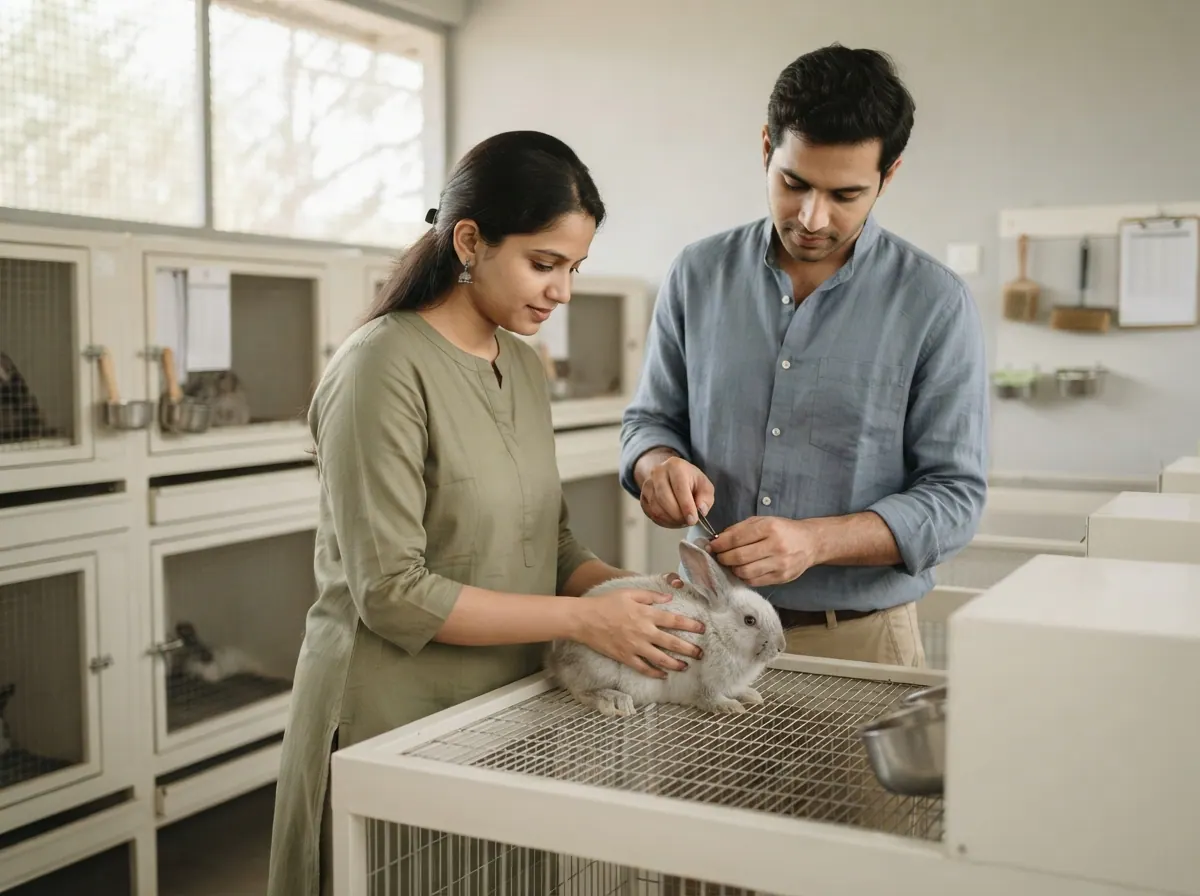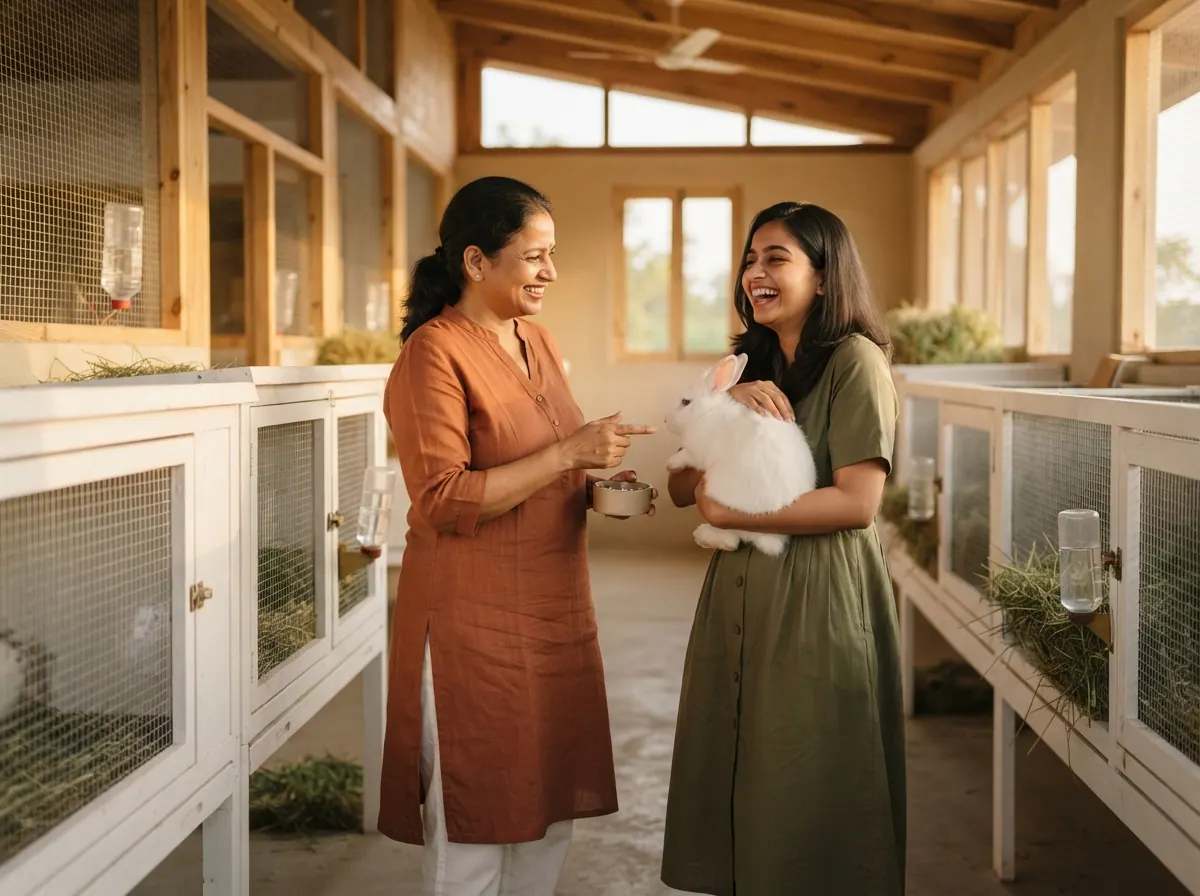
भारत में खरगोश फ़ार्म शुरू करने के लिए आपको छांव वाले हवादार शेड में ऊंचे तार के पिंजरे, पेलेट और हरे चारे वाली खुराक की योजना, जानवर खरीदने से पहले मांस या ऊन का खरीदार, और 10 मादा व 2 नर के लिए करीब ₹50,000–80,000 या 40 मादा व 5 नर के लिए ₹1.5–2 लाख चाहिए। खरगोश तेज़ी से बच्चे देते हैं और कम ज़मीन लेते हैं, लेकिन बाज़ार छोटा है, इसलिए मुश्किल बेचना है, पालना नहीं।
यहां के सारे आंकड़े अंदाज़े हैं। पैसा लगाने से पहले अपने इलाके के दाम देख लें।
कितना खर्च आता है?
| चीज़ | 10 मादा, 2 नर | 40 मादा, 5 नर |
|---|---|---|
| ब्रीडिंग खरगोश | ₹18,000–30,000 | ₹70,000–1 लाख |
| ट्रे वाले तार के पिंजरे | ₹15,000–25,000 | ₹50,000–70,000 |
| शेड, छत, शेड-नेट | ₹8,000–15,000 | ₹25,000–40,000 |
| feeder, drinker, नेस्ट बॉक्स | ₹3,000–5,000 | ₹10,000–15,000 |
| शुरू के महीनों का चारा | ₹5,000–8,000 | ₹20,000–30,000 |
| डॉक्टर और दवा | ₹2,000–3,000 | ₹6,000–10,000 |
| कुल | करीब ₹50,000–80,000 | करीब ₹1.5–2 लाख |
ब्रीडिंग जानवर भरोसेमंद फ़ार्म से लें, बाज़ार के विक्रेता से नहीं। मादा और नर की उम्र और उन्हें क्या खिलाया गया, यह पूछें।
कौन-सी नस्ल रखें?
- न्यूज़ीलैंड व्हाइट: आम मांस वाली नस्ल, तेज़ बढ़ती है और संभालना आसान है।
- व्हाइट जायंट: बड़ी मांस वाली नस्ल, अच्छा चारा चाहिए।
- सोवियत चिनचिला: मज़बूत मांस वाली नस्ल, अच्छी खाल।
- ग्रे जायंट: बड़ी और मज़बूत मांस वाली नस्ल।
- अंगोरा: ऊन के लिए, मांस के लिए नहीं। ठंडे इलाकों में बेहतर चलता है और ऊन के खरीदार कम हैं, इसलिए खरीदने से पहले खरीदार ढूंढें।
कमाई कितनी हो सकती है?
खरगोश से कमाई जल्दी नहीं होती। 40 मादा वाला जमा हुआ फ़ार्म। ये उदाहरण के आंकड़े हैं।
साल में बिके खरगोश
- 40 मादा × साल में करीब 4 बार बच्चे = 160 बार
- 160 बार × बिकने तक पले करीब 6 बच्चे = 960 खरगोश
- 960 खरगोश × करीब ₹600 प्रति (करीब 2.2 किलो) = ₹5,76,000 साल
- ₹5,76,000 ÷ 12 = करीब ₹48,000 महीना
हर महीने का खर्च
- बढ़ते खरगोशों का चारा: 960 × करीब ₹210 = ₹2,01,600 साल, यानी करीब ₹16,800 महीना
- मादा और नर का चारा: करीब ₹74,000 साल, यानी करीब ₹6,200 महीना
- एक मज़दूर = ₹10,000
- डॉक्टर और दवा = ₹2,000
- बिजली, पानी, पिंजरे की मरम्मत = ₹3,000
- कुल = करीब ₹38,000
बचत: ₹48,000 − ₹38,000 = करीब ₹10,000 महीना।
यह पतला है, और मानकर चला है कि हर खरगोश ₹600 में बिके। घर के लोग काम करें और हरा चारा खुद उगाएं तो बेहतर होता है। इस दाम पर न बिके तो तेज़ी से गिरता है।
शुरू करने से पहले क्या चाहिए?
- पहले खरीदार। होटल, रेस्टोरेंट, मांस की दुकानें और कुछ पालतू या लैब खरीदार खरगोश ले सकते हैं। उनसे बात करें और दाम व वज़न की ज़रूरत पहले पता कर लें।
- छांव और ठंडी हवा। करीब 30°C से ऊपर खरगोश परेशान होते हैं। छत, शेड-नेट, और पंखे या गीले पर्दे की योजना बनाएं।
- चारा। पेलेट, हरी पत्तियां और थोड़ा सूखा घास। अचानक बदलाव से पेट बिगड़ता है।
- ऐसा डॉक्टर जिसने खरगोश देखे हों।
कदम दर कदम
- चल रहे खरगोश फ़ार्म पर जाएं और पूछें कि दूध छुड़ाने से पहले कितने बच्चे मरते हैं।
- ऊंची कतार में पिंजरे बनाएं: तार का फ़र्श, बीट की ट्रे और छांव।
- एक ही नस्ल के कुछ स्वस्थ जोड़े लें, कई नस्लें न मिलाएं।
- नए खरगोश अलग रखें शेड में मिलाने से पहले।
- मादा को तभी मिलाएं जब वह उस उम्र और वज़न की हो जो विक्रेता बताए, और बच्चे होने से पहले नेस्ट बॉक्स दें।
- बच्चों का दूध उस उम्र में छुड़ाएं जो डॉक्टर या ब्रीडर कहे, और उन्हें बढ़ने वाले पिंजरों में डालें।
- हर मादा का रिकॉर्ड रखें: मिलाने की तारीख, बच्चे होने की तारीख, बच्चों की गिनती, मौतें।
कौन-से लाइसेंस लगते हैं?
- स्थानीय इजाज़त: छोटी यूनिट को शायद पंचायत या स्थानीय मंज़ूरी ही लगे, जो इलाके के हिसाब से बदलती है।
- Loan और योजनाएं: छोटे पशुपालन को बैंक या राज्य की योजनाओं से मदद मिल सकती है। नियम बदलते हैं, इसलिए ज़िले के पशुपालन दफ़्तर से पूछें।
- मांस बेचना: मांस तैयार करने और बेचने के लिए खाने के लाइसेंस और स्थानीय नियम हैं। FSSAI और स्थानीय दफ़्तर से पूछें।
- टैक्स: अपनी बिक्री पर टैक्स कैसे लगेगा, CA से पूछें।
क्या गलत हो सकता है?
- बेच न पाना। यही नए खरगोश फ़ार्म बंद होने का सबसे बड़ा कारण है।
- गर्मी की मार। गर्म, बंद शेड में खरगोश मर जाते हैं। पिंजरे की क्वालिटी से ज़्यादा छांव और हवा मायने रखती है।
- कान के कीड़े और पेट की बीमारी। गंदे पिंजरे और गीला चारा दिक्कत करते हैं। रोज़ सफ़ाई करें।
- गीली हरी घास खिलाना। गीला या अचानक नया चारा दस्त करा देता है, जिससे बच्चे जल्दी मरते हैं।
- मादा का बच्चों को कुचलना या मारना। पहली बार की मादा को नेस्ट बॉक्स न मिले तो ऐसा हो सकता है।
- नज़दीकी रिश्ते में मिलाना। इससे कमज़ोर बच्चे होते हैं। हर जोड़े का रिकॉर्ड रखें।
ये हालात आपके सामने आएँगे
आप क्या करेंगे? हर फ़ैसले की एक क़ीमत है।
शुरुआत
A hotel chef may take rabbits, but only 2 kg and above. A meat shop wants smaller ones.
- Plan for the hotel size: Longer feeding, better price
- Plan for the meat shop: Quicker sales, lower price
A farm sells pedigree stock with records. A market seller offers cheaper rabbits of unknown age.
- Buy from the farm: Higher price, known stock
- Buy from the market: Cheaper, age and health unknown
Wire cages stay clean but cost more. A carpenter offers wooden boxes that hold urine and germs.
- Order wire cages: Costly, easy to clean
- Take wooden boxes: Cheap, harder to keep clean
Summer heat under tin can pass 35 degrees. A thatched or net roof costs more and lasts less.
- Thatch roof with shade net: Cooler, more upkeep
- Plain tin roof: Cheap, heat stress risk
Angora wool sells at a higher price but buyers are few. Meat rabbits have more local buyers.
- Keep meat breeds: More buyers, lower price
- Keep Angora: Higher price, one wool buyer
Pellets cost more and keep growth steady. Greens are cheaper but vary through the year.
- Pellets plus some greens: Costly, steady growth
- Mostly greens and kitchen waste: Cheaper, slower growth
A friend gives you six rabbits. You have no isolation cage.
- Build a separate cage first: Small cost, safer shed
- Put them straight in: No cost, disease risk
पहला महीना
The doe is restless. A nest box and straw are ready but the cage is in a noisy spot.
- Move to a quiet cage: Needs handling, better odds
- Leave the doe there: No effort, may lose litter
Your first-time doe has killed the litter. There was no nest box and the shed was noisy.
- Add nest boxes, cover cages: Cost now, calmer does
- Mate again quickly: Cheap, same risk
Several rabbits shake their heads and have crusts in their ears.
- Call the vet for treatment: Fee and medicine
- Clean ears only at home: Cheap, mites may spread
Fresh cut fodder is soaked. Feeding it is easy but may upset their stomachs.
- Dry it in shade first: Time lost, safe feed
- Feed it straight: No wait, diarrhoea risk
रोज़ का काम
Rabbits are lying flat and breathing fast during a heatwave.
- Add fans and wet curtains: Power and water cost
- Give cold water and shade only: Cheap, some losses likely
Young rabbits are eating pellets. Early weaning helps the doe to breed again but needs good feed.
- Wean on schedule, good feed: Feed cost, more litters
- Leave them longer: Less work, fewer litters
One doe has had four litters back to back and looks thin.
- Rest the doe two months: Fewer litters, healthier doe
- Rebreed immediately: More litters, doe weakens
Two siblings were mated by mistake and the litter is weak.
- Tag cages and keep records: Small cost, fewer mistakes
- Trust your memory: No cost, weak litters
The hotel wants 2.2 kg. Your batch is close but each week costs feed.
- Hold two more weeks: Feed cost, hotel price
- Sell now to the meat shop: Cash in, lower price
A wool buyer visits and wants clean, unmatted wool; shearing needs care and time.
- Shear carefully and sort: Time, better price
- Sell mixed, matted wool: Quick, low price
The hotel took two batches and asks to settle next month.
- Wait and keep supplying: Feed bills pile up
- Stop until paid: Lose a main buyer
A shop wants small rabbits for pets. They pay more per rabbit but need healthy, handled ones.
- Supply a few for pets: Handling time, higher price
- Keep to meat only: Simple, no extra
जब मुश्किल आए
Many rabbits sneeze and have wet noses. Others look fine.
- Isolate sick rabbits, call vet: Fee, stops spread
- Wait a few days: No cost, may spread
Eight young rabbits died in three days with watery droppings.
- Call a vet, change feed slowly: Fees, protects the rest
- Replace dead stock: Cost, same problem
Dogs scared the rabbits last night and two does aborted.
- Build a wall and gate: Costly, safer stock
- Put up a thorn fence: Cheaper, dogs may return
Two buyers say demand is low and offer 20 per cent less.
- Accept the lower price: Keep sales, thinner profit
- Search for new buyers: Time and fuel, uncertain
The helper who handles feeding leaves for a city job.
- Offer more pay to stay: Higher wage, steady care
- Train someone new: Mistakes meanwhile
बढ़ाना
Sales are steady. More does need more cages, feed and your time.
- Raise young does yourself: Slow, cheaper
- Buy twenty breeders: Costly, faster
A spare quarter acre could grow lucerne or napier for rabbit feed.
- Plant a fodder plot: Cost now, cheaper feed
- Keep buying greens: No effort, higher cost
A hotel wants dressed meat. It needs a clean room and a food licence.
- Get licence and prepare: Fees and work, higher price
- Sell live rabbits only: No licence, lower price
Gardeners ask for rabbit manure for plants. It needs bagging and storage.
- Bag and sell it: Small bags, small income
- Give it free to neighbours: Goodwill only
A local group asks you to run a short class on rabbit keeping.
- Run a paid class: Time away from farm, small income
- Decline: Keeps focus
The bank may lend for more cages, but wants a report and your last year's records.
- Prepare it with a CA: Fees, cleaner records, no promise
- Grow from own savings: No fees, slower growth
क्या यह आपके लिए सही है?
खरगोश पालन उनके लिए ठीक है जिन्हें खरीदार मिल चुके हैं, जिनके पास ठंडी, छांव वाली जगह है, और जो छोटे जानवरों के साथ रोज़ ध्यान से काम करना पसंद करते हैं। उनके लिए कम ठीक है जो अपने इलाके में मांस नहीं बेच सकते या रोज़ फ़ार्म पर नहीं रह सकते।
एक अच्छा तरीका: किसी चल रहे खरगोश फ़ार्म पर एक हफ़्ता बिताएं और कम से कम दो खरीदारों से दाम लें। दोनों सही निकलें तो 10 मादा और 2 नर से शुरू करें, और बिक्री पक्की होने पर ही बढ़ें।