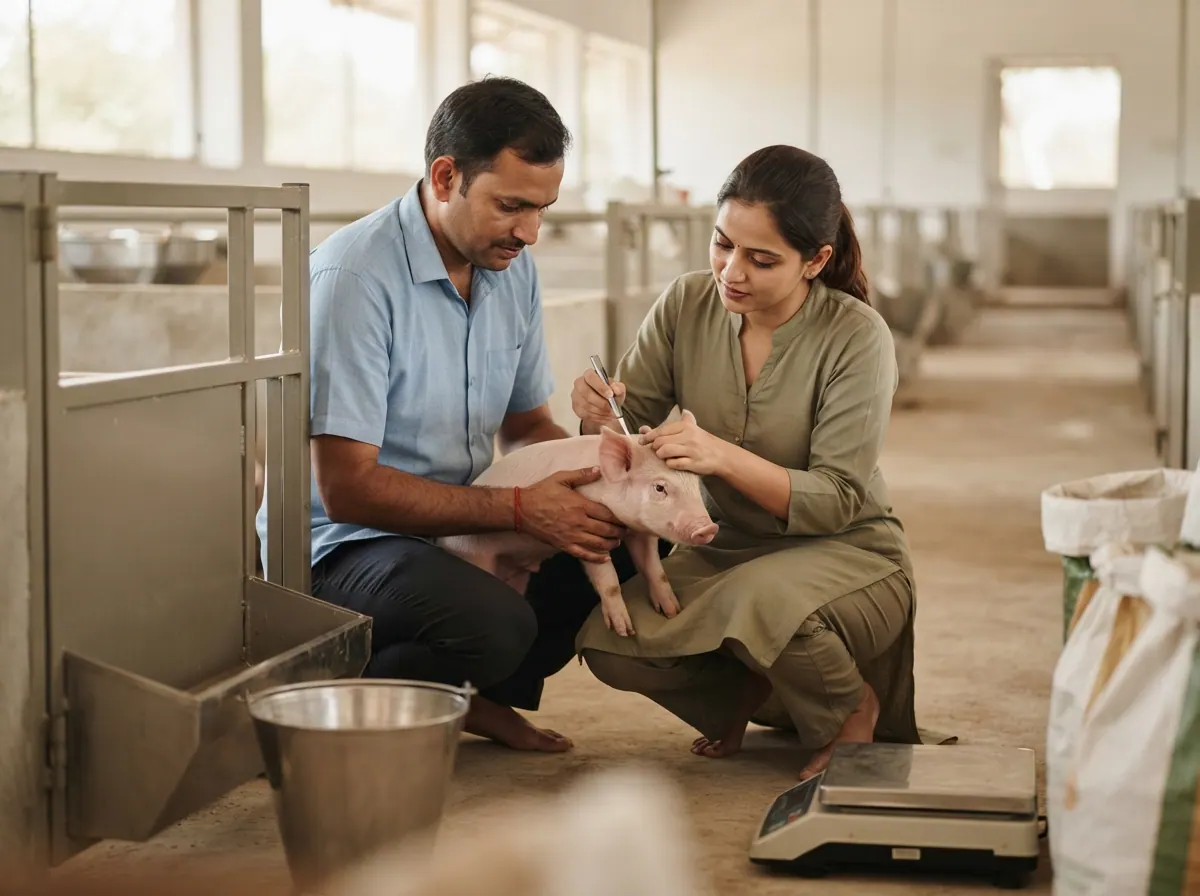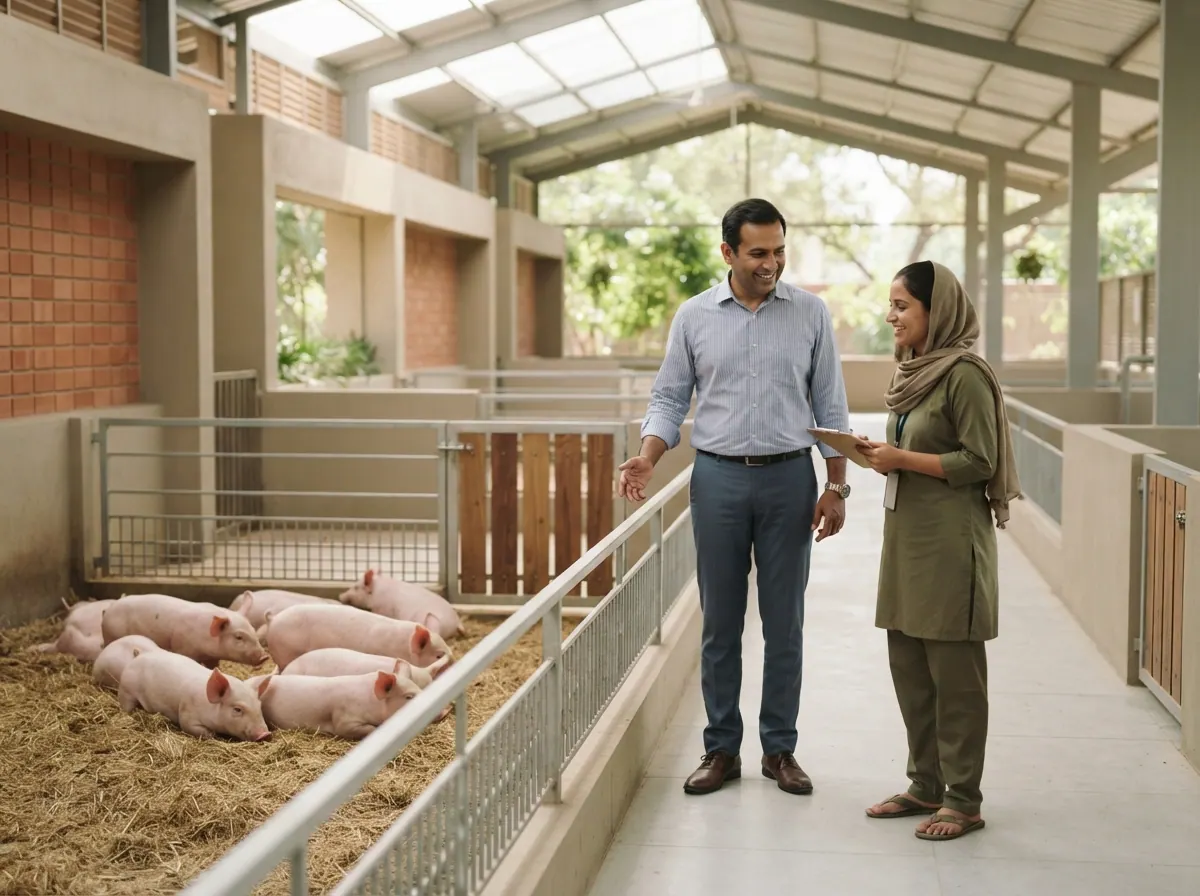
भारत में सूअर फ़ार्म शुरू करने के लिए आपको धोने लायक, छांव वाला शेड जिसमें अलग-अलग बाड़े हों, चारे का पक्का इंतज़ाम, सूअरों की बीमारी जानने वाला डॉक्टर, और 5 सूअरियों व एक नर के लिए करीब ₹1–2.5 लाख, या 15 सूअरियों व एक-दो नर के लिए ₹5–8 लाख चाहिए। यह खर्च तब है जब ज़मीन आपकी अपनी हो। कमाई बड़े हुए सूअर मांस के लिए बेचने से होती है, और पहली बिक्री अक्सर पहली खरीद के एक साल से ज़्यादा बाद आती है।
यहां के सारे आंकड़े अंदाज़े हैं। पैसा लगाने से पहले अपने इलाके के दाम देख लें।
कितना खर्च आता है?
| चीज़ | 5 सूअरी, 1 नर | 15 सूअरी, 2 नर |
|---|---|---|
| ब्रीडिंग सूअरी (गिल्ट) | ₹40,000–80,000 | ₹1.2–2.4 लाख |
| नर | ₹10,000–25,000 | ₹20,000–50,000 |
| शेड, पक्का फ़र्श, नाली, छत | ₹40,000–90,000 | ₹1.5–3 लाख |
| पानी, feeder, drinker | ₹10,000–20,000 | ₹30,000–60,000 |
| शुरू के महीनों का चारा | ₹20,000–40,000 | ₹60,000–1 लाख |
| डॉक्टर और टीके | ₹5,000–10,000 | ₹15,000–30,000 |
| कुल | करीब ₹1–2.5 लाख | करीब ₹5–8 लाख |
शेड में ज़्यादा बचत न करें। जिस फ़र्श को रोज़ धोया न जा सके, वहीं से बच्चों की बीमारी शुरू होती है।
कौन-सी नस्ल रखें?
- लार्ज व्हाइट यॉर्कशायर: भारत में सबसे आम व्यावसायिक नस्ल, तेज़ बढ़ती है और सूअरी के बच्चे ज़्यादा होते हैं।
- लैंडरेस: लंबा शरीर, अच्छी मां, और अक्सर लार्ज व्हाइट से क्रॉस कराई जाती है।
- ड्यूरोक: मज़बूत और तेज़ बढ़ने वाली, क्रॉस में अक्सर नर के तौर पर इस्तेमाल होती है।
- घुंघरू: पश्चिम बंगाल और ओडिशा की देसी नस्ल, सस्ते चारे पर भी ठीक चलती है।
- देसी सूअर: मज़बूत पर धीरे बढ़ते हैं, पूर्वोत्तर के कुछ हिस्सों और आदिवासी खरीदारों में पसंद किए जाते हैं।
कमाई कितनी हो सकती है?
15 सूअरियों वाला जमा हुआ फ़ार्म। ये उदाहरण के आंकड़े हैं, वादा नहीं।
साल में बिके सूअर
- 15 सूअरी × साल में 2 बार ब्याना = 30 बार
- 30 बार × 8 बच्चे जो बिकने तक पले = 240 सूअर
- 240 सूअर × करीब 90 किलो × करीब ₹110 किलो = ₹23,76,000 साल
- ₹23,76,000 ÷ 12 = करीब ₹1,98,000 महीना
हर महीने का खर्च
- बढ़ते सूअरों का चारा: 240 × 250 किलो × ₹26 ÷ 12 = करीब ₹1,30,000
- सूअरी और नर का चारा: करीब ₹30,000
- एक मज़दूर = ₹12,000
- डॉक्टर और दवा = ₹4,000
- बिजली, पानी, मरम्मत = ₹4,000
- कुल = करीब ₹1,80,000
बचत: ₹1,98,000 − ₹1,80,000 = करीब ₹18,000 महीना।
यह पतला है, क्योंकि ज़्यादातर खर्च चारे का है। घर के लोग काम करें तो ₹12,000 और बचते हैं। खेत या होटल के बचे खाने को चारे में लगाना हो तो डॉक्टर से पूछें कि सुरक्षित तरीका क्या है, क्योंकि उसमें भी जोखिम है।
शुरू करने से पहले क्या चाहिए?
- घरों से दूर जगह। सूअरों की बदबू होती है और पड़ोसी सबसे पहले शिकायत करते हैं। बनाने से पहले उनसे बात करें।
- चारे का पक्का स्रोत। तैयार चारा खरीदना और मक्का, चावल की भूसी व प्रोटीन मिलाकर बनाना, दोनों के दाम देखें।
- खरीदार। मांस की मांग आपके इलाके और समाज पर टिकी है। सूअरी खरीदने से पहले व्यापारी या कसाई ढूंढें।
- सूअर जानने वाला डॉक्टर। टीके, कीड़ों की दवा, और पास में बीमारी फैले तो क्या करना है, यह पूछें।
कदम दर कदम
- दो चल रही पिगरी देखें और पूछें कि दूध छुड़ाने से पहले कितने बच्चे मरते हैं।
- पहले शेड बनाएं: ढलान वाला धोने लायक फ़र्श, छांव, और ब्याने का बाड़ा जहां सूअरी बच्चों को दबाए बिना लेट सके।
- गिल्ट भरोसेमंद ब्रीडर से लें, व्यापारी से नहीं, और मां-बाप का रिकॉर्ड मांगें।
- नए जानवर अलग रखें, जितना डॉक्टर कहे, फिर बाकी के साथ मिलाएं।
- हर सूअरी का रिकॉर्ड रखें: मिलाने की तारीख, ब्याने की तारीख, बच्चों की गिनती, वज़न।
- बिक्री की योजना बनाएं। सूअर बिकने लायक वज़न पर पहुंचे तो बेच दें। ज़्यादा रखने से सिर्फ़ चारा खर्च होता है।
कौन-से लाइसेंस लगते हैं?
- स्थानीय इजाज़त: पंचायत या नगरपालिका पिगरी की मंज़ूरी मांग सकती है, और गंदगी के नियम लागू होते हैं। उनसे पूछें।
- Loan: बैंक पशुपालन loan देते हैं और कुछ राज्यों की योजनाओं में पिगरी को मदद मिलती है। नियम बदलते रहते हैं, इसलिए ज़िले के पशुपालन दफ़्तर से पूछें कि अभी क्या चालू है।
- सूअर लाना-ले जाना: बीमारी की खबर हो तो आवाजाही पर रोक लग सकती है। ले जाने से पहले पता करें।
- खुद मांस बेचना: यह अलग बिज़नेस है जिसमें खाने के लाइसेंस लगते हैं। लाइसेंस दफ़्तर से पूछें।
- टैक्स: अपनी बिक्री पर टैक्स कैसे लगेगा, CA से पूछें।
क्या गलत हो सकता है?
- बीमारी। अफ़्रीकन स्वाइन फ़ीवर से भारत के कुछ हिस्सों में भारी नुकसान हुआ है और इसका आसान इलाज नहीं है। बाहरी लोगों को शेड में न आने देना और पहले संकेत पर डॉक्टर बुलाना सबसे ज़रूरी है।
- बच्चे दबना या ठंड लगना। लेटती सूअरी नवजात को दबा सकती है और ठंडी रात पूरा बैच मार सकती है। ब्याने का सही बाड़ा और गर्म कोना मदद करता है।
- चारे का खर्च profit खा जाए। मक्का और सोया के दाम बदलते हैं, और सूअर आपको पालने ही पड़ते हैं।
- बेचने में देरी। बिकने लायक वज़न के बाद रखने से चारा ज़्यादा लगता है और कमाई थोड़ी बढ़ती है।
- पड़ोसियों की शिकायत। बदबू और मक्खियों से फ़ार्म बंद हो जाते हैं। रोज़ सफ़ाई करें और गोबर ठीक से संभालें।
ये हालात आपके सामने आएँगे
आप क्या करेंगे? हर फ़ैसले की एक क़ीमत है।
शुरुआत
Families near your plot hear about the shed. They say they will complain about smell.
- Meet them, move shed back: Costs land and bricks
- Build where planned: No delay, angry neighbours
The mason quotes a sloped concrete floor with drain. A mud floor costs much less but holds dirt.
- Lay the concrete floor: Costly, easy to wash
- Keep a packed earth floor: Cheap, more piglet illness
A trader sells young sows cheap at the roadside. A breeder charges more but shows parent records.
- Pay the breeder: Higher price, known stock
- Buy from the trader: Cheaper, no history
Large White grows fast on bought feed. Ghungroo is smaller but copes with cheaper feed.
- Large White Yorkshire: Heavier pigs, bigger feed bill
- Local Ghungroo: Cheaper feed, lighter sales
Your first sow is due in two weeks. A proper pen with guard rails costs money.
- Build the farrowing pen: Pay now, fewer crushed piglets
- Use a plain pen: Saves money, risk of crushing
The government vet offers a yearly visit plan. A private pig vet charges per visit but comes faster.
- Hire the private pig vet: Costly, quick response
- Rely on the government vet: Cheap, slow when urgent
Ready feed is easy but expensive. Mixing maize, bran and protein saves money but needs space and care.
- Buy ready feed: Easy, high monthly cost
- Mix feed on the farm: Savings later, setup cost now
पहला महीना
Your sow starts farrowing at night. Newborn piglets are cold and the sow keeps shifting.
- Stay up and help: Lost sleep, fewer deaths
- Call the vet to attend: Visit fee, safer litter
- Check in the morning: Rest, risk losing piglets
A cold spell hits. Piglets huddle and some are shivering under the sow.
- Set up a warm creep corner: Costs power and bulbs
- Cover with extra straw: Cheap, less reliable
One sow has ten piglets but the milk looks low. Some piglets are falling behind.
- Call the vet and feed extra: Fee and feed, saves piglets
- Foster some to another sow: Free, only if litters match
- Wait and watch: No cost, weak piglets die
A trader offers a fixed price for every pig you raise. A butcher nearby offers more but only some.
- Sign with the trader: Steady buyer, lower price
- Sell to butcher by batch: Better price, less steady
Pigs need water to drink and to cool down. Your borewell is dropping each afternoon.
- Dig a storage tank: Costly, steady water
- Buy tankers when short: Pay each time, shed stays clean
रोज़ का काम
Maize rises sharply after a poor harvest. Your feed bill grows every week.
- Bulk buy at the new price: Big outlay, steady supply
- Cut portions slightly: Saves cash, slower growth
Mating rates have dropped. A new boar is expensive and needs a new pen.
- Buy a young boar: Costly, better litters
- Use a neighbour's boar: Fee, disease risk
Piglets are a few weeks old. Early weaning lets the sow breed sooner but weaners need good starter feed.
- Wean on the vet's advice: Starter feed cost, faster cycle
- Let them suckle longer: Cheap, slower breeding
The growers eat well but gain slowly. The vet suspects worms and suggests a round for the whole shed.
- Treat the whole shed: Medicine cost, better growth
- Treat only the thinnest: Cheaper, others stay poor
The pile attracts flies and a neighbour has complained again.
- Make a compost pit: Costly, sells to farmers
- Have a tractor take it away: Pay per trip, no cleanup
A batch has reached selling weight but the local price has dipped. Each extra week costs feed.
- Sell now at the low price: Cash in, smaller income
- Hold two more weeks: Feed cost, price may recover
Frequent cuts leave your warming bulbs off at night while piglets are new.
- Buy an inverter: Costly, steady warmth
- Use a charcoal brazier outside: Cheap, needs night watch
जब मुश्किल आए
A farm in the next village reports deaths from swine fever. Officials ask farms to keep strict control.
- Lock down and disinfect: Costly, protects the herd
- Keep business as usual: No cost, serious danger
Three growers die suddenly and others have fever. You do not know the cause.
- Call the vet, isolate the shed: Fees and lost sales
- Bury dead pigs deep and report: Right step, work and fee
A buyer wants to inspect pigs inside the sheds, coming straight from other farms.
- Show pigs at the gate: Slight sales risk
- Let the visitor in after a wash: Boot wash needed, still risky
A fresh bag of feed smells of mould. The dealer says it is fine.
- Return it and buy again: Delay and extra cost
- Throw it and use stock: Loss, pigs stay safe
A rough, worn floor is hurting hooves, and a few pigs eat less.
- Resurface the floor: Costly, healthier pigs
- Put mats in one pen only: Cheaper, partial fix
The trader took a full load and now asks for two more weeks to pay.
- Wait for the payment: Feed bills pile up
- Stop selling to that trader: Lose a big buyer
बढ़ाना
Your litters do well. More sows mean more income but also more feed and a bigger shed.
- Raise gilts from your own: Slow, lower cost
- Buy five gilts now: Costly, faster growth
A mixer and grinder cost a lot but your feed bill is your biggest expense.
- Buy the mixer: Big outlay, cheaper feed
- Keep buying ready feed: No outlay, higher bills
A caterer wants pigs of one weight every month. This needs staggered batches and records.
- Plan batches for them: More work, steady income
- Keep selling to the trader: Simple, uneven demand
A bank offers a loan for expansion. It needs records, tags and insurance.
- Take the loan, add insurance: Fees and interest, room to grow
- Grow on own money: No interest, slower
Breeding dates are scribbled on the wall. A mix-up caused a late farrowing last month.
- Keep a proper record book: Time each week, fewer mix-ups
- Pay a helper to track: Wage cost, steady records
क्या यह आपके लिए सही है?
सूअर पालन उनके लिए ठीक है जिनके पास घरों से दूर ज़मीन है, पोर्क का स्थानीय बाज़ार है, और पहले लंबे चक्र का सब्र है। यह उनके लिए ठीक नहीं जिनके आसपास लोग इसे नहीं मानते, जो रोज़ फ़ार्म पर नहीं रह सकते, या जिन्हें कुछ ही महीनों में कमाई चाहिए।
एक अच्छा तरीका: पैसा लगाने से पहले किसी चल रही पिगरी पर दो हफ़्ते काम करें, एक ब्याना भी देखें। फिर भी मन हो तो 5 सूअरियों से शुरू करें, बच्चों की मौत कम करें, और अपने ही गिल्ट से आगे बढ़ें।