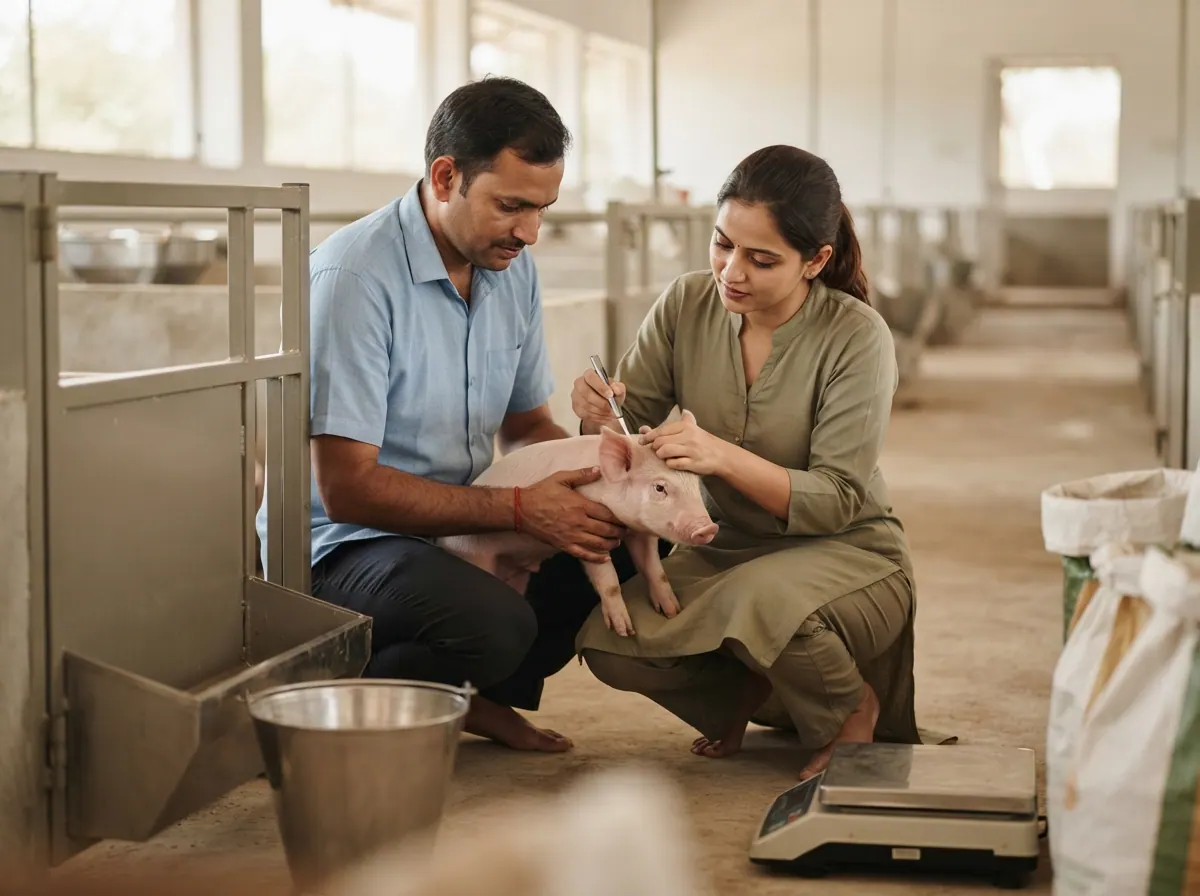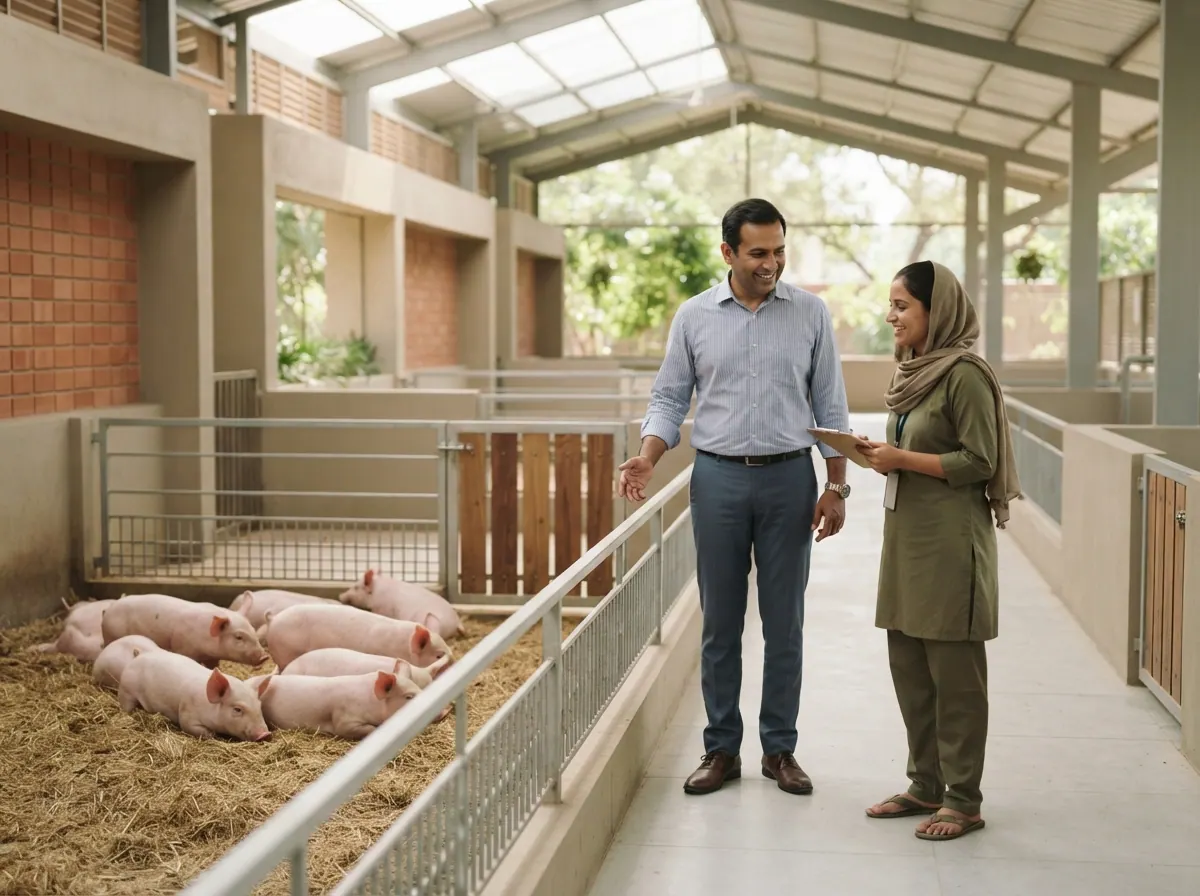
To start a pig farm in India you need a washable, shaded shed with separate pens, a steady feed supply, a vet who knows pig diseases, and about ₹1–2.5 lakh for 5 sows and a boar, or ₹5–8 lakh for 15 sows and a boar or two. That is on land you already own. The money comes from selling grown pigs for meat, and the first sale usually comes more than a year after your first purchase.
All figures here are estimates. Check prices near you before you spend.
What does it cost?
| Item | 5 sows, 1 boar | 15 sows, 2 boars |
|---|---|---|
| Breeding sows (gilts) | ₹40,000–80,000 | ₹1.2–2.4 lakh |
| Boar | ₹10,000–25,000 | ₹20,000–50,000 |
| Shed with concrete floor, drain, roof | ₹40,000–90,000 | ₹1.5–3 lakh |
| Water, feeders, drinkers | ₹10,000–20,000 | ₹30,000–60,000 |
| Feed reserve for the first months | ₹20,000–40,000 | ₹60,000–1 lakh |
| Vet visits and vaccines | ₹5,000–10,000 | ₹15,000–30,000 |
| Total | about ₹1–2.5 lakh | about ₹5–8 lakh |
The shed is not the place to save too much. A floor that cannot be washed down daily is where piglet illness begins.
Which breed should you keep?
- Large White Yorkshire: the most common commercial breed in India, grows fast and the sows have large litters.
- Landrace: long-bodied, good mothers, and often crossed with Large White.
- Duroc: a strong, fast-growing breed, often used as the boar in a cross.
- Ghungroo: a local breed from West Bengal and Odisha that does well on cheaper feed.
- Desi pigs: hardy, slow growing, popular in parts of the north-east and with tribal buyers.
How much can it earn?
Here is a settled farm with 15 sows. These are example numbers, not a promise.
Pigs sold in a year
- 15 sows × 2 litters a year = 30 litters
- 30 litters × 8 piglets raised to market = 240 pigs
- 240 pigs × about 90 kg × about ₹110 a kg = ₹23,76,000 a year
- ₹23,76,000 ÷ 12 = about ₹1,98,000 a month
Costs each month
- Feed for growing pigs: 240 × 250 kg × ₹26 ÷ 12 = about ₹1,30,000
- Feed for sows and boars: about ₹30,000
- One paid worker = ₹12,000
- Vet and medicine = ₹4,000
- Power, water and repairs = ₹4,000
- Total = about ₹1,80,000
Left over: ₹1,98,000 − ₹1,80,000 = about ₹18,000 a month.
It is thin, because feed is most of the bill. If your family works the farm, add back ₹12,000. If you can safely use farm or hotel food leftovers for part of the feed, ask your vet how to do it, because it also carries risk.
What do you need before you start?
- A site away from houses. Pigs smell, and neighbours complain first. Speak to them before you build.
- A steady feed source. Compare the price of buying ready feed with mixing maize, rice bran and a protein mix.
- A buyer. Meat demand depends on your region and community. Find a trader or butcher before you buy sows.
- A vet who knows pigs. Ask about vaccines, deworming and what to do if there is a disease outbreak nearby.
Step by step
- Visit two running piggeries and ask how many piglets they lose before weaning.
- Build the shed first, with a sloped, washable floor, shade, and a farrowing pen where the sow can lie down without crushing piglets.
- Buy gilts from a reliable breeder, not a trader, and ask for the breeding records of the parents.
- Keep new animals apart for the time your vet advises before mixing.
- Tag and record every sow: mating date, farrowing date, litter size, weights.
- Plan the sales. A pig is sold once it reaches market weight. Keeping it longer only costs feed.
Which licences apply?
- Local permission: the panchayat or municipality may need to approve a piggery, and waste disposal rules apply. Confirm with them.
- Loans: banks give livestock loans, and some state schemes support piggery units. Rules change, so ask the district animal husbandry office what is open now.
- Moving and selling pigs: movement can be restricted when disease is reported. Check before you transport.
- Selling meat yourself: this is a different business with food licences. Ask the licensing office.
- Tax: ask a CA how your sales are treated.
What goes wrong?
- Disease. African swine fever has caused heavy losses in parts of India, and there is no easy cure. Strict entry control, no visitors in the sheds, and calling the vet at the first sign of trouble matter most.
- Piglets crushed or chilled. A sow lying down can crush newborns, and a cold night can kill a litter. A proper farrowing pen and a warm corner help.
- Feed cost eating the profit. Prices of maize and soya move, and you carry the pigs while they rise.
- Selling too late. A pig kept past market weight eats more and earns little extra.
- Neighbour complaints. Smell and flies cause closures. Clean daily and handle manure properly.
Situations you will face
What would you do? Each choice costs something.
Getting started
Families near your plot hear about the shed. They say they will complain about smell.
- Meet them, move shed back: Costs land and bricks
- Build where planned: No delay, angry neighbours
The mason quotes a sloped concrete floor with drain. A mud floor costs much less but holds dirt.
- Lay the concrete floor: Costly, easy to wash
- Keep a packed earth floor: Cheap, more piglet illness
A trader sells young sows cheap at the roadside. A breeder charges more but shows parent records.
- Pay the breeder: Higher price, known stock
- Buy from the trader: Cheaper, no history
Large White grows fast on bought feed. Ghungroo is smaller but copes with cheaper feed.
- Large White Yorkshire: Heavier pigs, bigger feed bill
- Local Ghungroo: Cheaper feed, lighter sales
Your first sow is due in two weeks. A proper pen with guard rails costs money.
- Build the farrowing pen: Pay now, fewer crushed piglets
- Use a plain pen: Saves money, risk of crushing
The government vet offers a yearly visit plan. A private pig vet charges per visit but comes faster.
- Hire the private pig vet: Costly, quick response
- Rely on the government vet: Cheap, slow when urgent
Ready feed is easy but expensive. Mixing maize, bran and protein saves money but needs space and care.
- Buy ready feed: Easy, high monthly cost
- Mix feed on the farm: Savings later, setup cost now
First month
Your sow starts farrowing at night. Newborn piglets are cold and the sow keeps shifting.
- Stay up and help: Lost sleep, fewer deaths
- Call the vet to attend: Visit fee, safer litter
- Check in the morning: Rest, risk losing piglets
A cold spell hits. Piglets huddle and some are shivering under the sow.
- Set up a warm creep corner: Costs power and bulbs
- Cover with extra straw: Cheap, less reliable
One sow has ten piglets but the milk looks low. Some piglets are falling behind.
- Call the vet and feed extra: Fee and feed, saves piglets
- Foster some to another sow: Free, only if litters match
- Wait and watch: No cost, weak piglets die
A trader offers a fixed price for every pig you raise. A butcher nearby offers more but only some.
- Sign with the trader: Steady buyer, lower price
- Sell to butcher by batch: Better price, less steady
Pigs need water to drink and to cool down. Your borewell is dropping each afternoon.
- Dig a storage tank: Costly, steady water
- Buy tankers when short: Pay each time, shed stays clean
Running it
Maize rises sharply after a poor harvest. Your feed bill grows every week.
- Bulk buy at the new price: Big outlay, steady supply
- Cut portions slightly: Saves cash, slower growth
Mating rates have dropped. A new boar is expensive and needs a new pen.
- Buy a young boar: Costly, better litters
- Use a neighbour's boar: Fee, disease risk
Piglets are a few weeks old. Early weaning lets the sow breed sooner but weaners need good starter feed.
- Wean on the vet's advice: Starter feed cost, faster cycle
- Let them suckle longer: Cheap, slower breeding
The growers eat well but gain slowly. The vet suspects worms and suggests a round for the whole shed.
- Treat the whole shed: Medicine cost, better growth
- Treat only the thinnest: Cheaper, others stay poor
The pile attracts flies and a neighbour has complained again.
- Make a compost pit: Costly, sells to farmers
- Have a tractor take it away: Pay per trip, no cleanup
A batch has reached selling weight but the local price has dipped. Each extra week costs feed.
- Sell now at the low price: Cash in, smaller income
- Hold two more weeks: Feed cost, price may recover
Frequent cuts leave your warming bulbs off at night while piglets are new.
- Buy an inverter: Costly, steady warmth
- Use a charcoal brazier outside: Cheap, needs night watch
When things go wrong
A farm in the next village reports deaths from swine fever. Officials ask farms to keep strict control.
- Lock down and disinfect: Costly, protects the herd
- Keep business as usual: No cost, serious danger
Three growers die suddenly and others have fever. You do not know the cause.
- Call the vet, isolate the shed: Fees and lost sales
- Bury dead pigs deep and report: Right step, work and fee
A buyer wants to inspect pigs inside the sheds, coming straight from other farms.
- Show pigs at the gate: Slight sales risk
- Let the visitor in after a wash: Boot wash needed, still risky
A fresh bag of feed smells of mould. The dealer says it is fine.
- Return it and buy again: Delay and extra cost
- Throw it and use stock: Loss, pigs stay safe
A rough, worn floor is hurting hooves, and a few pigs eat less.
- Resurface the floor: Costly, healthier pigs
- Put mats in one pen only: Cheaper, partial fix
The trader took a full load and now asks for two more weeks to pay.
- Wait for the payment: Feed bills pile up
- Stop selling to that trader: Lose a big buyer
Growing
Your litters do well. More sows mean more income but also more feed and a bigger shed.
- Raise gilts from your own: Slow, lower cost
- Buy five gilts now: Costly, faster growth
A mixer and grinder cost a lot but your feed bill is your biggest expense.
- Buy the mixer: Big outlay, cheaper feed
- Keep buying ready feed: No outlay, higher bills
A caterer wants pigs of one weight every month. This needs staggered batches and records.
- Plan batches for them: More work, steady income
- Keep selling to the trader: Simple, uneven demand
A bank offers a loan for expansion. It needs records, tags and insurance.
- Take the loan, add insurance: Fees and interest, room to grow
- Grow on own money: No interest, slower
Breeding dates are scribbled on the wall. A mix-up caused a late farrowing last month.
- Keep a proper record book: Time each week, fewer mix-ups
- Pay a helper to track: Wage cost, steady records
Is it right for you?
Pig farming suits you if you have land away from homes, a local market for pork, and patience for a long first cycle. It does not suit you if people near you will not accept it, if you cannot be on the farm daily, or if you need income within months.
A good test: spend two weeks at a working piggery, including one farrowing. If you are still keen, start with 5 sows, get the piglet losses down, and grow from your own gilts.