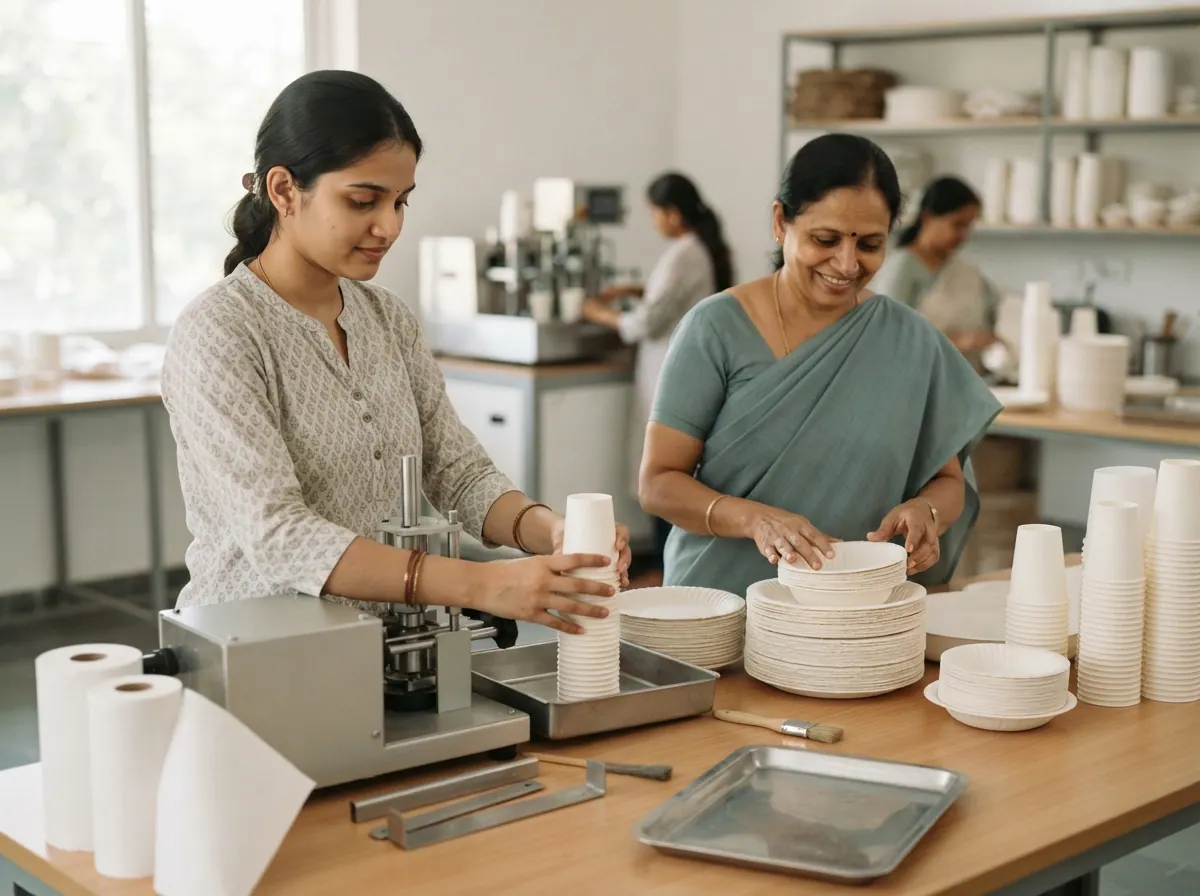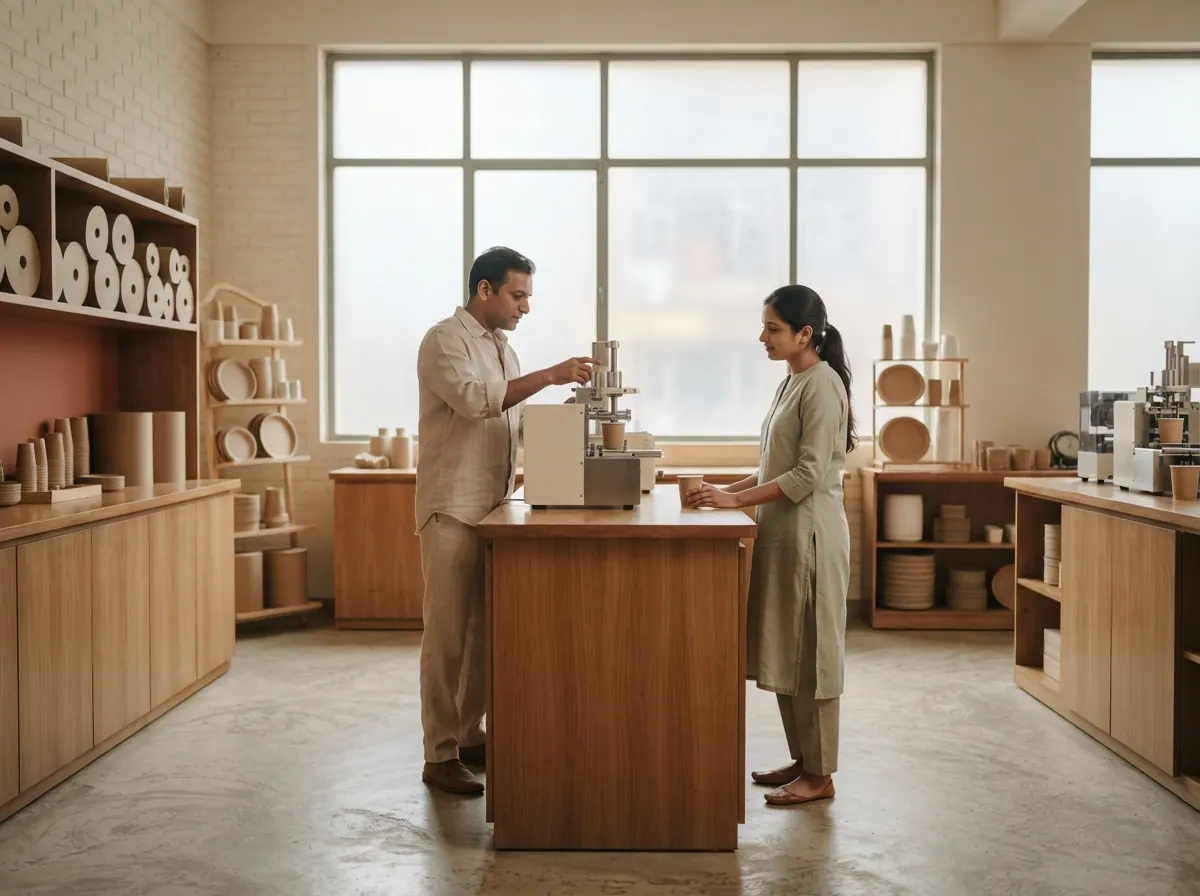
भारत में पेपर प्लेट का बिज़नेस शुरू करने के लिए आपको डाई के साथ एक या ज़्यादा प्लेट मशीन, कागज़ की लगातार सप्लाई, सूखी वर्कशॉप, पैकिंग टेबल और करीब ₹1–8 लाख चाहिए। पैसा मात्रा पर बनता है। हर प्लेट पर कमाई छोटी है, इसलिए मशीन से ज़्यादा आपका कागज़ का खर्च, बर्बादी और खरीदार मायने रखते हैं।
यहाँ के सारे आँकड़े अंदाज़े हैं। खर्च करने से पहले अपने इलाके के दाम ज़रूर देख लें।
कितना खर्च आता है?
| सामान | एक मशीन, छोटी शुरुआत | कई मशीनें, प्लेट और कप |
|---|---|---|
| बिजली वाला किराए का शेड | ₹10,000–30,000 डिपॉज़िट | ₹40,000–80,000 डिपॉज़िट |
| प्लेट मशीन (सेमी-ऑटोमैटिक, डाई के साथ) | ₹50,000–1.5 लाख | ₹2–4 लाख |
| कप मशीन | ज़रूरत नहीं | ₹2–5 लाख |
| अलग साइज़ की अतिरिक्त डाई | ₹10,000–40,000 | ₹40,000–1 लाख |
| शुरू का कागज़ स्टॉक | ₹20,000–70,000 | ₹1–2 लाख |
| पैकिंग सामान और तराज़ू | ₹5,000–15,000 | ₹15,000–40,000 |
| बिजली कनेक्शन और वायरिंग | ₹10,000–30,000 | ₹30,000–70,000 |
| रजिस्ट्रेशन और सैंपल टेस्ट | ₹3,000–10,000 | ₹10,000–30,000 |
| कुल | करीब ₹1–3 लाख | करीब ₹5–8 लाख |
मशीन की क्वालिटी मायने रखती है। जो मशीन बराबर नहीं दबाती उसकी प्लेट के किनारे टूटते हैं, और दुकानदार नहीं खरीदते। पैसा देने से पहले अपने कागज़ पर मशीन का डेमो माँगें।
कौन सा प्रोडक्ट बनाएँ?
- आम साइज़ की सादी प्लेट। सबसे आसान शुरुआत, कैटरर और दुकानों को पैक में बिकती है, पर कई छोटे निर्माता भाव पर टक्कर देते हैं।
- कप। चाय और ठंडे पेय के लिए माँग ज़्यादा है, पर कागज़, मशीन और क्वालिटी की ज़रूरत ज़्यादा है।
- मिठाई और नमकीन के लिए प्लेट। छोटे साइज़, मिठाई की दुकानों, चाट स्टॉल और टिफ़िन वालों के लिए जो बार-बार ऑर्डर करते हैं।
- प्रिंटेड या खास प्लेट। दुकान का नाम या डिज़ाइन ज़्यादा कमा सकता है, पर ज़्यादा सेटअप और बड़े ऑर्डर चाहिए।
कितनी कमाई हो सकती है?
मान लीजिए दो प्लेट मशीनों वाली छोटी यूनिट रोज़ करीब 5,000 प्लेट बनाती है, 26 दिन, यानी महीने की 1,30,000 प्लेट। ये मोटे आँकड़े हैं।
हर महीने
- बिक्री: 1,30,000 प्लेट × करीब ₹1.10 = ₹1,43,000
- कागज़: 1,30,000 × करीब ₹0.52 = ₹67,600
- तीन मज़दूर: 3 × ₹11,000 = ₹33,000
- बिजली: करीब ₹6,000
- किराया: करीब ₹8,000
- पैकिंग और डिलीवरी: करीब ₹6,000
- बचत: ₹1,43,000 − ₹67,600 − ₹33,000 − ₹6,000 − ₹8,000 − ₹6,000 = करीब ₹22,400
यह पतली रकम है। कागज़ प्रति प्लेट सिर्फ़ ₹0.05 बढ़ जाए तो महीने में करीब ₹6,500 कम हो जाते हैं। खरीदार तीस दिन में पैसा दें, तब तक कागज़ खरीदने के लिए आपको नकद चाहिए। जिस मशीन से 10% रिजेक्ट निकलें, वह मार्जिन का बड़ा हिस्सा और खा जाती है।
शुरू करने से पहले क्या चाहिए?
- दोबारा मिलने वाला कागज़। कागज़ के दो विक्रेता जानें ताकि भाव बढ़ने या देरी से काम न रुके।
- खरीदारों की सूची। आपके इलाके के कैटरर, मिठाई की दुकानें और कैंटीन जो आपकी प्लेट आज़माएँ।
- सूखा कमरा। कागज़ नमी खींचकर मुड़ जाता है, और फिर प्लेट ठीक नहीं दबती।
- पास में मिस्त्री। मशीन की दिक्कत से हफ़्ता भर काम न रुके।
- कागज़ के लिए नकद। कागज़ पहले खरीदना पड़ता है और पैसा बाद में आता है।
कदम दर कदम
- दो यूनिट देखें और मशीन चलती देखें। एक घंटे में अच्छी प्लेट और रिजेक्ट गिनें।
- एक साइज़ चुनें, दूसरा बाद में, जो आपके खरीदार सबसे ज़्यादा इस्तेमाल करते हैं।
- सेटअप करें: मशीन, प्लेट जमाने की बेंच और कागज़ का सूखा स्टोर।
- अपने कागज़ से टेस्ट बैच चलाएँ और किनारे की फ़िनिश, आकार और प्लेट कितनी अच्छी जमती है, यह जाँचें।
- गिनकर पैक करें पचास या सौ की साफ़ स्लीव या थैली में, पैक पर आपके नाम के साथ।
- सैंपल ले जाएँ कैटरर, मिठाई की दुकानों और इवेंट प्लानर के पास।
- छोटे पहले ऑर्डर लें और वादे के दिन डिलीवरी करें।
कौन से लाइसेंस लगते हैं?
नियम राज्य के हिसाब से बदलते हैं, इसलिए स्थानीय ऑफ़िस से पक्का करें:
- Udyam रजिस्ट्रेशन लोन और स्कीम के लिए।
- GST, अगर आपकी बिक्री पर लगता है। अपने CA से पूछें।
- वर्कशॉप के लिए स्थानीय इजाज़त, और कमर्शियल बिजली कनेक्शन।
- खाने से छूने वाली चीज़ों के नियम। ज़िला उद्योग केंद्र और फ़ूड सेफ़्टी ऑफ़िस से पूछें कि आपके कागज़ और प्लेट पर क्या लागू होता है।
- प्लास्टिक के नियम। भारत में कुछ सिंगल-यूज़ प्लास्टिक की चीज़ों पर रोक है, और पेपर प्लेट की माँग का यह एक हिस्सा है। अगर कोटिंग इस्तेमाल हो, तो सप्लायर से पूछें कि वह क्या है और प्रदूषण बोर्ड से पक्का करें।
- लोन और स्कीम। छोटे निर्माता अपने ज़िला उद्योग केंद्र से पूछ सकते हैं कि अभी क्या खुला है।
क्या गलत हो सकता है?
- टूटी या मुड़ी प्लेट। नम कागज़, दबाने का गलत तापमान या घिसी डाई से रिजेक्ट निकलते हैं।
- कागज़ के भाव का उतार-चढ़ाव। भाव बढ़ने से मार्जिन तुरंत घटता है, और दुकानें भाव बढ़ाना आसानी से नहीं मानतीं।
- देर से भुगतान। कैटरर और दुकानें अक्सर देर से देती हैं, जबकि कागज़ वाला नकद माँगता है।
- धूल और आग। रखा कागज़ और सूखे टुकड़े जल्दी जलते हैं। कमरा साफ़ और वायरिंग सुरक्षित रखें।
- खराब मशीन। सस्ती मशीन बराबर नहीं दबाती और खराब प्लेट बनाती है।
- धीमे महीने। शादी के सीज़न के बाद ऑर्डर घटते हैं, पर किराया और मज़दूरी चलती रहती है।
ये हालात आपके सामने आएँगे
आप क्या करेंगे? हर फ़ैसले की एक क़ीमत है।
शुरुआत
Caterers use large plates, sweet shops use small ones. Each size needs its own die, and a die costs money.
- Start with caterer plates: Bigger orders, slow payers
- Start with sweet-shop plates: Small orders, repeat buyers
A dealer shows a machine making perfect plates with the dealer's own paper. The dealer does not want to test yours.
- Insist on a demo with your paper: Delay, avoids a bad buy
- Buy the cheaper machine anyway: Save money, risk of rejects
A used semi-automatic machine costs half the price. Its heater and press may be worn.
- Buy a new machine: Costly, even pressing
- Buy the used one: Cheaper, more rejects
A paper mill agent offers the best price but needs a large order. A local dealer sells small lots at a higher price.
- Order a large lot: Cheaper, cash tied up
- Buy small lots locally: Dearer, little cash tied
One shed is cheap but the walls seep in rain. A dry shop costs more rent.
- Rent the dry shed: More rent, dry paper
- Take the damp shed: Cheap, paper curls
The commercial connection needs a deposit and weeks of paperwork. The shed has only a home line.
- Pay and wait for the connection: Deposit, lose some weeks
- Rent a generator meanwhile: Fuel cost, start on time
A caterer wants a proper bill with GST and your registration. Registration takes a few days.
- Register first: Small fee and wait
- Delay the first order: Lose a week, keep papers clean
पहला महीना
Many plates split at the rim. The paper may be damp, or the press temperature may be wrong.
- Dry the paper, adjust heat: Lose a batch, find the fix
- Sell the plates as seconds: Little cash, weaker name
A caterer wants a big order for a wedding in two weeks. It is more than your machine makes in that time.
- Hire extra hands, run a shift: Wages, win the order
- Accept part of the order: Safe, smaller sale
Shops prefer packs of fifty. Caterers want hundreds, with a count that does not come short.
- Offer both pack sizes: More packing work
- Only packs of 100: Simple, lose small shops
A shopkeeper counts forty-six plates in a pack marked fifty. Your workers count by weight.
- Count every pack by hand: Slower, trusted packs
- Add a few extra plates each pack: Costs margin, no complaints
Paper trimmings fill a corner and a worker smokes close by. The landlord has noticed.
- Clear offcuts daily, ban smoking: Small cost, safer shed
- Sell offcuts to a scrap dealer weekly: Small income, a little tidier
A good buyer wants thirty days. You must pay the paper supplier right away.
- Give 15 days only: Safer cash, may lose the buyer
- Give the 30 days: Keep the buyer, cash tied up
रोज़ का काम
Your paper supplier raises the price. Buyers will not accept a higher plate price easily.
- Raise the plate price slightly: Protect margin, lose some buyers
- Hold the price: Keep buyers, thin margin
Orders pour in for weeks. Your two machines run all day, and the dies are heating up.
- Run a night shift: Wages, more output
- Rest the machines, take fewer orders: Safer machines, lose sales
One die presses unevenly and makes weak rims. A new die costs money and a week's wait.
- Order a new die: Cost and wait, clean plates
- Get the die re-machined: Cheaper, lasts less
Many buyers want cups too. A cup machine and cup paper are a big spend and a new skill.
- Buy a cup machine: Big spend, new buyers
- Stay with plates: No spend, no new buyers
A bigger maker sells plates at a price that leaves you no margin. Some shops ask you to match it.
- Match the price for key buyers: Lower margin, keep buyers
- Hold price, stress quality: Some buyers leave
A chain of sweet shops wants printed plates. Printing and a plate die cost more but orders are steady.
- Do the printed plates: Setup cost, better price
- Decline the printing: No spend, lose the shop
The operator who knows your machine takes a job elsewhere during the busiest week.
- Hire and train quickly: Wages, slow week
- Run the machine yourself: Save wages, less selling time
A hospital canteen asks if your paper is safe for hot food and wants a letter from the paper supplier.
- Get a supplier letter and test: Fee and wait, trusted order
- Offer plates for dry food only: No cost, smaller sale
जब मुश्किल आए
A loose wire sparks near the paper stack. No fire starts, but the stack is dry and large.
- Rewire and buy an extinguisher: Cost now, much safer
- Move the stack, call an electrician: Mid cost, wiring checked
The roof leaks and wets two bundles of paper. The damp paper curls when it dries.
- Discard the wet bundles: Loss, clean output
- Dry and test a small lot: Time, may save some
The heating element burns out. The mechanic can fit a new one in two days, for a fee.
- Pay for the express fix: Costly, quick restart
- Wait for the normal visit: Cheaper, lose output
A wholesaler who takes a third of your plates keeps delaying payment and asks for more stock.
- Stop supply until paid: Lose volume, protect cash
- Supply smaller lots: Sales hold, risk stays
Orders drop sharply for six weeks. Rent and wages continue and the store is full of plates.
- Offer discounts to shops: Cash comes in, lower margin
- Run fewer shifts: Save power, idle workers
बढ़ाना
Orders have outgrown two machines and workers are on overtime. A third machine would clear the backlog.
- Buy the machine: Spend now, more output
- Keep overtime: Wages, tired workers
Event planners pay better than wholesalers but want delivery to venues and flexible quantities.
- Buy a delivery vehicle: Spend now, better price
- Keep selling to wholesalers: No spend, lower price
Customers ask for natural-looking plates. A separate machine and different material are needed.
- Add a premium line: Big spend, higher price
- Stay with paper: No spend, no new range
Supermarkets and kirana shops may stock printed retail packs. Printing and sealing cost more.
- Make branded retail packs: Printing cost, better rate
- Keep bulk sales only: No spend, low rate
क्या यह आपके लिए ठीक है?
पेपर प्लेट यूनिट आपके लिए ठीक है अगर आप कैटरर और दुकानों को बेच सकते हैं, एक मशीन और कुछ मज़दूर सँभाल सकते हैं और नकद सावधानी से चला सकते हैं। अगर आपको हर पीस पर ऊँचा मार्जिन चाहिए, या भुगतान का इंतज़ार नहीं कर सकते, तो यह कम ठीक बैठेगा।
एक अच्छा टेस्ट: किसी चालू यूनिट में दो दिन बिताएँ, अच्छी प्लेट और रिजेक्ट गिनें, और तीन कैटरर को फ़ोन करके पूछें कि वे कितना देते हैं और कैसे खरीदते हैं। हिसाब फिर भी ठीक लगे तो एक मशीन और एक साइज़ से शुरू करें।