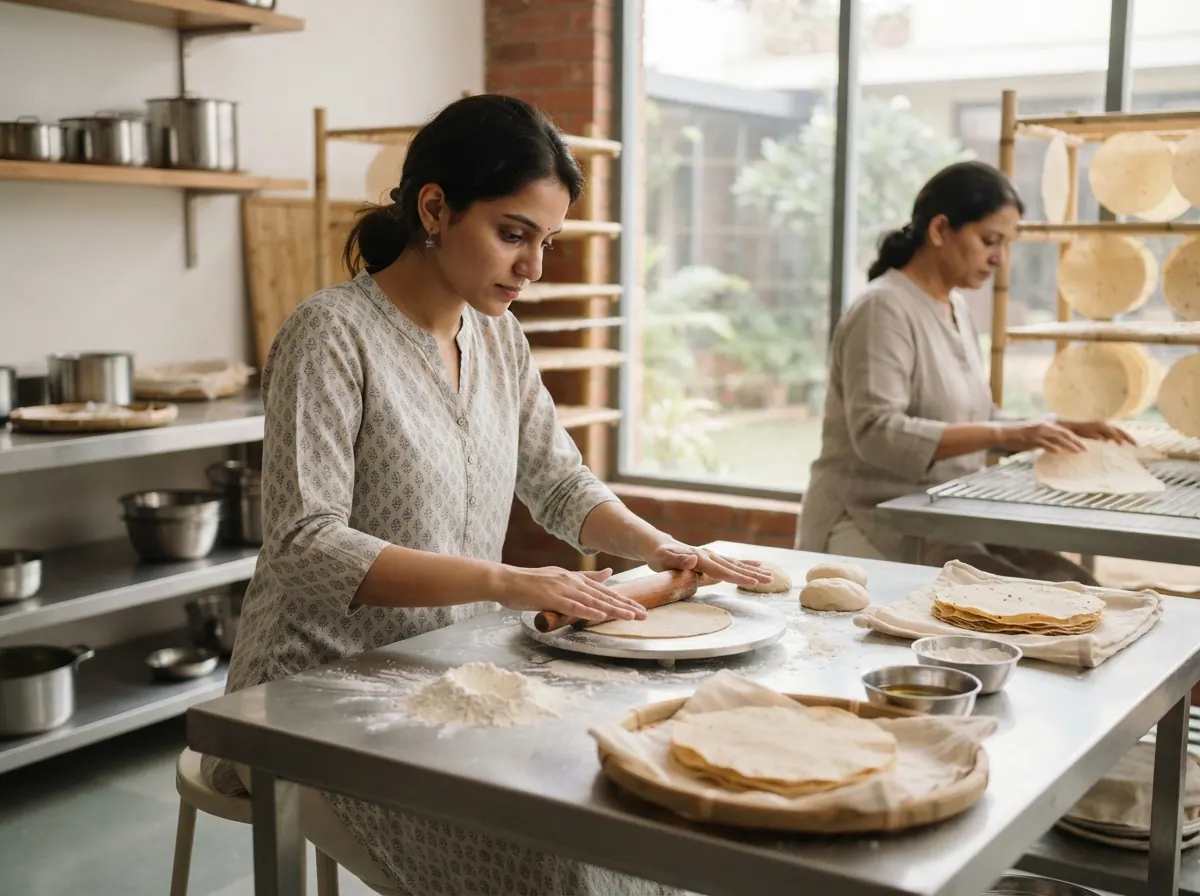
भारत में पापड़ बनाने का बिज़नेस शुरू करने के लिए साफ़ कमरा, आटा गूँधने की मशीन, पापड़ सुखाने की धूप वाली या ड्रायर वाली जगह, पैकिंग की व्यवस्था, FSSAI रजिस्ट्रेशन और छोटे घरेलू सेटअप के लिए करीब ₹20,000–60,000 चाहिए। पापड़ प्रेस और ड्रायर के साथ करीब ₹2 लाख तक लग सकते हैं। पापड़ का दाम प्रति पैकेट कम है और बिकता बहुत है, इसलिए कमाई मात्रा, हर बार एक जैसी क्वालिटी और सूखे मौसम पर टिकी है।
यहाँ सब आँकड़े अंदाज़े हैं। पैसा लगाने से पहले अपने इलाके के भाव पूछ लें।
कितना खर्च आएगा?
| चीज़ | घर से शुरुआत | छोटी यूनिट |
|---|---|---|
| आटा गूँधने की मशीन (मिक्सर) | ₹15,000–40,000 | ₹40,000–80,000 |
| पापड़ प्रेस या बेलन-पट्टा, बेलन | ₹3,000–8,000 | ₹40,000–80,000 |
| सुखाने के रैक, जाली ट्रे, सूती चादरें | ₹4,000–8,000 | ₹10,000–25,000 |
| ड्रायर या सुखाने का कमरा | ₹0 | ₹30,000–60,000 |
| आटा, मसाले, हींग, नमक, तेल, पहली खेप | ₹10,000–20,000 | ₹20,000–40,000 |
| पैकिंग: पाउच, सीलर, लेबल | ₹4,000–8,000 | ₹10,000–25,000 |
| FSSAI और बाकी तैयारी | ₹2,000–5,000 | ₹5,000–12,000 |
| कुल | करीब ₹20,000–60,000 | करीब ₹1.5–2 लाख |
हाथ से बेलने के लिए ऐसे कारीगर चाहिए जो पतला और बराबर बेलना जानें। कई लोग बेलने वालों को किलो के हिसाब से पैसे देते हैं और आटा एक जगह तैयार करते हैं।
कौन सा पापड़ पहले बनाएँ?
- उड़द दाल का पापड़: मुख्य चीज़। सादा, जीरा और काली मिर्च वाला पहली रेंज है।
- मूँग का पापड़: हल्का, नाश्ते और कुछ इलाकों में व्रत के दिनों में लोकप्रिय।
- चावल और साबूदाना पापड़: मौसमी, त्योहारों में अच्छे।
- इलाके के पापड़: जहाँ के हैं वहाँ मशहूर, जैसे मारवाड़ी, गुजराती और पंजाबी स्टाइल।
दो प्रकार चुनें और हर बार एक जैसे रखें। ग्राहक मोटाई, स्वाद और तलने पर भरोसा करते हैं।
कितनी कमाई हो सकती है?
एक छोटी यूनिट जो महीने में 500 किलो पापड़ किराना, मिठाई की दुकानों और कुछ दफ़्तरों को करीब ₹200 किलो में बेचती है।
बिक्री
- 500 किलो × ₹200 = ₹1,00,000
हर महीने का खर्च
- उड़द का आटा और दाल, करीब ₹80 प्रति किलो पापड़: ₹40,000
- मसाले, हींग, नमक और तेल: ₹8,000
- पैकिंग, 2,500 पैकेट × ₹3: ₹7,500
- बेलने की मज़दूरी करीब ₹20 किलो: ₹10,000
- एक मशीन ऑपरेटर: ₹10,000
- किराया: ₹5,000
- बिजली, ढुलाई और छोटे खर्च: ₹5,000
- कुल = ₹85,500
बचत: ₹1,00,000 − ₹85,500 = करीब ₹14,500 महीना।
Margin पतला है। परिवार खुद काम करे तो बेलने और ऑपरेटर का खर्च बचता है, पर उत्पादन छोटा रहता है। उड़द का भाव साल में ऊपर-नीचे होता है, इसलिए दाल का एक ख़राब महीना पूरा मुनाफ़ा खा सकता है।
शुरू करने से पहले क्या चाहिए?
- साफ़ कमरा और सूखी जगह धूप में सुखाने के लिए, जैसे छत, और चिड़ियों से बचाने के लिए जाली।
- भरोसे का आटा सप्लायर, और उड़द के बार-बार बदलते भाव की योजना।
- सधे हुए कारीगर या प्रेस, क्योंकि ऊँचा-नीचा पापड़ नहीं बिकता।
- बरसात की योजना: या तो ड्रायर या सूखे महीनों में बनाया स्टॉक।
कदम-दर-कदम
- तीन तरह के मसालों से नमूने के पापड़ बनाएँ और किराना दुकानों व पड़ोस में दें।
- FSSAI रजिस्ट्रेशन कराएँ और पूछें कि लेबल पर क्या चाहिए।
- आटे, पानी, नमक, हींग और तेल का अनुपात तय करें और लिख लें।
- साफ़ कपड़े या रैक पर सुखाएँ। पापड़ पलटें ताकि दोनों तरफ़ बराबर सूखे। पैक करने से पहले पूरी तरह सूखा होना चाहिए।
- सील पाउच में पैक करें 200 ग्राम, 500 ग्राम और 1 किलो में, पैकेट पर वज़न साफ़ लिखा हो।
- पहले कुछ दुकानों को माल दें और सीलन वाले या टूटे पैकेट वापस ले लें।
- त्योहार के पैक जोड़ें दिवाली और शादी के सीज़न के लिए।
कौन से लाइसेंस लगते हैं?
- FSSAI रजिस्ट्रेशन या लाइसेंस साइज़ और बिक्री के हिसाब से।
- उद्यम रजिस्ट्रेशन कुछ योजनाओं और लोन में मदद करता है। दफ़्तर से पक्का करें।
- GST बिक्री बढ़ने पर। CA से पूछें।
- पंचायत या नगरपालिका की इजाज़त शेड या किराये की जगह से चलाने पर।
- लेबल के नियम पैक खाने के लिए। छपवाने से पहले लाइसेंस दफ़्तर से पूछें।
क्या-क्या गड़बड़ हो सकती है?
- बरसात में पापड़ न सूखना और पैकेट में फफूँद लगना या नरम पड़ना।
- असमान मोटाई, जिससे कुछ पापड़ जल जाते हैं और कुछ तलने पर कच्चे रहते हैं।
- धूल, चिड़िया और कीड़े अगर पापड़ बिना ढके बाहर सूखे।
- उड़द के भाव में उछाल। दाल का भाव तब चढ़ सकता है जब आपकी दुकान का भाव तय हो।
- पापड़ खार या सोडा ज़्यादा डालना, जिससे स्वाद कड़वा या साबुन जैसा हो जाता है। ग्राहक पकड़ लेते हैं।
- ऑर्डर के बीच में बेलने वालों का छोड़ना। किलो के हिसाब से काम करने वाले वहाँ चले जाते हैं जहाँ रेट ज़्यादा हो।
ये हालात आपके सामने आएँगे
आप क्या करेंगे? हर फ़ैसले की एक क़ीमत है।
शुरुआत
A mill sells ready urad flour. Grinding your own dal gives more control but needs a pulveriser and time.
- Buy ready urad flour: Easy, you pay for convenience
- Buy dal and grind it: Machine cost, better control
Hand kneading papad dough is hard work for a big batch. A heavy-duty kneader costs a lot.
- Buy the kneader: Costly, even dough fast
- Knead by hand for now: No cost, tired arms, slow
Your terrace is open to dust and birds. A covered drying frame with net costs money.
- Build a netted drying frame: Costly, cleaner papad
- Dry on the open terrace: Cheap, dust and birds
A trader offers cheap hing powder. Pure hing costs far more but gives the papad its real smell and taste.
- Buy good quality hing: Costs more, true flavour
- Buy the cheaper compound: Less cost, weaker flavour
A sweet shop owner wants to stock your papad this week. Your FSSAI registration is not through yet.
- Wait for the registration: Lose a few weeks of sales
- Give free samples meanwhile: Costs stock, no sales yet
A skilled papad roller from the next lane will join you but asks for a higher rate per kilo than you planned.
- Pay the higher rate: Costs more, even papad
- Train a beginner instead: Cheaper, uneven for weeks
पहला महीना
A shop says some pieces fry crisp and others stay raw in the middle. Your rollers rush at the end of the day.
- Buy a papad press: Costly, even thickness
- Check thickness by gauge: Cheap, slower rolling
A full day of papad is on racks outside. Light rain would spoil it and the shop order is due.
- Move trays under a cover: Slower drying, delayed order
- Use a rented dryer today: Fee, order stays on time
A kirana owner says your papad has a soapy taste. You added extra papad khar to make the dough soft.
- Cut the khar, remake the lot: Lose a batch, better taste
- Keep the recipe, add more spice: No loss, taste problem stays
The shop will pay in a month and wants a good rate. Your first big order is tempting.
- Give on one-month credit: Big order, cash waits
- Give 10 kg for cash: Small, safe sale
रोज़ का काम
Papad dried only partly in damp weather and went into pouches. Some shops report green spots.
- Recall and throw those packs: Big loss, trust kept
- Buy a dryer for rainy weeks: Costly, solves the cause
A poor harvest pushes urad prices up. Your kirana shops pay a fixed rate per kilo.
- Raise your price a little: Margin holds, some shops grumble
- Hold the price and absorb it: Shops stay, margin thin
Sweet shops and a society order large lots before Diwali. You would need extra rollers.
- Hire extra rollers for a month: More wages, big sales
- Take only regular orders: Less strain, less money
A shop opens a carton and finds a quarter of the papads cracked. The pouches were packed too tightly.
- Use stiffer cartons, replace: Costs more, fewer breaks
- Replace only the broken packs: Cheaper, same problem later
A wedding caterer wants a large lot at a price lower than your shop rate, paid after the function.
- Accept at their price: Big volume, thin margin
- Ask half in advance: Safer money, may lose it
Customers ask for black pepper papad. Pepper costs a lot and the first batches may not sell.
- Try a small pepper batch: Test cost, new buyers
- Keep plain and jeera only: No risk, no growth
Shops ask for sabudana papad before a fasting season. It needs different dough and careful drying.
- Make a trial lot: Trial cost, seasonal sales
- Skip the season: No cost, lose the orders
जब मुश्किल आए
Two of your best rollers move to a bigger unit offering a higher rate during the festival.
- Match their rate for the season: Higher wages, order safe
- Let them go, hire new ones: Cheaper, slower and uneven
Chewed sacks and droppings in the store room. A pest-control service is costly, and traps are not enough.
- Hire pest control, new sacks: Costly, safe store
- Use traps and clean up: Cheaper, risk remains
An officer asks to see your drying area, flour storage and batch records. Your records are scattered.
- Make a batch and stock register: Daily effort, good records
- Promise to maintain it later: No effort, weaker standing
A small distributor has not paid for two months and asks for a fresh load because of the season.
- No new load until paid: Safe, may lose the dealer
- Send a half load: More at risk, dealer stays
A new maker sells papad in a pouch like yours at a lower rate in the same shops.
- Change your pouch and name: Printing cost, stand apart
- Cut your price to match: Keeps shops, thin margin
बढ़ाना
A group of women in a nearby village can roll papad at home for a rate per kilo. You must check quality.
- Work with the group: Wages and checks, more output
- Keep rolling in your unit: Control quality, slower growth
A machine presses papad faster than ten rollers. It is expensive and rollers may lose work.
- Buy the papad machine: Heavy cost, high output
- Keep hand rolling: No cost, slow growth
A cabinet dryer would let you make papad in rain and winter. It uses power and needs space.
- Install the dryer: Costly, year-round output
- Build stock in dry months: Cheap, cash tied in stock
A supermarket asks for 100 g printed packs with a barcode. It needs new pouches and a new machine setting.
- Make the small packs: Cost now, bigger shelves
- Stay with your usual packs: No cost, smaller reach
Distributors ask for proper tax invoices. You have not kept formal accounts.
- Hire a CA, set up billing: Fees now, bigger buyers
- Keep cash sales to shops: No fee, limited growth
A grocery in another country asks for sample cartons. Shipping and papers cost money and nothing is promised.
- Send export-grade samples: Costly, possible repeat order
- Decline for now: No cost, no chance
A shop near the market is for rent. Selling papad and pickle by weight pays more per kilo than to retailers.
- Rent and open the counter: Rent and staff, higher margin
- Keep selling to shops only: No risk, lower margin
An installer offers a solar dryer that saves on power and dries faster than the open terrace.
- Install the solar dryer: Big cost, steady drying
- Stay with sun and racks: No cost, weather risk
क्या यह आपके लिए ठीक है?
पापड़ का काम आपके लिए ठीक है अगर आप कारीगरों को सँभाल सकते हैं, रोज़ का एक सा काम पसंद करते हैं और मात्रा के बदले पतला margin मान सकते हैं। अगर जल्दी मुनाफ़ा चाहिए या सुखाने की सूखी जगह नहीं है तो कम ठीक है।
आसान टेस्ट: सूखे मौसम में किसी पापड़ यूनिट के साथ एक हफ़्ता रहें, गिनें कि एक बेलने वाला दिन में कितने किलो बनाता है और नम दिनों में वे क्या करते हैं। फिर मशीनें लेने से पहले छोटी ऑर्डर-बुक से शुरू करें।
पहले सीज़न में मौसम और सुखाई का एक सादा रजिस्टर रखें: तारीख, धूप के घंटे, सुखाए किलो और रद्द किलो। कुछ महीनों में पता चल जाता है कि किन हफ़्तों में पूरी शिफ़्ट चलानी है और कब रुकना या ड्रायर लेना है, और यह योजना इस काम में किसी भी मशीन से ज़्यादा पैसा बचाती है।