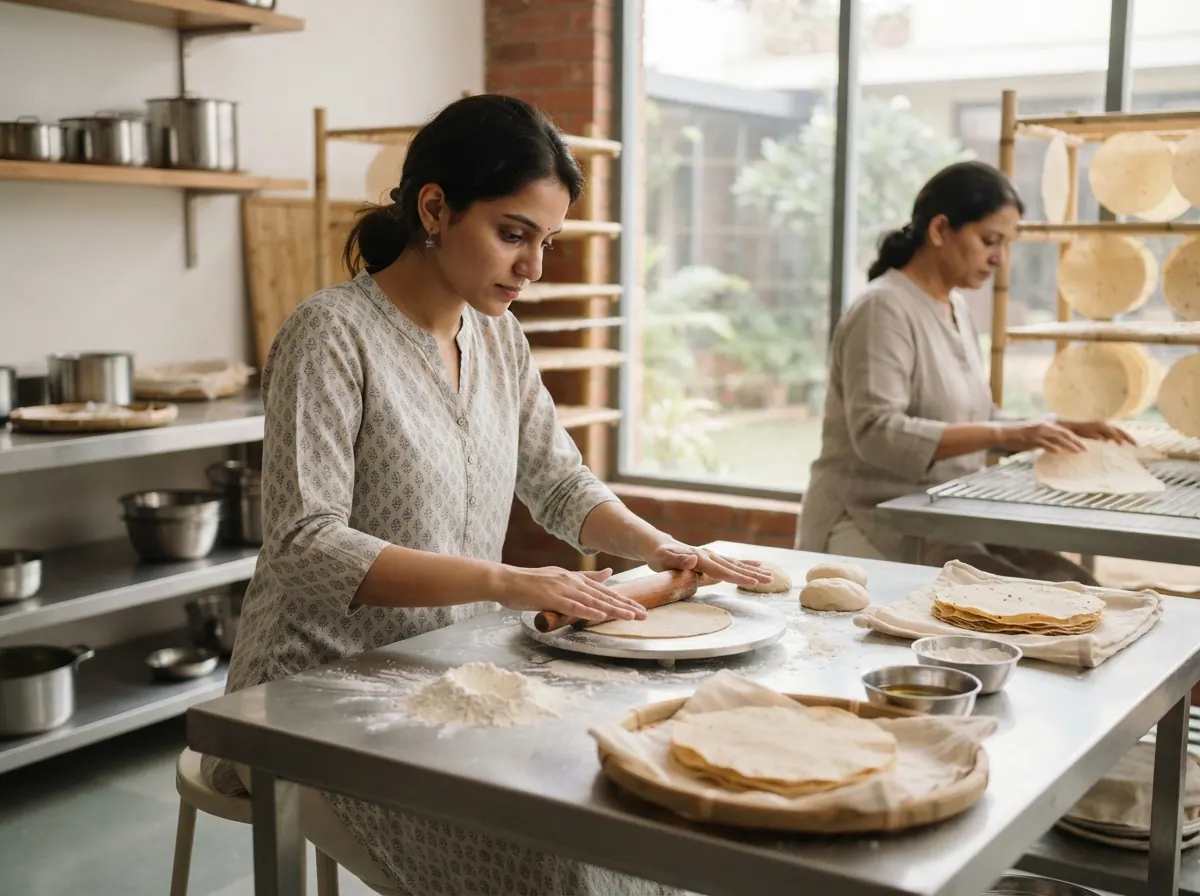
To start a papad making business in India you need a clean workroom, a dough kneader, space to dry papad in the sun or in a dryer, a packing arrangement, an FSSAI registration, and about ₹20,000–60,000 for a small home setup or up to about ₹2 lakh with a papad press and dryer. Papad is low priced per packet and sells in huge numbers, so your profit comes from volume, quality that never changes and a good dry season.
All figures here are estimates. Check prices near you before you spend.
What does it cost?
| Item | Home start | Small unit |
|---|---|---|
| Dough kneader (mixer) | ₹15,000–40,000 | ₹40,000–80,000 |
| Papad press or rolling board, rolling pins | ₹3,000–8,000 | ₹40,000–80,000 |
| Drying racks, net trays, cotton sheets | ₹4,000–8,000 | ₹10,000–25,000 |
| Dryer or drying room | ₹0 | ₹30,000–60,000 |
| Flour, spices, hing, salt, oil, first lot | ₹10,000–20,000 | ₹20,000–40,000 |
| Packing: pouches, sealer, labels | ₹4,000–8,000 | ₹10,000–25,000 |
| FSSAI and basic set-up | ₹2,000–5,000 | ₹5,000–12,000 |
| Total | about ₹20,000–60,000 | about ₹1.5–2 lakh |
Hand rolling needs workers who know how to roll thin and even. Many makers pay rollers per kilo and make the dough centrally.
Which papad should you start with?
- Urad dal papad: the staple. Plain, jeera and black pepper versions are the first range.
- Moong papad: lighter, popular as a snack and for fasting days in some regions.
- Rice and sabudana papad: seasonal, and good during festivals.
- Regional kinds: well known where they come from, such as Marwari, Gujarati and Punjabi styles.
Pick two lines and keep them the same every time. Customers rely on thickness, taste and how it fries.
How much can it earn?
Here is a small unit selling 500 kg a month to kirana shops, sweet shops and a few offices at about ₹200 a kilo.
Sales
- 500 kg × ₹200 = ₹1,00,000
Costs each month
- Urad flour and dal at about ₹80 per kg of papad: ₹40,000
- Spices, hing, salt and oil: ₹8,000
- Packing, 2,500 packets × ₹3: ₹7,500
- Rolling charges at about ₹20 a kg: ₹10,000
- One machine operator: ₹10,000
- Rent: ₹5,000
- Power, transport and small items: ₹5,000
- Total = ₹85,500
Left over: ₹1,00,000 − ₹85,500 = about ₹14,500 a month.
Margins are thin. If you do the work with family you keep the rolling and operator costs, but your output is small. The urad price swings during the year, so one bad month for dal can eat the whole profit.
What do you need before you start?
- A clean workroom and a dry space for sun drying, such as a terrace, with a net to keep birds away.
- A reliable flour source, and a plan for urad prices that move often.
- Trained rollers or a press, since uneven papad does not sell.
- A monsoon plan, which is either a dryer or a stock built in dry months.
Step by step
- Make sample papad with three different spice mixes and take them to kirana shops and neighbours.
- Get FSSAI registration and confirm what the label must carry.
- Fix your dough ratio for flour, water, salt, hing and oil, and write it down.
- Dry on clean cloth or racks. Turn the papad so both sides dry evenly. Papad must be fully dry before packing.
- Pack in sealed pouches of 200 g, 500 g and 1 kg, with the weight clear on the packet.
- Supply a few shops first and take back damp or broken packets.
- Add festival packs for Diwali and wedding seasons.
Which licences apply?
- FSSAI registration or licence depending on size and sales.
- Udyam registration helps with some schemes and loans. Confirm with the office.
- GST as your sales grow. Ask a CA.
- Panchayat or municipal permission if you run from a shed or rented place.
- Labelling rules for packed food. Ask the licensing office before printing.
What goes wrong?
- Papad that does not dry in the monsoon and turns mouldy or soft in the packet.
- Uneven thickness, so some pieces burn and others stay raw when fried.
- Dust, birds and insects on papad that dries outside without a cover.
- Urad price jumps. Dal prices can rise just as your shop price is fixed.
- Using too much baking soda or papad khar, which makes it taste bitter or soapy. Buyers notice.
- Rollers leaving in the middle of an order. Piece-rate workers move to wherever the rate is higher.
Situations you will face
What would you do? Each choice costs something.
Getting started
A mill sells ready urad flour. Grinding your own dal gives more control but needs a pulveriser and time.
- Buy ready urad flour: Easy, you pay for convenience
- Buy dal and grind it: Machine cost, better control
Hand kneading papad dough is hard work for a big batch. A heavy-duty kneader costs a lot.
- Buy the kneader: Costly, even dough fast
- Knead by hand for now: No cost, tired arms, slow
Your terrace is open to dust and birds. A covered drying frame with net costs money.
- Build a netted drying frame: Costly, cleaner papad
- Dry on the open terrace: Cheap, dust and birds
A trader offers cheap hing powder. Pure hing costs far more but gives the papad its real smell and taste.
- Buy good quality hing: Costs more, true flavour
- Buy the cheaper compound: Less cost, weaker flavour
A sweet shop owner wants to stock your papad this week. Your FSSAI registration is not through yet.
- Wait for the registration: Lose a few weeks of sales
- Give free samples meanwhile: Costs stock, no sales yet
A skilled papad roller from the next lane will join you but asks for a higher rate per kilo than you planned.
- Pay the higher rate: Costs more, even papad
- Train a beginner instead: Cheaper, uneven for weeks
First month
A shop says some pieces fry crisp and others stay raw in the middle. Your rollers rush at the end of the day.
- Buy a papad press: Costly, even thickness
- Check thickness by gauge: Cheap, slower rolling
A full day of papad is on racks outside. Light rain would spoil it and the shop order is due.
- Move trays under a cover: Slower drying, delayed order
- Use a rented dryer today: Fee, order stays on time
A kirana owner says your papad has a soapy taste. You added extra papad khar to make the dough soft.
- Cut the khar, remake the lot: Lose a batch, better taste
- Keep the recipe, add more spice: No loss, taste problem stays
The shop will pay in a month and wants a good rate. Your first big order is tempting.
- Give on one-month credit: Big order, cash waits
- Give 10 kg for cash: Small, safe sale
Running it
Papad dried only partly in damp weather and went into pouches. Some shops report green spots.
- Recall and throw those packs: Big loss, trust kept
- Buy a dryer for rainy weeks: Costly, solves the cause
A poor harvest pushes urad prices up. Your kirana shops pay a fixed rate per kilo.
- Raise your price a little: Margin holds, some shops grumble
- Hold the price and absorb it: Shops stay, margin thin
Sweet shops and a society order large lots before Diwali. You would need extra rollers.
- Hire extra rollers for a month: More wages, big sales
- Take only regular orders: Less strain, less money
A shop opens a carton and finds a quarter of the papads cracked. The pouches were packed too tightly.
- Use stiffer cartons, replace: Costs more, fewer breaks
- Replace only the broken packs: Cheaper, same problem later
A wedding caterer wants a large lot at a price lower than your shop rate, paid after the function.
- Accept at their price: Big volume, thin margin
- Ask half in advance: Safer money, may lose it
Customers ask for black pepper papad. Pepper costs a lot and the first batches may not sell.
- Try a small pepper batch: Test cost, new buyers
- Keep plain and jeera only: No risk, no growth
Shops ask for sabudana papad before a fasting season. It needs different dough and careful drying.
- Make a trial lot: Trial cost, seasonal sales
- Skip the season: No cost, lose the orders
When things go wrong
Two of your best rollers move to a bigger unit offering a higher rate during the festival.
- Match their rate for the season: Higher wages, order safe
- Let them go, hire new ones: Cheaper, slower and uneven
Chewed sacks and droppings in the store room. A pest-control service is costly, and traps are not enough.
- Hire pest control, new sacks: Costly, safe store
- Use traps and clean up: Cheaper, risk remains
An officer asks to see your drying area, flour storage and batch records. Your records are scattered.
- Make a batch and stock register: Daily effort, good records
- Promise to maintain it later: No effort, weaker standing
A small distributor has not paid for two months and asks for a fresh load because of the season.
- No new load until paid: Safe, may lose the dealer
- Send a half load: More at risk, dealer stays
A new maker sells papad in a pouch like yours at a lower rate in the same shops.
- Change your pouch and name: Printing cost, stand apart
- Cut your price to match: Keeps shops, thin margin
Growing
A group of women in a nearby village can roll papad at home for a rate per kilo. You must check quality.
- Work with the group: Wages and checks, more output
- Keep rolling in your unit: Control quality, slower growth
A machine presses papad faster than ten rollers. It is expensive and rollers may lose work.
- Buy the papad machine: Heavy cost, high output
- Keep hand rolling: No cost, slow growth
A cabinet dryer would let you make papad in rain and winter. It uses power and needs space.
- Install the dryer: Costly, year-round output
- Build stock in dry months: Cheap, cash tied in stock
A supermarket asks for 100 g printed packs with a barcode. It needs new pouches and a new machine setting.
- Make the small packs: Cost now, bigger shelves
- Stay with your usual packs: No cost, smaller reach
Distributors ask for proper tax invoices. You have not kept formal accounts.
- Hire a CA, set up billing: Fees now, bigger buyers
- Keep cash sales to shops: No fee, limited growth
A grocery in another country asks for sample cartons. Shipping and papers cost money and nothing is promised.
- Send export-grade samples: Costly, possible repeat order
- Decline for now: No cost, no chance
A shop near the market is for rent. Selling papad and pickle by weight pays more per kilo than to retailers.
- Rent and open the counter: Rent and staff, higher margin
- Keep selling to shops only: No risk, lower margin
An installer offers a solar dryer that saves on power and dries faster than the open terrace.
- Install the solar dryer: Big cost, steady drying
- Stay with sun and racks: No cost, weather risk
Is it right for you?
Papad suits you if you can manage workers, enjoy steady daily work and can accept thin margins in return for volume. It suits you less if you want quick profits or have no dry space for drying.
A good test: spend a week with a papad unit in the dry season, count how many kilos one roller makes in a day, and see how they handle damp days. Then start with a small order book before buying machines.
Keep a simple weather and drying log in the first season: date, hours of sun, kilos dried and kilos rejected. After a few months it shows which weeks to run full shifts and which weeks to pause or use a dryer, and that planning saves more money than any machine in this trade.