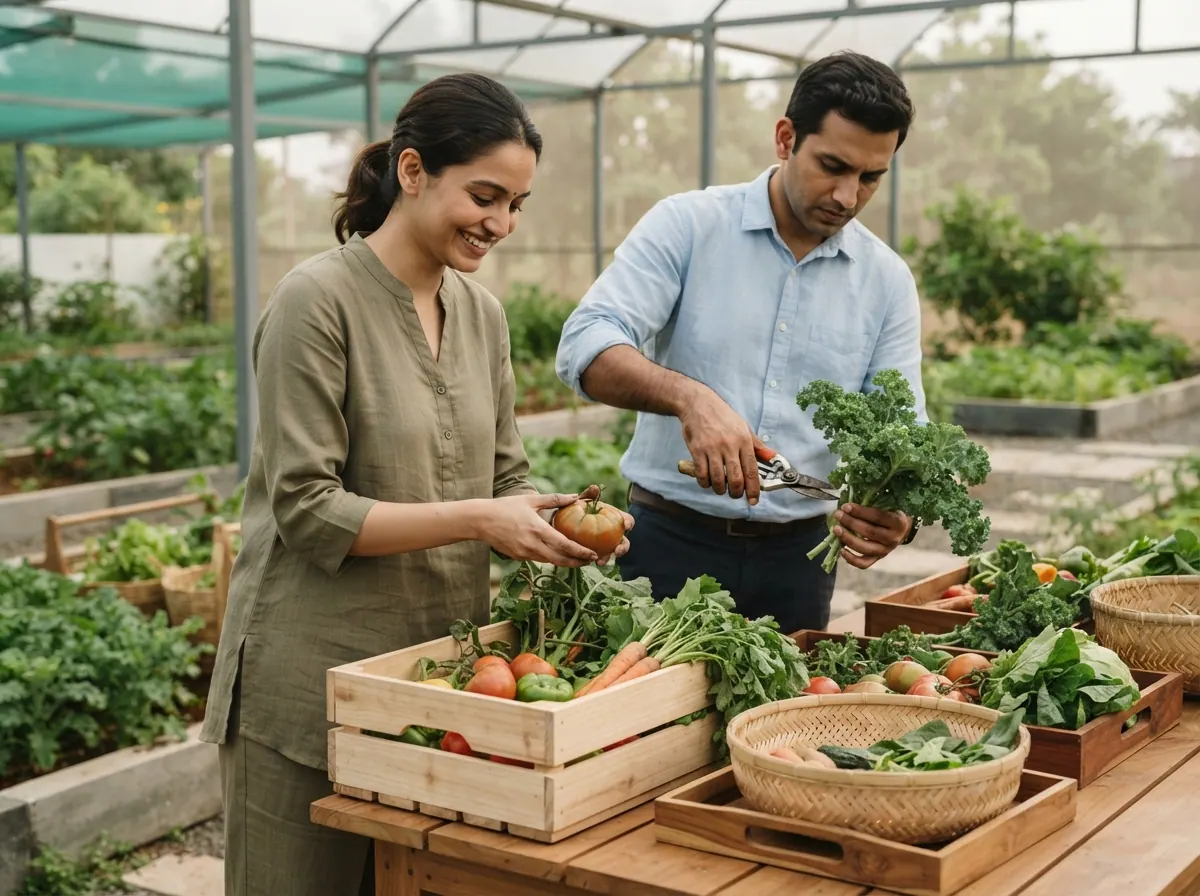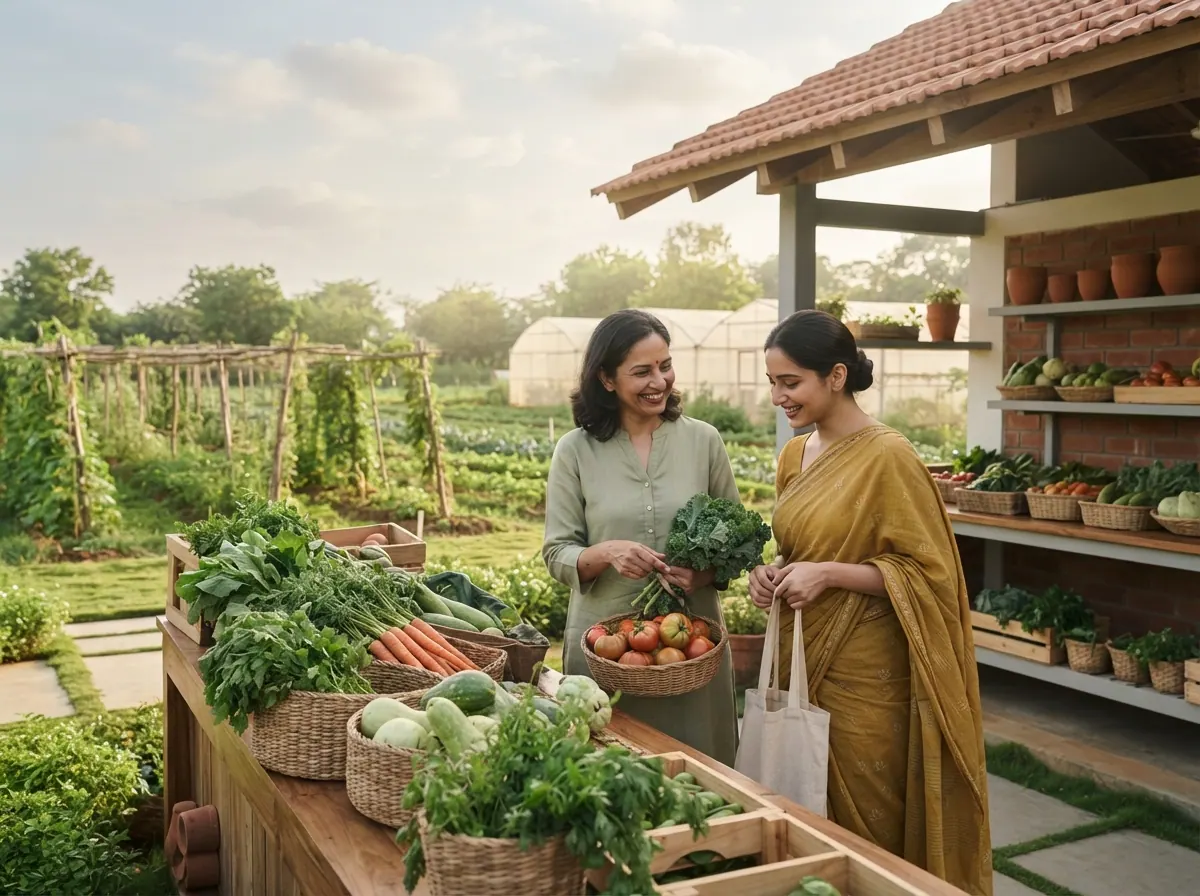
भारत में ऑर्गेनिक सब्ज़ी का फार्म शुरू करने के लिए आपको चाहिए ज़मीन जिसमें साल भर चलने वाला पानी हो, कम्पोस्ट और जैविक सामान की योजना, पौध के लिए नर्सरी की जगह, सर्टिफिकेशन का रास्ता, ज़्यादा भाव देने वाले खरीदार, और एक एकड़ के लिए करीब ₹1.7–3.4 लाख या चार एकड़ के लिए ₹5.7–11 लाख। यह मानकर कि ज़मीन आपकी अपनी है। ऑर्गेनिक खेती में पहले एक-दो साल में आमतौर पर ज़्यादा कमाई नहीं होती, क्योंकि मिट्टी और कीट जमते-जमते उपज गिरती है, और सबूत बनने से पहले आप हमेशा ऊँचा भाव नहीं ले सकते।
यहाँ सारे आँकड़े अंदाज़े हैं। पैसा लगाने से पहले अपने इलाके के दाम ज़रूर देख लें।
इसमें कितना खर्च आता है?
| मद | 1 एकड़ | 4 एकड़ |
|---|---|---|
| ज़मीन तैयार करना, क्यारियाँ, गोबर की खाद | ₹15,000–30,000 | ₹60,000–1.2 लाख |
| ड्रिप सिंचाई | ₹20,000–40,000 | ₹1.2–2 लाख |
| वर्मीकम्पोस्ट बेड या कम्पोस्ट गड्ढे | ₹20,000–40,000 | ₹60,000–1.2 लाख |
| नर्सरी की जगह, शेड नेट, ट्रे | ₹20,000–40,000 | ₹50,000–1 लाख |
| बीज और पौध | ₹10,000–20,000 | ₹35,000–70,000 |
| पहले साल का जैविक सामान (नीम खली, जैव-उर्वरक, जैव-कीटनाशक, ट्रैप) | ₹30,000–60,000 | ₹1.2–2.4 लाख |
| औज़ार, स्प्रेयर, क्रेट | ₹15,000–25,000 | ₹30,000–50,000 |
| सर्टिफिकेशन या ग्रुप फ़ीस | ₹5,000–20,000 | ₹10,000–30,000 |
| पैकिंग, तराज़ू, छोटी ठंडी जगह | ₹30,000–60,000 | ₹80,000–1.6 लाख |
| कुल | करीब ₹1.7–3.4 लाख | करीब ₹5.7–11 लाख |
अगर आप अपना कम्पोस्ट बनाएँ, अपनी पौध उगाएँ और खाद के लिए पशु हों तो अक्सर कम खर्च में काम चल जाता है।
क्या उगाएँ?
ऐसी सब्ज़ियाँ चुनें जो परिवार हर हफ़्ते खरीदते हैं और जो आपके मौसम में चलती हैं:
- पत्तेदार सब्ज़ियाँ: पालक, मेथी और धनिया जल्दी उगते हैं, पर जल्दी खराब भी होते हैं और उसी दिन डिलीवरी चाहिए।
- फल वाली सब्ज़ियाँ: टमाटर, बैंगन, भिंडी और मिर्च मुख्य आमदनी देते हैं। इन पर कीट आते हैं, इसलिए रोज़ देखें।
- जड़ और बेल वाली: मूली, गाजर, लौकी और तोरी देर तक टिकती हैं।
- देसी और स्थानीय किस्में: कुछ खरीदार पुरानी स्थानीय किस्मों के ज़्यादा पैसे देते हैं। ज़्यादा लगाने से पहले परख लें।
छोटी क्यारियों में कई तरह की सब्ज़ियाँ लगाएँ, ताकि एक कीट या एक खराब भाव पूरी आमदनी पर न पड़े।
कितनी कमाई हो सकती है?
यह एक एकड़ मिली-जुली ऑर्गेनिक सब्ज़ियों का हिसाब है, जमे हुए साल में, ज़्यादातर सीधे परिवारों और दुकानों को बेचकर।
साल की बिक्री
- साल में दो-तीन फसलों से करीब 9,000 किलो बिकने लायक सब्ज़ी
- 9,000 किलो × करीब ₹45 प्रति किलो = ₹4,05,000
साल का खर्च
- जैविक सामान और कम्पोस्ट = ₹60,000
- बीज और पौध = ₹25,000
- एक फ़ुल-टाइम वर्कर ₹12,000 महीना = ₹1,44,000
- पानी और बिजली = ₹12,000
- पैकिंग, ढुलाई और डिलीवरी = ₹40,000
- सर्टिफिकेशन या ग्रुप फ़ीस = ₹10,000
- दूसरे खर्च = ₹15,000
- कुल = ₹3,06,000
बचत: ₹4,05,000 − ₹3,06,000 = करीब ₹99,000 साल, यानी करीब ₹8,250 महीना।
अगर आपका परिवार खेत का काम खुद करे तो ₹1,44,000 भी बचते हैं, यानी करीब ₹20,000 महीना। एक एकड़ छोटा है, और पतला मार्जिन ही सच है। फ़र्क प्रीमियम भाव से पड़ता है, इसलिए बिना लेबल के मंडी ट्रेडर को बेचने पर हर किलो पर एक रुपये का नुकसान साल में करीब ₹9,000 का है।
शुरू करने से पहले क्या चाहिए?
- साल भर चलने वाला पानी। इसे मई में जाँचें, दिसंबर में नहीं।
- साफ़ खेत। अगर पड़ोसी रसायन छिड़कते हैं तो हवा और बहाव से वे आपके प्लॉट में आ सकते हैं। एक बफ़र पट्टी छोड़ें।
- कम्पोस्ट और पशु। खरीदी खाद लागत बढ़ाती है, इसलिए एक-दो गाय या पास की डेयरी से गोबर मिलने का इंतज़ाम मदद करता है।
- खरीदारों की योजना। लगाने से पहले जानें कि प्रीमियम कौन देगा। दस से बीस पक्के परिवार अच्छी शुरुआत हैं।
- सब्र। पहले दो सीज़न सीखने के हैं, मुनाफ़े के नहीं।
कदम दर कदम
- दो ऑर्गेनिक किसानों से बात करें और पहले और तीसरे साल की उपज, नुकसान और खरीदारों के बारे में पूछें।
- अपने ज़िला कृषि कार्यालय या सर्टिफायर के साथ सर्टिफिकेशन का रास्ता चुनें और पहले दिन से रिकॉर्ड शुरू करें।
- मिट्टी बनाएँ। कम्पोस्ट डालें, फसल बदलते रहें और मल्चिंग या हरी खाद से मिट्टी ढकी रखें।
- ड्रिप और नर्सरी लगाएँ, और हो सके तो पौध खुद उगाएँ।
- कीटों को पहले ही संभालें। ट्रैप, नीम आधारित स्प्रे, मिली-जुली फसल और स्वस्थ मिट्टी का इस्तेमाल करें। कोई भी स्प्रे डालने से पहले सर्टिफायर के नियम देखें।
- सुबह तुड़ाई करें और ध्यान से पैक करें, फार्म के नाम और तारीख के लेबल के साथ।
- हर हफ़्ते तय दिन पर बेचें ताकि ग्राहक जानें आप कब आएँगे, और हर बिक्री का रिकॉर्ड रखें।
- रिकॉर्ड रखें: सामान, बुवाई, तुड़ाई और बिक्री। सर्टिफायर यही माँगते हैं।
कौन-से लाइसेंस लगते हैं?
- ऑर्गेनिक सर्टिफिकेशन। उपज को ऑर्गेनिक कहने के लिए आमतौर पर सर्टिफिकेशन चाहिए, जैसे NPOP (मुख्यतः निर्यात के लिए) या PGS-India (समूह-आधारित, स्थानीय बिक्री के लिए)। कौन-सी लागू होती है और उसकी फ़ीस मान्यता प्राप्त सर्टिफायर या ज़िला कृषि कार्यालय से पक्की करें।
- खाद्य सुरक्षा। FSSAI रजिस्ट्रेशन लग सकता है अगर आप अपने नाम से पैक या प्रोसेस करते हैं। खाद्य सुरक्षा कार्यालय से पूछें।
- लोन और योजनाएँ। सरकारों ने कई योजनाओं से जैविक खेती को सहारा दिया है और बैंक कृषि लोन देते हैं। नाम और रकम बदलते हैं, इसलिए अपने ज़िला कृषि और बागवानी कार्यालय से पूछें।
- टैक्स। खेती की आमदनी और व्यापार की आमदनी अलग गिनी जाती हैं। दूसरों की उपज भी बेचने लगें तो CA से पूछें।
क्या गलत हो सकता है?
- बिना सर्टिफिकेशन "ऑर्गेनिक" बेचना। यह लेबल के नियम तोड़ता है और खरीदार का भरोसा खोता है। जो सच में करते हैं वही बताएँ, या सर्टिफिकेशन लें।
- पहले सालों में उपज गिरना। कम उपज और प्रीमियम न मिलना, दोनों साथ हों तो पहला सीज़न कठिन हो सकता है।
- कीट जिनका तुरंत इलाज नहीं। सफ़ेद मक्खी या फल छेदक का हमला एक हफ़्ते में टमाटर की फसल खत्म कर सकता है।
- पड़ोसी का स्प्रे बहकर आना। इससे आपका प्लॉट और सर्टिफिकेशन दोनों दूषित हो सकते हैं।
- सिर्फ़ एक खरीदार या एक फसल। एक बड़ा ऑर्डर बंद हो जाए या एक सब्ज़ी की भरमार हो जाए तो आप फँस जाते हैं।
- डिलीवरी में मार्जिन खा जाना। बाइक से छोटी डिलीवरी में समय और तेल लगता है, इसलिए उन्हें इकट्ठा करें।
- क्वालिटी का अंतर। जिस परिवार को एक बार मुरझाया गुच्छा मिला, वह दोबारा नहीं खरीदेगा।
ये हालात आपके सामने आएँगे
आप क्या करेंगे? हर फ़ैसले की एक क़ीमत है।
शुरुआत
A group certification costs fees and record-keeping from day one. A friend says just start selling and call it organic.
- Join a certification group: Fees and records, honest label
- Sell without any organic claim: No fee, no premium
The next field is sprayed with chemicals on windy days. Your first beds are three metres from the boundary.
- Plant a buffer hedge: Cost and lost space, safer plot
- Plant beyond the three metres: Less area, safer plot
Packet seed from the shop is coated with chemicals. Untreated or desi seed costs a lot more.
- Buy untreated seed: Higher cost, fits certification
- Buy coated seed, sell as non-organic: Cheap, no organic premium
A dairy will deliver cow dung at a rate. Making vermicompost saves money but takes months to start.
- Buy manure for now: Cost now, soil ready soon
- Build vermicompost beds: Slower, cheaper later
Drip saves water and weeding but costs a lot upfront. Flooding the beds costs nothing but uses water and grows more weeds.
- Install drip: Costly, less water and weeds
- Flood the beds: Free, more weeds and labour
A housing society offers a weekly stall. A WhatsApp group could also take orders, but needs delivery.
- Take the society stall: Stall fee, direct sales
- Start a WhatsApp group: No fee, delivery time
Tomato sells for more but attracts pests. Greens grow fast, sell cheaper and spoil quickly.
- Plant tomato: Higher price, pest risk
- Plant leafy greens: Faster, lower rate
पहला महीना
Tiny white insects are under every leaf. Neem spray helps but needs repeating and chemical spray is not allowed.
- Use traps and neem spray: Labour and inputs, organic
- Spray, then sell as non-organic: Quick fix, organic status lost
After the first rain the weeds are growing faster than the vegetables. Hand weeding takes many workers.
- Hire extra weeders: Labour cost, clean beds
- Mulch over the weeds: Cheaper, slower to work
The group inspector wants a record of every input and sowing date. You have been writing on scraps.
- Set up a register now: Time and effort, compliant
- Mark gaps, keep records from now: Gaps shown, the inspector may query
The beds give less than half what a conventional farmer next door gets. Customers are waiting.
- Add compost tea and mulch: Cost, slow improvement
- Tell customers, fill orders late: Slower, honest, some leave
The borewell gives less each day. Plants wilt by afternoon and drip lines run dry.
- Build a rain-fed farm pond: Big cost, lasting water
- Water in short rounds: No cost, plants stressed
Customers complain the palak was limp by the time it reached them. You used plastic sacks.
- Buy crates and damp cloth: Cost now, fresher produce
- Deliver earlier in the day: No cost, tiring mornings
रोज़ का काम
A mandi trader offers to take all your tomatoes at the market rate. Your direct families pay far more but take time.
- Sell the glut to the trader: Quick cash, no premium
- Keep it for direct buyers: Better price, risk of waste
A restaurant wants fixed quantities every Monday at a rate lower than your direct price, with weekly payment.
- Accept the order: Steady buyer, lower rate
- Decline and sell direct: Higher price, more selling time
Holes are showing in a third of the fruit. A neem spray helps only a little once the insect is inside.
- Pheromone traps, remove fruit: Cost and labour, saves rest
- Leave and sort at picking: Cheap, big losses
A cloudburst has left water standing in the lower beds for two days. Roots are rotting.
- Dig drains and raise beds: Cost and labour, long fix
- Wait for it to dry: Free, crop loss likely
A shop wants your name and a certification mark on the pack. Printing and labels cost money.
- Print proper labels: Cost now, higher price
- Sell unlabelled bundles: Free, lower price
Nearby farmers want to buy your nursery trays. It brings cash but uses up your own planting space and time.
- Sell some trays: Extra cash, less for your beds
- Keep all for your beds: Full planting, no extra cash
The worker who knows the beds says another farm pays more. Training a new one will take a season.
- Raise the wage: Higher monthly cost
- Let the worker go and retrain: No raise, slower work
जब मुश्किल आए
A patch of plants collapses overnight with brown stems. The disease may spread through the soil and water.
- Remove plants, rotate the crop: Lose the crop, clean soil
- Water more and hope: No cost, may spread
A worker used a leftover chemical bottle on one bed. The inspector notes it in the report.
- Report it and wait out the bed: Lose one bed, keep trust
- Tell customers, sell as non-organic: Lose the premium, honest
A short hailstorm tears the leaves of half the crop. The vegetables are marked and unfit for premium customers.
- Cover beds with net next time: Cost now, future safety
- Sell the marked produce cheaply: Some cash, lower price
A shop that bought a third of your produce shifts to a cheaper supplier. Stock begins to pile up.
- Start home delivery boxes: Time and cost, new buyers
- Cut the price for the shop: Keeps buyer, thinner margin
The dairy that gave you cow dung has shut. Compost stock lasts only two months.
- Buy manure from far away: Costly, long transport
- Boost green manure crops: Cheaper, slower soil
Compost tea and hard water have choked half the emitters. Rows at the far end are going dry.
- Flush lines and add a filter: Cost and a day's work
- Hand water the dry rows: No cost, heavy labour
बढ़ाना
A producer group offers shared transport and a combined stall at a bigger market. It takes a share of sales.
- Join the group: A share of sales, wider market
- Stay independent: Full price, slower reach
A neighbour offers a plot on lease. It needs a conversion period before you can call its crop organic.
- Lease and convert it: Cost, two years of waiting
- Improve your own acre: Smaller spend, steady gain
Extra tomatoes and chillies could become packed products. It needs a kitchen, packing and a food licence.
- Register and start small: Cost and paperwork, extra income
- Keep selling fresh only: Simple, waste in gluts
Customers ask for a weekend farm visit with a picnic. It builds trust but takes time and cleaning.
- Hold a paid farm day: Extra income, lost work
- Decline for now: Work continues, less trust
क्या यह आपके लिए सही है?
ऑर्गेनिक खेती आपके लिए ठीक है अगर आपको उगाने जितना ही बेचना और ग्राहकों से बात करना पसंद है, प्रीमियम के लिए दो साल रुक सकते हैं, और ज़मीन-पानी पहले से है। यह ठीक नहीं है अगर आपको जल्दी पैसा चाहिए या सब कुछ मंडी ट्रेडर के ज़रिए ही बेचना है।
एक अच्छा टेस्ट: चौथाई एकड़ से शुरू करें, एक सीज़न बीस परिवारों को सीधे बेचें, और अपना असली मार्जिन जाँचें। अगर वे टिके रहें और हिसाब बैठे, तो क्यारी-दर-क्यारी बढ़ाएँ।