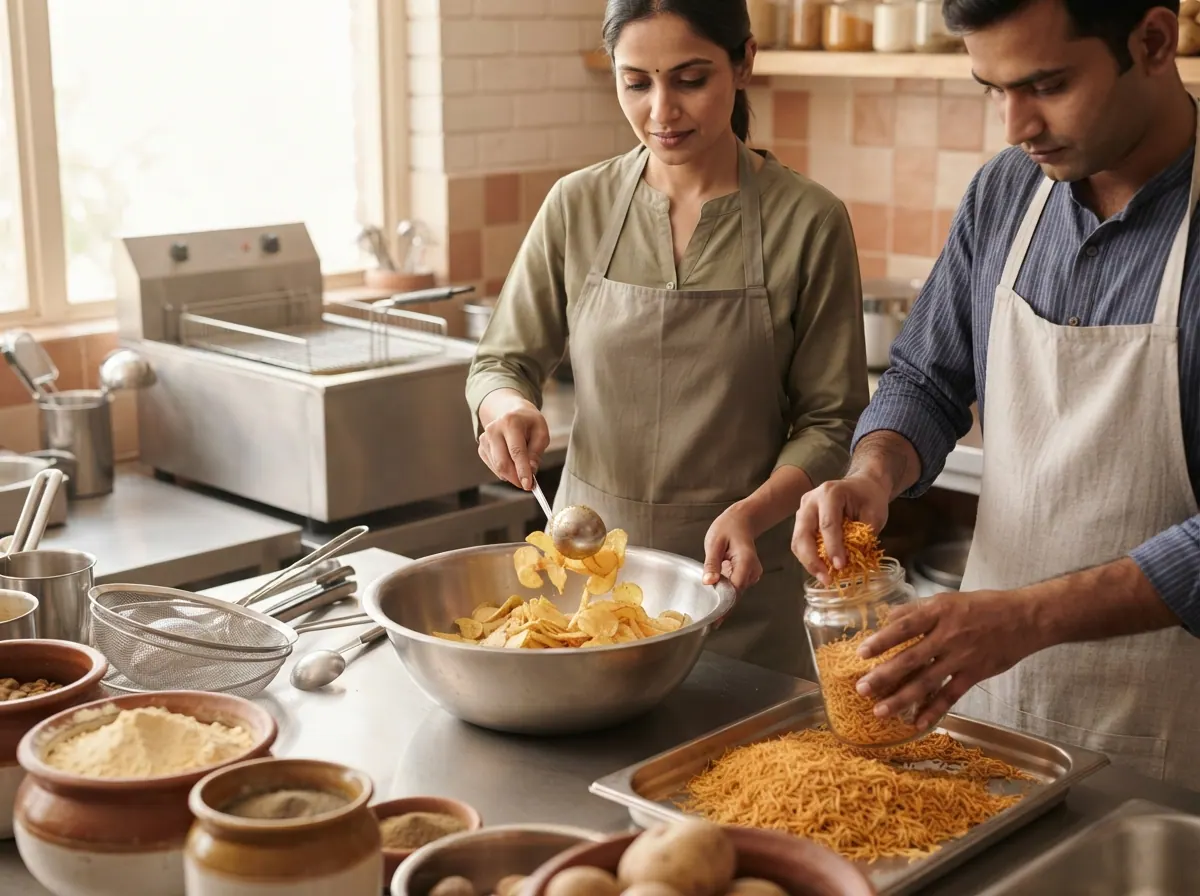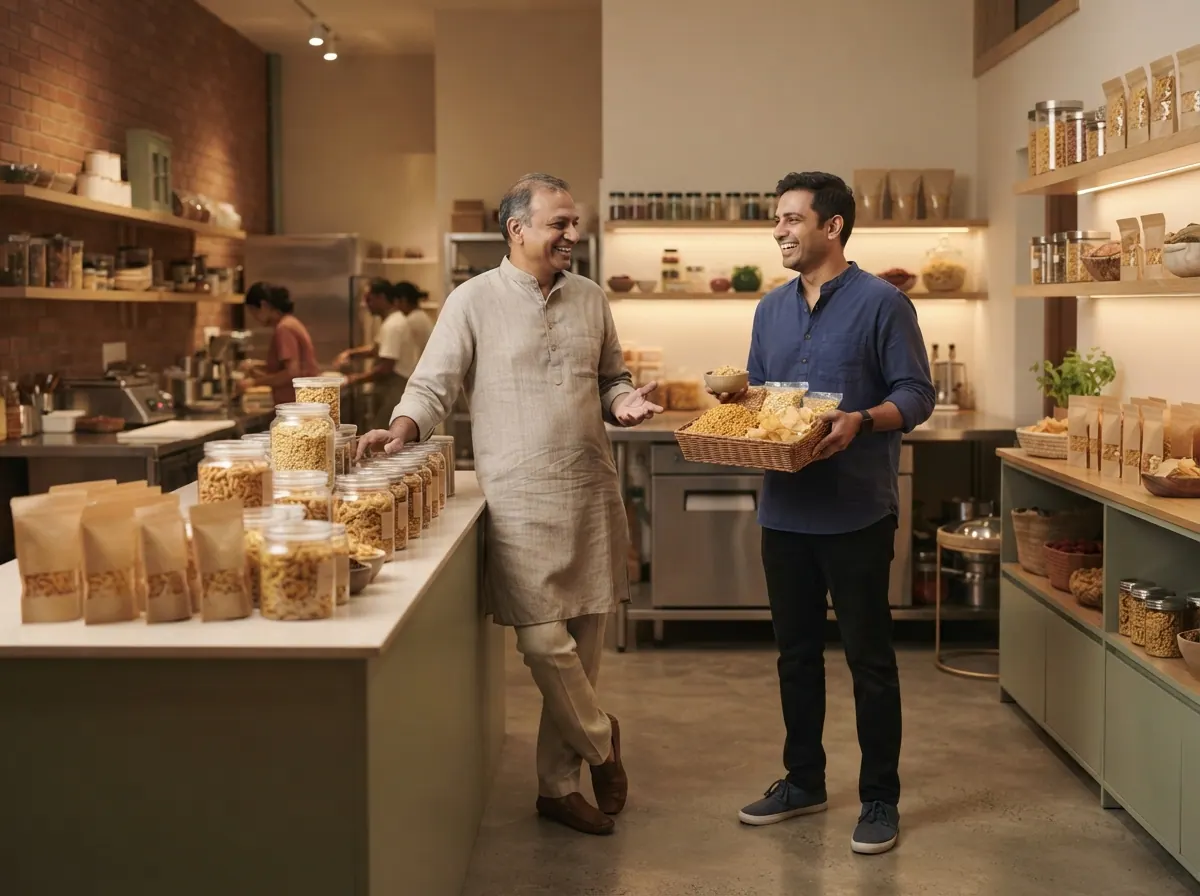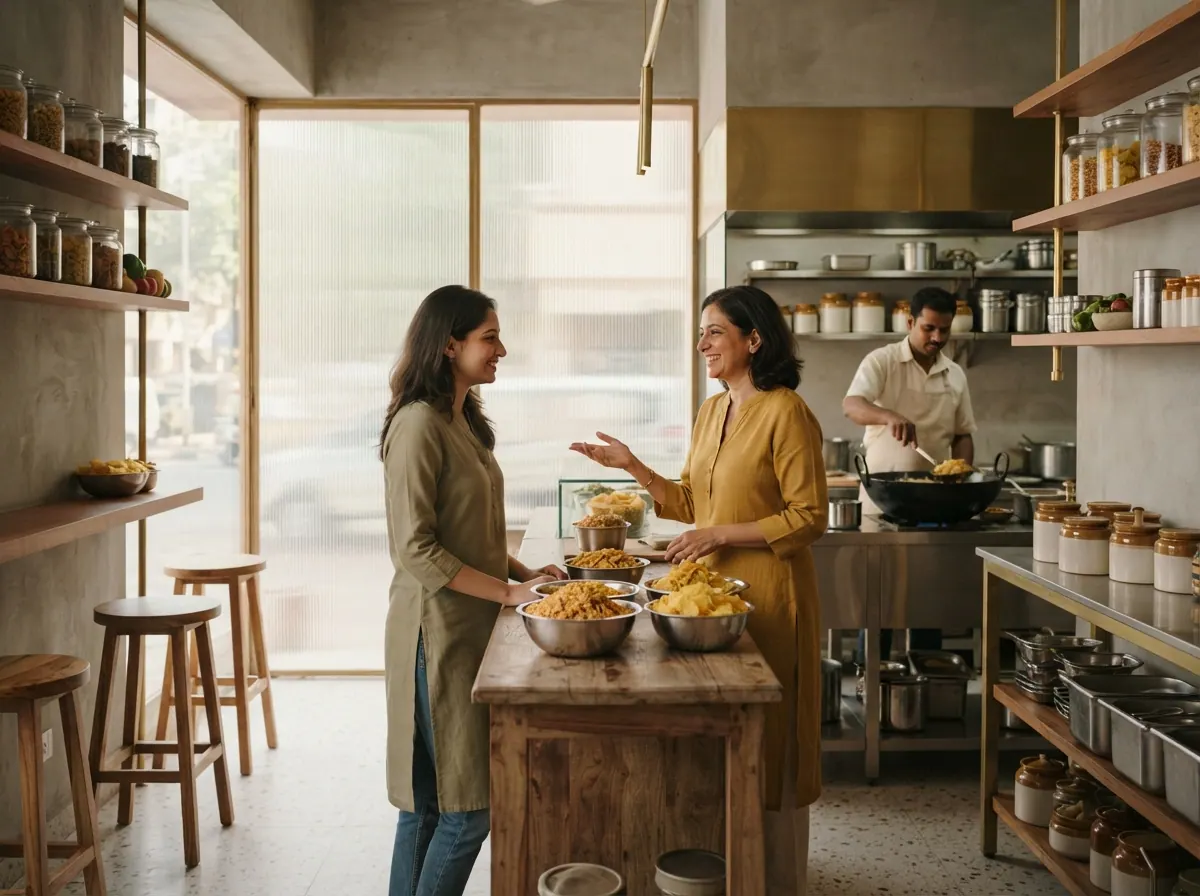
भारत में नमकीन का बिज़नेस शुरू करने के लिए कड़ाही या फ्रायर, सेव और कटिंग की एक-दो मशीनें, पाउच सीलर, FSSAI रजिस्ट्रेशन, तलने के लिए साफ़ कमरा और छोटे शुरू के लिए करीब ₹1–3 लाख चाहिए। ढंग की छोटी फ़ैक्टरी में ₹5–10 लाख तक लगते हैं। यह काम किराना दुकानों के बार-बार के ऑर्डर पर चलता है, और सबसे बड़े जोखिम ख़राब तेल और बासी स्टॉक हैं।
यहाँ सब आँकड़े अंदाज़े हैं। पैसा लगाने से पहले अपने इलाके के भाव पूछ लें।
कितना खर्च आएगा?
| चीज़ | छोटी शुरुआत | छोटी यूनिट |
|---|---|---|
| फ्रायर या बड़ी कड़ाही, गैस बर्नर | ₹15,000–40,000 | ₹60,000–1.5 लाख |
| सेव या गाठिया का सांचा, एक्सट्रूडर | ₹10,000–30,000 | ₹80,000–2 लाख |
| आलू या केला स्लाइसर, नमकीन कटर | ₹8,000–25,000 | ₹40,000–1 लाख |
| मिक्सर, मसाला टम्बलर, ट्रे, तराज़ू | ₹10,000–30,000 | ₹50,000–1.2 लाख |
| पाउच सीलिंग या पैकिंग मशीन | ₹5,000–20,000 | ₹60,000–1.5 लाख |
| पहला स्टॉक: बेसन, तेल, मेवे, मसाले | ₹30,000–60,000 | ₹1–1.5 लाख |
| पाउच, कार्टन, लेबल | ₹10,000–20,000 | ₹30,000–60,000 |
| FSSAI, जगह की तैयारी, डिपॉज़िट | ₹10,000–25,000 | ₹40,000–1 लाख |
| कुल | करीब ₹1–3 लाख | करीब ₹5–10 लाख |
मशीनों के दाम में बहुत फ़र्क़ होता है। पैसे देने से पहले अपने आटे से डेमो करवाएँ और पूछें कि आपके शहर में पुर्ज़े आसानी से मिलते हैं या नहीं।
पहले क्या बनाएँ?
ऐसी चीज़ें चुनें जो जल्दी तली जाएँ, टिकें और किलो के हिसाब से बिकें:
- सेव और भुजिया: बेसन की, किराना की अलमारी की मुख्य चीज़।
- मिक्सचर और चिवड़ा: तले टुकड़ों, मूँगफली और मसालों का मेल।
- गाठिया: गुजरात और आसपास लोकप्रिय।
- आलू और केले के चिप्स: स्लाइसर चाहिए, और क्वालिटी आलू पर निर्भर है।
- इलाके की चीज़ें: दक्षिण में मुरुक्कु, इंदौर की सेव और राजस्थानी भुजिया अपने इलाकों में मशहूर हैं।
दस प्रोडक्ट से शुरू न करें। दो-तीन अच्छे बने प्रोडक्ट लंबी सूची से ज़्यादा बिकते हैं।
कितनी कमाई हो सकती है?
एक छोटी यूनिट जो महीने में 1,000 किलो नमकीन किराना और मिठाई की दुकानों को करीब ₹180 किलो में बेचती है।
बिक्री
- 1,000 किलो × ₹180 = ₹1,80,000
हर महीने का खर्च
- बेसन, आटा, आलू, मूँगफली और मसाले करीब ₹65 किलो: ₹65,000
- तलने का तेल, नया डालने का: ₹22,000
- पाउच और कार्टन: ₹8,000
- तीन कारीगर × ₹11,000: ₹33,000
- किराया: ₹8,000
- गैस और बिजली: ₹9,000
- ढुलाई और छोटे खर्च: ₹6,000
- कुल = ₹1,51,000
बचत: ₹1,80,000 − ₹1,51,000 = करीब ₹29,000 महीना।
हर पैकेट पर margin पतला है, इसलिए माल की मात्रा और कम बर्बादी मायने रखती है। दिवाली जैसे त्योहारों पर माँग बढ़ती है, जबकि बरसात और उसके बाद के हफ़्ते सुस्त और सीलन भरे हो सकते हैं।
शुरू करने से पहले क्या चाहिए?
- रहने की जगह से दूर तलने का कमरा, अच्छी हवा, सूखा फ़र्श और आग बुझाने का सिलेंडर।
- भरोसे का तेल सप्लायर, और तेल काला होने से पहले छानने और बदलने की योजना।
- सूखा स्टोर बेसन और तैयार माल के लिए। नमी दोनों बिगाड़ती है।
- पैकिंग की योजना: कौन सा पाउच, सील कैसी और सिर्फ़ एयरटाइट पैकिंग या नाइट्रोजन।
कदम-दर-कदम
- नमूने के बैच बनाएँ और किराना वालों से पूछें कि कौन सा पैक और भाव सबसे जल्दी बिकता है।
- FSSAI के लिए अर्ज़ी दें और पूछें कि लेबल पर क्या चाहिए।
- तलने की जगह बनाएँ हवादार और गैस की सुरक्षित व्यवस्था के साथ।
- सिर्फ़ पहले दो प्रोडक्ट की मशीनें खरीदें। तीसरा बाद में जोड़ें।
- पैक साइज़ तय करें जैसे 100 ग्राम, 250 ग्राम और 500 ग्राम, हर साइज़ का साफ़ भाव।
- हर पाउच सील करें और लेबल लगाएँ: तारीख, वज़न, सामग्री और FSSAI नंबर।
- पहले कुछ दुकानों को माल दें, हर हफ़्ते जाएँ, और बासी माल बहस के बजाय वापस ले लें।
कौन से लाइसेंस लगते हैं?
- FSSAI रजिस्ट्रेशन या लाइसेंस, आपके साइज़ और माल के हिसाब से।
- उद्यम रजिस्ट्रेशन लोन और योजनाओं में काम आ सकता है। पूछकर देखें।
- GST बिक्री बढ़ने पर। CA से पूछें।
- फ़ायर और स्थानीय इजाज़त गैस पर तलने के लिए। नगरपालिका या पंचायत दफ़्तर से पक्का करें।
- लेबल के नियम पैक खाने के लिए। पाउच छपवाने से पहले फ़ूड सेफ्टी दफ़्तर से पूछ लें।
क्या-क्या गड़बड़ हो सकती है?
- तेल ज़्यादा दिन चलाना। काला, जला तेल नमकीन को कड़वा करता है और सेहत के लिए ठीक नहीं।
- नरम, बासे पैकेट। कमज़ोर सील से नमी घुसती है और दुकानें माल लौटा देती हैं।
- बेसन के दाम में उछाल। बेसन या तेल महँगा हो तो कुछ हफ़्तों में margin ख़त्म हो सकता है।
- तलने में आग। छोटे कमरे में गरम तेल और गैस के साथ लापरवाही ख़तरनाक है।
- बड़े ब्रांड के पैक की नकल। इससे कानूनी परेशानी हो सकती है और अपना नाम नहीं बनता।
- दुकानों का उधार। छोटी दुकानें देर से पैसे देती हैं और मुफ़्त माल माँगती हैं।
ये हालात आपके सामने आएँगे
आप क्या करेंगे? हर फ़ैसले की एक क़ीमत है।
शुरुआत
A hand kadhai costs little but needs a worker standing over it. A thermostat fryer costs far more and fries steadily.
- Buy the thermostat fryer: Costly, steady quality
- Start with big kadhais: Cheaper, uneven batches
A dealer shows a sev press at half the usual price. It has never been tried on your besan dough.
- Ask for a demo first: Costs a trip, safer buy
- Buy the cheap press: Saves money, may jam often
Your open verandah works for now. A separate vented room costs money, and neighbours dislike the smoke.
- Build a vented frying room: Costly, safer work
- Fry on the verandah: Cheap, smoke complaints
One dealer sells sealed tins at a fair price. Another sells loose oil at a lower rate with no bill.
- Buy sealed tins with a bill: Dearer, clean oil and papers
- Buy the loose oil: Cheaper, quality unknown
Printed pouches look professional but have a minimum order. Plain ones with stickers cost less.
- Order printed pouches: High minimum, better look
- Use plain pouches, stickers: Cheaper, plainer look
A sweet shop owner wants to stock your mixture this week. Your FSSAI registration is still in process.
- Wait for the registration: Lose a few weeks of sales
- Give free samples meanwhile: Costs stock, no sales yet
पहला महीना
Shop owners say your sev became soft. The pouch seals look thin and the room was humid when packing.
- Buy a better sealing machine: Costly, airtight packs
- Cool the batch, re-seal by hand: Cheap, slow and uneven
After a week of daily frying, the oil is dark and the bhujia tastes slightly bitter. New oil is costly.
- Change the oil now: Costs a tin, better taste
- Filter it and top up: Cheaper, taste may stay off
The shop is busy and says payment will come after a month. They also want a free sample of every item.
- Supply on one-month credit: A good order, cash waits
- Supply 15 kg for cash: Small, safe sale
A new helper splashed hot oil on their wrist. The burn is not serious but they need treatment and a few days off.
- Pay the doctor and wages: Costly, a safe workplace
- Give first aid, no leave: Cheaper, helper unhappy
Your sev is crisp but looks pale next to a big brand. Shopkeepers say customers pick the brighter pack.
- Adjust besan mix, fry time: Test cost, honest colour
- Print a clearer pack window: Print cost, buyers see it
रोज़ का काम
Chana prices climb and your besan supplier raises the rate by a fifth. Your shops pay a fixed price per kilo.
- Raise your price a little: Margin holds, some shops grumble
- Hold price and take the hit: Shops stay, margin thin
Three sweet shops and a society want big lots before Diwali. Your helpers can fry only so much.
- Hire extra workers, add shifts: Overtime cost, big sales
- Take only your regular orders: Less strain, less money
The monsoon leaked into your store. Several besan sacks smell musty and have lumps.
- Throw out the bad sacks: Lose the besan, safe product
- Fix the roof and store racks: Costs more, stops repeat
The potatoes from a new supplier have high sugar and the chips brown too fast.
- Switch to better potatoes: Dearer, paler chips
- Lower the heat, fry slower: Cheap, fewer chips per hour
A kirana returns 20 kg of unsold mixture near its date. They say it is not moving.
- Take it back, give new stock: Costly, shop stays loyal
- Refuse the return: No loss, shop may drop you
A school canteen asks for 30-gram packs at a very low price per packet. It needs new pouches and a lot of packing time.
- Make the small packs: Volume, thin margin
- Offer only 100 g packs: Better margin, may lose them
The town fair offers a food stall. Fee, helpers and a big stock of fresh packets would be needed.
- Take the stall: Fee and stock, fresh sales
- Skip the fair: No fee, no new buyers
जब मुश्किल आए
A gas flame flared and the oil caught fire. A helper put it out with a wet cloth. Nobody is hurt, but the wall is scorched.
- Buy extinguishers, train workers: Costly, a safer room
- Repaint the wall only: Cheap, same danger
A food officer visits and asks how often oil is changed and where the records are. You have no register.
- Start an oil and batch register: Daily effort, good records
- Say oil is changed often: No effort, weaker standing
A larger brand offers your shops a lower price and free display stands. Two shops ask you to match.
- Match the price: Keeps shops, thin margin
- Stress freshness and taste: Keeps margin, may lose a shop
The press motor burns out two days before a large delivery. The mechanic quotes a repair and a long wait for a new part.
- Rent a machine for the week: Rental cost, order kept
- Make by hand, deliver late: Cheap, late and uneven
A sweet shop's cheque for ₹18,000 comes back unpaid. They promise to pay soon and want more stock for the season.
- Stop supply until they clear it: Safe, may lose the shop
- Supply a small lot meanwhile: More at risk, shop stays
बढ़ाना
A local farmer offers cheap raw bananas in season. You would need a slicer and a second fryer.
- Add the banana chips line: Machine cost, new sales
- Improve your existing items: Small spend, slower growth
Hand packing takes two workers a full day. An automatic machine costs far more but weighs and seals neatly.
- Buy the automatic machine: Heavy cost, faster packing
- Keep hand sealing: No cost, slow packing
A distributor will carry your namkeen to 40 shops in the next town but wants a big margin and monthly payment.
- Take the distributor: Big volume, thin margin
- Visit shops yourself: Better margin, slow growth
A shop near the market is available. Selling loose namkeen by weight would earn more per kilo than to retailers.
- Rent and open the counter: Rent and staff, higher margin
- Keep selling only to shops: No risk, lower margin
A trader in a Gulf country wants samples of your mixture. Shipping and special packing cost money and nothing is promised.
- Send professional samples: Costly, possible big order
- Decline for now: No cost, no chance
Cutters, mixers and sealers run all day and the bill keeps rising. An installer offers a rooftop solar system.
- Install rooftop solar: Big spend, lower bills later
- Shift heavy work to day hours: Small saving, no spend
A supermarket chain will stock your mixture if you show a lab test for moisture and shelf life.
- Pay for the lab test: Costly, bigger shops open
- Stay with local shops: No cost, limited reach
क्या यह आपके लिए ठीक है?
नमकीन का काम आपके लिए ठीक है अगर आप गरम, सुबह-सुबह की तलाई की शिफ़्ट चला सकते हैं, खर्च पर नज़र रख सकते हैं और दुकानों के चक्कर लगा सकते हैं। अगर कम मेहनत चाहिए या तेल, धुएँ और सफ़ाई से चिढ़ है तो कम ठीक है।
आसान टेस्ट: किसी स्थानीय नमकीन वाले के यहाँ दो हफ़्ते रहकर देखें कि रोज़ कितना तेल डालते हैं और कितना माल लौटता है। फिर छोटी, साफ़ शुरुआत करें और पहली दुकानों से जानें कि क्या सुधारना है।
एक आदत शुरू से डालें: हर बैच का एक पाउच हफ़्ते भर शेल्फ पर रखकर चखें और उसके पास तेल बदलने की तारीख लिख लें। इस काम में ज़्यादातर माल की वापसी नरम सेव और पुराने तेल से होती है, और दुकानदार से पहले अपने पैकेट जाँचें तो दोनों आसानी से पकड़ में आ जाते हैं।