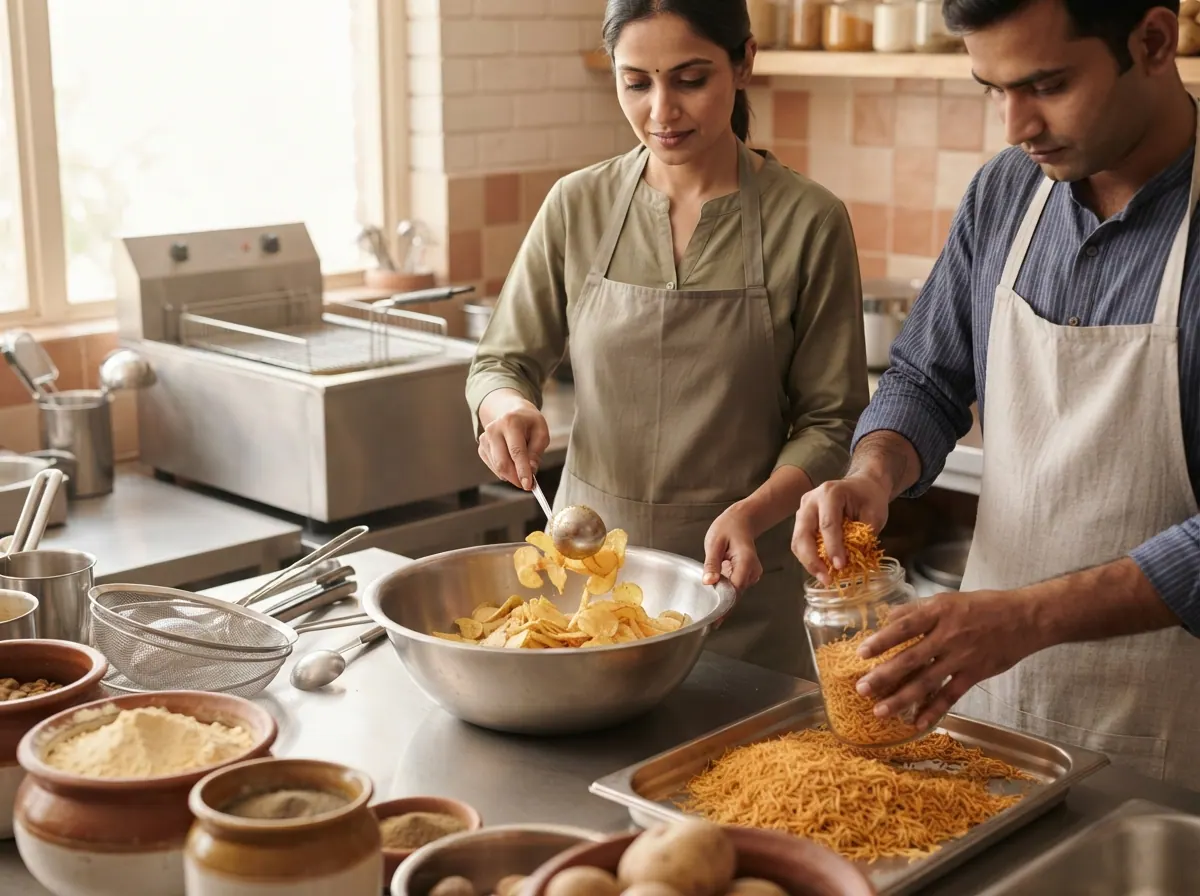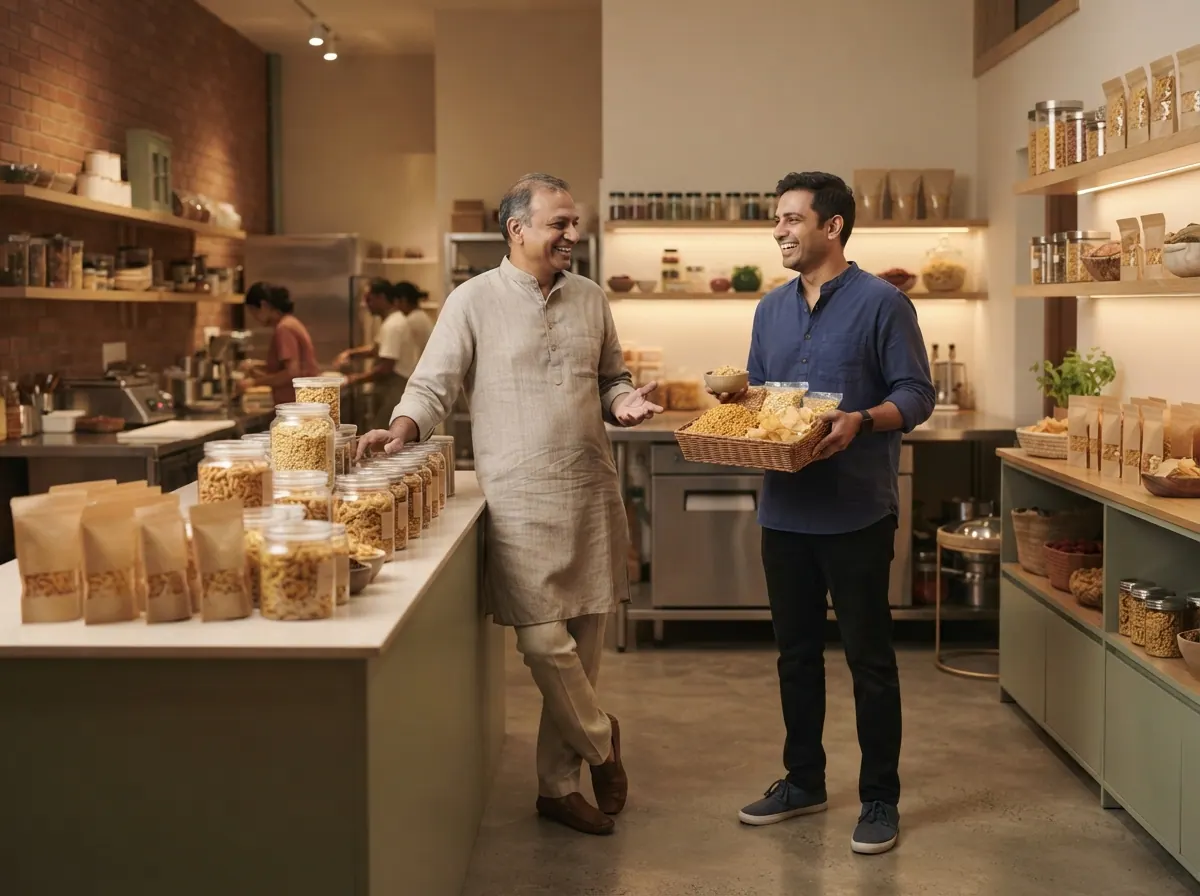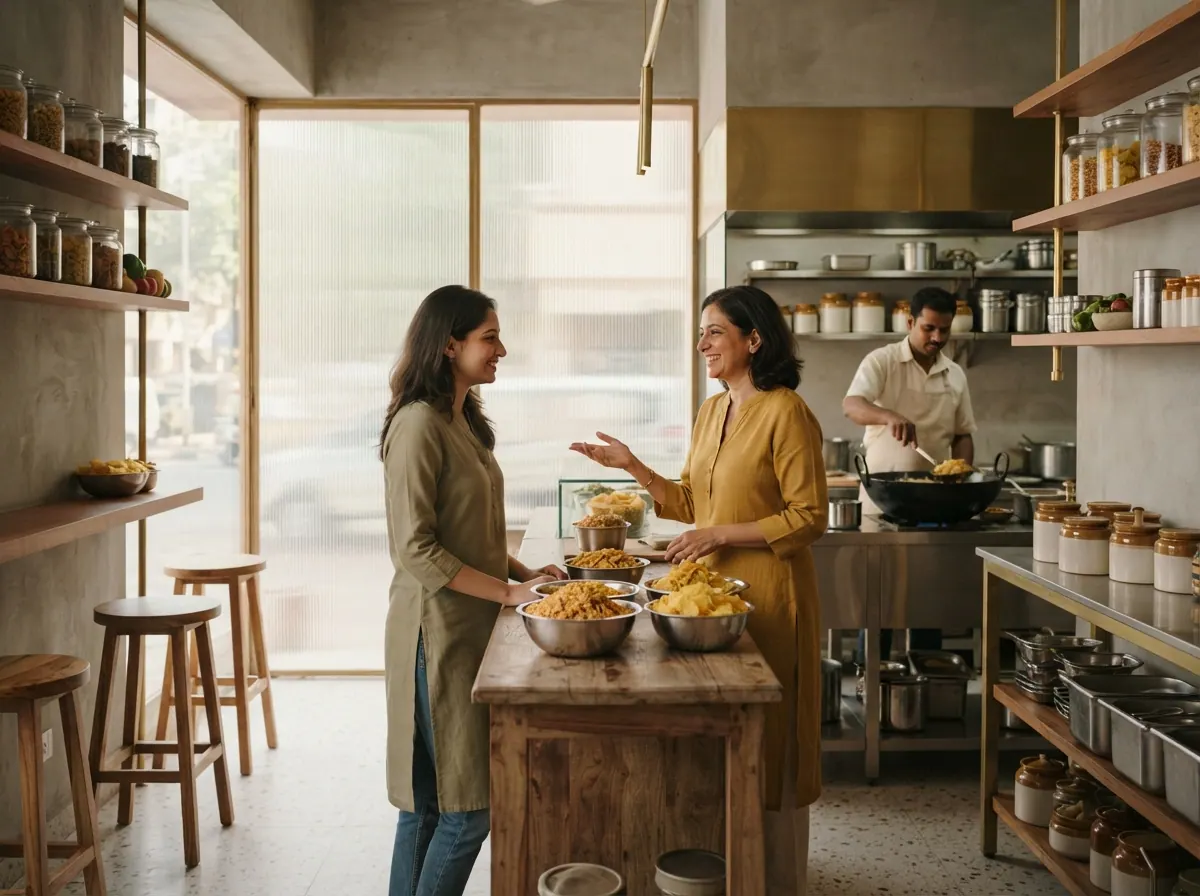
To start a namkeen business in India you need a kadhai or fryer setup, one or two machines for sev and cutting, a pouch sealer, FSSAI registration, a clean room for frying, and about ₹1–3 lakh for a small start or ₹5–10 lakh for a proper small factory. The trade lives on repeat orders from kirana shops, and the biggest risks are bad oil and stale stock.
All figures here are estimates. Check prices near you before you spend.
What does it cost?
| Item | Small start | Small unit |
|---|---|---|
| Fryer or large kadhai, gas burners | ₹15,000–40,000 | ₹60,000–1.5 lakh |
| Sev or gathiya press, extruder | ₹10,000–30,000 | ₹80,000–2 lakh |
| Potato or banana slicer, namkeen cutter | ₹8,000–25,000 | ₹40,000–1 lakh |
| Mixer, spice tumbler, trays, scale | ₹10,000–30,000 | ₹50,000–1.2 lakh |
| Pouch sealing or packing machine | ₹5,000–20,000 | ₹60,000–1.5 lakh |
| First stock of besan, oil, nuts, spices | ₹30,000–60,000 | ₹1–1.5 lakh |
| Pouches, cartons, labels | ₹10,000–20,000 | ₹30,000–60,000 |
| FSSAI, shop set-up, deposit | ₹10,000–25,000 | ₹40,000–1 lakh |
| Total | about ₹1–3 lakh | about ₹5–10 lakh |
Machines range widely. Ask for a demo with your own dough before paying, and ask if spare parts are easy to get in your town.
What should you make first?
Pick items that fry fast, store well and sell by the kilo:
- Sev and bhujia: besan based, the staple of kirana shelves.
- Mixture and chivda: a blend of fried pieces, peanuts and spices.
- Gathiya and ganthiya: popular in Gujarat and nearby.
- Potato and banana chips: need a slicer, and quality depends on the potato.
- Regional lines: Murukku in the south, sev in Indore and Rajasthan style bhujia are well known where they come from.
Do not start with ten products. Two or three that you can make well will sell better than a long list.
How much can it earn?
Here is a small unit selling 1,000 kg a month to kirana shops and sweet shops at about ₹180 a kilo.
Sales
- 1,000 kg × ₹180 = ₹1,80,000
Costs each month
- Besan, flour, potatoes, peanuts and spices at about ₹65 a kg: ₹65,000
- Frying oil top-ups: ₹22,000
- Pouches and cartons: ₹8,000
- Three workers × ₹11,000: ₹33,000
- Rent: ₹8,000
- Gas and power: ₹9,000
- Transport and small items: ₹6,000
- Total = ₹1,51,000
Left over: ₹1,80,000 − ₹1,51,000 = about ₹29,000 a month.
Margins are slim per packet, so volume and low waste matter. Festivals such as Diwali bring a spike, while the monsoon and the weeks after can be slow and damp.
What do you need before you start?
- A fryer room away from your living area, with strong ventilation, a dry floor and a fire extinguisher.
- A reliable oil supplier, and a plan for filtering and changing oil before it darkens.
- Dry storage for besan and finished goods. Moisture ruins both.
- A packing plan: the pouch, its seal and whether you use nitrogen or only airtight packing.
Step by step
- Make sample batches and ask kirana owners which packs and prices sell fastest.
- Apply for FSSAI and check what labelling the office wants.
- Set up the frying area with proper ventilation and a safe gas arrangement.
- Buy machines for your first two products only. Add a third later.
- Fix pack sizes such as 100 g, 250 g and 500 g, with a clear price per size.
- Seal and label every pouch with date, weight, ingredients and FSSAI number.
- Supply a few shops first, visit each week, and take back stale stock instead of arguing.
Which licences apply?
- FSSAI registration or licence, depending on your size and what you sell.
- Udyam registration can help with loans and schemes. Check what applies.
- GST as your sales grow. Ask a CA.
- Fire and local permission for frying with gas. Confirm with the municipal or panchayat office.
- Labelling rules for packed food. Ask the food safety office before printing pouches.
What goes wrong?
- Oil used too long. Dark, burnt oil makes the namkeen bitter and is not healthy.
- Soft, stale packets. Damp air gets in through weak seals, and shops return them.
- Besan price swings. A jump in besan or oil costs can wipe out your margin in a few weeks.
- Frying fires. Hot oil and gas in a small room is dangerous if you cut corners.
- Copying a big brand's pack. It can bring legal trouble and does not build your own name.
- Shop credit. Small shops pay late and want free stock.
Situations you will face
What would you do? Each choice costs something.
Getting started
A hand kadhai costs little but needs a worker standing over it. A thermostat fryer costs far more and fries steadily.
- Buy the thermostat fryer: Costly, steady quality
- Start with big kadhais: Cheaper, uneven batches
A dealer shows a sev press at half the usual price. It has never been tried on your besan dough.
- Ask for a demo first: Costs a trip, safer buy
- Buy the cheap press: Saves money, may jam often
Your open verandah works for now. A separate vented room costs money, and neighbours dislike the smoke.
- Build a vented frying room: Costly, safer work
- Fry on the verandah: Cheap, smoke complaints
One dealer sells sealed tins at a fair price. Another sells loose oil at a lower rate with no bill.
- Buy sealed tins with a bill: Dearer, clean oil and papers
- Buy the loose oil: Cheaper, quality unknown
Printed pouches look professional but have a minimum order. Plain ones with stickers cost less.
- Order printed pouches: High minimum, better look
- Use plain pouches, stickers: Cheaper, plainer look
A sweet shop owner wants to stock your mixture this week. Your FSSAI registration is still in process.
- Wait for the registration: Lose a few weeks of sales
- Give free samples meanwhile: Costs stock, no sales yet
First month
Shop owners say your sev became soft. The pouch seals look thin and the room was humid when packing.
- Buy a better sealing machine: Costly, airtight packs
- Cool the batch, re-seal by hand: Cheap, slow and uneven
After a week of daily frying, the oil is dark and the bhujia tastes slightly bitter. New oil is costly.
- Change the oil now: Costs a tin, better taste
- Filter it and top up: Cheaper, taste may stay off
The shop is busy and says payment will come after a month. They also want a free sample of every item.
- Supply on one-month credit: A good order, cash waits
- Supply 15 kg for cash: Small, safe sale
A new helper splashed hot oil on their wrist. The burn is not serious but they need treatment and a few days off.
- Pay the doctor and wages: Costly, a safe workplace
- Give first aid, no leave: Cheaper, helper unhappy
Your sev is crisp but looks pale next to a big brand. Shopkeepers say customers pick the brighter pack.
- Adjust besan mix, fry time: Test cost, honest colour
- Print a clearer pack window: Print cost, buyers see it
Running it
Chana prices climb and your besan supplier raises the rate by a fifth. Your shops pay a fixed price per kilo.
- Raise your price a little: Margin holds, some shops grumble
- Hold price and take the hit: Shops stay, margin thin
Three sweet shops and a society want big lots before Diwali. Your helpers can fry only so much.
- Hire extra workers, add shifts: Overtime cost, big sales
- Take only your regular orders: Less strain, less money
The monsoon leaked into your store. Several besan sacks smell musty and have lumps.
- Throw out the bad sacks: Lose the besan, safe product
- Fix the roof and store racks: Costs more, stops repeat
The potatoes from a new supplier have high sugar and the chips brown too fast.
- Switch to better potatoes: Dearer, paler chips
- Lower the heat, fry slower: Cheap, fewer chips per hour
A kirana returns 20 kg of unsold mixture near its date. They say it is not moving.
- Take it back, give new stock: Costly, shop stays loyal
- Refuse the return: No loss, shop may drop you
A school canteen asks for 30-gram packs at a very low price per packet. It needs new pouches and a lot of packing time.
- Make the small packs: Volume, thin margin
- Offer only 100 g packs: Better margin, may lose them
The town fair offers a food stall. Fee, helpers and a big stock of fresh packets would be needed.
- Take the stall: Fee and stock, fresh sales
- Skip the fair: No fee, no new buyers
When things go wrong
A gas flame flared and the oil caught fire. A helper put it out with a wet cloth. Nobody is hurt, but the wall is scorched.
- Buy extinguishers, train workers: Costly, a safer room
- Repaint the wall only: Cheap, same danger
A food officer visits and asks how often oil is changed and where the records are. You have no register.
- Start an oil and batch register: Daily effort, good records
- Say oil is changed often: No effort, weaker standing
A larger brand offers your shops a lower price and free display stands. Two shops ask you to match.
- Match the price: Keeps shops, thin margin
- Stress freshness and taste: Keeps margin, may lose a shop
The press motor burns out two days before a large delivery. The mechanic quotes a repair and a long wait for a new part.
- Rent a machine for the week: Rental cost, order kept
- Make by hand, deliver late: Cheap, late and uneven
A sweet shop's cheque for ₹18,000 comes back unpaid. They promise to pay soon and want more stock for the season.
- Stop supply until they clear it: Safe, may lose the shop
- Supply a small lot meanwhile: More at risk, shop stays
Growing
A local farmer offers cheap raw bananas in season. You would need a slicer and a second fryer.
- Add the banana chips line: Machine cost, new sales
- Improve your existing items: Small spend, slower growth
Hand packing takes two workers a full day. An automatic machine costs far more but weighs and seals neatly.
- Buy the automatic machine: Heavy cost, faster packing
- Keep hand sealing: No cost, slow packing
A distributor will carry your namkeen to 40 shops in the next town but wants a big margin and monthly payment.
- Take the distributor: Big volume, thin margin
- Visit shops yourself: Better margin, slow growth
A shop near the market is available. Selling loose namkeen by weight would earn more per kilo than to retailers.
- Rent and open the counter: Rent and staff, higher margin
- Keep selling only to shops: No risk, lower margin
A trader in a Gulf country wants samples of your mixture. Shipping and special packing cost money and nothing is promised.
- Send professional samples: Costly, possible big order
- Decline for now: No cost, no chance
Cutters, mixers and sealers run all day and the bill keeps rising. An installer offers a rooftop solar system.
- Install rooftop solar: Big spend, lower bills later
- Shift heavy work to day hours: Small saving, no spend
A supermarket chain will stock your mixture if you show a lab test for moisture and shelf life.
- Pay for the lab test: Costly, bigger shops open
- Stay with local shops: No cost, limited reach
Is it right for you?
Namkeen suits you if you can run a hot, early frying shift, watch costs closely and keep visiting shops. It suits you less if you want low effort or dislike oil, smoke and cleaning.
A good test: spend two weeks at a local namkeen maker, see how much oil they top up each day, and count their returns. Then make a small, clean start and let your first shops tell you what to improve.
One more habit worth building early: taste a pouch from every batch after a week on the shelf, and keep a note of the oil change date beside it. Most returns in this trade come from soft sev and stale oil, and both are easy to catch when you check your own packets before a shopkeeper does.