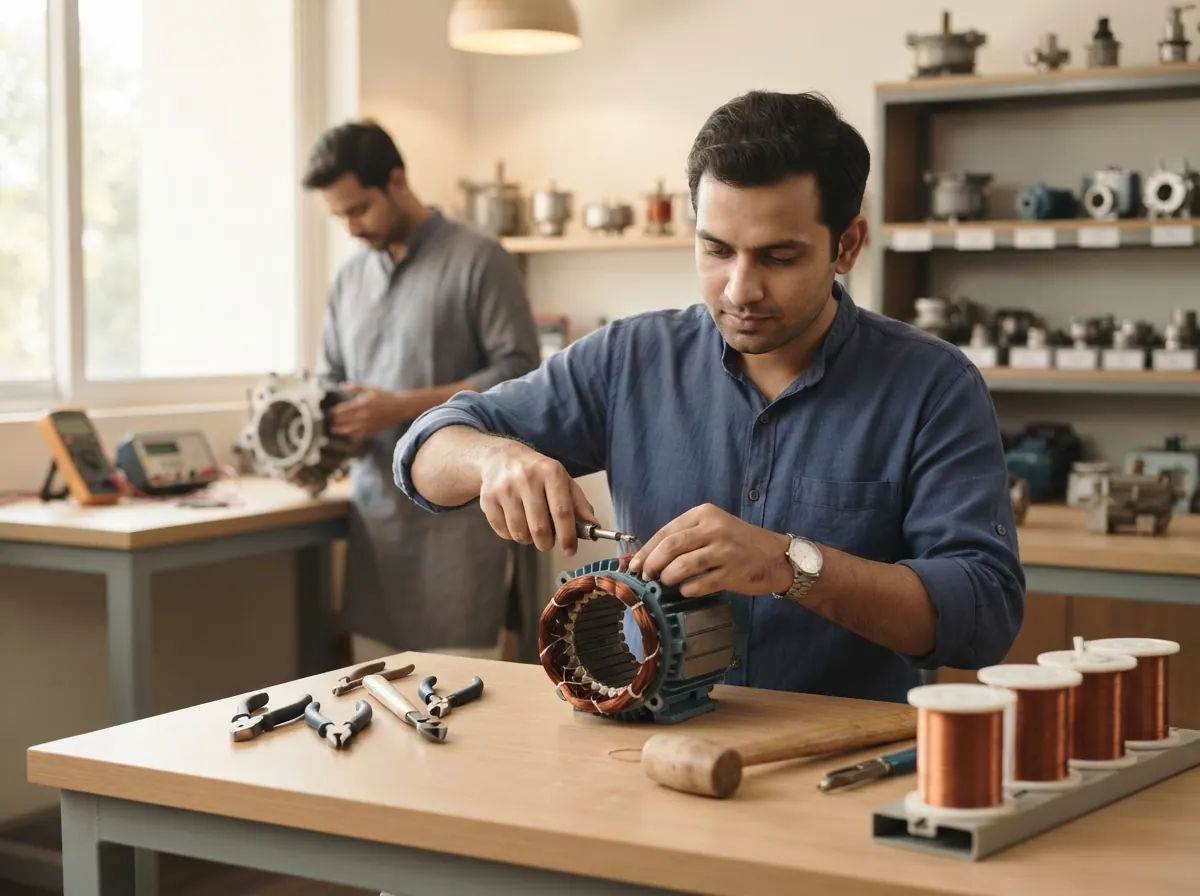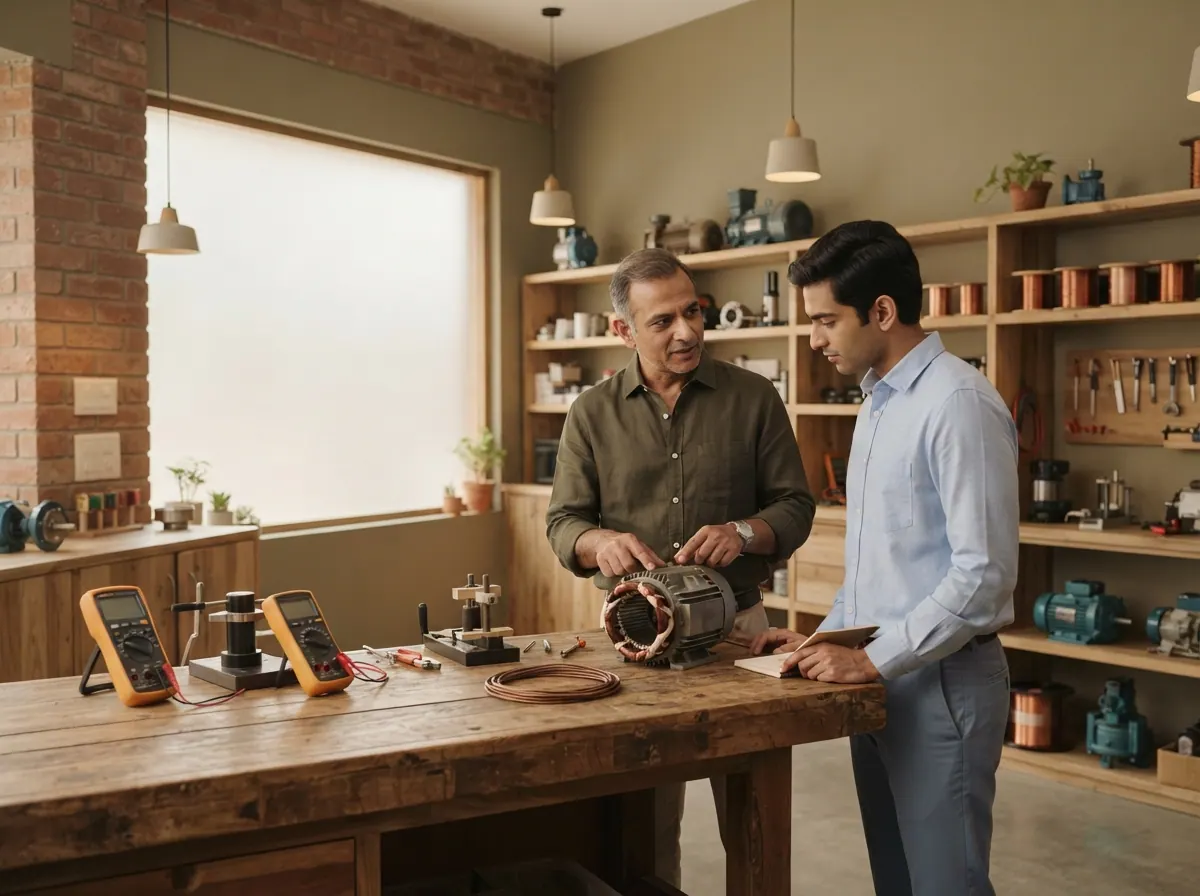
भारत में मोटर रिवाइंडिंग और पंप रिपेयर की दुकान शुरू करने के लिए आपको वाइंडिंग मशीन, हाथ के औज़ार, मेगर और मल्टीमीटर, वार्निश और बेकिंग का सेटअप, एनामल्ड तांबे के तार और इंसुलेशन का स्टॉक, एक सीखा हुआ वाइंडर (आप या कोई कारीगर) और लगभग ₹1 लाख से ₹3 लाख चाहिए। कमाई जली हुई पंप और वर्कशॉप की मोटरों की रिवाइंडिंग, बेयरिंग बदलने और पंखे, मिक्सर और छोटे पंप ठीक करने से होती है। हर जॉब का सबसे बड़ा ख़र्च तांबा है, और सबसे बड़ा ख़तरा वह मोटर है जो दोबारा जलकर लौट आए।
यहाँ सारे आँकड़े अंदाज़े हैं। पैसा लगाने से पहले अपने इलाक़े के भाव देख लें।
कितना खर्च आता है?
| चीज़ | बुनियादी दुकान | बड़ी दुकान |
|---|---|---|
| वाइंडिंग मशीन और कॉइल फ़ॉर्मर | ₹15,000–35,000 | ₹35,000–70,000 |
| हाथ के औज़ार, बेयरिंग पुलर, प्रेस | ₹10,000–20,000 | ₹20,000–40,000 |
| मेगर, मल्टीमीटर, क्लैंप मीटर | ₹6,000–12,000 | ₹12,000–25,000 |
| वार्निश डिप टैंक और छोटा बेकिंग ओवन | ₹10,000–25,000 | ₹25,000–50,000 |
| तांबे का तार, इंसुलेशन, स्लीव, बेयरिंग (शुरुआती स्टॉक) | ₹25,000–50,000 | ₹60,000–1.2 लाख |
| दुकान का डिपॉज़िट, बेंच, रैक, शटर | ₹15,000–30,000 | ₹30,000–50,000 |
| फ़ोन, बोर्ड, विज़िटिंग कार्ड | ₹3,000–8,000 | ₹8,000–15,000 |
| कुल | लगभग ₹1–1.8 लाख | लगभग ₹2.2–3 लाख |
तांबा महँगा है और उसका भाव बदलता रहता है, इसलिए शुरू में थोड़ा-थोड़ा ख़रीदें, ऐसे तार वाले डीलर से जो अच्छा एनामल्ड तार और सही बिल दे।
शुरू करने से पहले क्या चाहिए?
- सही वाइंडर का हुनर। मोटर में मूल जितने ही टर्न, तार की मोटाई, कॉइल स्पैन और कनेक्शन होने चाहिए। अंदाज़े से करने वाला वाइंडर जली हुई मोटरें लौटाता है।
- मोटर की बुनियाद। सिंगल-फ़ेज़ और थ्री-फ़ेज़ मोटर, कैपेसिटर, स्टार्टर और मोटर जलने के कारण सीखें: कम वोल्टेज, सूखा चलना, ओवरलोड, ख़राब बेयरिंग, या थ्री-फ़ेज़ मोटर पर सिंगल-फ़ेज़ सप्लाई।
- देने से पहले टेस्ट। हर लौटाई जाने वाली मोटर पर इंसुलेशन के लिए मेगर टेस्ट और नो-लोड करंट की जाँच।
- ग्राहकों के पास जगह। मार्केट, चक्की वाले इलाक़े, खेतों के इलाक़े या बोरवेल मैकेनिक के पास, जो आपको काम भेज सकें।
- तांबे का डीलर। अच्छा तार स्थिर भाव पर, और तार की गुणवत्ता जाँचने का तरीक़ा।
कितनी कमाई हो सकती है?
यह एक हेल्पर वाली जमी हुई दुकान के दूसरे साल का उदाहरण है। ये अंदाज़े हैं, वादा नहीं।
महीने की आमदनी
- 30 रिवाइंडिंग × औसत बिल लगभग ₹2,000 = ₹60,000
- 40 छोटे जॉब (बेयरिंग, पंखे, मिक्सर, कैपेसिटर) × लगभग ₹350 = ₹14,000
- कुल बिल = ₹74,000
सामान
- रिवाइंडिंग के लिए तांबा, इंसुलेशन और वार्निश, लगभग 50% = ₹30,000
- छोटे जॉब के पार्ट्स, लगभग 30% = ₹4,200
- कुल सामान = ₹34,200
महीने का खर्च
- दुकान का किराया = ₹6,000
- एक हेल्पर = ₹9,000
- बिजली, वार्निश, बाक़ी = ₹5,000
- कुल = ₹20,000
बचत: ₹74,000 − ₹34,200 − ₹20,000 = लगभग ₹19,800 महीना।
यह मामूली रक़म है, और यही ईमानदार हिसाब है। अगर आप ख़ुद वाइंडिंग करें और बोरवेल मैकेनिकों से जुड़ें जो नियमित पंप मोटरें भेजें, तो आप ज़्यादा बचा सकते हैं।
कदम दर कदम
- एक साल किसी अनुभवी वाइंडर के साथ काम करें, अगर हो सके। जली हुई वाइंडिंग और नेमप्लेट से डेटा पढ़ना सीखें।
- पहले वाइंडिंग मशीन और टेस्ट के उपकरण लें, फिर सबसे ज़्यादा चलने वाली तार की मोटाइयों का छोटा स्टॉक।
- बोरवेल मैकेनिक, इलेक्ट्रीशियन और खेत के पंप डीलरों से मिलें। मोटर जलने पर पहला फ़ोन अक्सर उन्हें जाता है, और कई ख़ुद वाइंडिंग नहीं करते।
- डेटा दर्ज करें हर मोटर खोलने से पहले: टर्न, मोटाई, स्पैन, कनेक्शन। हर एक का कार्ड रखें।
- हर मोटर टेस्ट करें लौटाने से पहले मेगर और नो-लोड करंट से।
- छोटी वारंटी लिखकर दें, और बताएँ कि क्या शामिल नहीं है, जैसे वोल्टेज की समस्या या सूखा चलना।
- पंप रिपेयर और बिक्री जोड़ें जब वाइंडिंग का काम पक्का हो जाए।
कौन से लाइसेंस लगते हैं?
छोटी दुकान के लिए:
- शॉप और एस्टैब्लिशमेंट रजिस्ट्रेशन अपने स्थानीय निकाय में।
- GST जब बिक्री सीमा पार करे, या कारोबारी ग्राहकों को टैक्स इनवॉइस चाहिए। CA से पूछें।
- स्थानीय नियम शोर, वार्निश के धुएँ और पुराने तांबे और वार्निश के कचरे के निपटान पर। अपने स्थानीय दफ़्तर से पूछें।
- आग से सुरक्षा बेकिंग ओवन और वार्निश के आसपास। अपने स्थानीय फ़ायर ऑफ़िस से पूछें।
- स्टाफ़ के नियम। कई लोग रखते हैं तो मज़दूरी और रिकॉर्ड के बारे में अपने श्रम दफ़्तर से पूछें।
क्या ग़लत हो सकता है?
- मोटर जलकर लौटना। ग़लत मोटाई या टर्न की गिनती, या ख़राब कनेक्शन वाइंडिंग को फिर जला देता है।
- ग्राहक जो वही मोटर बार-बार लाते हैं। असली ख़राबी वोल्टेज, सूखा चलना या कमज़ोर स्टार्टर है, वाइंडिंग नहीं।
- तांबे का भाव उछलना। तय किया हुआ दाम एक हफ़्ते में घाटे में बदल सकता है।
- बेयरिंग और शाफ़्ट की अनदेखी। घिसी बेयरिंग पर नई वाइंडिंग फिर फेल होती है, और ग्राहक वाइंडर को दोष देता है।
- किसानों या चक्कियों का बकाया। किसान और छोटी चक्कियाँ देर से पैसे देते हैं, अक्सर फ़सल या बड़े ऑर्डर के बाद।
- घटिया तार लगाना। पतला या घटिया तार एक महीने पैसा बचाता है और ग्राहक को साल भर भुगतना पड़ता है।
ये हालात आपके सामने आएँगे
आप क्या करेंगे? हर फ़ैसले की एक क़ीमत है।
शुरुआत
You can strip a motor but have never wound a full coil set. A winder offers to teach you for a year at a low wage.
- Learn from the winder first: Low pay now, motors come right
- Open and learn on jobs: Earn sooner, burnt motors likely
A semi-automatic winding machine counts turns for you. A manual one is cheaper but slower and counted by hand.
- Buy the counting machine: Costlier, fewer turn errors
- Buy the manual machine: Cheaper, slow and error-prone
One dealer sells good enamelled wire at a steady price. The other is cheaper but gives no bill and unclear quality.
- Buy from the proper dealer: Costs more, safe winding
- Buy a small trial from both: Mixed cost, test the cheap one
A small baking oven gives a good varnish cure. Air drying costs nothing but takes days and leaves a weaker finish.
- Buy a baking oven: Cost now, longer-lasting winding
- Air dry for now: Free, slow and weaker
A megger checks insulation before you hand back a motor. A multimeter alone cannot show weak insulation.
- Buy the megger: Spend now, fewer returns
- Use the multimeter only: Saves money, motors may fail
A shop beside the borewell mechanics costs more. A lane shop is cheap but few customers come by.
- Take the shop near mechanics: Higher rent, steady referrals
- Take the lane shop: Low rent, few referrals
A motor arrives with a burnt winding. Writing down turns, gauge and span takes time, and some owners are in a hurry.
- Record all the data first: Slower, correct winding
- Strip it quickly, wind by guess: Faster, burnt motor risk
पहला महीना
A farmer returns a pump motor you wound last week. It has burnt again and the farmer is angry.
- Test, find cause, rewind free: Cost to you, trust kept
- Charge half and rewind: Some money, angry farmer
A flour mill owner brings a motor for the third time. The area has low evening voltage and the starter is weak.
- Suggest a stabiliser and starter: Lose a rewind, gain trust
- Rewind and warn about voltage: Honest, income is smaller
A customer wants only a rewind to save money, but the bearings are worn and the shaft wobbles.
- Change the bearings too: Bigger bill, motor lasts
- Rewind and tell about bearings: Cheaper bill, warned it may fail
Wire costs rise by a good margin. You have quoted four customers last week at the older rate.
- Honour the quotes: Loss now, goodwill
- Raise the price, explain: Margin safe, some complaints
A farmer needs the pump motor today and says payment comes after harvest in three months.
- Wind now, take part payment: Some risk, loyal farmer
- Cash only: Safe money, lose the job
Before summer, many cooler and ceiling-fan motors arrive. They pay little, but they bring new faces to your shop.
- Take them, quick turnaround: Small bills, many new customers
- Keep the bench for pumps: Bigger bills, fewer walk-ins
रोज़ का काम
Dozens of burnt pump motors arrive in one week. You can wind about ten a week alone.
- Hire a temporary winder: Wage cost, more rewinds
- Take only what you can do: Quality kept, lose jobs
Two mechanics send you steady pump motors and ask for a cut of each bill.
- Give a small fair cut: Less margin, steady work
- Refuse the cut: Full margin, fewer motors
A customer offers old wire from a burnt motor and asks you to reuse it to save cost.
- Refuse and use new wire: Higher bill, reliable motor
- Turn the job down: No risk, lose the job
Customers ask you to repair pump bodies, impellers and seals, not only the motor.
- Stock pump parts, learn: Stock cost, bigger bills
- Do only the motor part: Simple, miss some jobs
A customer returns a motor after two months, claiming it is under warranty. You said one month.
- Check it and repair at cost: Small cost, goodwill
- Hold to one month: Policy kept, upset customer
Varnish cans are stored close to the oven. A helper notices them getting hot and warns you.
- Move them, add an extinguisher: Small cost, safe shop
- Move cans to a cool shelf: Small cost, slower oven use
Small jobs pay little but come daily. They crowd out larger rewinds that pay more.
- Set a small-job day: More rewinds, some small jobs lost
- Take all jobs: Many customers, thin bills
A small workshop customer asks for a tax invoice for the rewinds. You are near the registration limit.
- Register and bill properly: CA fee, bigger customers
- Plain bills, register at the limit: Saves the fee, may lose the customer
जब मुश्किल आए
Your trained helper opens a bench two lanes away and some farmers follow.
- Raise pay for the next one: Higher wage, keeps standards
- Do all the winding yourself: No wage, slower work
Four motors you wound with one reel have shorted early. The enamel on that wire was poor.
- Rewind all four free: Costly, trust saved
- Tell all four, rewind at cost: Cheaper, honest
A new shop offers rewinds at half your price. Some of your regulars try them.
- Match on small motors: Thin margin, keep customers
- Stay on testing and warranty: Margin safe, lose some
Power cuts stop your machine and oven for days, while rent and wages continue. Customers wait.
- Rent a small generator: Rent cost, work continues
- Wait for power: No cost, delays and cancels
A flour mill owes ₹18,000 for three rewinds and keeps delaying. It is a regular customer.
- Ask part payment, pause work: Pressure, may lose the mill
- Keep working, wait: Keep the client, cash tied
बढ़ाना
A small factory wants 10 HP and bigger motors wound. You would need bigger formers and a stronger stand.
- Buy bigger equipment: Large spend, higher bills
- Stay with small motors: No spend, smaller bills
A dealer offers pumps to sell on a small margin. It needs stock, but your customers trust your advice.
- Stock a few pump sets: Cash tied, extra margin
- Keep only repairs: Simple, miss some sales
A small factory with thirty motors wants a yearly contract for checks and quick repair.
- Take the yearly contract: Steady work, low rate
- Charge per job: Higher rate, uncertain work
Work is piling up. A trained winder will cost a good wage and needs a second machine.
- Hire a winder, add a machine: Spend and wage, more rewinds
- Raise your own rates: No spend, fewer jobs
क्या यह आपके लिए ठीक है?
मोटर रिवाइंडिंग उनके लिए ठीक है जिनके हाथ धैर्य वाले हैं, जिन्हें यह खोजना अच्छा लगता है कि मशीन क्यों ख़राब हुई, और जो स्थिर, मामूली आमदनी में सहज हैं। जिन्हें जल्दी मुनाफ़ा चाहिए, या जिन्हें धूल, वार्निश की गंध और बेंच पर लंबे घंटे पसंद नहीं, उनके लिए कम ठीक है।
एक अच्छा टेस्ट: कुछ महीने किसी वाइंडर के साथ बिताएँ, निगरानी में कम से कम तीस मोटरें खोलें और दोबारा वाइंड करें, फिर छोटी बेंच और वाइंडिंग मशीन से दुकान खोलें, दो-तीन मैकेनिकों से जुड़ें जो पंप मोटरें भेजें, और वहाँ से बढ़ें।