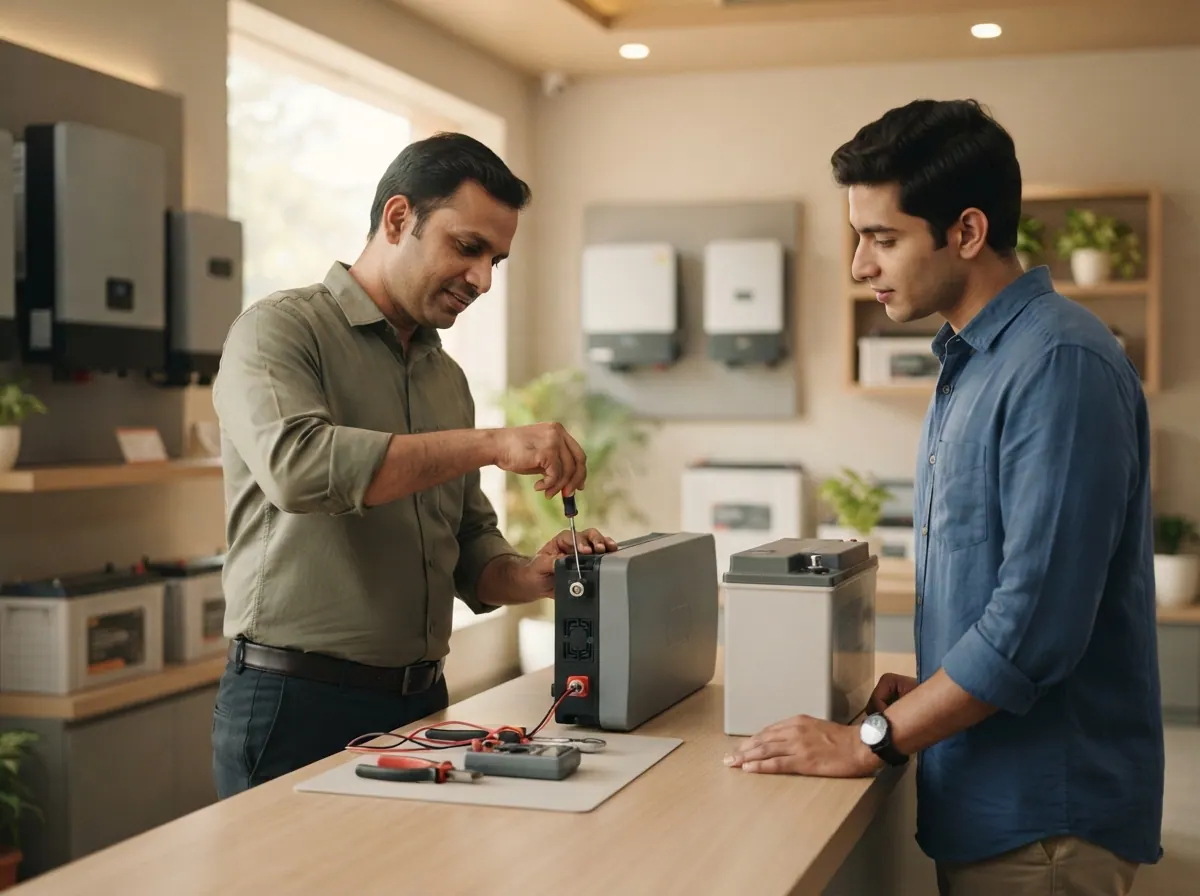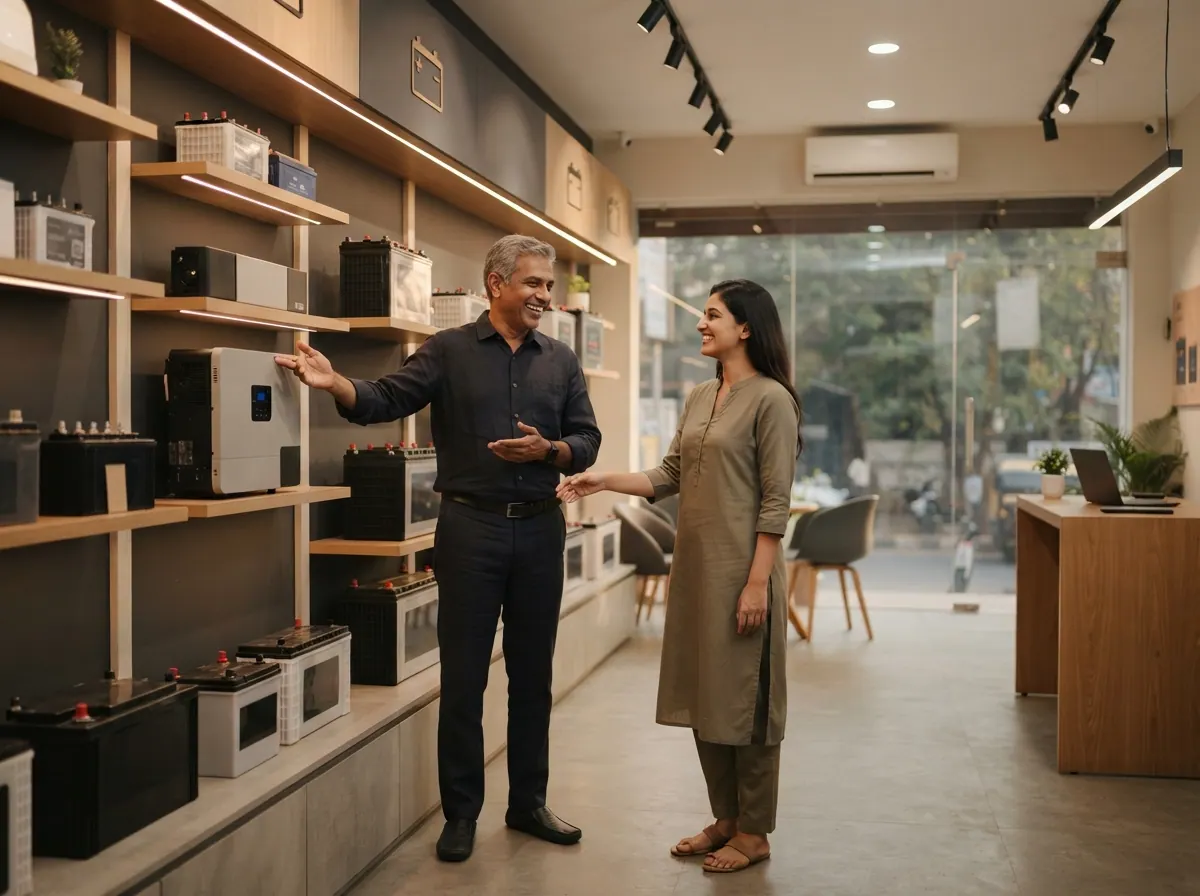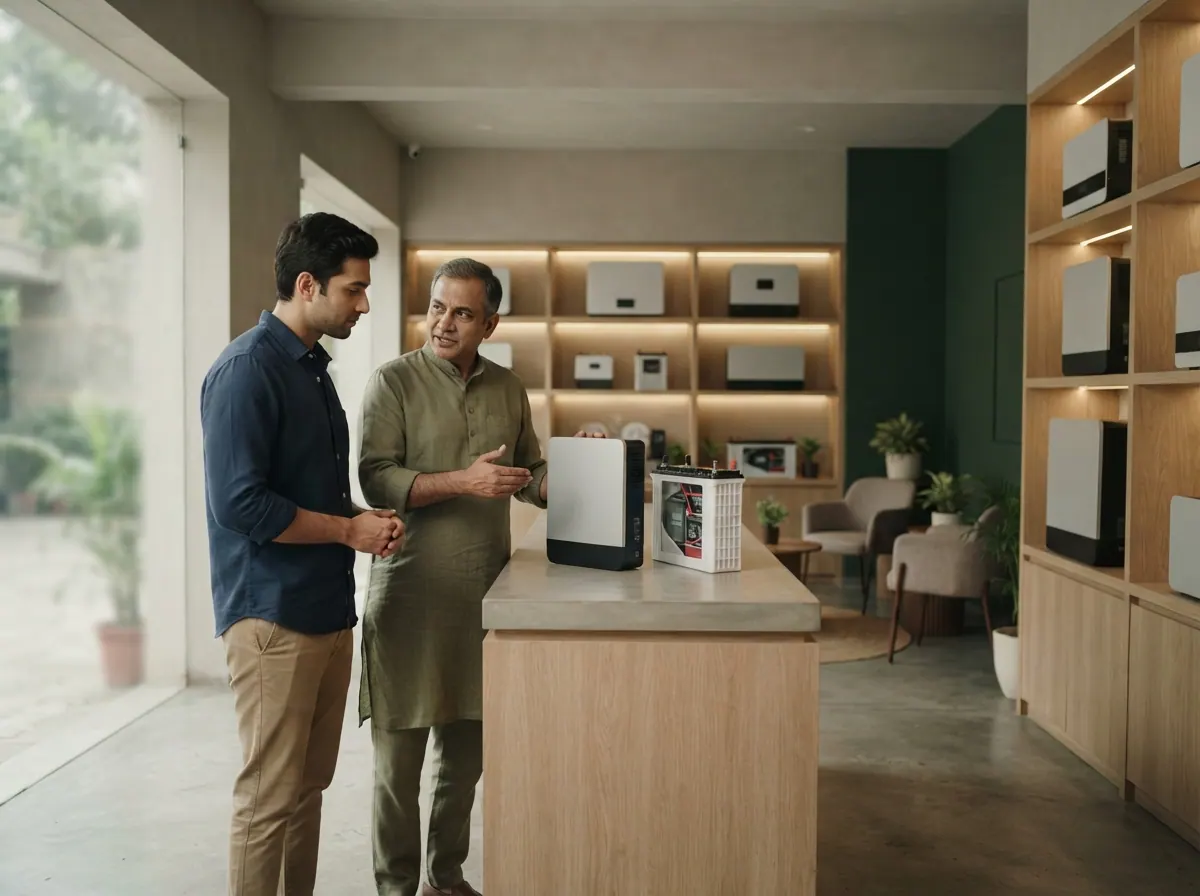
भारत में इन्वर्टर और बैटरी की दुकान खोलने के लिए आपको भारी सामान आसानी से चढ़ने-उतरने वाली दुकान, ट्यूबुलर, गाड़ी और टू-व्हीलर की बैटरियों और कुछ इन्वर्टर मॉडल का स्टॉक, चार्जिंग और टेस्टिंग बेंच, डिलीवरी का वाहन और लगभग ₹3 लाख से ₹10 लाख चाहिए। ज़्यादातर पैसा बैटरी के स्टॉक में लगता है। कमाई नई बैटरी बेचने, पुरानी बैटरी बदले में लेने और बेचे हुए सामान की सर्विस से होती है।
यहाँ सारे आँकड़े अंदाज़े हैं। पैसा लगाने से पहले अपने इलाक़े के भाव देख लें।
कितना खर्च आता है?
| चीज़ | छोटी दुकान | बड़ी दुकान |
|---|---|---|
| बैटरी स्टॉक (ट्यूबुलर, गाड़ी, छोटी UPS) | ₹1.5–4 लाख | ₹4–7 लाख |
| डिस्प्ले में इन्वर्टर और UPS | ₹50,000–1.2 लाख | ₹1.2–2 लाख |
| चार्जिंग बेंच, हाइड्रोमीटर, लोड टेस्टर, मल्टीमीटर | ₹25,000–50,000 | ₹50,000–90,000 |
| दुकान का डिपॉज़िट, रैक, फ़र्श की सुरक्षा | ₹30,000–60,000 | ₹60,000–1 लाख |
| डिलीवरी वाहन (सेकंड-हैंड टेम्पो या लोडर) | ₹0–50,000 | ₹1–2 लाख |
| बोर्ड, बिलिंग सॉफ़्टवेयर, विज्ञापन | ₹10,000–20,000 | ₹20,000–30,000 |
| कुल | लगभग ₹3–5 लाख | लगभग ₹7–10 लाख |
हर साइज़ का गहरा स्टॉक न लें। पहले देखें कि आपके इलाक़े में कौन सी Ah रेटिंग और मॉडल चलते हैं, क्योंकि बिना बिका स्टॉक नुक़सान करता है और शेल्फ़ पर पड़ी बैटरी का चार्ज भी घटता है।
शुरू करने से पहले क्या चाहिए?
- भरोसेमंद सप्लायर। ताज़ी बैटरी बहुत मायने रखती है। हर बैटरी पर बनने की तारीख़ का कोड देखें और पुराना स्टॉक न लें।
- क्या बेचना है इसकी समझ। 1 kVA इन्वर्टर वाले ग्राहक को 2 kVA वाली दुकान से अलग बैटरी चाहिए। लोड के हिसाब से इन्वर्टर और बैटरी चुनना सीखें।
- वज़न उठाने का इंतज़ाम। ट्यूबुलर बैटरियाँ भारी होती हैं। ट्रॉली, रैम्प और डिलीवरी वाहन चाहिए।
- पुरानी बैटरी रखने की सुरक्षित जगह। पुरानी बैटरियों से एसिड रिसता है, इसलिए रीसाइक्लर के आने तक उन्हें सुरक्षित कोने में रखें।
कितनी कमाई हो सकती है?
यह एक जमी हुई दुकान के दूसरे साल का उदाहरण है। ये अंदाज़े हैं, वादा नहीं।
महीने का मार्जिन
- 25 बैटरी बिकीं × लगभग ₹1,500 मार्जिन = ₹37,500
- 8 इन्वर्टर या UPS × लगभग ₹1,500 मार्जिन = ₹12,000
- सर्विस, डिस्टिल्ड वॉटर, छोटी मरम्मत = लगभग ₹10,000
- कुल = लगभग ₹59,500
महीने का खर्च
- दुकान का किराया = ₹12,000
- एक हेल्पर = ₹12,000
- डिलीवरी का पेट्रोल और वाहन = ₹5,000
- बिजली, फ़ोन, बाक़ी = ₹3,000
- कुल = ₹32,000
बचत: ₹59,500 − ₹32,000 = लगभग ₹27,500 महीना।
इसमें स्टॉक में फँसे पैसे का ब्याज शामिल नहीं है। ₹5 लाख का स्टॉक जो घूम नहीं रहा, उस दुकान में भीड़ दिखती है पर कमाई बहुत कम होती है।
कौन सी बैटरी और इन्वर्टर बिकते हैं?
स्टॉक अपने आसपास के घरों और दुकानों के हिसाब से रखें:
- ट्यूबुलर बैटरी (लगभग 150 Ah और ऊपर) घर के इन्वर्टर की मुख्य बिक्री है, और समय पर डिस्टिल्ड वॉटर डालने पर यह फ़्लैट-प्लेट बैटरी से ज़्यादा चलती है।
- गाड़ी की बैटरी कार, दोपहिया और ई-रिक्शा के लिए साल भर बिकती है और ऐसे ग्राहक लाती है जो हर दो-तीन साल में लौटते हैं।
- छोटी UPS बैटरी दुकानों, कंप्यूटर और CCTV के लिए छोटे दफ़्तरों को लगातार बिकती है।
- इन्वर्टर बैटरी के साथ बिकते हैं, इसलिए दोनों ख़रीदने वाला ग्राहक सबसे अच्छा बिल देता है। साइज़ बताने से पहले हमेशा पूछें कि वह कितना लोड चलाना चाहता है।
कदम दर कदम
- कुछ हफ़्ते किसी चालू बैटरी की दुकान में काम करें। बैटरी टेस्ट करना, चार्ज करना और साइज़ चुनना सीखें।
- डिस्ट्रीब्यूटर या ब्रांड ढूँढें जो ताज़ा माल सही उधारी या एडवांस पर दे।
- ऐसी सड़क पर दुकान लें जहाँ ट्रक और टेम्पो रुक सकें, मार्केट, फ़्लैट या छोटे दफ़्तरों के पास।
- तेज़ बिकने वाले मॉडल से शुरू करें और इन्वर्टर का छोटा डिस्प्ले रखें। तीन महीने की बिक्री देखकर और बढ़ाएँ।
- ग्राहक कार्ड रखें जिसमें बैटरी की तारीख़, वारंटी और आख़िरी सर्विस हो। इससे ग्राहक सही समय पर लौटते हैं।
- घर पर इंस्टॉलेशन और चेक-अप विज़िट दें। इसी के लिए लोग ज़्यादा पैसा देते हैं।
- पुरानी बैटरियाँ अधिकृत रीसाइक्लर या अपने डिस्ट्रीब्यूटर को भेजने का इंतज़ाम करें ताकि ढेर न लगे।
कौन से लाइसेंस लगते हैं?
काग़ज़ी काम राज्य के हिसाब से बदलता है, पर आम तौर पर:
- शॉप और एस्टैब्लिशमेंट रजिस्ट्रेशन अपने स्थानीय निकाय में।
- GST रजिस्ट्रेशन जब टर्नओवर सीमा पार करे या सप्लायर माँगे। CA से पूछें।
- पुरानी बैटरी के नियम। भारत में इस्तेमाल की हुई बैटरी को संभालने और लौटाने के नियम हैं। अपने राज्य प्रदूषण नियंत्रण बोर्ड या डिस्ट्रीब्यूटर से पूछें कि आपको क्या करना है।
- ब्रांड डीलरशिप एग्रीमेंट में स्टॉक, दाम और वारंटी की अपनी शर्तें होती हैं। साइन करने से पहले पढ़ें।
- आग से सुरक्षा, क्योंकि दुकान में कई बैटरियाँ और चार्जर रहते हैं। अपने स्थानीय फ़ायर ऑफ़िस से पूछें।
क्या ग़लत हो सकता है?
- पुराना स्टॉक। महीनों बिना इस्तेमाल पड़ी बैटरी की उम्र घट जाती है। ग्राहक दोष फ़ैक्टरी को नहीं, आपको देता है।
- लोड के हिसाब से ग़लत साइज़। छोटी बैटरी साल भर में ख़त्म हो जाती है, और ख़रीदार याद रखता है कि किसने बेची।
- धीमे मॉडल में फँसा पैसा। एक साइज़ का बहुत स्टॉक और ख़रीदार कोई नहीं।
- वारंटी की लड़ाई। जो ग्राहक ओवरलोड से बैटरी बिगाड़ देते हैं वे भी बदलने को कहते हैं। बिल पर साफ़ शर्तें लिखना मदद करता है।
- एसिड गिरना और धुआँ। बंद कमरे में चार्जिंग ख़तरनाक है। हवा आने दें और चार्जिंग चिंगारी से दूर रखें।
- सप्लायर की देरी। अगर सप्लायर वारंटी में बैटरी बदलने में देर करे तो ग्राहक का ग़ुस्सा आपको झेलना पड़ता है।
ये हालात आपके सामने आएँगे
आप क्या करेंगे? हर फ़ैसले की एक क़ीमत है।
शुरुआत
A distributor offers tubular batteries at a discount. The date codes show they were made many months ago.
- Ask for fresh stock only: Pay more, longer-lasting batteries
- Take it, sell as older stock: Cheaper, discounted and honest
A battery company offers a dealership with leads and a sign board. It asks for a stock order and monthly targets.
- Take the dealership: Big stock order, steady leads
- Buy from a distributor: Free choice, fewer leads
An electrician quotes a basic charging corner. A better one has proper earthing, ventilation and separate switches.
- Pay for the safer setup: Costlier, safer from fire
- Use a smaller safe corner: Fewer chargers, slower charging
A shop on the main road costs double the rent. A lane shop is cheaper but trucks cannot reach it.
- Take the main road shop: Higher rent, more walk-ins
- Take the lane shop: Low rent, hard deliveries
A customer has a 2 kVA inverter but wants a small, cheap battery. It will run, but not for long.
- Explain and sell right size: Smaller sale now, trust built
- Sell what they asked: Quick sale, complaint later
Many customers want home delivery. A second-hand tempo costs a lot, while hiring one per trip adds up.
- Buy a second-hand tempo: Big spend, free deliveries
- Hire per trip: Small cost each time
Shelf space is limited. Car batteries sell fast but need a fitter. Tubular batteries bring higher bills but sell slower.
- Stock more tubular: Higher margin, slower sales
- Stock more vehicle batteries: Quick sales, thinner margin
पहला महीना
A customer brings back a new battery that will not hold charge. It might be a defect or deep discharge.
- Test and replace at once: Cost now, claim from maker later
- Send for company testing: No cost, a waiting customer
A helper dropped a battery and acid has hit the floor and burned the cartons. The helper's hand is red.
- Clean safely, buy gear: Gloves, neutraliser and clinic
- Stop work, treat first: Lost day, helper looked after
Customers trade in old batteries and now ten are stacked at the back. A scrap dealer offers cash on the spot.
- Give to authorised recycler: Less cash, follows the rules
- Wait for a full load: Better rate, stack takes space
The area has had several outages. Customers rush in and your stock of one model runs low.
- Order extra from distributor: Rush charges, more sales
- Sell what you have: Little spend, lose some sales
Local electricians say they will send you buyers if you give them a share of each sale.
- Give a small fair share: Less margin, steady referrals
- Refuse the arrangement: Full margin, fewer leads
You are selling 15 batteries a week. Writing cards with dates and warranties is slow work.
- Write a card for each sale: Extra time, repeat visits
- Skip the cards: Faster, customers forget you
रोज़ का काम
Before April everyone wants an inverter. Distributors want advance payment for a large lot.
- Buy a big lot early: Big advance, strong season
- Order in small lots: Less cash tied, stockouts
Customers forget to top up distilled water, and their batteries die early. A free visit each quarter costs your time.
- Offer quarterly check-ups: Time and fuel, loyal buyers
- Charge for each visit: Earns small fees, fewer visits
A neighbouring electrician wants five batteries now and will pay in a month. The electrician is a regular buyer.
- Give on short credit: More sales, payment risk
- Cash or advance only: Safe money, buyer goes elsewhere
Some buyers ask about lithium batteries. They cost more, and you know little about them.
- Learn and stock a few: Training and stock cost
- Stay with lead-acid: Familiar, some customers leave
A customer connected too many fans and a heater to the inverter. The battery is dead and they demand a free one.
- Offer a discount on new: Part cost, customer stays
- Refuse, show the warranty terms: No loss, anger risk
Offices and flats now ask for tax invoices. You are close to the registration limit.
- Register and bill properly: CA fee, bigger buyers
- Hire a part-time accountant: Monthly fee, bills stay legal
A brand runs an old-battery exchange offer. It brings buyers, but you must hold extra stock and take more old batteries.
- Join the exchange offer: Stock cost, many buyers
- Skip the offer: No stock risk, fewer buyers
जब मुश्किल आए
A charger in the back corner is hot and smells of plastic. Cartons are stacked close by.
- Switch off, get it checked: Repair cost, no accident
- Shut charging, rent charger: Slower service, pay for hire
The shutter was forced and six tubular batteries were taken. The loss is large.
- Report and fit cameras: Costly, record and deterrent
- Only change the lock: Cheap, still exposed
Three customers wait for replacement batteries. The company says it takes six weeks.
- Give loaners from stock: Cash tied, patient customers
- Ask customers to wait: No cost, complaints rise
A new shop sells the same brand much lower. Your regulars start asking for matches.
- Match on popular models: Thin margin, keep buyers
- Sell on service and trust: Margin safe, lose some
Water has reached the lowest racks in the monsoon. Some boxed inverters were on the floor.
- Raise racks, test units: Cost, units checked safe
- Test and discount the wet units: Some loss, honest sale
Ten batteries of one rating have sat for four months. They are losing charge and your cash is tied.
- Recharge and discount them: Time and discount, cash back
- Keep waiting for full price: No effort, life draining away
बढ़ाना
Customers ask for solar with battery backup. It means new brands, a technician and some risk.
- Add solar with an installer: Investment, bigger bills
- Stay with inverters: Lower risk, slower growth
A van with a technician can visit homes for battery checks and replace on the spot.
- Start the service van: Vehicle and wage cost
- Keep service in the shop: Cheap, fewer homes reached
A private school asks for a bulk quote for 20 batteries with yearly service. They pay slowly.
- Quote with half advance: Safer terms, may refuse
- Accept full credit: Large order, late payment
A town 20 km away has no good battery shop. A relative offers a place if you stock it.
- Open the second outlet: Big stock, wider area
- Deliver to that town: Small cost, less reach
क्या यह आपके लिए ठीक है?
बैटरी की दुकान उनके लिए ठीक है जो भारी सामान संभाल सकते हैं, ग्राहकों से तकनीकी बातें करना पसंद करते हैं, और बहुत सारे स्टॉक के साथ घबराते नहीं। जिनके पास पैसा कम है उनके लिए कम ठीक है, क्योंकि धीमा स्टॉक चोट करता है, या जिन्हें एसिड और चार्जर के आसपास गंदा काम पसंद नहीं।
एक अच्छा टेस्ट: स्टॉक ख़रीदने से पहले एक बिजली-कटौती के मौसम में एक महीना किसी बैटरी दुकान में काम करें। अगर फिर भी करना चाहें, तो छोटी दुकान से शुरू करें और अपनी बिक्री के रिकॉर्ड से तय करें कि आगे क्या रखना है।