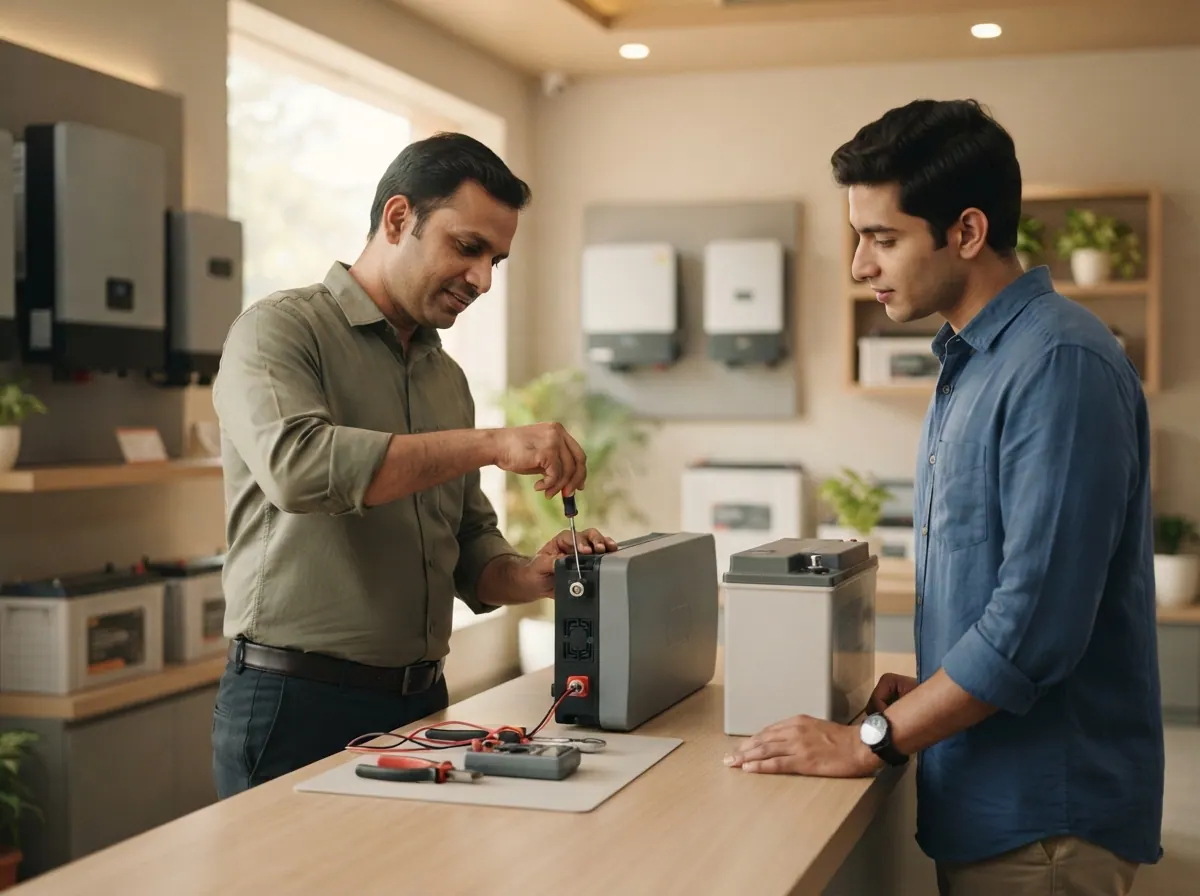
To open an inverter and battery shop in India you need a shop with a heavy-goods entrance, stock of tubular and car or two-wheeler batteries and a few inverter models, a charging and testing bench, a delivery vehicle, and about ₹3 lakh to ₹10 lakh. Most of the money sits in battery stock. You make money by selling new batteries, taking old ones in exchange, and servicing what you sold.
All figures here are estimates. Check prices near you before you spend.
What does it cost?
| Item | Smaller shop | Fuller shop |
|---|---|---|
| Battery stock (tubular, vehicle, small UPS) | ₹1.5–4 lakh | ₹4–7 lakh |
| Inverters and UPS units on display | ₹50,000–1.2 lakh | ₹1.2–2 lakh |
| Charging bench, hydrometer, load tester, multimeter | ₹25,000–50,000 | ₹50,000–90,000 |
| Shop deposit, racks, floor protection | ₹30,000–60,000 | ₹60,000–1 lakh |
| Delivery vehicle (second-hand tempo or loader) | ₹0–50,000 | ₹1–2 lakh |
| Board, billing software, ads | ₹10,000–20,000 | ₹20,000–30,000 |
| Total | about ₹3–5 lakh | about ₹7–10 lakh |
Do not buy deep stock of every size. Learn which Ah ratings and models your area asks for, because dead stock loses money and old batteries lose charge on a shelf.
What do you need before you start?
- A supplier you trust. Fresh batteries matter. Ask the manufacturing date code on each battery and do not accept old stock.
- Knowledge of what to sell. A customer with a 1 kVA inverter needs a different battery than a shop with a 2 kVA one. Learn to size the inverter and battery to the load.
- A way to carry weight. Tubular batteries are heavy. You need a trolley, a ramp and a delivery vehicle.
- A place to store old batteries safely. Old batteries leak acid and must wait in a safe corner for the recycler.
How much can it earn?
Here is a settled shop in its second year. These numbers are examples, not promises.
Monthly margin
- 25 batteries sold × about ₹1,500 margin = ₹37,500
- 8 inverters or UPS units × about ₹1,500 margin = ₹12,000
- Service, distilled water, small repairs = about ₹10,000
- Total = about ₹59,500
Monthly costs
- Shop rent = ₹12,000
- One helper = ₹12,000
- Delivery fuel and vehicle upkeep = ₹5,000
- Electricity, phone, misc = ₹3,000
- Total = ₹32,000
Left over: ₹59,500 − ₹32,000 = about ₹27,500 a month.
This does not count interest on the money tied up in stock. A shop with ₹5 lakh of stock that is not turning over can feel busy but earn very little.
Which batteries and inverters sell?
Match stock to the homes and shops around you:
- Tubular batteries (about 150 Ah and above) are the main sale for home inverters, and they last longer than flat-plate batteries if topped up with distilled water on time.
- Vehicle batteries for cars, two-wheelers and e-rickshaws sell all year and bring customers who come back every two or three years.
- Small UPS batteries for shops, computers and CCTV sell steadily to small offices.
- Inverters are sold with a battery, so a customer who buys both gives you the best bill. Always ask the load they want to run before suggesting a size.
Step by step
- Spend a few weeks in a working battery shop. Learn to test, charge and size batteries.
- Find a distributor or brand that supplies fresh stock on reasonable credit or advance terms.
- Choose a shop on a road where trucks and tempos can stop, near markets, flats or small offices.
- Start with fast-selling models and a small display of inverters. Add more after three months of sales records.
- Keep a customer card with the battery's date, warranty and last service. This brings customers back at the right time.
- Offer a home installation and a check-up visit. This is what people pay extra for.
- Arrange for old batteries to go to an authorised recycler or your distributor, so they do not pile up.
Which licences apply?
Paperwork depends on your state, but usually includes:
- Shop and establishment registration with your local body.
- GST registration if your turnover crosses the limit, or if a supplier asks. Ask a CA.
- Old battery rules. India has rules for handling and returning used batteries. Ask your State Pollution Control Board or distributor what you must do.
- Brand dealership agreements have their own terms on stock, pricing and warranty. Read before you sign.
- Fire safety for a shop that stores many batteries and chargers. Ask your local fire office.
What goes wrong?
- Old stock. A battery that sat unused for months loses life. The customer blames you, not the factory.
- Wrong size for the load. An undersized battery dies in a year, and the buyer remembers who sold it.
- Cash locked in slow models. Too much stock of one size and no buyer.
- Warranty fights. Customers who damaged a battery by overloading it still ask for a replacement. Clear terms on the bill help.
- Acid spills and fumes. Charging in a closed room is dangerous. Keep air moving and keep charging away from sparks.
- Buying credit from a hurt supplier. If a supplier delays warranty replacements, you carry the customer's anger.
Situations you will face
What would you do? Each choice costs something.
Getting started
A distributor offers tubular batteries at a discount. The date codes show they were made many months ago.
- Ask for fresh stock only: Pay more, longer-lasting batteries
- Take it, sell as older stock: Cheaper, discounted and honest
A battery company offers a dealership with leads and a sign board. It asks for a stock order and monthly targets.
- Take the dealership: Big stock order, steady leads
- Buy from a distributor: Free choice, fewer leads
An electrician quotes a basic charging corner. A better one has proper earthing, ventilation and separate switches.
- Pay for the safer setup: Costlier, safer from fire
- Use a smaller safe corner: Fewer chargers, slower charging
A shop on the main road costs double the rent. A lane shop is cheaper but trucks cannot reach it.
- Take the main road shop: Higher rent, more walk-ins
- Take the lane shop: Low rent, hard deliveries
A customer has a 2 kVA inverter but wants a small, cheap battery. It will run, but not for long.
- Explain and sell right size: Smaller sale now, trust built
- Sell what they asked: Quick sale, complaint later
Many customers want home delivery. A second-hand tempo costs a lot, while hiring one per trip adds up.
- Buy a second-hand tempo: Big spend, free deliveries
- Hire per trip: Small cost each time
Shelf space is limited. Car batteries sell fast but need a fitter. Tubular batteries bring higher bills but sell slower.
- Stock more tubular: Higher margin, slower sales
- Stock more vehicle batteries: Quick sales, thinner margin
First month
A customer brings back a new battery that will not hold charge. It might be a defect or deep discharge.
- Test and replace at once: Cost now, claim from maker later
- Send for company testing: No cost, a waiting customer
A helper dropped a battery and acid has hit the floor and burned the cartons. The helper's hand is red.
- Clean safely, buy gear: Gloves, neutraliser and clinic
- Stop work, treat first: Lost day, helper looked after
Customers trade in old batteries and now ten are stacked at the back. A scrap dealer offers cash on the spot.
- Give to authorised recycler: Less cash, follows the rules
- Wait for a full load: Better rate, stack takes space
The area has had several outages. Customers rush in and your stock of one model runs low.
- Order extra from distributor: Rush charges, more sales
- Sell what you have: Little spend, lose some sales
Local electricians say they will send you buyers if you give them a share of each sale.
- Give a small fair share: Less margin, steady referrals
- Refuse the arrangement: Full margin, fewer leads
You are selling 15 batteries a week. Writing cards with dates and warranties is slow work.
- Write a card for each sale: Extra time, repeat visits
- Skip the cards: Faster, customers forget you
Running it
Before April everyone wants an inverter. Distributors want advance payment for a large lot.
- Buy a big lot early: Big advance, strong season
- Order in small lots: Less cash tied, stockouts
Customers forget to top up distilled water, and their batteries die early. A free visit each quarter costs your time.
- Offer quarterly check-ups: Time and fuel, loyal buyers
- Charge for each visit: Earns small fees, fewer visits
A neighbouring electrician wants five batteries now and will pay in a month. The electrician is a regular buyer.
- Give on short credit: More sales, payment risk
- Cash or advance only: Safe money, buyer goes elsewhere
Some buyers ask about lithium batteries. They cost more, and you know little about them.
- Learn and stock a few: Training and stock cost
- Stay with lead-acid: Familiar, some customers leave
A customer connected too many fans and a heater to the inverter. The battery is dead and they demand a free one.
- Offer a discount on new: Part cost, customer stays
- Refuse, show the warranty terms: No loss, anger risk
Offices and flats now ask for tax invoices. You are close to the registration limit.
- Register and bill properly: CA fee, bigger buyers
- Hire a part-time accountant: Monthly fee, bills stay legal
A brand runs an old-battery exchange offer. It brings buyers, but you must hold extra stock and take more old batteries.
- Join the exchange offer: Stock cost, many buyers
- Skip the offer: No stock risk, fewer buyers
When things go wrong
A charger in the back corner is hot and smells of plastic. Cartons are stacked close by.
- Switch off, get it checked: Repair cost, no accident
- Shut charging, rent charger: Slower service, pay for hire
The shutter was forced and six tubular batteries were taken. The loss is large.
- Report and fit cameras: Costly, record and deterrent
- Only change the lock: Cheap, still exposed
Three customers wait for replacement batteries. The company says it takes six weeks.
- Give loaners from stock: Cash tied, patient customers
- Ask customers to wait: No cost, complaints rise
A new shop sells the same brand much lower. Your regulars start asking for matches.
- Match on popular models: Thin margin, keep buyers
- Sell on service and trust: Margin safe, lose some
Water has reached the lowest racks in the monsoon. Some boxed inverters were on the floor.
- Raise racks, test units: Cost, units checked safe
- Test and discount the wet units: Some loss, honest sale
Ten batteries of one rating have sat for four months. They are losing charge and your cash is tied.
- Recharge and discount them: Time and discount, cash back
- Keep waiting for full price: No effort, life draining away
Growing
Customers ask for solar with battery backup. It means new brands, a technician and some risk.
- Add solar with an installer: Investment, bigger bills
- Stay with inverters: Lower risk, slower growth
A van with a technician can visit homes for battery checks and replace on the spot.
- Start the service van: Vehicle and wage cost
- Keep service in the shop: Cheap, fewer homes reached
A private school asks for a bulk quote for 20 batteries with yearly service. They pay slowly.
- Quote with half advance: Safer terms, may refuse
- Accept full credit: Large order, late payment
A town 20 km away has no good battery shop. A relative offers a place if you stock it.
- Open the second outlet: Big stock, wider area
- Deliver to that town: Small cost, less reach
Is it right for you?
A battery shop suits you if you can handle heavy goods, like talking technical details with customers, and can hold a lot of stock without panicking. It suits you less if you have limited cash, because slow stock hurts, or if you dislike dirty work around acid and chargers.
A good test: before buying stock, work in a battery shop for a month through one power-cut season. If you still want it, start with the smaller shop and let your sales records decide what to stock next.