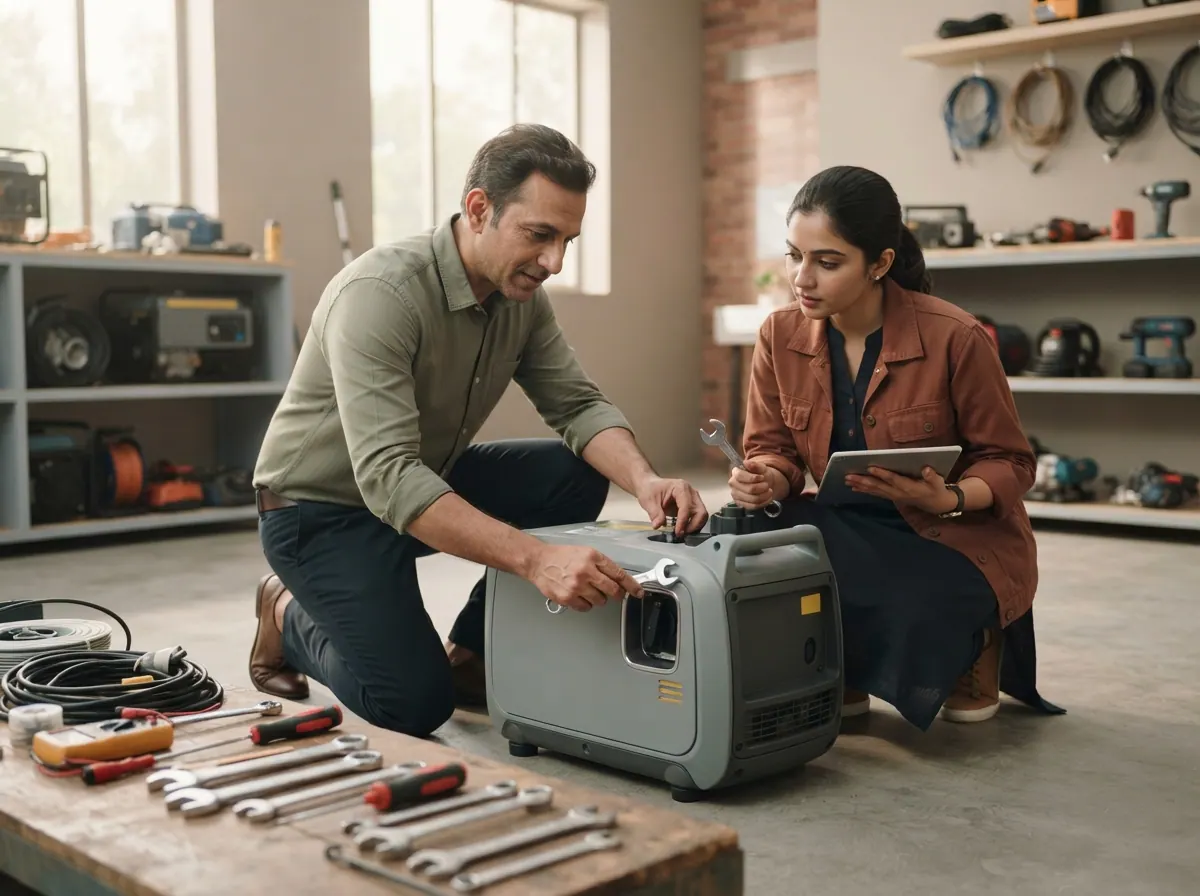
भारत में जनरेटर रेंटल बिज़नेस शुरू करने के लिए आपको दो-तीन अच्छी तरह मेंटेन किए हुए साइलेंट DG सेट, उन्हें ले जाने के लिए लोडर या टेम्पो, कनेक्टर के साथ मोटे केबल, तार जोड़ना सुरक्षित तरीक़े से जानने वाला एक आदमी और लगभग ₹3 लाख से ₹15 लाख चाहिए, जो इस पर निर्भर करता है कि कितने सेट और किस साइज़ के हैं। कमाई शादी, कार्यक्रम, दुकान, निर्माण स्थल और छोटी फ़ैक्टरियों से दिन या घंटे के किराये से होती है। पैसा सेट चलते रहने में है, यार्ड में खड़े रहने में नहीं।
यहाँ सारे आँकड़े अंदाज़े हैं। पैसा लगाने से पहले अपने इलाक़े के भाव देख लें।
कितना खर्च आता है?
| चीज़ | छोटी शुरुआत (3 सेट) | बड़ा बेड़ा (4 से 5 सेट) |
|---|---|---|
| साइलेंट DG सेट (जैसे 10, 15, 25 kVA) | ₹2–4 लाख पुराने या छोटे नए | ₹7–11 लाख |
| मोटे केबल, कप्लर, डिस्ट्रीब्यूशन बॉक्स | ₹25,000–50,000 | ₹60,000–1 लाख |
| अर्थिंग किट, MCB, सुरक्षा सामान | ₹10,000–20,000 | ₹20,000–35,000 |
| लोडर या टेम्पो | किराये पर | ₹1–2.5 लाख |
| यार्ड या शेड, तिरपाल, सुरक्षा | ₹10,000–25,000 | ₹30,000–60,000 |
| बीमा, काग़ज़, विज्ञापन | ₹10,000–20,000 | ₹25,000–40,000 |
| कुल | लगभग ₹3–5.5 लाख | लगभग ₹10–15 लाख |
पुराने सेट से काफ़ी बचत हो सकती है, पर पैसे देने से पहले चलने के घंटे देखें और मैकेनिक से इंजन और अल्टरनेटर की जाँच करवाएँ।
शुरू करने से पहले क्या चाहिए?
- ग्राहकों की साफ़ समझ। टेंट हाउस, केटरर, बिल्डर, दुकानदार और फ़ंक्शन हॉल सब अलग तरह से किराये पर लेते हैं। उनसे पूछें कि कौन सा साइज़ और कब।
- इंजन की जानकारी। तेल, कूलेंट, फ़िल्टर, बेल्ट, बैटरी और ख़राब होते अल्टरनेटर की पहचान आनी चाहिए।
- सुरक्षित बिजली कनेक्शन। बिना चेंजओवर स्विच के जनरेटर को घर या दुकान की लाइन से जोड़ने पर बिजली वापस लाइन में जा सकती है और लाइनमैन को चोट पहुँचा सकती है। हमेशा सही चेंजओवर इस्तेमाल करें।
- साइट पर चलाने वाला आदमी। कई ग्राहक चाहते हैं कि ऑपरेटर सेट चालू करे और डीज़ल भरे।
- बीमा और रेंटल एग्रीमेंट। एग्रीमेंट में लिखा हो कि डीज़ल कौन भरेगा, नुक़सान पर क्या होगा और किराया कब ख़त्म होगा।
कितनी कमाई हो सकती है?
यह एक छोटे बेड़े के दूसरे साल का उदाहरण है। ये अंदाज़े हैं, वादा नहीं।
महीने की किराये की आमदनी
- 10 kVA के 2 सेट × 8 दिन × लगभग ₹3,000 रोज़ = ₹48,000
- 15 kVA का 1 सेट × 7 दिन × लगभग ₹4,500 = ₹31,500
- 25 kVA का 1 सेट × 5 दिन × लगभग ₹7,000 = ₹35,000
- कुल = ₹1,14,500
महीने का खर्च
- दो ऑपरेटर या ड्राइवर = ₹28,000
- लोडर का पेट्रोल और रखरखाव = ₹12,000
- सर्विसिंग और स्पेयर = ₹10,000
- यार्ड किराया, बीमा, बाक़ी = ₹8,000
- कुल = ₹58,000
बचत: ₹1,14,500 − ₹58,000 = लोन से पहले लगभग ₹56,500 महीना।
अगर आपने ₹8 लाख का लोन लिया और किस्त लगभग ₹20,000 महीना है, तो आपके पास लगभग ₹36,500 बचते हैं। यहाँ हर सेट महीने का सिर्फ़ चौथाई हिस्सा किराये पर है, इसलिए शादियाँ कम हों तो आमदनी बहुत घट सकती है जबकि ख़र्चे वही रहते हैं।
कदम दर कदम
- दस ग्राहकों से बात करें, जैसे टेंट हाउस, केटरर, बिल्डर और दुकानदार। पूछें कि कौन सा साइज़, कब, और अभी कितना देते हैं।
- पहला सेट ख़रीदें या लें, उसी साइज़ का जो वे माँगते हैं। पुराना लेने से पहले कुछ घंटे लोड पर चलाकर देखें।
- सही केबल और अर्थिंग किट लें। कभी भी मुड़े-जुड़े तार वाला सेट न सौंपें।
- सीधा रेंटल एग्रीमेंट लिखें जिसमें फ़्यूल रीडिंग, सिक्योरिटी डिपॉज़िट, नुक़सान की शर्तें और देर से लौटाने का चार्ज हो।
- हर सेट पर सिक्योरिटी डिपॉज़िट लें और देते और लेते समय फ़ोटो के साथ चेकलिस्ट रखें।
- हर किराये के बाद सर्विस करें। तेल, फ़िल्टर और कूलेंट देखें और हर सेट का लॉग रखें।
- सेट बढ़ाएँ जब आपकी बुकिंग डायरी भरने लगे, और बड़ा सेट तब लें जब बार-बार माँग आए।
कौन से लाइसेंस लगते हैं?
काग़ज़ी काम राज्य और सेट के साइज़ पर निर्भर करता है:
- शॉप और एस्टैब्लिशमेंट रजिस्ट्रेशन और GST, जैसे ज़्यादातर कारोबारों में। CA से पूछें।
- प्रदूषण और शोर के नियम जनरेटर सेट के लिए हैं, और किराये के लिए साइलेंट कैनोपी वाले सेट आम हैं। अपने प्रदूषण नियंत्रण बोर्ड से पूछें कि क्या लागू है।
- ईंधन रखना। ज़्यादा मात्रा में डीज़ल रखने के सुरक्षा और आग के नियम हैं। अपने स्थानीय फ़ायर ऑफ़िस से पूछें।
- बीमा सेट का, ढुलाई का और ग्राहक की संपत्ति के नुक़सान का।
- बिजली के नियम साइट पर लगाने के लिए। जहाँ इमारत से कनेक्शन चाहिए वहाँ लाइसेंस वाले इलेक्ट्रीशियन से करवाएँ।
क्या ग़लत हो सकता है?
- खाली पड़े सेट। महीने में दस दिन बुक होने वाले सेट पर भी बीमा, यार्ड और लोन रोज़ चलता है।
- ग्राहक सेट पर ज़्यादा लोड डाल देते हैं। केटरर ज़्यादा प्लग लगा दे तो 10 kVA सेट ट्रिप होता या जलता है। उन्हें लोड समझाएँ।
- देर से लौटाना और डीज़ल का झगड़ा। साफ़ फ़्यूल रीडिंग के बिना एक पक्ष को ठगा हुआ लगता है।
- शादी की रात ख़राबी। फ़ंक्शन में सेट बंद होना आपके नाम के लिए आफ़त है। हर बुकिंग से पहले टेस्ट करें।
- डीज़ल में पानी। यह फ़ंक्शन के बीच इंजन को जाम कर देता है।
- केबल और डीज़ल की चोरी। तांबे का केबल और डीज़ल यार्ड और साइट से ग़ायब हो जाते हैं।
ये हालात आपके सामने आएँगे
आप क्या करेंगे? हर फ़ैसले की एक क़ीमत है।
शुरुआत
A dealer offers a used 15 kVA set at nearly half the new price. Its running hours are not written anywhere.
- Buy a new set: High price, fewer breakdowns
- Buy used after a mechanic check: Lower price, a mechanic fee
Caterers ask for 10 kVA, builders want 25 kVA. You can afford only one set for now.
- Buy a 10 kVA silent set: More bookings, smaller rent
- Buy a 25 kVA set: Bigger rent, fewer customers
A shop sells cable that looks thick enough for rental use at a low price. It heats up under a heavy load.
- Buy proper rated cable: Costly, safe for heavy loads
- Rent only to small loads: Cheaper cable, fewer bookings
A yard with a guard costs more than an open plot near your home. Thieves target cable and diesel.
- Pay for a guarded yard: Higher rent, safer sets
- Use the open plot: Cheap, theft risk
Your first customers are friends who say there is no need for papers. You worry about fuel and damage disputes.
- Use a written agreement: Awkward, avoids fights
- Trust them on word: Friendly, a dispute risk
A shop owner asks you to connect the generator straight to the panel without a changeover switch.
- Insist on a changeover: Needs an electrician, safe
- Turn the booking down: Lose the job, no risk
Wedding customers ask for someone to start and watch the set. An operator costs wages every day.
- Offer a paid operator: Higher bill, fewer faults
- Hand over with a short demo: No wage, customers misuse it
पहला महीना
A customer says the set used little diesel. Your tank shows a much bigger drop, and there is no note.
- Settle on a fair middle: Lose some, keep customer
- Insist on full amount: Full money, angry customer
Halfway through the reception your set trips. The caterer has plugged in too many ovens.
- Send a standby set: Cost of transport, goodwill
- Reset it and explain the fault: Small cost, honest answer
A set coughs and stops at a shop opening. You find water in the bottom of the tank.
- Drain tank, change filters: Cost and delay, engine saved
- Just restart and hope: No cost, injector damage risk
A builder's team kept the set two extra days and says the work ran over. The next customer is waiting.
- Charge the extra days: Fair money, builder annoyed
- Waive the extra: Goodwill, lose rent
The sets are booked back to back. A proper check after each return costs time, oil and filters.
- Check after every return: Time and parts, fewer breakdowns
- Service monthly only: Saves time, failures likely
A caterer plans to run several ovens and coolers on one 10 kVA set. The set will trip or overheat.
- Insist on a bigger set: Higher rent, no breakdown
- Rent two small sets: More handling, split load
रोज़ का काम
Every date is booked, and a tent house asks for three more sets. You own two.
- Sub-rent from another firm: Margin shared, more income
- Say no to the extra: No risk, lose a regular
Diesel gets costlier and customers grumble about fuel bills. Some say your sets use too much.
- Offer fuel-saving tune-ups: Service cost, happy customers
- Ignore the complaints: No cost, quiet losses
A builder wants a 25 kVA set for three months. Rent is lower per day and payment comes monthly.
- Take the long contract: Steady money, lower rate
- Keep for short bookings: Higher rate, uncertain days
A big event firm asks for a fifteen percent discount in exchange for regular bookings.
- Give the discount: Thin margin, steady bookings
- Offer a smaller discount: Better margin, may refuse
A function in a residential lane ran a set late at night. Neighbours phoned the police about the noise.
- Offer a silent canopy set: Costly set, fewer complaints
- Tell customers to handle it: No cost, bad name risk
A first-time customer wants the set now and promises to pay after the function.
- Take a deposit first: Safe money, a few refuse
- Give it on trust: Friendly, payment risk
An agent offers a policy covering theft and damage on the rental sets. The yearly premium is not small.
- Buy the policy: Yearly cost, covered losses
- Skip it for now: No premium, big risk
A fair committee wants power for stalls for ten days. They ask for a low rate and payment after the mela.
- Take it with half advance: Good income, tight handling
- Take it all on credit: Bigger bill, payment risk
जब मुश्किल आए
Someone cut the lock and took a roll of heavy copper cable. A booking is tomorrow.
- Buy new, add guard and light: Costly, deters thieves
- Rent proper cable for now: Rent cost, safe for loads
A set burned its alternator during a booking. Repair is costly and the customer asks for a refund.
- Repair, refund the day: Big cost, trust saved
- Check the log, share the cost: Costs repair, fair to customer
Your oldest set smokes and loses power. A full overhaul costs nearly a new small set.
- Overhaul the engine: Large bill, set back in work
- Sell it, buy a newer one: Cash in, bigger purchase
A new firm rents at a lower rate with old sets. Some regular customers try them.
- Match the rate on small sets: Thin margin, keep customers
- Stay on reliability: Margin safe, lose some
Heavy rain floods your yard and water enters two sets. You must dry and test them before use.
- Dry and fully test them: Cost and delay, safe sets
- Raise the sets, test one: Cheaper, another may fail
बढ़ाना
A factory and a hospital annex ask for a big set. It costs a lot, and bookings are rare but high value.
- Buy the big set: Huge spend, large rent
- Sub-rent one when needed: No spend, thin margin
Event firms ask for light towers, cables and distribution boards with the set as a package.
- Offer a full power package: Equipment cost, bigger bills
- Rent only the generators: Simple, lose package buyers
A town 30 km away has no good rental firm. You would need a loader trip and a local contact.
- Start service there: Transport cost, more bookings
- Stay in your own town: Easy, less growth
Shop and hall owners with their own generators ask who can service them yearly.
- Offer yearly service plans: Steady income, mechanic wage
- Stay with rentals only: Simple, miss a market
क्या यह आपके लिए ठीक है?
जनरेटर रेंटल उनके लिए ठीक है जो मशीनें संभाल सकते हैं, रिकॉर्ड रखते हैं और शादी के सीज़न में बेवक़्त फ़ोन उठा सकते हैं। जिन्हें नुक़सान और डिपॉज़िट की बात करना पसंद नहीं, या जिन्हें हर महीने पक्की कमाई चाहिए, उनके लिए कम ठीक है, क्योंकि आमदनी शादी, मौसम और बिजली कटौती के साथ ऊपर-नीचे होती है।
एक अच्छा टेस्ट: एक शादी का सीज़न किसी टेंट हाउस या रेंटल फ़र्म के सेट संभालने में मदद करें। अगर देर रात की ड्यूटी संभाल लें, तो सोच-समझकर चुने दो-तीन सेट और एक ऑपरेटर से शुरू करें, और डायरी भरने पर ही और जोड़ें।