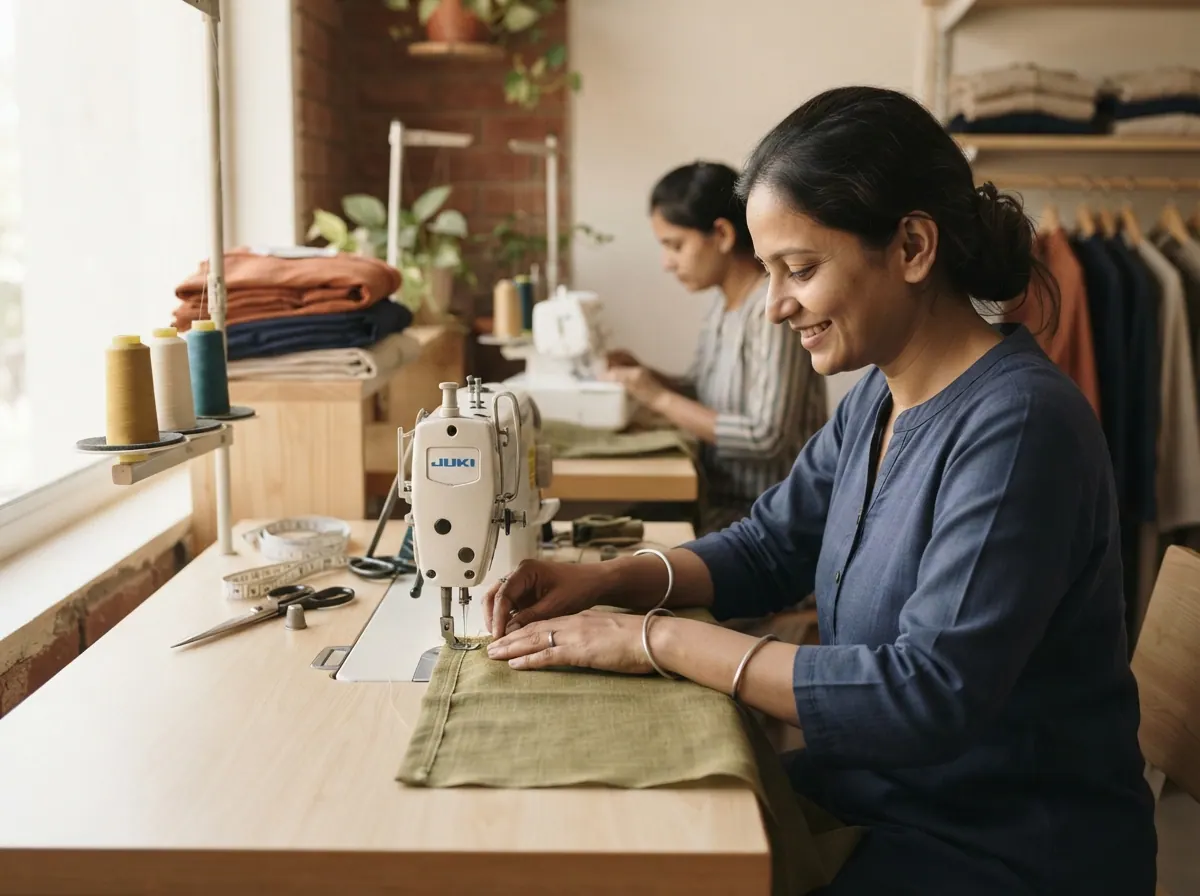
भारत में छोटी गारमेंट यूनिट शुरू करने के लिए आपको अच्छी रोशनी और बिजली वाला हॉल, 8 से 10 मशीनें, कटिंग टेबल, कुछ कुशल ऑपरेटर और व्यापारियों का जॉब वर्क करने के लिए करीब ₹3–6 लाख चाहिए। अगर कपड़ा भी खरीदकर अपना ब्रांड बेचना है तो ₹10–20 लाख सोचें, क्योंकि ज़्यादातर पैसा कपड़े में फँसता है।
यहाँ दिए सारे आँकड़े अंदाज़े हैं। पैसा लगाने से पहले अपने यहाँ के भाव देख लें।
खर्चा कितना आता है?
| सामान | जॉब वर्क यूनिट, करीब 10 मशीनें |
|---|---|
| सिंगल नीडल मशीनें (5–6) | ₹70,000–1.6 लाख |
| ओवरलॉक मशीनें (2) | ₹50,000–90,000 |
| आपके प्रोडक्ट की स्पेशल मशीन (फ़्लैटलॉक, बटनहोल, बटन) | ₹40,000–1 लाख |
| कटिंग टेबल, कैंची, स्ट्रेट नाइफ़ कटर | ₹30,000–70,000 |
| प्रेस टेबल, स्टीम आयरन, धागा काटने के औज़ार | ₹15,000–35,000 |
| हॉल का एडवांस या किराया और बिजली फ़िटिंग | ₹50,000–1 लाख |
| सुई, धागा, स्पेयर, पहले महीने की मज़दूरी | ₹40,000–70,000 |
| कुल (जॉब वर्क) | करीब ₹3–6 लाख |
पुरानी मशीनें बहुत सस्ती होती हैं, पर उनकी उम्र, मोटर और स्पेयर देख लें। इंडस्ट्रियल मशीनों को स्थिर बिजली और सही टेबल भी चाहिए। अपना ब्रांड बनाना है तो कपड़े, पैटर्न, लेबल, पैकिंग और सैंपल सेट का पैसा अलग से रखें।
कमाई कितनी हो सकती है?
जॉब वर्क में कपड़ा आपका नहीं होता, आप सिलाई का रेट प्रति पीस कमाते हैं। दस मशीनों वाली यूनिट का एक महीना, बेसिक शर्ट बनाते हुए:
बिक्री
- महीने में करीब 5,000 पीस × ₹40 प्रति पीस = ₹2,00,000
खर्चे
- ऑपरेटर को प्रति पीस, करीब ₹22 × 5,000 = ₹1,10,000
- तीन हेल्पर (कटर, चेकर, फ़िनिशर) × ₹12,000 = ₹36,000
- हॉल का किराया = ₹20,000
- बिजली = ₹8,000
- धागा, सुई, स्पेयर = ₹10,000
- कुल = ₹1,84,000
बचत: ₹2,00,000 − ₹1,84,000 = करीब ₹16,000 महीना।
यह कम दिखता है, और है भी। जॉब वर्क का मार्जिन पतला होता है, इसलिए मुनाफ़ा तब आता है जब मशीनें रोज़ चलती रहें और आप खुद सुपरवाइज़र बनें। ऑर्डर के बीच हफ़्ताभर खाली बैठी यूनिट कमाई से ज़्यादा गँवा देती है। अपना ब्रांड ज़्यादा कमा सकता है, पर तभी जब माल बिके।
शुरू करने से पहले क्या चाहिए?
- एक प्रोडक्ट पर ध्यान। शर्ट, कुर्ती, नाइटवियर, बच्चों के कपड़े, यूनिफ़ॉर्म या टी-शर्ट, सबके लिए अलग मशीन और ऑपरेटर चाहिए। पहले एक चुनें।
- मशीन से पहले खरीदार। ऐसे व्यापारियों और ब्रांड से बात करें जो साफ़ रेट पर पहला ऑर्डर दें।
- रोशनी और बिजली वाला हॉल। ऑपरेटर दिनभर काम करते हैं। अच्छी रोशनी से खराबी कम होती है, और सही थ्री-फ़ेज़ कनेक्शन से मशीन की दिक्कत नहीं आती।
- कुशल ऑपरेटर। अच्छा ऑपरेटर और अच्छा चेकर आपकी क्वालिटी तय करते हैं। दूसरी यूनिट से लोग ढूँढें और पगार लिखित में तय करें।
- मज़दूरी का कैश। खरीदार अक्सर 15 से 45 दिन में पैसे देते हैं, पर वर्कर को साप्ताहिक या मासिक पैसे चाहिए।
कदम दर कदम
- कुछ महीने किसी यूनिट में काम करें ताकि सिलाई, लाइन बैलेंस और कॉस्टिंग सीख सकें।
- एक प्रोडक्ट चुनें और उसके सारे ऑपरेशन सीखें। एक सादी शर्ट में कॉलर से हेम तक कई स्टेप होते हैं।
- व्यापारी से सैंपल ऑर्डर लें, प्रति पीस रेट और साफ़ डेडलाइन के साथ।
- मशीनें धीरे-धीरे लें। पहले वही मशीनें जो पहले प्रोडक्ट को चाहिए, फिर ऑर्डर के साथ और।
- ऑपरेटर रखें और पगार तय करें। सिलाई वालों को प्रति पीस और हेल्पर को महीने की पगार कई यूनिट में चलती है।
- हर लॉट चेक करें। पैकिंग से पहले चेकर सिलाई, नाप और ढीले धागे देखे।
- रिकॉर्ड रखें। मिले पीस, दिए पीस और रिजेक्ट लिखें और खरीदार से साइन करवाएँ, ताकि बाद में गिनती पर झगड़ा न हो।
- दूसरा खरीदार जोड़ें, इससे पहले कि पहला खरीदार आधे से ज़्यादा काम हो जाए।
कौन से लाइसेंस लगते हैं?
ज़रूरतें राज्य के हिसाब से बदलती हैं, इसलिए स्थानीय दफ़्तर से पूछें:
- स्थानीय इजाज़त नगर निगम या पंचायत से मशीनों वाली यूनिट चलाने की, जो आपके आकार के हिसाब से शॉप एंड एस्टैब्लिशमेंट या फ़ैक्ट्री जैसे नियम में आ सकती है।
- कमर्शियल बिजली कनेक्शन, मोटरों के हिसाब से सही लोड के साथ।
- GST टर्नओवर पर और इस पर निर्भर है कि आप माल बेचते हैं या सिर्फ़ जॉब वर्क करते हैं। CA बता देगा।
- उद्यम रजिस्ट्रेशन लोन में मदद करता है और आवेदन मुफ़्त है।
- PF और ESI वर्कर की गिनती एक सीमा पार करने पर लग सकते हैं। CA से जल्दी पूछ लें ताकि पगार और रजिस्ट्रेशन की योजना बन सके।
- आग से सुरक्षा। रुई जैसा कचरा और कपड़ा जल्दी जलता है, इसलिए निकास खुले रखें और अग्निशामक भरे रखें।
क्या गलत हो सकता है?
- मशीनें खाली बैठना। एक खरीदार का काम धीमा पड़ता है और ऑपरेटर बैठे रहते हैं, जबकि खर्चे चलते रहते हैं।
- गलत नाप। 500 पीस में पैटर्न या साइज़ की गलती का मतलब दोबारा काम या लॉट रिजेक्ट।
- त्योहार के बाद ऑपरेटर का न लौटना। कई वर्कर दिवाली या ईद पर घर जाते हैं और लौटते नहीं, इसलिए ऑर्डर पिछड़ जाते हैं।
- देर से पेमेंट। व्यापारी आपके पीस रखकर दो महीने बाद पैसे देता है, और आप हर हफ़्ते मज़दूरी देते हैं।
- कपड़े का सिकुड़ना और रंग छूटना। कपड़ा खरीदार का होता है, पर खराबी का दोष सिलाई पर आता है, जब तक आप शुरू में उसे लिख न लें।
- सुई और टेंशन की दिक्कत। छूटे टाँके और सिकुड़न खराब धागे या सेटिंग से आते हैं और रिजेक्शन कराते हैं।
- बहुत कम रेट बोलना। जो रेट कागज़ पर ठीक लगे, उसमें धागा, स्पेयर, बिजली और चेकिंग का समय छूट जाता है।
ये हालात आपके सामने आएँगे
आप क्या करेंगे? हर फ़ैसले की एक क़ीमत है।
शुरुआत
A closing unit sells six single needle machines at half the new price. The motors are old and spares are hard to find.
- Buy the used machines: Cheaper, breakdown risk
- Buy new machines: Costly, steady output
Shirts pay better per piece but need many steps. T-shirts are quicker to stitch but the rate is lower.
- Start with shirts: Higher rate, slower learning
- Start with T-shirts: Easier, lower rate
Your hall has a household connection. Motors slow down when all machines run together.
- Get a proper commercial connection: Fee and wait, steady output
- Run fewer machines at once: No cost, slower output
A Delhi trader offers 300 pieces as a trial order at a low rate, with more orders if the finish is liked.
- Take it at the trader's rate: Thin margin, chance of repeat
- Ask for a higher rate: Better margin, the trader may refuse
A first-floor hall with good light needs a large advance. A ground-floor godown is cheaper but dark.
- Take the bright first floor: Big advance, fewer defects
- Take the dark godown: Lower advance, more mistakes
A cutting master asks for high pay but wastes less cloth. You could cut on your own with a slow start.
- Hire the master: Costly, less cloth waste
- Cut it yourself: Saves pay, more mistakes
Thread and cloth dust cover the floor, and the hall has a single narrow exit.
- Add exit and extinguishers: Costs money, much safer
- Add one exit now, extinguishers later: Mid cost, the main risk is removed
पहला महीना
Operators asked for fixed daily pay. Piece rate gets more output, but some are afraid of low earnings.
- Pay per piece: More output, rushed work
- Pay fixed daily wages: Steadier mood, slower output
A bad batch of thread causes skipped stitches. The trader's checker will reject any bad pieces.
- Re-stitch every bad piece: Time and wages, trust kept
- Tell the trader, offer a discount: Lose some income, honest
Medium labels went onto large shirts in one carton before anyone noticed.
- Open and fix the carton: Costs a day, lot correct
- Tell the buyer, offer relabelling: Delay, honest
You delivered 1,200 pieces. The trader counted 1,150 and wants it deducted. You did not take a signed count.
- Accept the deduction: Loses money, keeps buyer
- Dispute and recount: May recover, buyer annoyed
A boutique asks for 400 kurtis. Your costing sheet shows a rate, but they offer ₹6 less per piece.
- Hold your rate: Better margin, may lose lot
- Take the lower rate: Wins the lot, thin margin
रोज़ का काम
A buyer wants 3,000 kidswear pieces before Diwali. You can finish it only with overtime and extra hands.
- Hire extra hands and overtime: Costly, rate is good
- Take half the order: Less strain, less income
Four operators ask for ten days off and may not return. Orders are pending.
- Give leave with a return bonus: Costs money, they likely return
- Refuse the leave: Saves money, some quit
The buyer supplied cotton that shrinks, and finished shirts fail their wash test. The buyer blames your stitching.
- Show your cutting and stitch notes: Argument, may be proved right
- Absorb the loss quietly: Pay for it, buyer stays
The overlock jams and the mechanic needs two days. The lot ships in three.
- Pay the mechanic to rush it: Extra fee, on time
- Borrow another unit's machine: Cheap, they get a favour
A dealer offers thread cones cheaper than your regular brand. Operators say it snaps and slows them down.
- Stay with the good brand: Costs more, fewer breaks
- Buy the cheaper thread: Saves money, slower and rework
Collar stitching is slow, and the rest of the line piles up behind it every day.
- Add a second collar machine: Costs money, faster flow
- Retrain the operator: Slower fix, cheap
Your best buyer wants longer credit, while wages are weekly.
- Insist on 30 days: Safer cash, might lose the buyer
- Agree to 60 days: Keeps buyer, cash tight
जब मुश्किल आए
A few operators say other units give provident fund and insurance. Your count of workers is now growing.
- Check with a CA and register: Costs monthly, proper records
- Ask a CA what is due: Small fee, rules known
The buyer says collars on a lot are uneven and returns the whole carton set.
- Redo the collars: Weeks of labour, trust kept
- Offer a discount instead: Quicker, lower income
A trader holds 600 of your finished pieces and owes you money. The phone is off.
- Visit the shop and push: Time lost, may recover some
- Write it off and move on: Stops the chase, full loss
A spark from a loose wire catches thread dust. Staff put it out, but a stack of cloth is damaged.
- Rewire and add extinguishers: Costly, a real fix
- Replace the wire and one extinguisher: Mid cost, the fire risk is cut
Customers return shirts from a new pattern because the sleeves pinch. The buyer wants it fixed for the next lot.
- Hire a pattern maker: Fee now, better fit
- Adjust it by trial: Cheap, slower to get right
The boiler on your iron table leaks and 2,000 pieces need pressing by Friday.
- Send to an outside presser: Costs per piece, on time
- Repair and press late: Cheap, buyer waits
A trader asks you to stitch shirts with a famous brand label sewn in. The rate is very good.
- Refuse fake labels: Lose the order, stay clean
- Ask for the trader's label: Smaller order, honest work
बढ़ाना
A wholesaler says kidswear under your own label would earn more than job work. You would buy cloth yourself.
- Make a small own lot: Cash in cloth, higher margin
- Stay with job work: Safe, thin margin
Orders keep arriving, and the floor above is free. Ten more machines mean more staff and more risk.
- Expand to twenty machines: Heavy spend, more output
- Add four machines only: Moderate spend, safer
A contractor offers regular orders for strict quality checks and social audit papers. Rates are better but rules are tight.
- Meet the audit standards: Costly, steady better work
- Stay with local traders: No spend, lower rates
Marketplace sellers want 100 to 200 pieces with their own tags and fast delivery. Margins are better, orders are small.
- Take small online orders: Better rate, more handling
- Keep bulk orders only: Simpler, lower rate
क्या यह आपके लिए सही है?
गारमेंट यूनिट आपके लिए ठीक है अगर आप लोगों को संभाल सकते हैं, बारीकी पसंद करते हैं और डेडलाइन के दबाव में शांत रह सकते हैं। अगर कम निगरानी में जल्दी मुनाफ़ा चाहिए या वर्कर और खरीदारों से निपटना पसंद नहीं, तो कम सही है।
एक अच्छा टेस्ट: एक महीना किसी चलती यूनिट में सुपरवाइज़र बनकर बिताएँ, और मालिक से एक असली कॉस्टिंग शीट दिखाने को कहें। फिर एक प्रोडक्ट, एक खरीदार और छह मशीनों से शुरू करें, और मशीनें तब बढ़ाएँ जब मौजूदा मशीनें पूरी तरह व्यस्त हों।