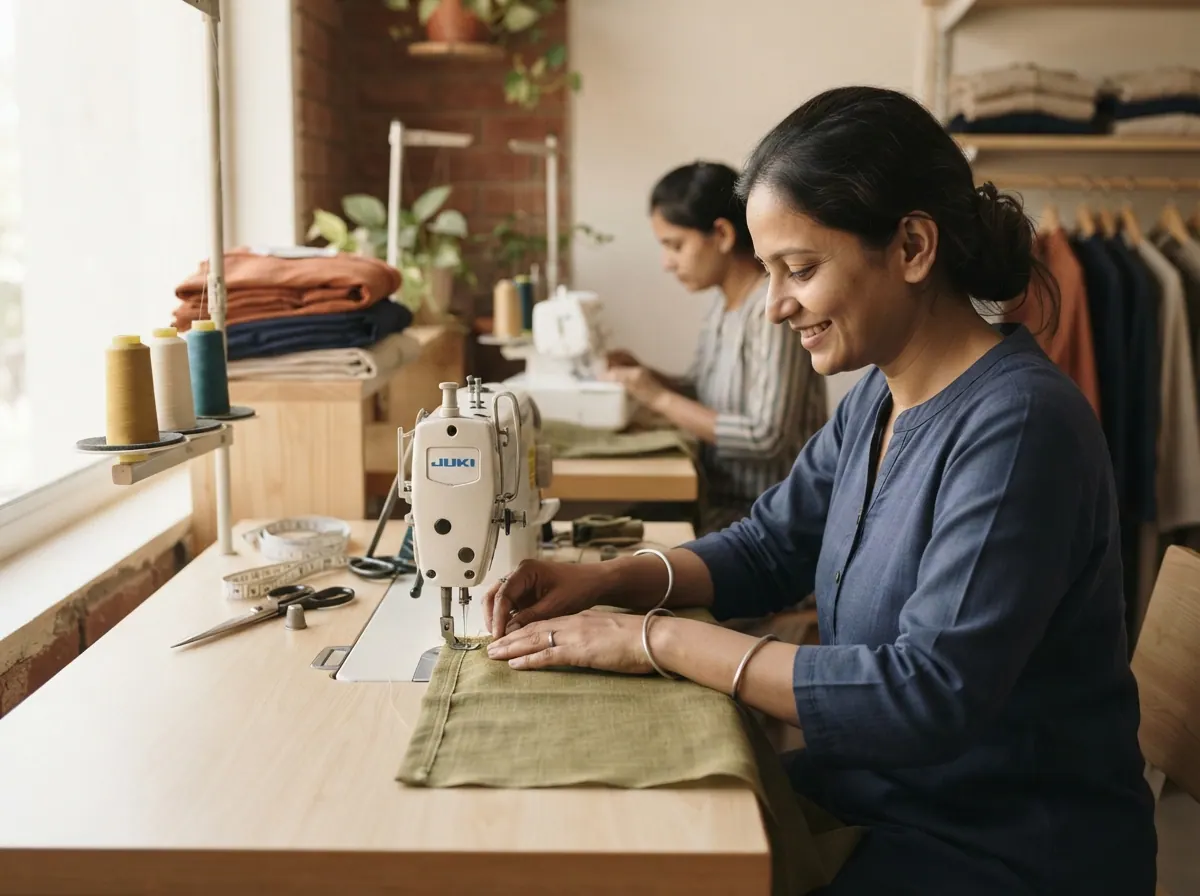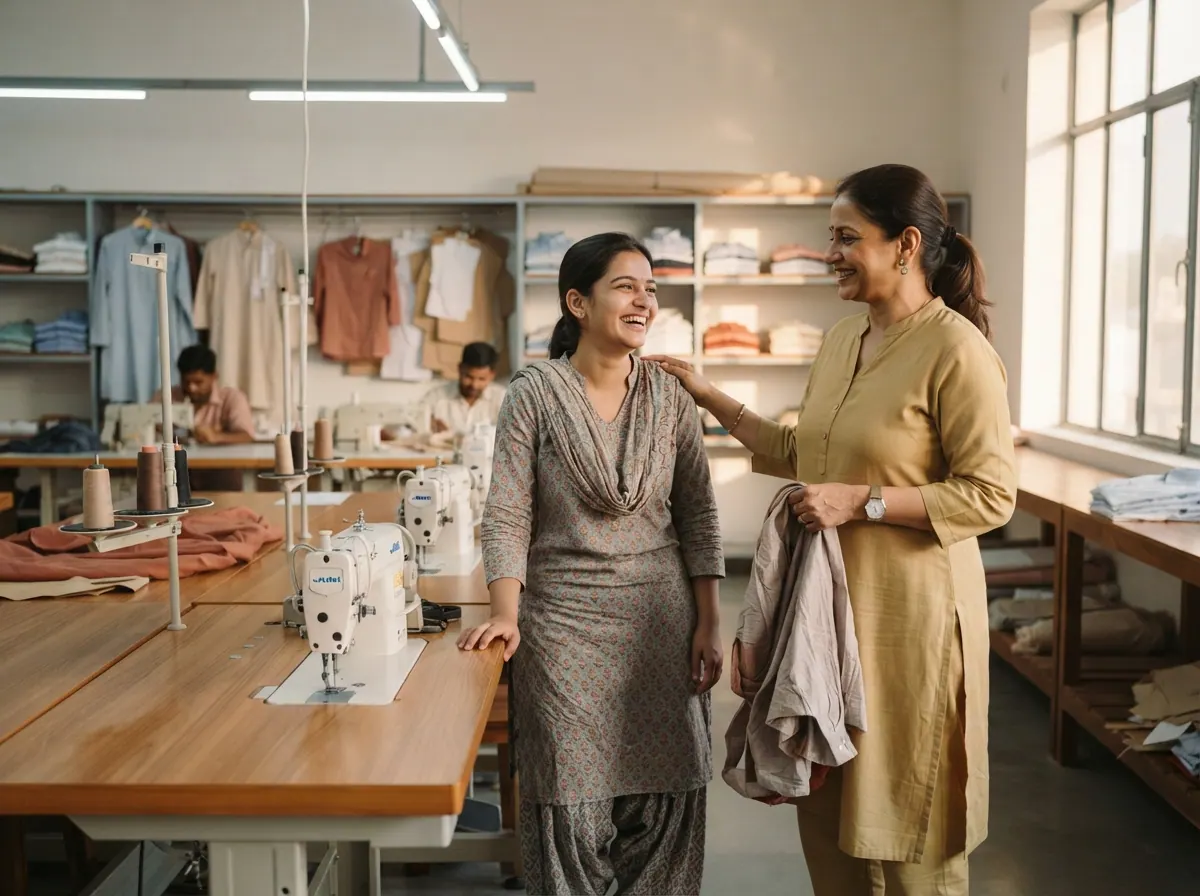
To start a small garment manufacturing unit in India you need a hall with good light and power, 8 to 10 machines, a cutting table, a few skilled operators, and about ₹3–6 lakh to do job work for traders. If you also buy fabric and sell your own brand, plan for ₹10–20 lakh, mostly because cloth ties up cash.
All figures here are estimates. Check prices near you before you spend.
What does it cost?
| Item | Job work unit, about 10 machines |
|---|---|
| Single needle machines (5–6) | ₹70,000–1.6 lakh |
| Overlock machines (2) | ₹50,000–90,000 |
| Special machine for your product (flatlock, buttonhole, button) | ₹40,000–1 lakh |
| Cutting table, scissors, straight knife cutter | ₹30,000–70,000 |
| Iron table, steam iron, thread-cutting tools | ₹15,000–35,000 |
| Hall advance or rent and power fitting | ₹50,000–1 lakh |
| Needles, thread, spares, first month's wages | ₹40,000–70,000 |
| Total (job work) | about ₹3–6 lakh |
Used machines cost much less but check their age, motor and spares. Industrial machines also need a stable power supply and proper tables. If you plan your own brand, add money for cloth, patterns, labels, packaging and a sample set before you can sell to a shop.
How much can it earn?
In job work you do not own the cloth, so you earn a rate per piece for stitching. Here is a month for a unit with ten machines, doing basic shirts.
Sales
- About 5,000 pieces a month × ₹40 a piece = ₹2,00,000
Costs
- Operators paid per piece, about ₹22 × 5,000 = ₹1,10,000
- Three helpers (cutter, checker, finisher) × ₹12,000 = ₹36,000
- Hall rent = ₹20,000
- Electricity = ₹8,000
- Thread, needles, spares = ₹10,000
- Total = ₹1,84,000
Left over: ₹2,00,000 − ₹1,84,000 = about ₹16,000 a month.
That looks small, and it is. Job work margin is thin, so profit comes from keeping machines busy every day and from your own work as supervisor. A unit that stays idle for a week between orders loses more than it makes. Your own brand can earn better, but only if you sell.
What do you need before you start?
- A product to focus on. Shirts, kurtis, nightwear, kidswear, uniforms or T-shirts each need different machines and operators. Pick one first.
- A buyer before the machines. Talk to traders and brands who will give you a first order with a clear rate.
- A hall with light and power. Operators work all day. Good light cuts defects, and a sound three-phase connection avoids machine problems.
- Skilled operators. A good operator and a good checker decide your quality. Look for people from other units and agree wages in writing.
- Cash for wages. Buyers often pay in 15 to 45 days, but workers expect weekly or monthly pay.
Step by step
- Work in a unit for some months to learn stitching, line balance and costing.
- Choose one product and learn its operations. A simple shirt has many steps, from collar to hem.
- Get a sample order from a trader at a rate per piece and a clear deadline.
- Buy machines in stages. Start with the machines that your first product needs and add more with orders.
- Hire operators and set pay. Piece-rate pay for stitchers and monthly pay for helpers works for many units.
- Check every lot. A checker inspects stitching, measures and loose threads before packing.
- Keep records. Write down pieces received, pieces delivered and rejects, signed by the buyer, so no one disputes counts later.
- Add a second buyer before the first one is more than half your work.
Which licences apply?
Requirements vary by state, so check locally:
- Local permission from the municipality or panchayat for running a unit with machines, which may be under shop and establishment or a factory-type rule depending on your size.
- Commercial electricity connection, with proper load for your motors.
- GST depends on turnover and on whether you supply goods or only job work. A CA can tell you.
- Udyam registration helps with loans and is free to apply.
- PF and ESI may apply once your workers cross certain numbers. Ask a CA early so wages and registration are planned.
- Fire safety. Lint and cloth burn fast, so keep exits clear and extinguishers filled.
What goes wrong?
- Machines sit idle. One buyer slows down and operators wait. Fixed costs keep running.
- Wrong measurements. A pattern or size mistake across 500 pieces means rework or the buyer rejects the lot.
- Operators leave after festivals. Many workers go home for Diwali or Eid and do not return, so orders slip.
- Late payment. A trader keeps your pieces and pays after two months, while you pay wages every week.
- Cloth shrinkage and colour run. The cloth comes from the buyer, but defects get blamed on stitching unless you record them at the start.
- Needle and tension problems. Skipped stitches and puckering come from bad thread or setup and cause rejections.
- Quoting too low. A rate that looks fine on paper forgets thread, spares, power and checking time.
Situations you will face
What would you do? Each choice costs something.
Getting started
A closing unit sells six single needle machines at half the new price. The motors are old and spares are hard to find.
- Buy the used machines: Cheaper, breakdown risk
- Buy new machines: Costly, steady output
Shirts pay better per piece but need many steps. T-shirts are quicker to stitch but the rate is lower.
- Start with shirts: Higher rate, slower learning
- Start with T-shirts: Easier, lower rate
Your hall has a household connection. Motors slow down when all machines run together.
- Get a proper commercial connection: Fee and wait, steady output
- Run fewer machines at once: No cost, slower output
A Delhi trader offers 300 pieces as a trial order at a low rate, with more orders if the finish is liked.
- Take it at the trader's rate: Thin margin, chance of repeat
- Ask for a higher rate: Better margin, the trader may refuse
A first-floor hall with good light needs a large advance. A ground-floor godown is cheaper but dark.
- Take the bright first floor: Big advance, fewer defects
- Take the dark godown: Lower advance, more mistakes
A cutting master asks for high pay but wastes less cloth. You could cut on your own with a slow start.
- Hire the master: Costly, less cloth waste
- Cut it yourself: Saves pay, more mistakes
Thread and cloth dust cover the floor, and the hall has a single narrow exit.
- Add exit and extinguishers: Costs money, much safer
- Add one exit now, extinguishers later: Mid cost, the main risk is removed
First month
Operators asked for fixed daily pay. Piece rate gets more output, but some are afraid of low earnings.
- Pay per piece: More output, rushed work
- Pay fixed daily wages: Steadier mood, slower output
A bad batch of thread causes skipped stitches. The trader's checker will reject any bad pieces.
- Re-stitch every bad piece: Time and wages, trust kept
- Tell the trader, offer a discount: Lose some income, honest
Medium labels went onto large shirts in one carton before anyone noticed.
- Open and fix the carton: Costs a day, lot correct
- Tell the buyer, offer relabelling: Delay, honest
You delivered 1,200 pieces. The trader counted 1,150 and wants it deducted. You did not take a signed count.
- Accept the deduction: Loses money, keeps buyer
- Dispute and recount: May recover, buyer annoyed
A boutique asks for 400 kurtis. Your costing sheet shows a rate, but they offer ₹6 less per piece.
- Hold your rate: Better margin, may lose lot
- Take the lower rate: Wins the lot, thin margin
Running it
A buyer wants 3,000 kidswear pieces before Diwali. You can finish it only with overtime and extra hands.
- Hire extra hands and overtime: Costly, rate is good
- Take half the order: Less strain, less income
Four operators ask for ten days off and may not return. Orders are pending.
- Give leave with a return bonus: Costs money, they likely return
- Refuse the leave: Saves money, some quit
The buyer supplied cotton that shrinks, and finished shirts fail their wash test. The buyer blames your stitching.
- Show your cutting and stitch notes: Argument, may be proved right
- Absorb the loss quietly: Pay for it, buyer stays
The overlock jams and the mechanic needs two days. The lot ships in three.
- Pay the mechanic to rush it: Extra fee, on time
- Borrow another unit's machine: Cheap, they get a favour
A dealer offers thread cones cheaper than your regular brand. Operators say it snaps and slows them down.
- Stay with the good brand: Costs more, fewer breaks
- Buy the cheaper thread: Saves money, slower and rework
Collar stitching is slow, and the rest of the line piles up behind it every day.
- Add a second collar machine: Costs money, faster flow
- Retrain the operator: Slower fix, cheap
Your best buyer wants longer credit, while wages are weekly.
- Insist on 30 days: Safer cash, might lose the buyer
- Agree to 60 days: Keeps buyer, cash tight
When things go wrong
A few operators say other units give provident fund and insurance. Your count of workers is now growing.
- Check with a CA and register: Costs monthly, proper records
- Ask a CA what is due: Small fee, rules known
The buyer says collars on a lot are uneven and returns the whole carton set.
- Redo the collars: Weeks of labour, trust kept
- Offer a discount instead: Quicker, lower income
A trader holds 600 of your finished pieces and owes you money. The phone is off.
- Visit the shop and push: Time lost, may recover some
- Write it off and move on: Stops the chase, full loss
A spark from a loose wire catches thread dust. Staff put it out, but a stack of cloth is damaged.
- Rewire and add extinguishers: Costly, a real fix
- Replace the wire and one extinguisher: Mid cost, the fire risk is cut
Customers return shirts from a new pattern because the sleeves pinch. The buyer wants it fixed for the next lot.
- Hire a pattern maker: Fee now, better fit
- Adjust it by trial: Cheap, slower to get right
The boiler on your iron table leaks and 2,000 pieces need pressing by Friday.
- Send to an outside presser: Costs per piece, on time
- Repair and press late: Cheap, buyer waits
A trader asks you to stitch shirts with a famous brand label sewn in. The rate is very good.
- Refuse fake labels: Lose the order, stay clean
- Ask for the trader's label: Smaller order, honest work
Growing
A wholesaler says kidswear under your own label would earn more than job work. You would buy cloth yourself.
- Make a small own lot: Cash in cloth, higher margin
- Stay with job work: Safe, thin margin
Orders keep arriving, and the floor above is free. Ten more machines mean more staff and more risk.
- Expand to twenty machines: Heavy spend, more output
- Add four machines only: Moderate spend, safer
A contractor offers regular orders for strict quality checks and social audit papers. Rates are better but rules are tight.
- Meet the audit standards: Costly, steady better work
- Stay with local traders: No spend, lower rates
Marketplace sellers want 100 to 200 pieces with their own tags and fast delivery. Margins are better, orders are small.
- Take small online orders: Better rate, more handling
- Keep bulk orders only: Simpler, lower rate
Is it right for you?
A garment unit suits you if you can manage people, like detail, and can stay calm when deadlines press. It suits you less if you want quick profit with little supervision, or dislike dealing with workers and buyers.
A good test: spend a month supervising in a working unit, and ask the owner to show you one real costing sheet. Then start with one product, one buyer and six machines, and grow only when the machines are busy.