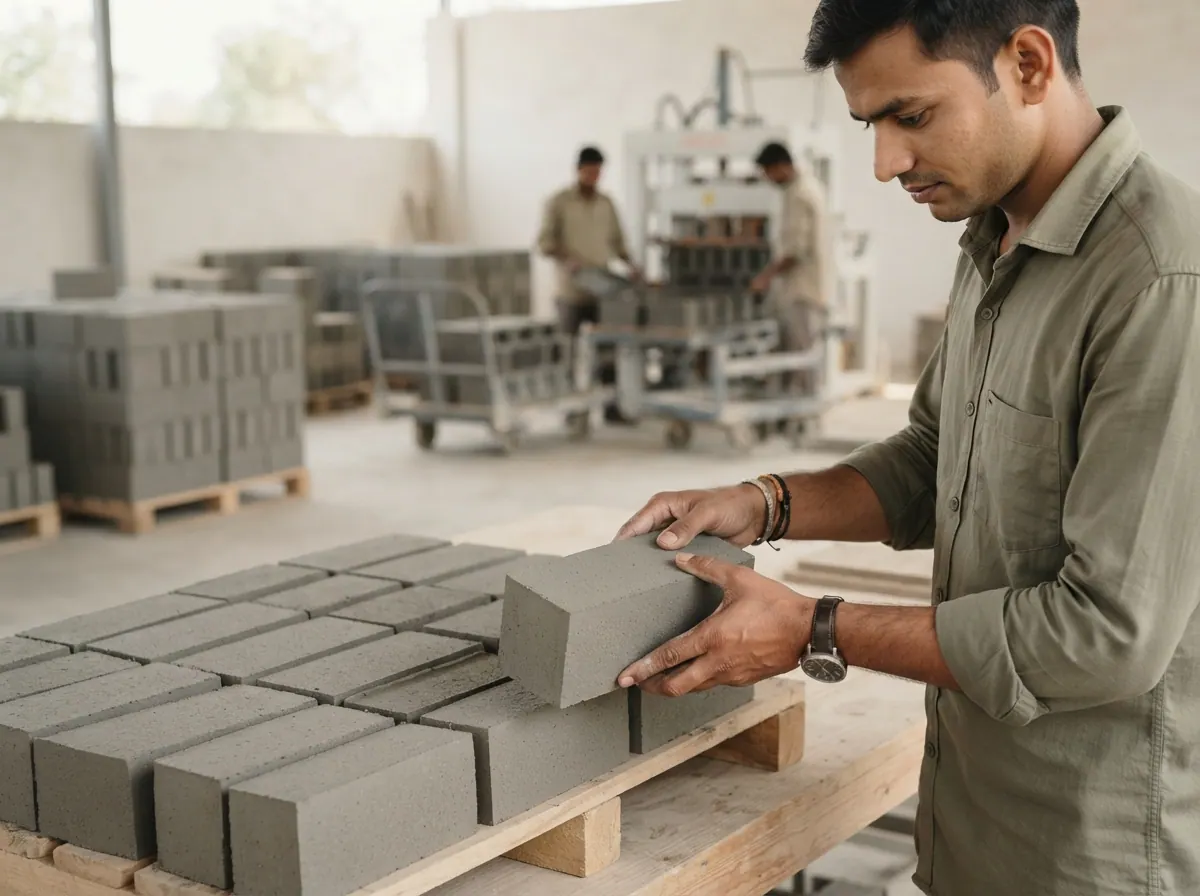
भारत में फ्लाई ऐश ईंट और सीमेंट ब्लॉक की यूनिट शुरू करने के लिए आपको प्रेस मशीन, मिक्सर, ढके शेड वाला समतल यार्ड, पानी वाली क्योरिंग की जगह, पास में फ्लाई ऐश का स्रोत और करीब ₹5–30 लाख चाहिए। पैसा रोज़ हज़ारों ईंटों से बनता है, इसलिए कच्चे माल का खर्च, टूट-फूट और डिलीवरी की दूरी मुनाफ़ा तय करती है।
यहाँ के सारे आँकड़े अंदाज़े हैं। खर्च करने से पहले अपने इलाके के दाम ज़रूर देख लें।
कितना खर्च आता है?
| सामान | छोटी सेमी-ऑटोमैटिक यूनिट | बड़ी ऑटोमैटिक यूनिट |
|---|---|---|
| ज़मीन या यार्ड किराए पर (डिपॉज़िट) | ₹1–3 लाख | ₹3–8 लाख |
| शेड, समतल फ़र्श और पानी की टंकी | ₹1.5–4 लाख | ₹4–8 लाख |
| ईंट प्रेस (सेमी या फुली ऑटोमैटिक) | ₹3–8 लाख | ₹8–15 लाख |
| पैन या ड्रम मिक्सर | ₹40,000–1.2 लाख | ₹1.5–3 लाख |
| पैलेट, ट्रॉली और साँचे | ₹50,000–1.5 लाख | ₹2–4 लाख |
| लोडर या कन्वेयर | ज़रूरत नहीं | ₹1–3 लाख |
| बिजली कनेक्शन और वायरिंग | ₹30,000–1 लाख | ₹1–2 लाख |
| शुरू का फ्लाई ऐश, सीमेंट और रेत का स्टॉक | ₹1–2.5 लाख | ₹3–6 लाख |
| रजिस्ट्रेशन और लैब टेस्ट | ₹20,000–50,000 | ₹40,000–1 लाख |
| कुल | करीब ₹5–15 लाख | करीब ₹15–30 लाख |
पैलेट का खर्च लोग भूल जाते हैं। रोज़ हज़ारों ईंट बनाने वाली यूनिट को कई हज़ार पैलेट चाहिए, वरना ईंटों को क्योर होने की जगह नहीं मिलती।
क्या-क्या बना सकते हैं?
- फ्लाई ऐश ईंट। आम प्रोडक्ट, बिल्डरों और ठेकेदारों को दीवार के लिए बिकती है।
- ठोस और खोखले सीमेंट ब्लॉक। चारदीवारी और फ़्रेम वाली इमारतों में लगते हैं।
- पेवर ब्लॉक। अलग साँचे और अलग ग्राहक चाहिए, जैसे कॉलोनी और कंपाउंड।
- कर्ब स्टोन और टाइल। ये तभी जोड़ें जब पहला प्रोडक्ट लगातार बिकने लगे।
कितनी कमाई हो सकती है?
मान लीजिए छोटी सेमी-ऑटोमैटिक यूनिट रोज़ करीब 4,000 ईंट बनाती है, 26 दिन, यानी महीने की 1,04,000 ईंट। ये मोटे आँकड़े हैं।
हर महीने
- बिक्री: 1,04,000 ईंट × करीब ₹6.50 = ₹6,76,000
- कच्चा माल (फ्लाई ऐश, सीमेंट, रेत): 1,04,000 × करीब ₹3.80 = ₹3,95,200
- आठ मज़दूर: 8 × ₹12,000 = ₹96,000
- बिजली और डीज़ल: करीब ₹20,000
- किराया और लोन ब्याज: करीब ₹40,000
- बचत: ₹6,76,000 − ₹3,95,200 − ₹96,000 − ₹20,000 − ₹40,000 = करीब ₹1,24,800
यह तब है जब हर ईंट उसी भाव पर बिके और बिल्डर पैसा दें। सिर्फ़ 5% टूट-फूट भी बिक्री से करीब ₹33,800 घटा देती है। बारिश से कई दिन उत्पादन रुकता है, और सीमेंट या फ्लाई ऐश का भाव बढ़ना तुरंत चुभता है। ट्रक से डिलीवरी आम तौर पर अलग लगती है, और लंबी दूरी आपकी ईंट को दूसरे की ईंट से महँगा कर सकती है।
शुरू करने से पहले क्या चाहिए?
- पास में फ्लाई ऐश। ढुलाई कभी-कभी फ्लाई ऐश जितनी ही पड़ती है। जानें कि राख कहाँ से आती है और पहुँचाकर कितने की पड़ती है।
- टेस्ट में पास होने वाला मिश्रण। सैंपल लैब ले जाएँ और जो अनुपात इस्तेमाल करें उसका रिकॉर्ड रखें।
- समतल, अच्छी निकासी वाली ज़मीन। पक्की सतह वाला समतल यार्ड, बाढ़ से दूर, क्योरिंग के पानी के साथ।
- खरीदने वाले बिल्डर। आपके पास के ठेकेदार, बिल्डर और राजमिस्त्री, और उनके भुगतान की आदत।
- वर्किंग कैपिटल। सीमेंट और राख का पैसा जल्दी देना पड़ता है, जबकि बिल्डर हफ़्तों में देते हैं।
कदम दर कदम
- दो यूनिट देखें और मिश्रण, टूट-फूट और बारिश से कितने दिन जाते हैं, यह पूछें।
- फ्लाई ऐश और सीमेंट का स्रोत ढूँढें और पहुँचाकर के भाव लें।
- यार्ड तैयार करें: समतल फ़र्श, प्रेस के ऊपर शेड, क्योरिंग की जगह और पानी की सप्लाई।
- मशीन और मिक्सर लगाएँ और लैब से मंज़ूर मिश्रण से ट्रायल चलाएँ।
- टेस्ट ईंटें बनाएँ और क्योर होने के बाद मज़बूती की जाँच के लिए सैंपल भेजें।
- पूरे समय क्योर करें, बताए अनुसार ईंटों को गीला रखते हुए।
- बिल्डरों को सैंपल दिखाएँ और छोटे पहले ऑर्डर लें, जिस दिन कहें उस दिन डिलीवरी दें।
कौन से लाइसेंस लगते हैं?
नियम राज्य और साइट के हिसाब से बदलते हैं, इसलिए हर एक अपने स्थानीय ऑफ़िस से पक्का करें:
- Udyam रजिस्ट्रेशन लोन और स्कीम के लिए।
- GST, अगर आपकी बिक्री पर लगता है। अपने CA से पूछें।
- ज़मीन के इस्तेमाल की इजाज़त आपके प्लॉट पर औद्योगिक या लघु यूनिट के लिए।
- प्रदूषण की मंज़ूरी। फ्लाई ऐश की धूल और गंदे पानी के लिए राज्य प्रदूषण बोर्ड की मंज़ूरी लग सकती है।
- फ्लाई ऐश के इस्तेमाल के नियम। भारत में बिजली संयंत्रों के पास फ्लाई ऐश ईंट को बढ़ावा देने वाले नियम हैं। ज़िला उद्योग केंद्र से पूछें कि आप पर क्या लागू होता है।
- क्वालिटी स्टैंडर्ड। ईंट का ब्यूरो ऑफ़ इंडियन स्टैंडर्ड्स का मानक है, और कुछ खरीदार टेस्ट माँगते हैं। BIS ऑफ़िस से पूछें।
- लोन और स्कीम। बैंक और कुछ राज्य योजनाएँ छोटी बिल्डिंग मटेरियल यूनिट को सहारा देती हैं। ज़िला उद्योग केंद्र से पूछें कि अभी क्या खुला है।
क्या गलत हो सकता है?
- कमज़ोर ईंट। सीमेंट कम, क्योरिंग खराब या गलत मिश्रण से ईंट भुरभुरी बनती है, और बिल्डर लौटा देते हैं।
- उठाने-रखने में टूट-फूट। खुरदुरा स्टैकिंग और लोडिंग ईंटों का बड़ा हिस्सा तोड़ सकती है।
- बारिश। उत्पादन रुक जाता है और बिना क्योर हुई ईंटें बह सकती हैं।
- फ्लाई ऐश की धूल। यह मज़दूरों के फेफड़ों और पड़ोस के घरों पर असर करती है। मास्क, पानी का छिड़काव और ढका स्टोर रखें।
- डिलीवरी खर्च। लंबी दूरी मार्जिन खा जाती है।
- बिल्डरों का देर से भुगतान। तीन महीने बाद चुकता होने वाला बड़ा ऑर्डर आपकी अगली सीमेंट खरीद रोक सकता है।
ये हालात आपके सामने आएँगे
आप क्या करेंगे? हर फ़ैसले की एक क़ीमत है।
शुरुआत
An automatic press makes far more bricks per day but costs several times as much. You have no steady orders yet.
- Buy the semi-automatic press: Lower cost, slower output
- Buy the automatic press: Big spend, faster output
A power plant supplies ash at a low rate but it is far away. A nearby dealer sells it at a higher rate.
- Buy direct from the plant: Cheaper ash, freight cost
- Buy from the nearby dealer: Dearer ash, easy supply
The yard is uneven and turns to mud in rain. A hard level floor costs a good sum.
- Lay a hard level floor: Costly, fewer broken bricks
- Level the soil only: Cheap, muddy and uneven
A lab test of your mix costs money and takes days. Your machine maker says the standard ratio is fine.
- Get the mix lab-tested: Fee and wait, trusted bricks
- Go ahead with the ratio given: Faster, unknown strength
Bricks need pallets while they cure. Buying enough costs a lot, and fewer pallets limit your output.
- Buy a full set of pallets: Big spend, steady output
- Buy half and add later: Less spend, limits output
The industrial connection will take a month. A generator can run the press until then.
- Rent a generator: Fuel cost, start on time
- Wait for the connection: Save money, lose weeks
The ash dust may need consent from the pollution board. The paperwork needs a fee and a site visit.
- Apply before starting: Fee and wait, safe start
- Start with a trial run only: Small output while applying
पहला महीना
Test bricks break easily after a week. The cement may be too little or the curing too short.
- Adjust the mix, cure longer: Lose a batch, fix the mix
- Sell them for filler use: Some cash, weaker name
Bricks need to stay wet for days. The borewell gives little water in summer.
- Dig a tank and fit a pump: Cost now, steady curing
- Buy water by tanker: Daily cost, flexible
A mason wants to try a thousand bricks before giving an order. The mason wants a lower price for the trial.
- Give the trial at a discount: Lower price, order may follow
- Sell at full price: Fair price, slower trust
The mixing area is dusty and workers cough. Masks and a water spray cost money.
- Fit a spray and give masks: Cost now, safer workers
- Give masks only: Cheap, dust still spreads
Builders expect delivery. A small truck costs a lot, and hiring trucks adds to every order.
- Buy a small truck: Big spend, control delivery
- Hire trucks per order: Per-trip cost, no capital
A third of a day's output is chipped after loading. Workers stack in a hurry.
- Train a loading crew: Wages, fewer breakages
- Accept the breakage: No cost, lower sales
रोज़ का काम
Rain floods part of the yard. Uncured bricks are wet and some slump.
- Cover stacks and clear drains: Cost now, saves bricks
- Wait for it to pass: No cost, some bricks lost
Cement costs more per bag. Builders do not accept a higher brick price easily.
- Raise the brick price a little: Protect margin, lose a few buyers
- Hold the price: Keep buyers, thin margin
A builder wants a big supply over two months, with payment in 60 days.
- Take the order: Big volume, cash tied up
- Ask for 30% advance: Safer cash, may be refused
A nearby unit sells below your cost of delivery. Some builders ask you to match.
- Match for key builders: Lower margin, keep builders
- Hold the price, show test reports: Some buyers leave
A housing society wants paver blocks for its roads. It needs new moulds and colour.
- Buy moulds and make pavers: Spend now, higher price
- Stay with bricks: No spend, no new buyers
The ash trucks are delayed for a week. The press stands idle and workers wait.
- Buy ash from a dealer: Dearer, keep running
- Pause and wait: Cheaper, lose output
A worker gets a hand caught while clearing the mould. It is a painful crush injury.
- Pay treatment and wages, add guards: Cost now, safer press
- Pay the clinic bill only: Cheaper, workers lose trust
A builder with a deadline asks for bricks only a few days old. They are not fully cured and may be weak.
- Refuse until cured: Lose the rush, keep quality
- Offer older stock at a discount: Lower price, a safe sale
जब मुश्किल आए
A builder says a load is crumbling at the corners. It may be a bad batch or poor curing.
- Take back and replace: Heavy cost, trust kept
- Test and then decide: Test fee, a delay
A builder who took a large order keeps delaying payment. Cement suppliers want their money.
- Stop supply until paid: Lose the builder, protect cash
- Keep supplying small loads: Sales hold, risk grows
The press loses pressure in a rush week. The mechanic needs a part from another city.
- Pay for express delivery: Costly, quick restart
- Wait for the normal delivery: Cheaper, a week lost
Residents near the yard say dust coats their homes. A complaint may reach the pollution board.
- Cover stockpiles, spray water: Cost and effort, calmer area
- Wait and see: No cost, notice likely
Rain has cut sales for weeks. The bank instalment is due, and cash is low.
- Ask the bank for time: Extra interest, breathing room
- Sell stock at a discount: Cash now, lower margin
बढ़ाना
Orders exceed one shift. A second shift needs wages and more pallets for curing.
- Run a second shift: Wages and pallets, more output
- Stay on one shift: No spend, lose orders
Builders ask for hollow cement blocks too. You need new moulds and a bigger curing area.
- Add a hollow block line: Spend now, wider range
- Keep fly ash bricks only: No spend, no new range
Loading by hand is slow and breaks bricks. A loader costs a lot but speeds up dispatch.
- Buy the loader: Big spend, faster loading
- Hire extra loaders: Wages, slower
A contractor on a large project wants lab strength certificates for every lot you supply.
- Test every lot and share reports: Test costs, bigger orders
- Skip large project orders: No test cost, no big orders
क्या यह आपके लिए ठीक है?
फ्लाई ऐश ईंट यूनिट आपके लिए ठीक है अगर आपके पास ज़मीन या यार्ड है, पास में फ्लाई ऐश का स्रोत है और आप मज़दूरों व रोज़ के उत्पादन लक्ष्य को सँभाल सकते हैं। अगर आपको जल्दी आसान नकद चाहिए, या डिलीवरी और बिल्डरों से भुगतान वसूलने का कोई तरीका नहीं है, तो यह कम ठीक बैठेगा।
एक अच्छा टेस्ट: किसी चालू यूनिट में कुछ दिन बिताएँ, अच्छी ईंट और टूट-फूट गिनें, और तीन बिल्डरों से पूछें कि वे कितना और कितनी जल्दी देते हैं। हिसाब फिर भी बैठे तो बड़ी मशीन में पैसा लगाने से पहले छोटी सेमी-ऑटोमैटिक मशीन से शुरू करें।