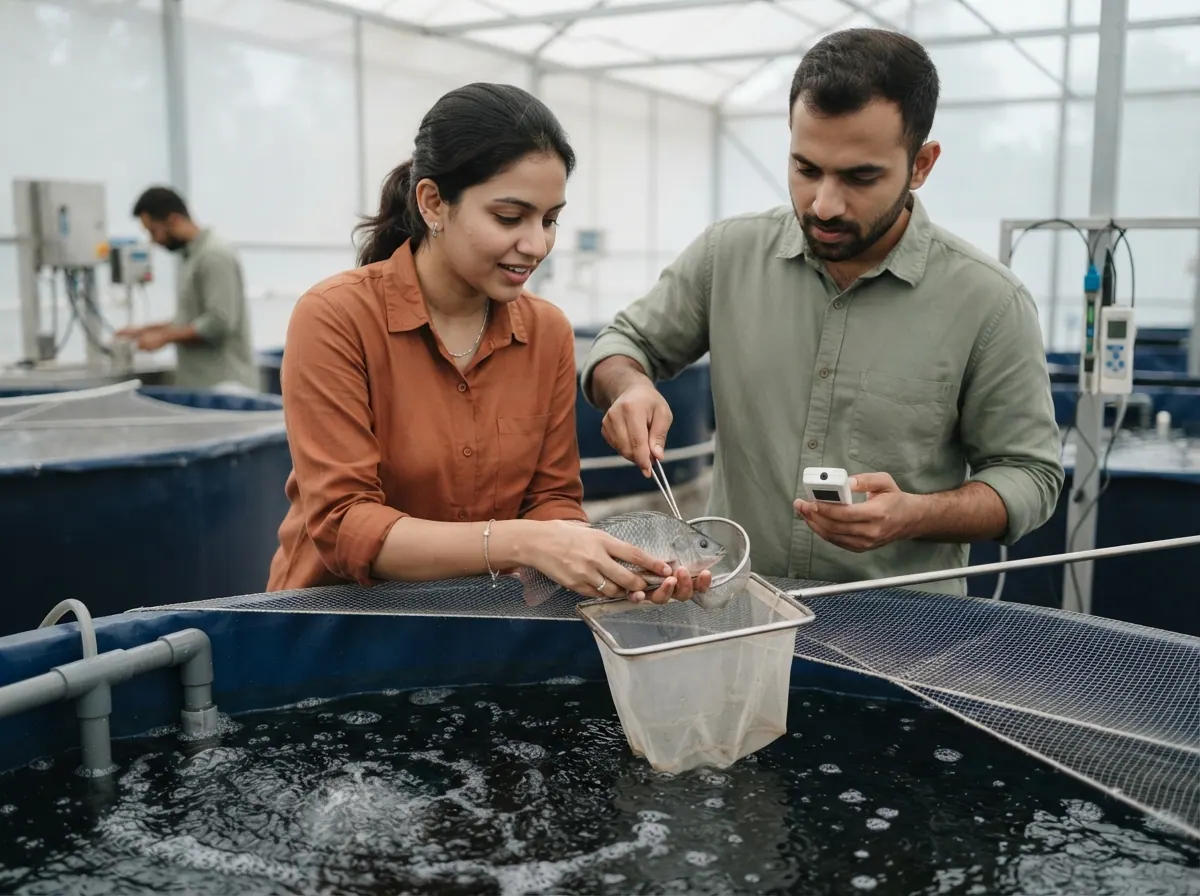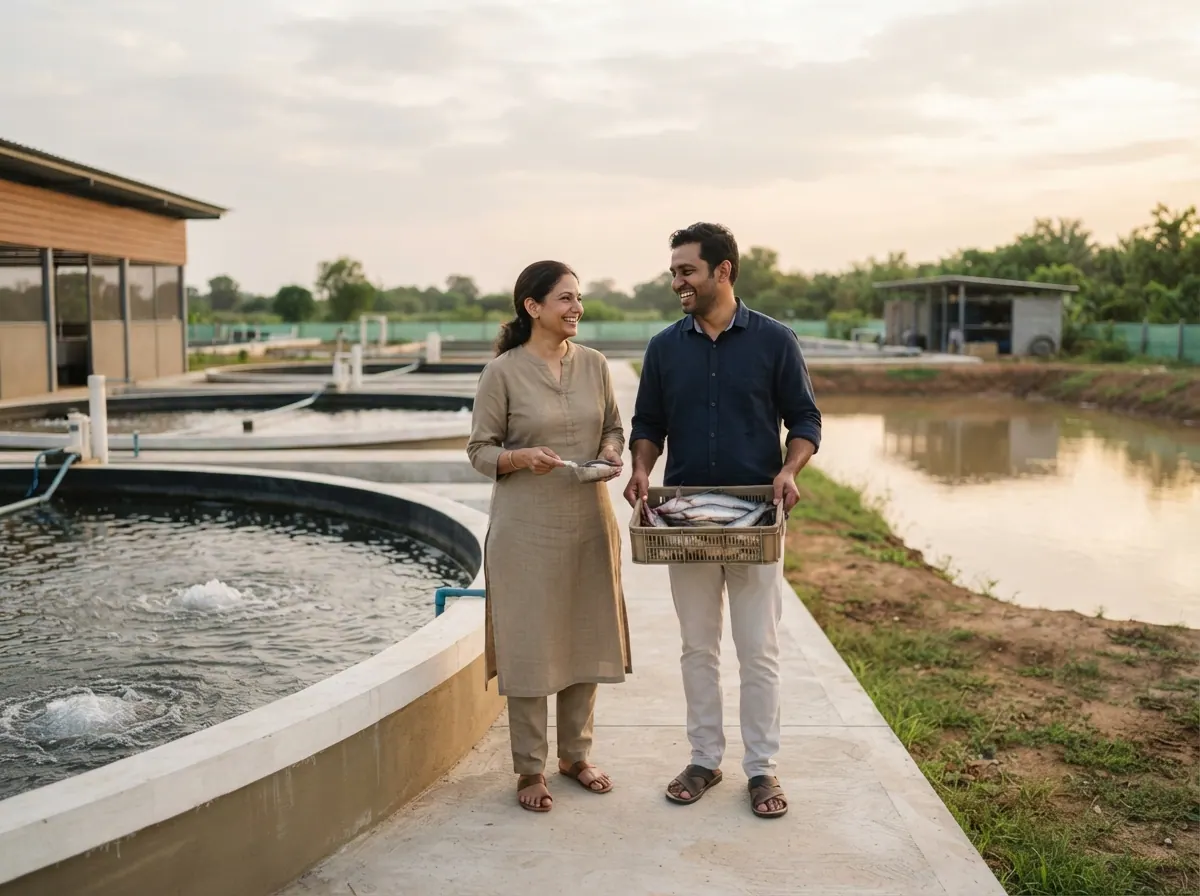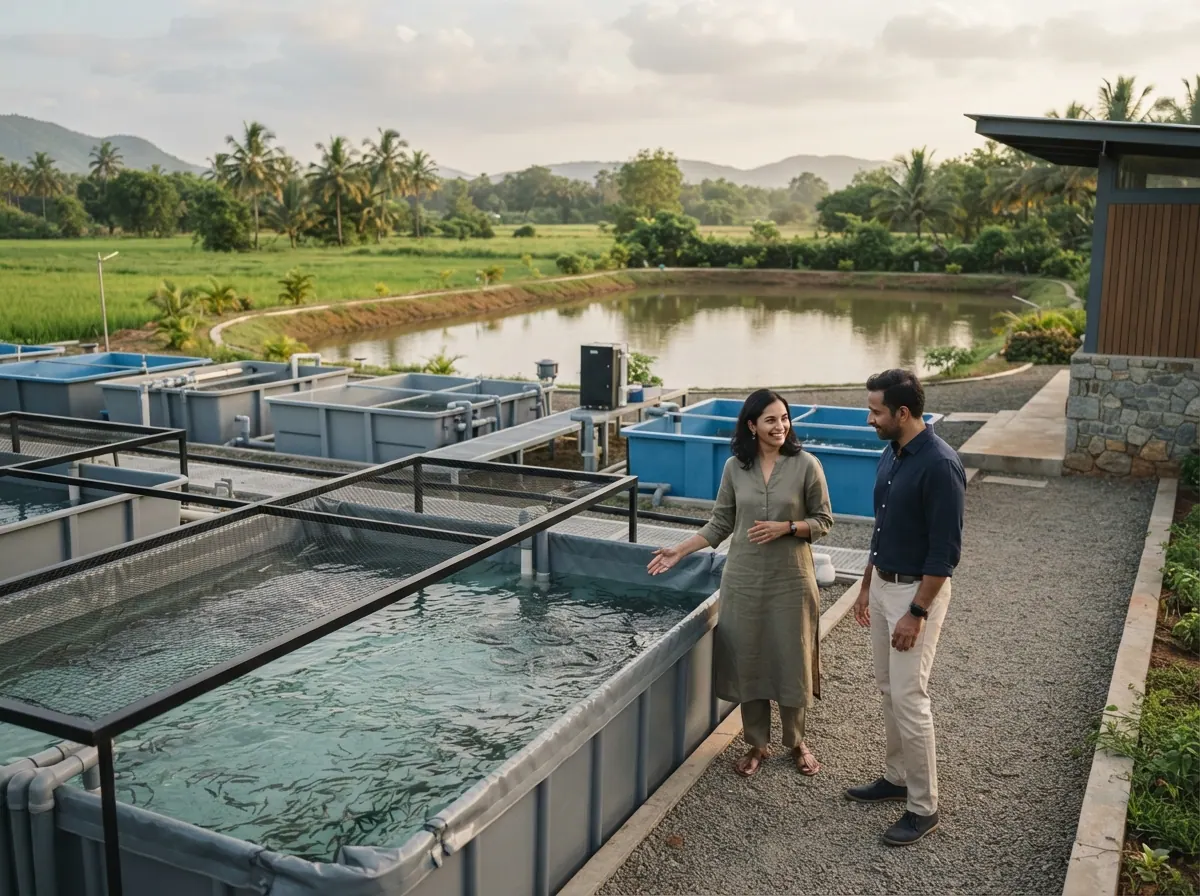
भारत में फिश फार्म शुरू करने के लिए आपको चाहिए तालाब या टैंक, पानी का पक्का स्रोत, हैचरी से अच्छे बीज (फिंगरलिंग), फीड की योजना, और एक एकड़ के कार्प तालाब के लिए करीब ₹1.5–4 लाख, या छोटी बायोफ्लॉक यूनिट के लिए ₹4–10 लाख। यह मानकर कि ज़मीन या लीज़ आपके पास है। कमाई 8 से 12 महीने बाद बड़ी हुई मछली बेचने से आती है, इसलिए पहली बड़ी बिक्री से पहले एक पूरी फसल का खर्च आपको खुद उठाना होगा।
यहाँ सारे आँकड़े अंदाज़े हैं। पैसा लगाने से पहले अपने इलाके के दाम ज़रूर देख लें।
इसमें कितना खर्च आता है?
| मद | 1 एकड़ कार्प तालाब | छोटी बायोफ्लॉक यूनिट |
|---|---|---|
| खुदाई, बाँध और इनलेट/आउटलेट | ₹60,000–1.5 लाख | नहीं |
| टैंक, लाइनर और फ्रेम | नहीं | ₹1.5–4 लाख |
| एयरेटर और ब्लोअर | ₹15,000–40,000 | ₹60,000–1.5 लाख |
| बिजली बैकअप या जनरेटर | ₹0–40,000 | ₹40,000–1.2 लाख |
| चूना, खाद और पानी जाँच किट | ₹10,000–20,000 | ₹10,000–25,000 |
| पहली फसल के बीज | ₹15,000–40,000 | ₹20,000–60,000 |
| पहली फसल की फीड | ₹1.5–2.5 लाख | ₹80,000–1.5 लाख |
| जाल, तराज़ू, छोटे औज़ार | ₹10,000–25,000 | ₹10,000–25,000 |
| कुल | करीब ₹2.5–4+ लाख | करीब ₹4–10 लाख |
अगर तालाब पहले से खुदा है तो खर्च काफ़ी कम हो जाता है। लीज़ का तालाब शुरुआती खर्च घटाता है, पर हर साल किराया जुड़ता है, इसलिए नीचे के मुनाफ़े के हिसाब में उसे गिनें।
कौन-सी मछली पालें?
- रोहू, कतला और मृगल: भारत की मुख्य कार्प मछलियाँ, जो अक्सर एक ही तालाब में साथ पाली जाती हैं। ये पानी की अलग-अलग गहराई पर खाती हैं और ज़्यादातर लोकल बाज़ारों में बिकती हैं।
- पंगेशियस: गर्म पानी में तेज़ बढ़ती है, पर अच्छी फीड और साफ़ पानी चाहिए, और खरीदार राज्य के हिसाब से अलग हैं।
- तिलापिया: मज़बूत और जल्दी बढ़ने वाली, बायोफ्लॉक में चलती है। पहले लोकल माँग देख लें, क्योंकि हर बाज़ार में इसे पसंद नहीं किया जाता।
- मागुर या सिंघी: पूर्वी इलाकों के कुछ बाज़ारों में ऊँचा भाव, पर संभालने में सावधानी चाहिए।
नज़दीकी फिश सीड फार्म से पूछें कि आपके पानी के तापमान में क्या अच्छा चलता है, और वही बेचें जो आपका लोकल फिश मार्केट पहले से खरीदता है।
कितनी कमाई हो सकती है?
यह एक एकड़ के कार्प तालाब का हिसाब है, सामान्य साल में, करीब 10 महीने की एक फसल के लिए।
एक फसल में बिकी मछली
- 5,000 बीज डाले
- करीब 20% बीमारी, पक्षियों और खराब पानी में गए: 5,000 − 1,000 = 4,000 मछली
- बिक्री पर औसत वज़न करीब 1 किलो: 4,000 किलो
- 4,000 किलो × करीब ₹130 प्रति किलो = ₹5,20,000
फसल का खर्च
- बीज: 5,000 × ₹4 = ₹20,000
- फीड: करीब 6,000 किलो × ₹40 = ₹2,40,000
- चूना, खाद, दवा = ₹15,000
- एयरेटर और पंप की बिजली = ₹20,000
- पार्ट-टाइम मज़दूरी = ₹40,000
- तालाब का लीज़ या ज़मीन का किराया = ₹30,000
- कुल = ₹3,65,000
बचत: ₹5,20,000 − ₹3,65,000 = करीब ₹1,55,000 पूरी फसल का, यानी 10 महीने में करीब ₹15,500 महीना।
पूरे एक एकड़ के लिए यह कम है, और यह तभी बनता है जब नुकसान कम रहे। पानी बिगड़ जाए तो पूरी फसल जा सकती है, और फीड का पैसा लग जाने के बाद हर 500 मछली मरने का मतलब करीब ₹65,000 की बिक्री का नुकसान है।
शुरू करने से पहले क्या चाहिए?
- पूरी फसल तक चलने वाला पानी। अगर मई में बोरवेल या नहर सूख जाए तो तालाब बर्बाद हो जाएगा। गर्मी में पानी का लेवल देखें, सिर्फ़ अभी का नहीं।
- पानी रोकने वाली मिट्टी। चिकनी या दोमट मिट्टी पानी रोकती है। रेतीली मिट्टी में पानी रिसता है।
- अच्छे बीज का स्रोत। सरकारी या जाने-माने सीड फार्म से खरीदें, सड़क किनारे के विक्रेता से नहीं।
- पानी की जाँच। pH और ऑक्सीजन जाँचना सीखें, या मत्स्य अधिकारी से सीख लें।
- पहले से खरीदार। बीज डालने से पहले लोकल फिश ट्रेडर और नज़दीकी मंडी से बात कर लें।
कदम दर कदम
- दो चालू फार्म देखें और उनकी पिछली फसल, मौतें और फीड का बिल पूछें।
- तालाब खोदें या ठीक करें। गहराई करीब 5 से 6 फुट रखें, बाँध मज़बूत हो, और इनलेट-आउटलेट पर जाली लगाएँ।
- सुखाएँ, चूना डालें और खाद दें। आपकी मिट्टी के हिसाब से चूना और खाद कितनी लगेगी, यह मत्स्य कार्यालय बता सकता है। बीज डालने से पहले पानी में प्राकृतिक भोजन बनने दें।
- ठंडी सुबह या शाम में बीज छोड़ें। पहले थैले पानी पर तैराएँ ताकि तापमान बराबर हो जाए।
- समय पर फीड दें और पानी देखें। रोज़ पानी का रंग, गंध और मछली का व्यवहार देखें। सुबह मछली मुँह ऊपर करे तो ऑक्सीजन कम है।
- हर महीने कुछ मछली तौलें ताकि बढ़त पता चले और फीड की मात्रा तय हो।
- बाज़ार के साइज़ पर पकड़ें और बर्फ वाले ट्रेडर को उसी दिन बेच दें।
कौन-से लाइसेंस लगते हैं?
- तालाब की अनुमति और पानी का हक़ राज्य के हिसाब से अलग है। तालाब सामूहिक या लीज़ की ज़मीन पर है तो मालिक या पंचायत की लिखित सहमति चाहिए।
- एक्वाकल्चर लोन और योजनाएँ। बैंक लोन देते हैं, और मत्स्य क्षेत्र की सरकारी योजनाएँ रही हैं। नियम बदलते हैं, इसलिए ज़िला मत्स्य कार्यालय से पक्का कर लें।
- बीमा कुछ जगहों पर मछली की फसल का होता है। कार्यालय से पूछें और पढ़ें कि क्या कवर होता है।
- ज़िंदा मछली बेचने या ट्रक से ले जाने के लोकल नियम हो सकते हैं। कार्यालय से पूछें।
- टैक्स। बिक्री बढ़ने पर CA से पूछें कि उसे कैसे दर्ज करें।
क्या गलत हो सकता है?
- रात में ऑक्सीजन गिरना। ज़्यादा फीड और बादल वाला मौसम हो तो सुबह मछली ऊपर तैरती दिखती है। ज़्यादा फीड से ज़्यादा ज़रूरी एयरेटर और फीड पर काबू है।
- कमज़ोर बीज। कमज़ोर बीज पहले महीने में मर जाता है, और यह फीड का पैसा देने के बाद पता चलता है।
- गर्मी में पानी की कमी। घटता तालाब गर्म हो जाता है और मछली तनाव में आती है।
- पक्षी, साँप और चोर। बगुले और जलकौवे छोटी मछली खाते हैं, और सड़क के पास रात में चोरी होती है।
- ज़्यादा फीड देना। बची फीड पानी में सड़कर तालाब को ज़हरीला बना देती है।
- बायोफ्लॉक में बिजली कटना। ब्लोअर के बिना टैंक घंटों में फेल हो सकता है।
- एक ही खरीदार भाव तय करे। तालाब पर सिर्फ़ एक ट्रेडर आता है तो आपको उसी का रेट लेना पड़ता है।
ये हालात आपके सामने आएँगे
आप क्या करेंगे? हर फ़ैसले की एक क़ीमत है।
शुरुआत
A vendor sells rohu fingerlings at half the hatchery rate. The vendor cannot say where they were bred.
- Buy from the hatchery: Costs more, healthier seed
- Buy from the vendor: Pay less, weak seed risk
The digger offers a shallow pond for less. A deeper one holds water through May but costs more earth work.
- Dig it deeper: Higher bill, safer in summer
- Keep it shallow: Lower bill, heats up fast
Pangasius grows faster but needs richer feed. Carp is slower and cheaper, and every local market knows it.
- Start with pangasius: Quick growth, feed-heavy
- Start with rohu and catla: Slower, steady buyers
The fisheries officer says to dry the bed, add lime and let green water form. It will delay stocking by two weeks.
- Follow the advice: Costs lime, a safer start
- Fill and stock this week: Faster start, weaker water
The borewell gives enough water now. Neighbours say it slows down badly by May.
- Dig a second source: Big bill, water for summer
- Trust the borewell: Saves money, summer risk
A trader will give an advance if you sign for the full harvest at a set rate. Market rates may rise by then.
- Sign with the trader: Advance cash, locked rate
- Stay free to choose: No advance, better chance
पहला महीना
A neighbouring farmer says stock more per acre for more kilos. Your pond has no aerator yet.
- Stock the lower number: Fewer fish, fewer deaths
- Stock heavily: More fish, oxygen risk
The seed truck is late and the sun is hot. The bags are warm to touch.
- Wait until evening: Some losses, safer release
- Release them right away: Saves time, shock risk
The cheaper pellet has lower protein on the bag. The dealer says it works the same.
- Stay with the good brand: Higher cost, better growth
- Switch to the cheap one: Lower cost, slower growth
The pond has turned dark green after two cloudy days. A testing kit costs money and your helper says it is fine.
- Test and fix the water: Kit and effort, safer fish
- Leave it as it is: No cost, risk at dawn
White birds stand at the pond edge every morning. Netting over the corners costs a lot.
- Put up netting: Costly, saves fingerlings
- Use scare ribbons: Cheap, birds return soon
रोज़ का काम
A net sample after three months shows the fish are lighter than the feed chart says.
- Test water and change feed: Costly, fixes the cause
- Wait another month: No cost, may lose growth
It stops on a hot evening. The repair shop says two days, and a new motor costs more.
- Buy a new motor now: Higher bill, fixed tonight
- Wait for the repair: Lower bill, two risky nights
The pond has fallen by a foot and the fish are staying near the surface. Pumping fresh water adds a power bill.
- Pump in fresh water: Power and pump cost
- Cut feed and wait for rain: Cheap, slows growth
The dealer raises the price of pellets by a few rupees a kilo and offers a discount for ten bags up front.
- Buy ten bags in advance: Big bill now, steady price
- Buy bag by bag: Easy on cash, pays the rise
A trader offers cash today for half your fish at under 700 grams. Another month would add weight.
- Sell half now: Cash in hand, lower weight
- Wait one more month: Feed cost, heavier fish
The trader offers a price below the market rate and says nobody else will come this far.
- Take fish to the town market: Transport cost, better price
- Sell to the trader: No effort, lower rate
The nets are in and fish are lined up, but the ice shop in town opens late. The market is two hours away.
- Send a bike for ice: Small cost, fresh fish
- Sell to the nearest buyer: No delay, lower price
The officer says you could get help with training and a loan if your pond records and permission are in order.
- Get your papers in order: Fees and time, support later
- Ignore it for now: No cost, no help
जब मुश्किल आए
Dozens of fish are at the surface with open mouths after a cloudy night. Your aerator is running but one blade is bent.
- Stop feed, add aeration: Cost of extra air, saves most
- Feed lightly and hope: No extra cost, more may die
Several rohu have red spots and torn fins. The fisheries office says to test before treating.
- Test and treat as advised: Costly, targeted treatment
- Use whatever the shop says: Cheap, may not work
After a night of rain, water is flowing over the pond wall and some fish are escaping.
- Rebuild and raise the bund: Big bill, safer next time
- Patch it with soil: Cheap, may fail again
A neighbour's crop spray drained into your inlet channel and fish are turning sluggish.
- Close the inlet and talk: Pumping cost, keeps peace
- Complain to the panchayat: Slow, village tension
Someone cast nets at night and took a few kilos. Footprints lead to the road.
- Add lights and a watchman: Ongoing cost, deters theft
- Just fence the road side: Cheap, still exposed
Your usual trader paid for the last load with a cheque that did not clear. The trader promises cash next week and wants another load.
- Hold the next load: Feed cost, protects you
- Send one more load: Keeps buyer, big risk
बढ़ाना
The first crop paid well. A second pond would double output but also the feed bill and the work.
- Dig the second pond: Heavy cost, more fish
- Improve the first pond: Smaller cost, steadier growth
A supplier shows a four-tank biofloc kit. It needs power all day, and one long cut could kill a tank.
- Buy tanks and a generator: Large spend, more per sq ft
- Stay with the pond: No new risk, slower growth
A nursery pond would give you seed at lower cost and sell extra to neighbours. It needs careful handling in the first weeks.
- Build a nursery pond: Cost and learning, cheaper seed
- Keep buying seed: No new work, higher seed cost
A hotel owner wants fish twice a week, cleaned and iced. It pays better than the trader but needs a vehicle.
- Start hotel deliveries: Vehicle cost, better rates
- Keep selling to the trader: Easy money, lower rate
The branch manager will consider a loan if you show pond records, permission and sales slips.
- Build a project report: CA fee, loan chance
- Grow from your own profit: No fee, slower growth
क्या यह आपके लिए सही है?
फिश फार्मिंग आपके लिए ठीक है अगर पानी पक्का है, आप रोज़ तालाब देख सकते हैं, और पहली बिक्री के लिए लगभग एक साल इंतज़ार कर सकते हैं। यह ठीक नहीं है अगर आप पानी के पास नहीं रह सकते या फसल का कुछ हिस्सा खोने का जोखिम नहीं उठा सकते।
एक अच्छा टेस्ट: बीज डालने और पकड़ने के समय किसी चालू फार्म पर कुछ हफ़्ते काम करें। उसके बाद भी मन हो तो एक छोटे तालाब से शुरू करें, पानी पढ़ना सीखें, और एक फायदे वाली फसल के बाद ही बढ़ाएँ।