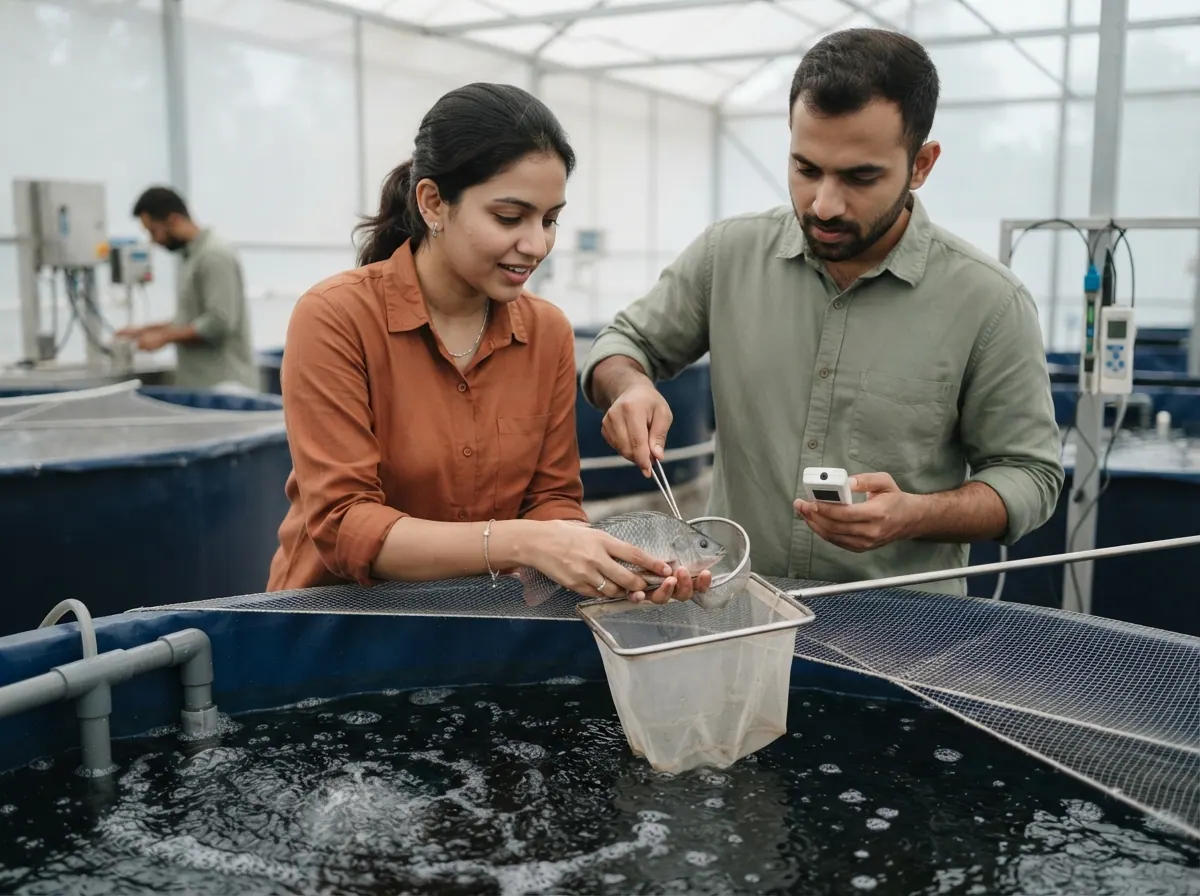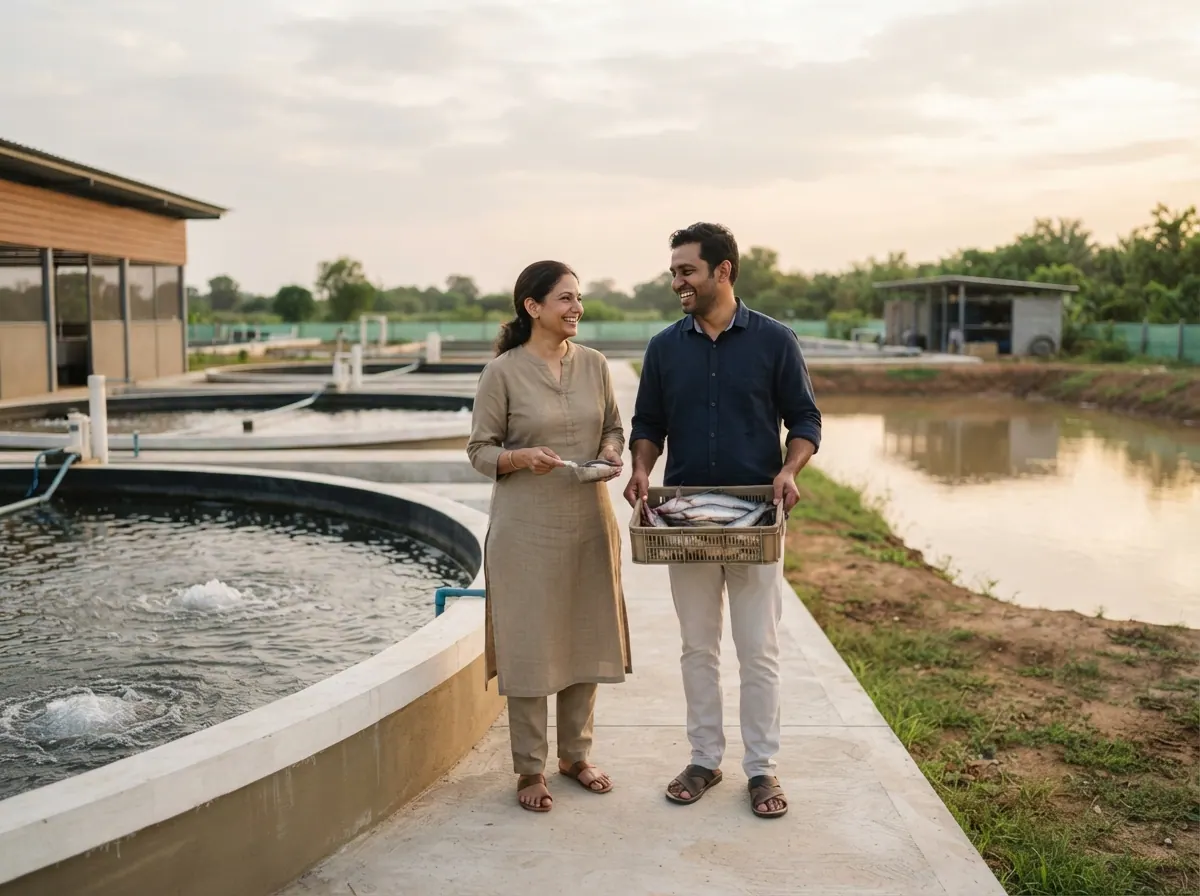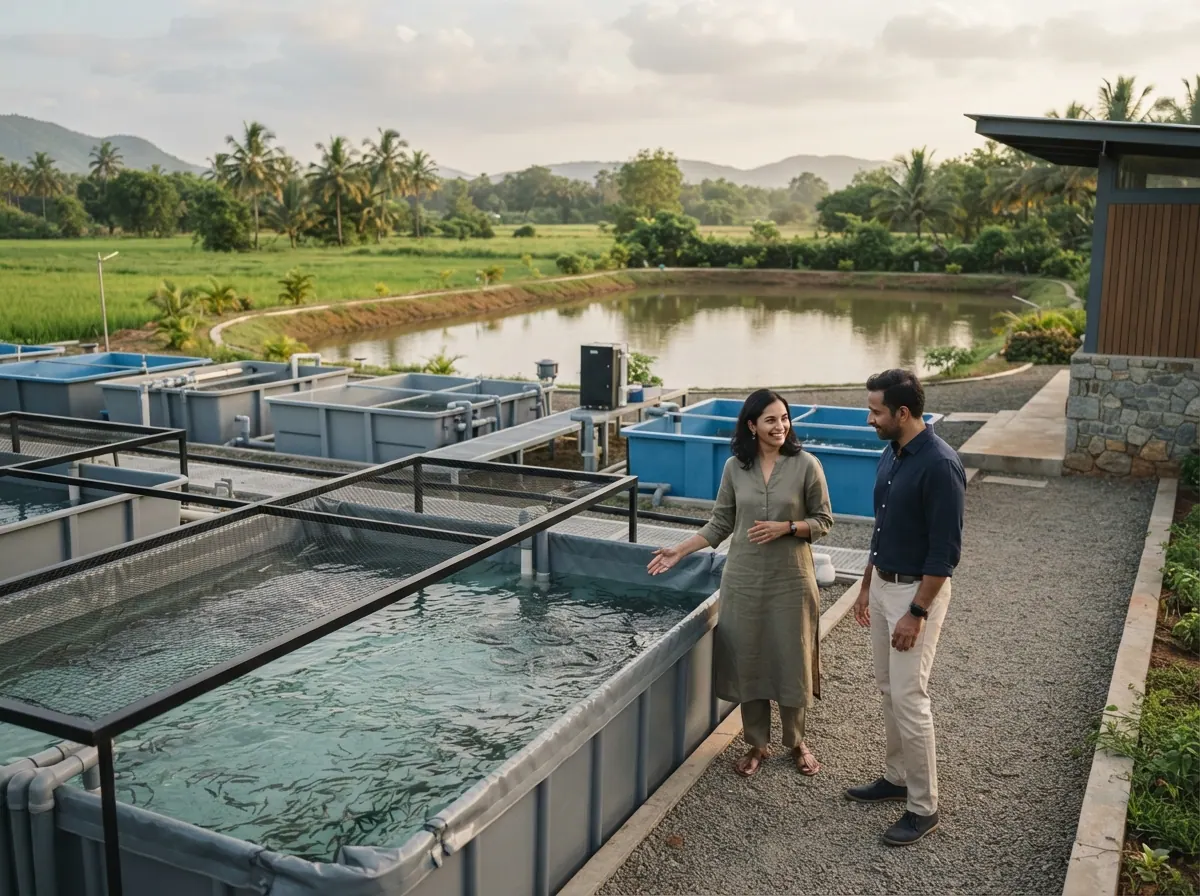
To start a fish farm in India you need a pond or tanks with a dependable water source, healthy fingerlings from a hatchery, a feed plan, and about ₹1.5–4 lakh for a one-acre carp pond, or ₹4–10 lakh for a small biofloc unit. That assumes you already have land or a lease. The money comes from selling grown fish after 8 to 12 months, so you must fund one full crop before the first big sale.
All figures here are estimates. Check prices near you before you spend.
What does it cost?
| Item | 1-acre carp pond | Small biofloc unit |
|---|---|---|
| Digging, bund and inlet/outlet | ₹60,000–1.5 lakh | none |
| Tanks, liner and frame | none | ₹1.5–4 lakh |
| Aerators and blower | ₹15,000–40,000 | ₹60,000–1.5 lakh |
| Power backup or generator | ₹0–40,000 | ₹40,000–1.2 lakh |
| Lime, manure and water testing kit | ₹10,000–20,000 | ₹10,000–25,000 |
| Fingerlings for the first crop | ₹15,000–40,000 | ₹20,000–60,000 |
| Feed for the first crop | ₹1.5–2.5 lakh | ₹80,000–1.5 lakh |
| Net, weighing scale, small tools | ₹10,000–25,000 | ₹10,000–25,000 |
| Total | about ₹2.5–4+ lakh | about ₹4–10 lakh |
If the pond is already dug, the cost falls sharply. A leased pond lowers setup but adds a yearly rent, so work that into the profit sum below.
Which fish should you grow?
- Rohu, catla and mrigal: the main Indian carps, often grown together in one pond. They feed at different depths and sell in most local markets.
- Pangasius: grows fast in warm water, but needs good feed and clean water, and buyers differ by state.
- Tilapia: hardy and quick, popular in biofloc. Check local demand first, because not every market likes it.
- Magur or singhi: high price in some eastern markets, but they need careful handling.
Ask the nearest fish seed farm what grows well in your water temperature, and sell what your local fish market already buys.
How much can it earn?
Here is a one-acre carp pond, in a normal year, per crop of about 10 months.
Fish sold in one crop
- Stock 5,000 fingerlings
- Lose about 20% to disease, birds and bad water: 5,000 − 1,000 = 4,000 fish
- Average weight at sale about 1 kg: 4,000 kg
- 4,000 kg × about ₹130 a kg = ₹5,20,000
Costs in the crop
- Fingerlings: 5,000 × ₹4 = ₹20,000
- Feed: about 6,000 kg at ₹40 = ₹2,40,000
- Lime, manure, medicine = ₹15,000
- Power for aerator and pump = ₹20,000
- Part-time labour = ₹40,000
- Pond lease or land rent = ₹30,000
- Total = ₹3,65,000
Left over: ₹5,20,000 − ₹3,65,000 = about ₹1,55,000 for the crop, or about ₹15,500 a month over 10 months.
That is modest for a full acre, and it depends on losses staying low. A farm can lose its whole crop when the water goes bad, and every 500 fish that die are about ₹65,000 of sales gone after the feed is already paid.
What do you need before you start?
- Water that lasts the whole crop. A borewell or canal that dries up in May will ruin a pond. Check the water level in summer, not just now.
- Soil that holds water. Clay or clay-loam holds water. Sandy soil leaks.
- A good fingerling source. Buy from a government or reputed seed farm, not a roadside vendor.
- Water testing. Learn to check pH and dissolved oxygen, or have a fisheries officer show you.
- A buyer arranged early. Talk to local fish traders and the nearest market before you stock.
Step by step
- Visit two working farms and ask about their last crop, deaths and feed bill.
- Dig or fix the pond. Keep it about 5 to 6 feet deep, with a strong bund and screens on the inlet and outlet.
- Dry, lime and fertilise. Your fisheries office can say how much lime and manure suit your soil. Let natural food grow in the water before stocking.
- Stock fingerlings in the cool morning or evening. Float the bags first so the temperature matches.
- Feed on time and watch the water. Look at the colour, smell and fish behaviour every day. Fish gasping at dawn means low oxygen.
- Weigh a few fish every month to check growth and fix the feed amount.
- Harvest when the fish reach market size and sell the same day to a trader with ice.
Which licences apply?
- Pond permission and water rights differ by state. If the pond is on common or leased land, you need the owner or panchayat to agree in writing.
- Aquaculture loans and schemes. Banks give loans, and government schemes for fisheries have existed. Rules change, so confirm with the district fisheries office.
- Insurance for fish crops exists in some places. Ask the office and read what is covered.
- Selling live fish or moving them by truck may have local rules. Ask the office.
- Tax. Ask a CA how your sales should be recorded as they grow.
What goes wrong?
- Oxygen drops at night. Heavy feeding plus cloudy weather can cause fish to float at dawn. An aerator and feed control matter more than extra feed.
- Poor fingerlings. Weak seed dies in the first month, and you only find out after paying for feed.
- Summer water shortage. A shrinking pond heats up and stresses the fish.
- Birds, snakes and thieves. Herons and cormorants eat small fish, and night theft happens near roads.
- Overfeeding. Uneaten feed rots in the water and makes the pond toxic.
- Biofloc power cuts. Without a blower, a tank can fail within hours.
- One buyer sets the price. If only one trader comes to your pond, you take that trader's rate.
Situations you will face
What would you do? Each choice costs something.
Getting started
A vendor sells rohu fingerlings at half the hatchery rate. The vendor cannot say where they were bred.
- Buy from the hatchery: Costs more, healthier seed
- Buy from the vendor: Pay less, weak seed risk
The digger offers a shallow pond for less. A deeper one holds water through May but costs more earth work.
- Dig it deeper: Higher bill, safer in summer
- Keep it shallow: Lower bill, heats up fast
Pangasius grows faster but needs richer feed. Carp is slower and cheaper, and every local market knows it.
- Start with pangasius: Quick growth, feed-heavy
- Start with rohu and catla: Slower, steady buyers
The fisheries officer says to dry the bed, add lime and let green water form. It will delay stocking by two weeks.
- Follow the advice: Costs lime, a safer start
- Fill and stock this week: Faster start, weaker water
The borewell gives enough water now. Neighbours say it slows down badly by May.
- Dig a second source: Big bill, water for summer
- Trust the borewell: Saves money, summer risk
A trader will give an advance if you sign for the full harvest at a set rate. Market rates may rise by then.
- Sign with the trader: Advance cash, locked rate
- Stay free to choose: No advance, better chance
First month
A neighbouring farmer says stock more per acre for more kilos. Your pond has no aerator yet.
- Stock the lower number: Fewer fish, fewer deaths
- Stock heavily: More fish, oxygen risk
The seed truck is late and the sun is hot. The bags are warm to touch.
- Wait until evening: Some losses, safer release
- Release them right away: Saves time, shock risk
The cheaper pellet has lower protein on the bag. The dealer says it works the same.
- Stay with the good brand: Higher cost, better growth
- Switch to the cheap one: Lower cost, slower growth
The pond has turned dark green after two cloudy days. A testing kit costs money and your helper says it is fine.
- Test and fix the water: Kit and effort, safer fish
- Leave it as it is: No cost, risk at dawn
White birds stand at the pond edge every morning. Netting over the corners costs a lot.
- Put up netting: Costly, saves fingerlings
- Use scare ribbons: Cheap, birds return soon
Running it
A net sample after three months shows the fish are lighter than the feed chart says.
- Test water and change feed: Costly, fixes the cause
- Wait another month: No cost, may lose growth
It stops on a hot evening. The repair shop says two days, and a new motor costs more.
- Buy a new motor now: Higher bill, fixed tonight
- Wait for the repair: Lower bill, two risky nights
The pond has fallen by a foot and the fish are staying near the surface. Pumping fresh water adds a power bill.
- Pump in fresh water: Power and pump cost
- Cut feed and wait for rain: Cheap, slows growth
The dealer raises the price of pellets by a few rupees a kilo and offers a discount for ten bags up front.
- Buy ten bags in advance: Big bill now, steady price
- Buy bag by bag: Easy on cash, pays the rise
A trader offers cash today for half your fish at under 700 grams. Another month would add weight.
- Sell half now: Cash in hand, lower weight
- Wait one more month: Feed cost, heavier fish
The trader offers a price below the market rate and says nobody else will come this far.
- Take fish to the town market: Transport cost, better price
- Sell to the trader: No effort, lower rate
The nets are in and fish are lined up, but the ice shop in town opens late. The market is two hours away.
- Send a bike for ice: Small cost, fresh fish
- Sell to the nearest buyer: No delay, lower price
The officer says you could get help with training and a loan if your pond records and permission are in order.
- Get your papers in order: Fees and time, support later
- Ignore it for now: No cost, no help
When things go wrong
Dozens of fish are at the surface with open mouths after a cloudy night. Your aerator is running but one blade is bent.
- Stop feed, add aeration: Cost of extra air, saves most
- Feed lightly and hope: No extra cost, more may die
Several rohu have red spots and torn fins. The fisheries office says to test before treating.
- Test and treat as advised: Costly, targeted treatment
- Use whatever the shop says: Cheap, may not work
After a night of rain, water is flowing over the pond wall and some fish are escaping.
- Rebuild and raise the bund: Big bill, safer next time
- Patch it with soil: Cheap, may fail again
A neighbour's crop spray drained into your inlet channel and fish are turning sluggish.
- Close the inlet and talk: Pumping cost, keeps peace
- Complain to the panchayat: Slow, village tension
Someone cast nets at night and took a few kilos. Footprints lead to the road.
- Add lights and a watchman: Ongoing cost, deters theft
- Just fence the road side: Cheap, still exposed
Your usual trader paid for the last load with a cheque that did not clear. The trader promises cash next week and wants another load.
- Hold the next load: Feed cost, protects you
- Send one more load: Keeps buyer, big risk
Growing
The first crop paid well. A second pond would double output but also the feed bill and the work.
- Dig the second pond: Heavy cost, more fish
- Improve the first pond: Smaller cost, steadier growth
A supplier shows a four-tank biofloc kit. It needs power all day, and one long cut could kill a tank.
- Buy tanks and a generator: Large spend, more per sq ft
- Stay with the pond: No new risk, slower growth
A nursery pond would give you seed at lower cost and sell extra to neighbours. It needs careful handling in the first weeks.
- Build a nursery pond: Cost and learning, cheaper seed
- Keep buying seed: No new work, higher seed cost
A hotel owner wants fish twice a week, cleaned and iced. It pays better than the trader but needs a vehicle.
- Start hotel deliveries: Vehicle cost, better rates
- Keep selling to the trader: Easy money, lower rate
The branch manager will consider a loan if you show pond records, permission and sales slips.
- Build a project report: CA fee, loan chance
- Grow from your own profit: No fee, slower growth
Is it right for you?
Fish farming suits you if you have steady water, can check the pond daily, and can wait most of a year for the first sale. It does not suit you if you cannot be near the water or cannot afford to lose part of a crop.
A good test: spend a few weeks on a working farm during stocking and harvest. If you still want it, start with one small pond, learn to read the water, and grow only after one profitable crop.