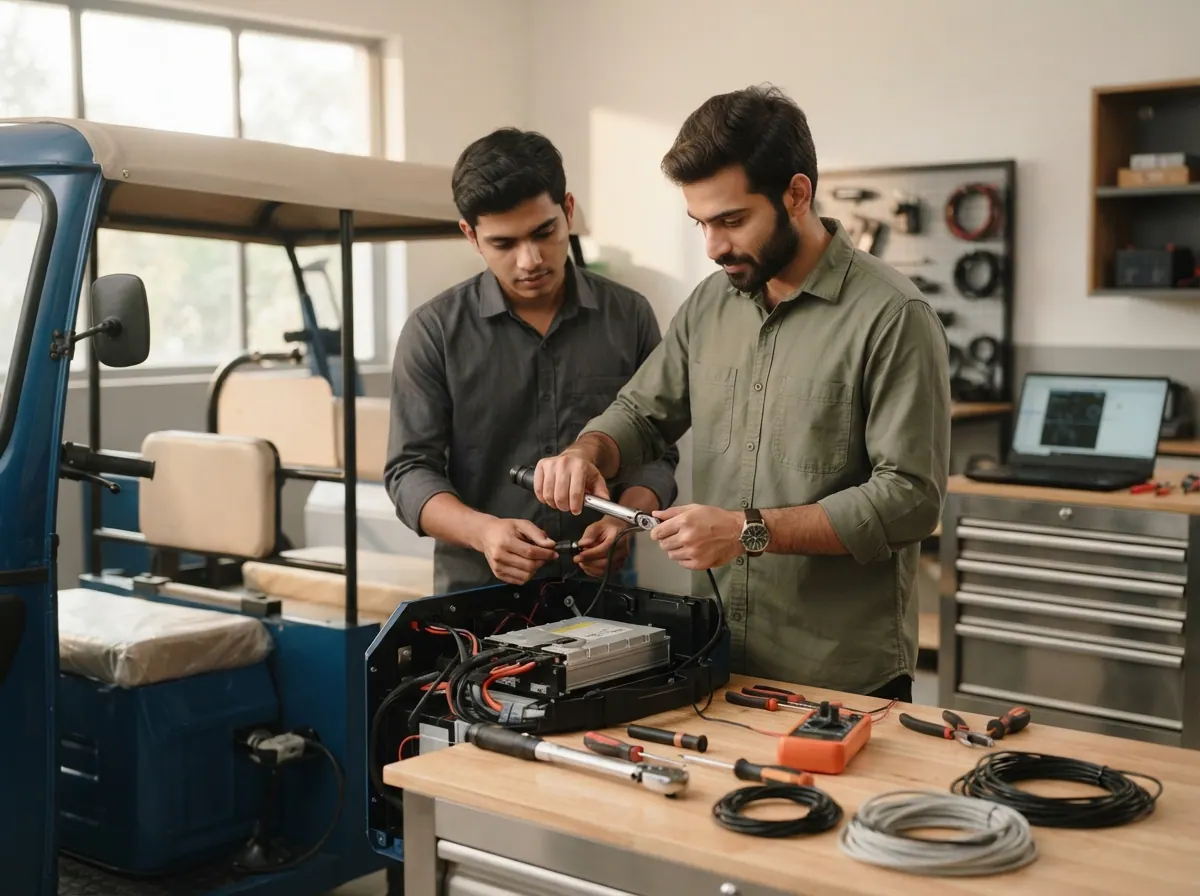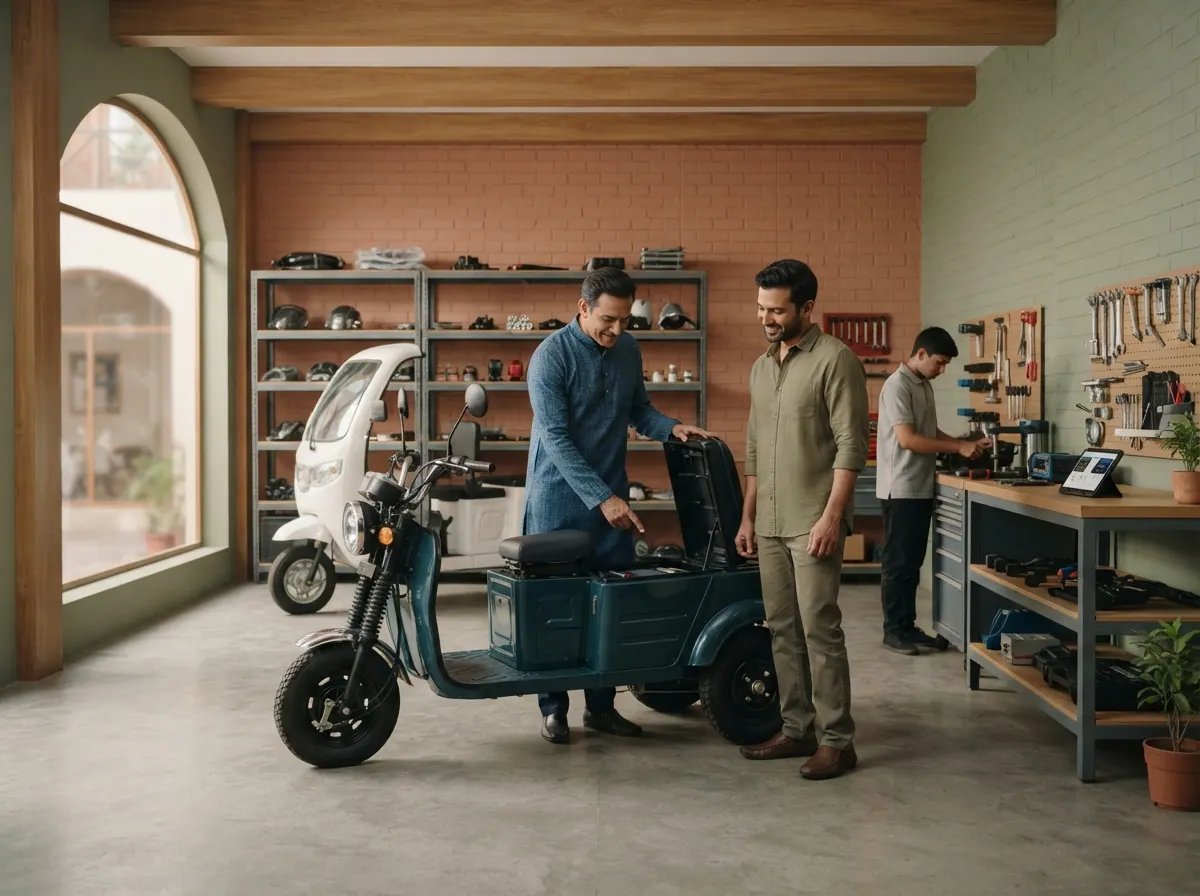
भारत में ई-रिक्शा, ऑटो और EV रिपेयर गैराज शुरू करने के लिए आपको ऐसी सड़क के पास ढकी हुई जगह चाहिए जहाँ ई-रिक्शा और ऑटो रुकते हैं, मल्टीमीटर और कंट्रोलर टेस्टर, बैटरी टेस्टर और चार्जर, हाइड्रोलिक जैक और हाथ के औज़ार, स्पेयर पार्ट्स का स्टॉक, एक सीखा हुआ हेल्पर और लगभग ₹1 लाख से ₹5 लाख। आपके ग्राहक ज़्यादातर ऐसे ड्राइवर हैं जो रोज़ की कमाई पर जीते हैं, इसलिए वे जल्दी पैसे देते हैं, पर चाहते हैं कि गाड़ी उसी दिन ठीक हो।
यहाँ सारे आँकड़े अंदाज़े हैं। पैसा लगाने से पहले अपने इलाक़े के भाव देख लें।
कितना खर्च आता है?
| चीज़ | बुनियादी गैराज | बड़ा गैराज |
|---|---|---|
| मल्टीमीटर, क्लैंप मीटर, कंट्रोलर टेस्टर | ₹6,000–12,000 | ₹12,000–25,000 |
| बैटरी लोड टेस्टर, चार्जर, हाइड्रोमीटर | ₹10,000–20,000 | ₹20,000–40,000 |
| हाथ के औज़ार, जैक, स्टैंड, वेल्डिंग सेट | ₹15,000–30,000 | ₹30,000–60,000 |
| स्पेयर पार्ट्स (कंट्रोलर, कॉन्टैक्टर, ब्रेक शू, टायर, ट्यूब, बल्ब) | ₹30,000–60,000 | ₹70,000–1.5 लाख |
| बैटरी स्टॉक (कुछ सेट) | – | ₹80,000–1.5 लाख |
| दुकान का डिपॉज़िट, शेड, शटर, बोर्ड | ₹15,000–30,000 | ₹40,000–80,000 |
| फ़ोन, बिलिंग, विज्ञापन | ₹3,000–8,000 | ₹8,000–15,000 |
| कुल | लगभग ₹1–1.8 लाख | लगभग ₹3–5 लाख |
मरम्मत और छोटे पार्ट्स स्टॉक से शुरू करें। बैटरियों में बहुत पैसा फँसता है, इसलिए ड्राइवरों का भरोसा बनने के बाद ही जोड़ें।
शुरू करने से पहले क्या चाहिए?
- बिजली और मैकेनिक की बुनियाद। ई-रिक्शा में मोटर, कंट्रोलर, कॉन्टैक्टर और बैटरी एक सीधे चेसिस पर होते हैं। आपको वायरिंग पढ़ना, मल्टीमीटर चलाना और ब्रेक, डिफ़रेंशियल और टायर जानने चाहिए।
- इलाक़े की गाड़ियाँ जानना। देखें कि आपके आसपास ड्राइवर कौन सी कंपनी और कौन सी बैटरी चलाते हैं। पार्ट्स सारे मॉडल में नहीं चलते।
- बैटरी सुरक्षित संभालना। बैटरी पैक में बहुत करंट होता है। टर्मिनल पर गिरा हुआ पाना जलन या आग कर सकता है। लिथियम पैक का सही तरीक़ा कंपनी से सीखें।
- जहाँ से ड्राइवर गुज़रते हैं। स्टैंड, मार्केट, मेट्रो या बस अड्डे के पास, जहाँ कुछ गाड़ियाँ खड़ी करने की जगह हो।
- पार्ट्स सप्लायर। नज़दीकी बड़े बाज़ार में एक अच्छा थोक वाला, और कोई पार्ट कम पड़े तो उसी दिन मँगाने का रास्ता।
कितनी कमाई हो सकती है?
यह एक जमे हुए गैराज के दूसरे साल का उदाहरण है। ये अंदाज़े हैं, वादा नहीं।
महीने की आमदनी
- 70 मरम्मत जॉब × औसत बिल लगभग ₹800 = ₹56,000
- पार्ट्स की लागत लगभग 40% = ₹22,400
- जॉब का मार्जिन: ₹56,000 − ₹22,400 = ₹33,600
- बैटरी और टायर बिक्री का मार्जिन = लगभग ₹12,000
- कुल मार्जिन = लगभग ₹45,600
महीने का खर्च
- दुकान का किराया = ₹8,000
- एक हेल्पर = ₹10,000
- बिजली, पानी, बाक़ी = ₹3,000
- कुल = ₹21,000
बचत: ₹45,600 − ₹21,000 = लगभग ₹24,600 महीना।
ड्राइवर अक्सर मौक़े पर नक़द देते हैं। गाड़ी खड़ी रहने पर वे उधार भी माँगते हैं, इसलिए पहली माँग से पहले अपना उधार का नियम तय कर लें।
कदम दर कदम
- किसी चालू गैराज में कुछ महीने ई-रिक्शा और ऑटो पर काम करें, अगर हो सके।
- जगह चुनें स्टैंड, मार्केट या मेट्रो स्टेशन के पास जहाँ ड्राइवर हमेशा गुज़रते हैं।
- पहले टेस्ट के औज़ार लें, फिर उन ख़राबियों के छोटे पार्ट्स जो सबसे ज़्यादा दिखती हैं।
- तेज़ रहें। जिस ड्राइवर का एक दिन जाता है उसकी कमाई जाती है। समय बताएँ और निभाएँ।
- हर जॉब लिखें: गाड़ी का नंबर, ख़राबी, पार्ट्स, बिल और तारीख़। एक हफ़्ते बाद फ़ोन करके पूछें कि गाड़ी कैसी चल रही है।
- बैटरी खुले में टेस्ट करें और बदलने की सलाह देने से पहले ड्राइवर को रीडिंग दिखाएँ।
- बैटरी बिक्री और चार्जिंग सर्विस जोड़ें जब आपके पास नियमित ड्राइवर हो जाएँ।
कौन से लाइसेंस लगते हैं?
छोटे गैराज के लिए:
- शॉप और एस्टैब्लिशमेंट रजिस्ट्रेशन या स्थानीय ट्रेड लाइसेंस। अपने स्थानीय निकाय से पूछें।
- GST अगर बिक्री सीमा पार करे या सप्लायर माँगे। CA से पूछें।
- पुराना तेल और पुरानी बैटरी। इस्तेमाल हुए तेल और लेड-एसिड बैटरी के निपटान के नियम हैं। अपने प्रदूषण नियंत्रण बोर्ड या डिस्ट्रीब्यूटर से पूछें।
- आग से सुरक्षा, क्योंकि गैराज में कई बैटरियाँ और चार्जर होते हैं। अपने स्थानीय फ़ायर ऑफ़िस से पूछें।
- ब्रांड की मंज़ूरी अगर आप अधिकृत सर्विस पॉइंट के तौर पर विज्ञापन करना चाहते हैं। कंपनी से उनकी शर्तें पूछें।
क्या ग़लत हो सकता है?
- अच्छी बैटरी बदल देना। ड्राइवर नई बैटरी के पैसे देता है जबकि असली ख़राबी ढीला टर्मिनल या कमज़ोर चार्जर थी। वह स्टैंड पर सबको बता देता है।
- सस्ते स्पेयर पार्ट्स। सस्ता कंट्रोलर जो दो हफ़्ते में फेल हो जाए, ड्राइवर को अगले गैराज भेज देता है।
- उसी दिन के वादे जो पूरे न हों। एक रात पार्ट का इंतज़ार ड्राइवर का पूरा दिन खा जाता है।
- उधार जो लौटता नहीं। एक हफ़्ता तंगी में रहने वाले ड्राइवर से पैसे निकालना मुश्किल होता है।
- चार्जिंग से आग। ओवरलोड चार्जर या गत्तों के पास ख़राब वायरिंग आग लगा सकती है।
- नए मॉडल जो आप नहीं सुधार सकते। लिथियम पैक और नए कंट्रोलर के लिए ट्रेनिंग, औज़ार और कभी-कभी कंपनी की मंज़ूरी चाहिए।
ये हालात आपके सामने आएँगे
आप क्या करेंगे? हर फ़ैसले की एक क़ीमत है।
शुरुआत
You know auto repair but not controllers and contactors. A garage owner offers you a month of work for a small fee.
- Pay and learn for a month: Fee and delay, fewer mistakes
- Open now, learn on drivers: Earn sooner, wrong fixes likely
A shop near the e-rickshaw stand costs double the rent. A lane shop is cheap but drivers rarely pass.
- Rent near the stand: Higher rent, drivers walk in
- Take the lane shop: Low rent, few walk-ins
A controller tester lets you find faults without swapping parts. It costs more than a multimeter.
- Buy the tester: Cost now, quicker diagnosis
- Swap parts to find faults: Saves money, slow and costly
Controllers fail often and cost a lot each. The market is a two-hour trip, so a missing part means a lost day.
- Stock the common ones: Cash tied, same-day repairs
- Order per breakdown: Little cash tied, slower jobs
You plan to charge four batteries at once near your cartons. An electrician offers proper wiring for a fee.
- Pay for proper wiring: Costly, safer from fire
- Charge only two at a time: Cheap, fewer jobs a day
A boy offers to work for very little, claiming to have watched repairs. A trained mechanic asks for much more.
- Hire the trained mechanic: Higher wage, faster repairs
- Hire and train the boy: Low wage, slow work
A driver with a dead motor cannot pay until earning again. The driver works at the stand every day.
- Repair now, part payment: Some risk, a loyal driver
- Cash first: Safe, driver goes elsewhere
पहला महीना
A driver says the batteries are dead and wants new ones. You find a corroded terminal and weak connections.
- Clean and tighten, charge: Small bill, honest, trusted
- Sell batteries after showing the fault: Small sale, the driver may decline
A trader sells controllers at a low price with no brand name. Drivers like cheap fixes.
- Stay with branded ones: Lower margin, fewer returns
- Stock the cheap ones: Better margin, early failures
A driver wants the vehicle back tonight. The motor part will reach you only in the morning.
- Fetch it by bike tonight: Fuel and effort, the driver is grateful
- Ask the driver to wait: No cost, driver loses earnings
Your helper dropped a spanner across a battery pack. There was a spark and a small burn on the helper's hand.
- Stop, teach safe handling: Lost hour, insulated tools
- Rest the helper, work alone: Slower jobs, helper recovers
A driver wants only a small adjustment, but you see the brake shoes are worn out and the driver carries school kids.
- Insist on new brake shoes: Bigger bill, safer ride
- Refuse the job as asked: Lose the job, the driver may go elsewhere
रोज़ का काम
Summer heat kills many batteries at once. Drivers ask you for replacements, but a bulk order needs cash.
- Order batteries in bulk: Big outlay, strong sales
- Order per customer: Little cash tied, slower
Drivers leave old batteries when they buy new ones. A scrap dealer wants them but a recycler pays less and is far.
- Give to authorised recycler: Less cash, follows the rules
- Hold for a better rate: Space used, uncertain
A driver brings a new lithium-pack vehicle. You have not been trained on the pack or its software.
- Refer the driver to the maker: Lose the job, no risk
- Take training from the maker: Fee and time, new customers
A man with twelve e-rickshaws wants all repairs done by you at a lower rate, paid monthly.
- Take the contract: Steady work, delayed pay
- Ask for weekly payment: Safer money, the owner may refuse
Tyre jobs are many and you send them out. A machine costs money but keeps the margin.
- Buy the machine: Spend now, more margin
- Keep sending it out: No spend, lose margin
A motor you rewound has failed. The driver says it was under your warranty, but the warranty you gave was one week.
- Repair free this time: Cost to you, goodwill
- Stand by the one-week limit: Policy kept, angry driver
Flood water blocks the road and many vehicles stall in water. Drivers bring wet motors and controllers.
- Work late, dry and test each: Long hours, loyal drivers
- Take fewer wet vehicles: Rest, lose repair jobs
Many controllers burn in the heat. You suspect poor airflow and overloaded vehicles.
- Add fans, advise drivers: Extra work, fewer repeats
- Just replace controllers: More sales, drivers complain
जब मुश्किल आए
You smell burning in the morning. A charger is melted and the wire insulation near it has blackened.
- Replace wiring and charger: Costly, safer garage
- Shut charging for a week: Cheaper, lost battery work
Overnight, two customer batteries were stolen from your shop. Drivers look to you to cover them.
- Pay the drivers, add a guard: Costly, trust kept
- Report it and share the loss: Cheaper, drivers upset
A new garage nearby charges half for common repairs and uses cheap parts. Some drivers move.
- Match on labour only: Thin margin, keep drivers
- Stay on quality and speed: Margin safe, lose some
Traders say repaired vehicles parked on the road block their shops. A local officer has noticed.
- Rent a small parking space: Extra rent, no more complaints
- Park fewer vehicles: No cost, fewer jobs
Your senior mechanic quits to open a garage on the next road. Some drivers follow.
- Raise pay for the next one: Higher wage, steadier team
- Do the repairs yourself: No wage, slower service
बढ़ाना
A battery distributor offers you a dealer rate if you take a stock order. It brings more drivers but locks cash.
- Take the dealer rate: Big stock, better margin
- Buy battery by order: Little cash tied, thin margin
The shop is full of waiting vehicles. A second bay and a mechanic would double the jobs you can do.
- Build the second bay: Spend and wage, more jobs
- Book repairs by time: Cheap, still limited
A small e-rickshaw maker offers you service work for their buyers, but wants tools and a trained staff member.
- Accept and train a staff member: Cost and wage, steady jobs
- Stay independent: Freedom, fewer leads
Drivers stranded on the road call you at night. A tow cart or small pickup would let you fetch them.
- Buy a small pickup: Big spend, loyal drivers
- Send a mechanic on a bike: Cheap, only small faults
The leader of an e-rickshaw stand wants a lower rate for all twenty drivers, paid weekly.
- Give a small group rate: Many jobs, thinner margin
- Keep normal rates: Margin safe, fewer jobs
क्या यह आपके लिए ठीक है?
ई-रिक्शा गैराज उनके लिए ठीक है जो हाथ से काम करने वाले मैकेनिक हैं, तेज़ काम करते हैं, और गाड़ी तुरंत माँगने वाले थके ड्राइवरों के साथ शांत रह सकते हैं। जिन्हें गंदा और शोर वाला काम पसंद नहीं, या जो एक जॉब के अच्छे पैसे देने वाले ग्राहक चाहते हैं, उनके लिए कम ठीक है, क्योंकि हर जॉब का मार्जिन छोटा है और मात्रा मायने रखती है।
एक अच्छा टेस्ट: ई-रिक्शा स्टैंड के पास किसी गैराज में एक महीना बिताएँ। अगर तेज़ी और समस्या सुलझाने का मज़ा आए, तो स्टैंड के पास बुनियादी सेटअप से शुरू करें, नियमित ड्राइवरों का समूह बनाएँ, और फिर बैटरी की बिक्री जोड़ें।