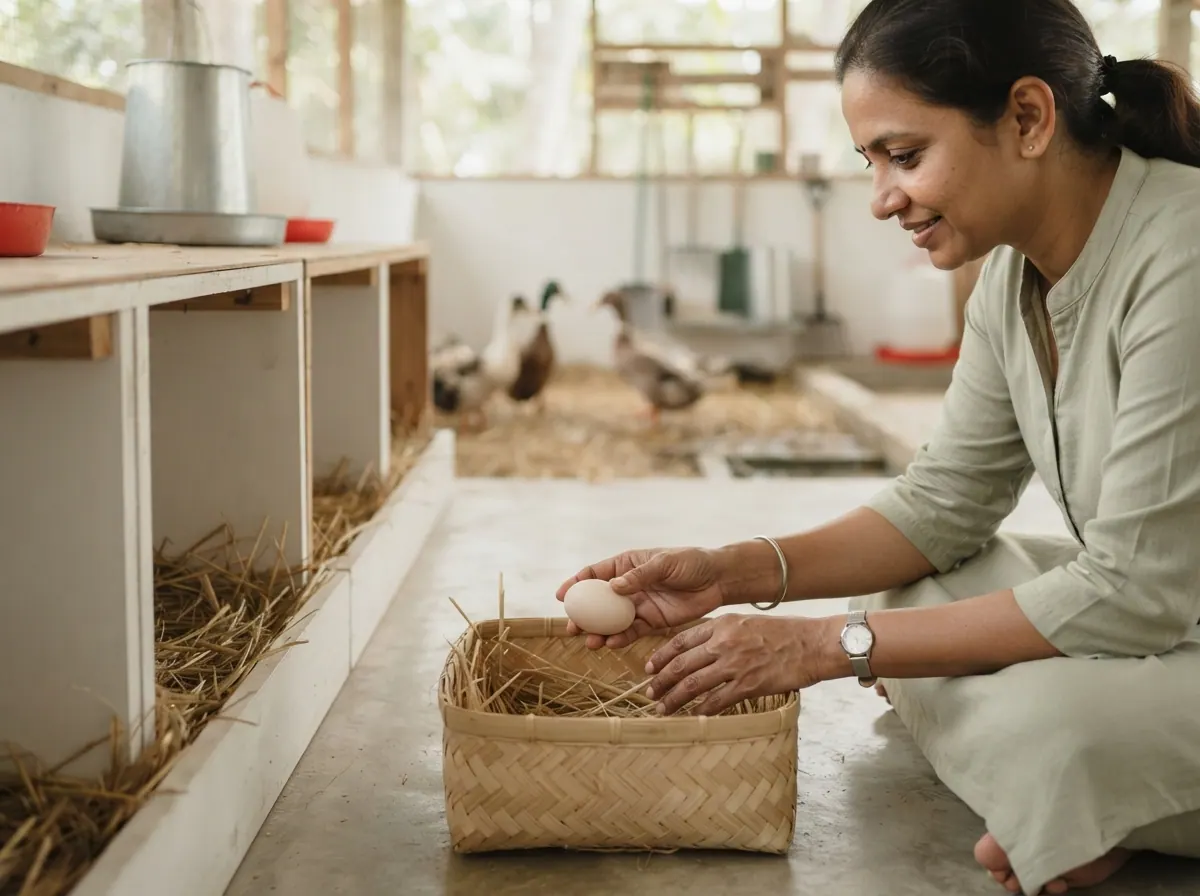
भारत में बत्तख पालन शुरू करने के लिए चाहिए रात का सूखा शेड, साफ़ पानी, भरोसेमंद हैचरी के स्वस्थ चूज़े, बत्तख जानने वाला डॉक्टर, और 100 बत्तखों के लिए करीब ₹70,000–1.1 लाख या 300 के लिए ₹2–3.3 लाख। यह मानकर कि ज़मीन आपकी अपनी है। अंडे वाली बत्तखें आमतौर पर करीब पांच महीने बाद अंडे देना शुरू करती हैं, इसलिए पहली कमाई तब आती है जब आप महीनों का चारा पहले ही खिला चुके होते हैं।
यहां दिए सभी आंकड़े अनुमान हैं। खर्च करने से पहले अपने इलाके के दाम ज़रूर जांच लें।
इसमें कितना खर्च आता है?
| मद | 100 बत्तख | 300 बत्तख |
|---|---|---|
| चूज़े | ₹4,000–6,000 | ₹12,000–18,000 |
| ऊंचे सूखे फ़र्श वाला रात का शेड | ₹20,000–35,000 | ₹60,000–1 लाख |
| दाना और पानी के बर्तन | ₹4,000–6,000 | ₹12,000–18,000 |
| अंडे शुरू होने तक का चारा | ₹30,000–45,000 | ₹90,000–1.35 लाख |
| पानी की नांद या छोटी नाली | ₹5,000–10,000 | ₹15,000–30,000 |
| टीके और डॉक्टर की विज़िट | ₹3,000–5,000 | ₹8,000–12,000 |
| अंडे की ट्रे, नेस्ट बॉक्स, छोटे औज़ार | ₹3,000–6,000 | ₹8,000–15,000 |
| कुल | करीब ₹70,000–1.1 लाख | करीब ₹2–3.3 लाख |
सबसे बड़ा हिस्सा चारे का है। अगर आपके पास घोंघे और जलीय पौधों वाला तालाब है, या कटाई के बाद धान के खेत जहां बत्तखें चुग सकें, तो चारे का खर्च घटता है। पूरी तरह इस पर निर्भर न रहें, क्योंकि जंगली चारा मौसम के हिसाब से बदलता है।
कौन-सी बत्तख रखें?
- खाकी कैंपबेल: सबसे आम अंडे वाली नस्ल। अच्छे झुंड को ठीक चारे के साथ साल भर अंडे मिलते हैं।
- इंडियन रनर: सीधी खड़ी रहने वाली, फुर्तीली अंडे की बत्तख। चुगने में अच्छी है पर प्रबंधन अच्छा चाहिए।
- पेकिन: सफ़ेद मांस वाली बत्तख, जो तेज़ी से बढ़कर भारी होती है।
- मस्कोवी: मांस वाला पक्षी, शांत, छोटे शेड में रह लेता है और दूसरी बत्तखों से कम खाता है।
पहले मकसद तय करें: अंडा, मांस, या दोनों। फिर वही नस्ल खरीदें जिसे आपके इलाके के खरीदार पहले से जानते हैं।
इसमें कितनी कमाई हो सकती है?
मान लें खाकी कैंपबेल की 300 बत्तखों का झुंड अंडे देने के पहले साल में है।
महीने की आमदनी
- औसत दिन में 75% बत्तखें अंडे देती हैं: 300 × 75% = 225 अंडे रोज़
- 225 अंडे × 30 दिन = 6,750 अंडे
- 6,750 अंडे × करीब ₹8 = ₹54,000
महीने का खर्च
- चारा: 300 बत्तख × 0.11 किलो × ₹26 प्रति किलो × 30 दिन = ₹25,740
- एक पार्ट-टाइम हेल्पर = ₹8,000
- डॉक्टर और टीके = ₹1,500
- पानी, बिजली, मरम्मत = ₹2,000
- कुल = करीब ₹37,240
बचत: ₹54,000 − ₹37,240 = करीब ₹16,760 महीना।
यह मामूली रकम है, और इसमें वे पांच महीने नहीं गिने गए जब चूज़े बढ़ रहे थे और अंडे नहीं थे। एक-दो साल अंडे देने के बाद झुंड पुराना होता है और अंडे घटते हैं, उसका नुकसान भी इसमें नहीं है। तब पुरानी बत्तखें मांस के लिए बेचकर नया बैच लाया जाता है।
शुरू करने से पहले क्या चाहिए?
- अंडों और पुरानी बत्तखों के लिए खरीदार। अंडा व्यापारी, मिठाई की दुकानें, बेकरी, होटल और मांस विक्रेताओं से बात करें। कुछ इलाकों में बत्तख के अंडे बहुत बिकते हैं, और कुछ में लोग लगभग नहीं खरीदते।
- सूखा बिछावन और सुरक्षित शेड। बत्तखों को पानी पसंद है पर रात का घर सूखा रहना चाहिए। लोमड़ी, कुत्ते और सांप इन पर हमला करते हैं।
- पीने का साफ़ पानी, जिसमें बत्तख चोंच डुबो सके।
- डॉक्टर, जिसने बत्तखों का इलाज किया हो और डक प्लेग और कॉलरा के टीके बता सके।
- पहले अंडे से पहले पांच महीने के चारे का पैसा।
कदम दर कदम
- दो चालू बत्तख फ़ार्म देखें, एक अंडे वाला और एक मांस वाला, और पूछें कि पिछले साल कितनी बत्तखें मरीं।
- शेड बनाएं, ऊंचे सूखे फ़र्श, अच्छी हवा, बाड़ और रात में बंद होने वाले दरवाज़े के साथ।
- जानी-मानी हैचरी से चूज़े लें, और हैच की तारीख और टीकों का रिकॉर्ड पूछें।
- चूज़ों को शुरू के हफ़्तों में गर्माहट, साफ़ पानी और स्टार्टर दाने के साथ पालें।
- डॉक्टर के कार्यक्रम से टीके लगवाएं, अपने इलाके की आम बीमारियों के लिए।
- ग्रोवर और फिर लेयर दाने पर जाएं, जैसा डॉक्टर या दाना सप्लायर बताए, और दाना धीरे-धीरे बदलें।
- अंडे सुबह जल्दी नेस्ट बॉक्स से उठाएं, क्योंकि बत्तखें अक्सर रात में या भोर में अंडे देती हैं। अंडे साफ़ रखें और जल्दी बेचें।
- रिकॉर्ड रखें: हर हफ़्ते का चारा, रोज़ के अंडे और मौतें।
कौन-से लाइसेंस लगते हैं?
नियम राज्य के हिसाब से बदलते हैं, इसलिए स्थानीय दफ़्तरों से पक्का करें:
- पंचायत या स्थानीय अनुमति शेड के लिए, ख़ासकर अगर वह घरों के पास हो।
- पशुधन और पोल्ट्री नियम। ज़िला पशुपालन दफ़्तर से पूछें कि बत्तख फ़ार्म को कौन-सा रजिस्ट्रेशन या रिपोर्टिंग चाहिए। बर्ड फ़्लू के नियम बत्तखों पर भी लागू होते हैं, और प्रकोप में अधिकारी आवाजाही रोक या पक्षियों को मारने का आदेश दे सकते हैं।
- लोन और योजनाएं। बैंक पशुधन और पोल्ट्री लोन देते हैं, और कुछ राज्य योजनाएं बत्तख पालन में मदद करती हैं। शर्तें बदलती हैं, इसलिए किसी सब्सिडी पर हिसाब टिकाने से पहले ज़िला दफ़्तर से पक्का करें।
- अंडे या मांस दुकान में या ब्रांड के नाम से बेचने पर खाद्य लाइसेंस लग सकता है। खाद्य सुरक्षा दफ़्तर से पूछें।
- टैक्स। बिक्री बढ़ने पर CA से पूछें कि टैक्स कैसे लगेगा।
क्या गलत हो सकता है?
- गीला, गंदा घर। गीले फ़र्श से पैरों की दिक्कत और बीमारी होती है। बिछावन सूखा रखें।
- डक प्लेग या कॉलरा। बीमारी कुछ ही दिनों में बहुत बत्तखें मार सकती है। टीके और नए पक्षियों को अलग रखना ज़रूरी है।
- बर्ड फ़्लू की खबर। पास में केस आएं तो आवाजाही रुक सकती है और अंडे के दाम गिरते हैं। बायोसिक्योरिटी सख्त रखें और सरकारी सूचनाओं पर नज़र रखें।
- जंगली जानवर। लोमड़ी, गीदड़ और आवारा कुत्ते कमज़ोर बाड़े से बत्तखें उठा ले जाते हैं, और एक रात में पूरा बैच खत्म हो सकता है।
- बत्तखों का अंडे देना बंद करना। खराब चारा, तनाव, अचानक बदलाव या कम रोशनी से अंडे घटते हैं। अंडे अचानक गिरें तो चारा, पानी और तनाव देखें, फिर डॉक्टर बुलाएं।
- पक्का खरीदार न होना। बत्तख के अंडे हर जगह नहीं खाए जाते। चूज़े खरीदने से पहले खरीदार ढूंढ लें।
ये हालात आपके सामने आएँगे
आप क्या करेंगे? हर फ़ैसले की एक क़ीमत है।
शुरुआत
Khaki Campbell ducks give eggs but take five months to start. Pekin ducks grow fast but need a meat buyer.
- Keep Khaki Campbell: Slow start, steady eggs
- Keep Pekin for meat: Quicker sale, uneven buyers
A seller offers ducklings at half the hatchery price. They cannot tell you their hatch date or vaccines.
- Buy from the hatchery: Higher price, healthier birds
- Buy from the seller: Cheaper, deaths likely
A raised slatted floor keeps ducks dry at night but costs more. Bare ground is cheap but turns to mud.
- Build the raised floor: Costlier, dry and healthy
- Use ground with straw: Cheaper, wet in rain
A village pond is close, but it is shared and its water is dull green. A trough is clean but needs filling daily.
- Use a trough with tank water: Labour, fewer infections
- Let them use the pond: Free, disease risk
Neighbours say foxes and stray dogs come at night. A proper fence with a buried base costs more than plain wire.
- Build a strong fence: Costly, protects the flock
- Use plain wire: Cheaper, predator risk
The ducks are four months old. A trader gives a low fixed price; a bakery wants a smaller regular supply.
- Sign with the trader: All eggs sold, lower price
- Supply the bakery and shops: Better price, fewer sales
The government vet mostly sees cattle. A private poultry vet knows ducks but charges more per visit.
- Hire the poultry vet: Higher fee, better advice
- Use the government vet: Cheap, limited duck advice
पहला महीना
A cold night is forecast and your brooder lamp is weak. Chilled ducklings huddle and die.
- Add heat lamps tonight: Power cost, ducklings safe
- Cover with extra sacks: Cheap, some may be lost
A shop sells starter feed at two prices. The cheaper one has less protein and the ducklings grow slower.
- Buy the better starter: Costlier, healthy growth
- Buy the cheaper feed: Saves money, slower growth
Several ducklings struggle to stand. The vet says feed and housing may be the cause.
- Call the vet and fix feed: Fee and a feed change
- Wait and watch: Free, more may weaken
The vet comes to vaccinate against duck plague. Your helper says it will stress the birds and cost a day of work.
- Vaccinate on schedule: Fee, protects the flock
- Postpone a month: Saves now, plague risk
रोज़ का काम
Eggs begin to come, but many are small and thin-shelled. A trader will pay less for them.
- Improve layer feed and calcium: Cost now, better eggs
- Sell them as they are: No cost, lower price
Some ducks lay eggs in the water or in the run at night. You find fewer eggs than you expect.
- Add nest boxes, shut ducks in: Small cost, fewer lost eggs
- Let them roam free: No cost, eggs go missing
Your part-time helper finds a better job. Ducks need feed and eggs must be collected daily.
- Hire a new helper: Pay higher wage
- Do it all yourself: Saves wages, tiring
The feed seller raises their price by two rupees a kilo. A cheaper mix with rice bran is possible.
- Keep the same feed: Higher cost, steady laying
- Mix in rice bran and snails: Saves money, slower laying
A caterer wants three times your usual eggs for a week. You will have to hold back from other buyers.
- Supply the caterer: Good price, others wait
- Keep regular customers: Steady trust, lower income
A neighbour says the duck droppings smell and the quacking is loud. They may go to the panchayat.
- Clean more, move the manure: Cost and effort, calm talks
- Ignore the complaint: No cost, bigger fight later
Rats are eating and fouling the feed sacks. Poison may reach the ducks, and traps take time.
- Raise sacks, set traps: Labour, safe for ducks
- Seal gaps, keep a cat: Slow, safe for ducks
जब मुश्किल आए
Water gets into the night shed. Bedding is soaked and ducks stand in muddy water.
- Raise the floor and drain: Costly, protects health
- Change bedding daily: Cheaper, more work
Six ducks die in two days with watery droppings. You fear duck plague.
- Call the vet, isolate the flock: Costly, limits the spread
- Treat with shop medicine: Cheap, may spread
Officials report bird flu in a village nearby. Egg buyers get nervous and the price falls.
- Lock down and follow advice: Costs sales, protects birds
- Report to vet, sell carefully: Slow sales, honest
Daily eggs drop from 220 to 150 over a week. A dog barked all night near the shed.
- Check feed, water and stress: Time and a vet fee
- Change the feed brand: Costs, may be wrong fix
A jackal got through a weak spot in the fence and killed eleven ducks before the dogs barked.
- Rebuild the fence strongly: Costly, safer ahead
- Patch the hole and sleep nearby: Cheap, tiring
बढ़ाना
After two seasons, the flock lays far less. You can sell the old ducks for meat and buy new ones.
- Replace the flock: Cost now, eggs come back
- Keep them another season: Saves money, low eggs
A local hotel asks for dressed duck every week. It means a new batch, a separate pen and a slaughter plan.
- Start a Pekin batch: Cost and work, new income
- Stay with eggs only: Simple, no new buyer
A neighbour offers their harvested paddy fields for the ducks to forage in. It saves feed but means walking them daily.
- Take the fields: Cheaper feed, more labour
- Keep feeding in the shed: Easier, higher feed bill
Your bank offers a poultry loan to go from 300 to 600 ducks. Eggs sell, but prices swing.
- Take the loan: More ducks, instalments to pay
- Grow slowly from profit: Safer, slow growth
A shop asks for clean, graded eggs in trays with your name. It needs washing, trays and a small table.
- Grade and pack them: Setup cost, better price
- Sell loose in baskets: No cost, lower price
A supermarket wants your eggs under your farm name. They ask for food safety papers.
- Get the registration: Fee and effort, bigger buyers
- Keep selling to traders: No paperwork, lower price
Nearby growers want to buy droppings for their fields or fish ponds. Collecting it means extra work.
- Collect and sell it: Extra work, small income
- Give it away: Goodwill, no income
क्या यह आपके लिए सही है?
बत्तख पालन उनके लिए ठीक है जिनके पास थोड़ी ज़मीन है, जो हर सुबह अंडे और चारे के लिए फ़ार्म पर रह सकते हैं, और ऐसे इलाके में बेचते हैं जहां बत्तख के अंडे और मांस चलते हैं। जिन्हें पहले कुछ महीनों में कमाई चाहिए, या जिनके इलाके में बत्तख के उत्पाद का बाज़ार नहीं, उनके लिए यह कम ठीक है।
एक अच्छी जांच: किसी चालू बत्तख फ़ार्म पर दो हफ़्ते काम करें, और पहले 50 बत्तखों के छोटे झुंड के अंडे बेचकर देखें। अगर अपनी मेहनत के साथ हिसाब बैठता है, तो एक साथ सब खरीदने की बजाय धीरे-धीरे 300 तक बढ़ें।