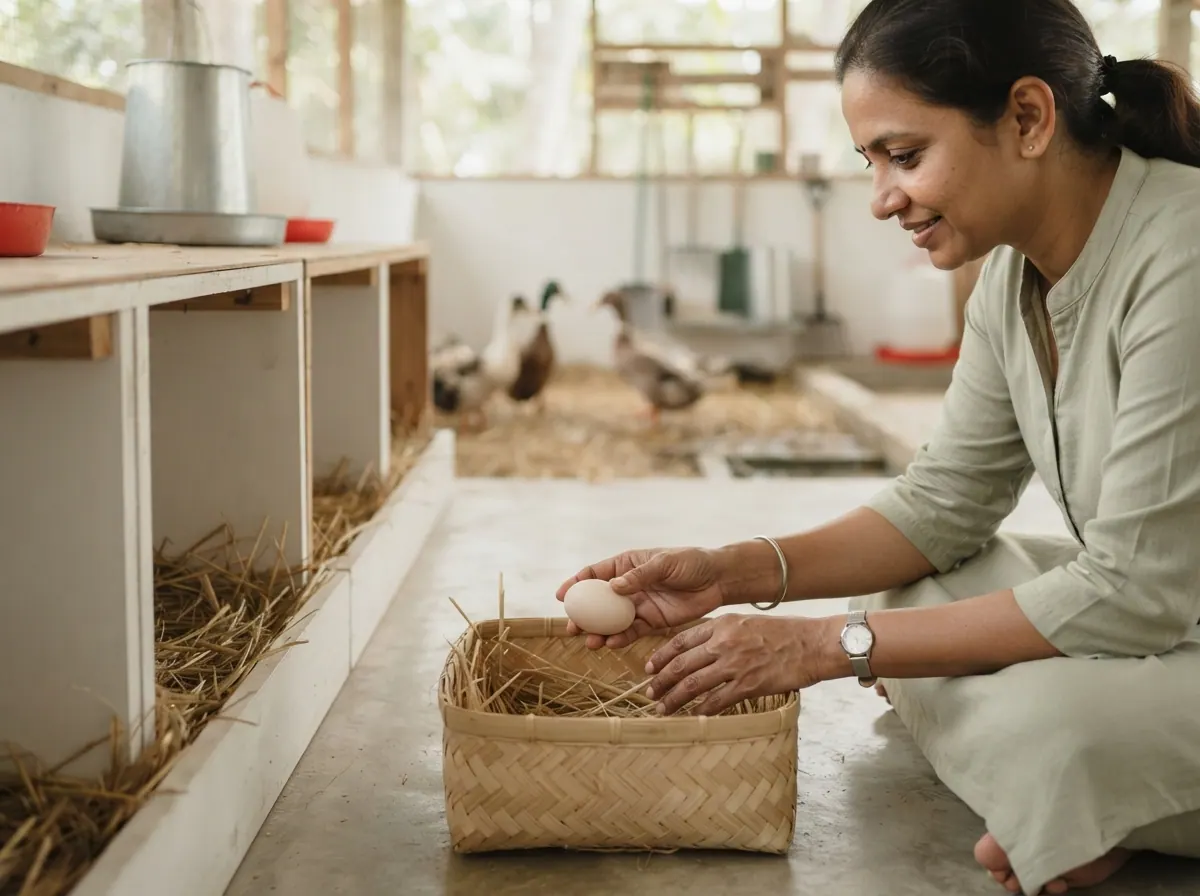
To start duck farming in India you need a dry night shed, access to clean water, healthy ducklings from a reliable hatchery, a vet who knows ducks, and about ₹70,000–1.1 lakh for 100 ducks or ₹2–3.3 lakh for 300. That assumes you already have the land. Layer ducks usually begin laying after about five months, so most of the first income arrives only after you have paid for months of feed.
All figures here are estimates. Check prices near you before you spend.
What does it cost?
| Item | 100 ducks | 300 ducks |
|---|---|---|
| Ducklings | ₹4,000–6,000 | ₹12,000–18,000 |
| Night shed with raised dry floor | ₹20,000–35,000 | ₹60,000–1 lakh |
| Feeders and drinkers | ₹4,000–6,000 | ₹12,000–18,000 |
| Feed until laying starts | ₹30,000–45,000 | ₹90,000–1.35 lakh |
| Water trough or small channel | ₹5,000–10,000 | ₹15,000–30,000 |
| Vaccines and vet visits | ₹3,000–5,000 | ₹8,000–12,000 |
| Egg trays, nest boxes, small tools | ₹3,000–6,000 | ₹8,000–15,000 |
| Total | about ₹70,000–1.1 lakh | about ₹2–3.3 lakh |
Feed is the largest part. If you have a pond with snails and aquatic plants, or paddy fields after harvest where ducks can forage, feed cost falls. Do not rely on it fully, because wild feed varies by season.
Which duck should you keep?
- Khaki Campbell: the most common egg breed. A good flock lays well through the year with decent feed.
- Indian Runner: an upright, active egg duck. It forages well but needs good management.
- Pekin: a white meat duck that grows fast and heavy.
- Muscovy: a meat bird that is quieter, comfortable in small sheds, and eats less than other ducks.
Choose the purpose first: eggs, meat, or both. Then buy the breed your local buyers already know.
How much can it earn?
Take a laying flock of 300 Khaki Campbell ducks in their first year of laying.
Monthly income
- 75% of ducks lay on an average day: 300 × 75% = 225 eggs a day
- 225 eggs × 30 days = 6,750 eggs
- 6,750 eggs × about ₹8 each = ₹54,000
Monthly costs
- Feed: 300 ducks × 0.11 kg × ₹26 a kg × 30 days = ₹25,740
- One part-time helper = ₹8,000
- Vet and vaccines = ₹1,500
- Water, power, repairs = ₹2,000
- Total = about ₹37,240
Left over: ₹54,000 − ₹37,240 = about ₹16,760 a month.
That is a modest number, and it does not include the five months of no eggs while the ducklings grow. It also does not include the loss when the flock gets older, after one or two laying years, and egg numbers fall. At that point you sell the old ducks for meat and replace them with a new batch.
What do you need before you start?
- A buyer for eggs and old birds. Talk to egg traders, sweet shops, bakeries, hotels and meat sellers. In some areas duck eggs sell very well, and in others people hardly buy them.
- Dry bedding and a safe shed. Ducks like water but their night house must stay dry. Foxes, dogs and snakes attack them.
- Clean water for drinking that the ducks can dip their beaks in.
- A vet who has treated ducks, and who can tell you about vaccines for duck plague and cholera.
- Money for five months of feed before the first eggs.
Step by step
- Visit two running duck farms, one egg and one meat, and ask how many ducks they lost last year.
- Build the shed with a raised dry floor, good airflow, a fence, and a door that closes at night.
- Buy ducklings from a hatchery with a known record, and ask for the hatch date and vaccination history.
- Brood the ducklings for the first weeks with warmth, clean water and starter feed.
- Vaccinate on the vet's schedule against the diseases common in your area.
- Switch to grower and then layer feed as advised by your vet or feed supplier, and change feed slowly.
- Collect eggs early in the morning from nest boxes, because ducks often lay at night or early dawn. Keep eggs clean and sell fast.
- Keep a record of feed used, eggs per day and deaths each week.
Which licences apply?
Rules vary by state, so confirm with local offices:
- Panchayat or local permission for the shed, especially if it is near houses.
- Livestock and poultry rules. Ask your district animal husbandry office what registration or reporting a duck farm needs. Avian influenza rules apply to ducks, and officials can order movement limits or culling in an outbreak.
- Loans and schemes. Banks give livestock and poultry loans, and some state schemes support duck rearing. Terms change, so confirm with your district office before you plan around any subsidy.
- Selling eggs or meat in a shop or under a brand may need food licences. Ask the food safety office.
- Tax. Ask a CA how your sales are treated as they grow.
What goes wrong?
- Wet, dirty housing. A damp floor leads to foot problems and disease. Keep bedding dry.
- Duck plague or cholera. Disease can kill many ducks in days. Vaccination and keeping new birds apart matter.
- Avian influenza news. If cases appear near you, movement can stop and egg prices drop. Keep biosecurity strict and watch official notices.
- Predators. Foxes, jackals and stray dogs take ducks from poorly fenced runs, and a single night can wipe out a batch.
- Ducks that stop laying. Poor feed, stress, sudden changes or too little light cause a drop. A sudden fall in eggs means check feed, water and stress, then call the vet.
- No steady buyer. Duck eggs are not eaten everywhere. Find buyers before you buy ducklings.
Situations you will face
What would you do? Each choice costs something.
Getting started
Khaki Campbell ducks give eggs but take five months to start. Pekin ducks grow fast but need a meat buyer.
- Keep Khaki Campbell: Slow start, steady eggs
- Keep Pekin for meat: Quicker sale, uneven buyers
A seller offers ducklings at half the hatchery price. They cannot tell you their hatch date or vaccines.
- Buy from the hatchery: Higher price, healthier birds
- Buy from the seller: Cheaper, deaths likely
A raised slatted floor keeps ducks dry at night but costs more. Bare ground is cheap but turns to mud.
- Build the raised floor: Costlier, dry and healthy
- Use ground with straw: Cheaper, wet in rain
A village pond is close, but it is shared and its water is dull green. A trough is clean but needs filling daily.
- Use a trough with tank water: Labour, fewer infections
- Let them use the pond: Free, disease risk
Neighbours say foxes and stray dogs come at night. A proper fence with a buried base costs more than plain wire.
- Build a strong fence: Costly, protects the flock
- Use plain wire: Cheaper, predator risk
The ducks are four months old. A trader gives a low fixed price; a bakery wants a smaller regular supply.
- Sign with the trader: All eggs sold, lower price
- Supply the bakery and shops: Better price, fewer sales
The government vet mostly sees cattle. A private poultry vet knows ducks but charges more per visit.
- Hire the poultry vet: Higher fee, better advice
- Use the government vet: Cheap, limited duck advice
First month
A cold night is forecast and your brooder lamp is weak. Chilled ducklings huddle and die.
- Add heat lamps tonight: Power cost, ducklings safe
- Cover with extra sacks: Cheap, some may be lost
A shop sells starter feed at two prices. The cheaper one has less protein and the ducklings grow slower.
- Buy the better starter: Costlier, healthy growth
- Buy the cheaper feed: Saves money, slower growth
Several ducklings struggle to stand. The vet says feed and housing may be the cause.
- Call the vet and fix feed: Fee and a feed change
- Wait and watch: Free, more may weaken
The vet comes to vaccinate against duck plague. Your helper says it will stress the birds and cost a day of work.
- Vaccinate on schedule: Fee, protects the flock
- Postpone a month: Saves now, plague risk
Running it
Eggs begin to come, but many are small and thin-shelled. A trader will pay less for them.
- Improve layer feed and calcium: Cost now, better eggs
- Sell them as they are: No cost, lower price
Some ducks lay eggs in the water or in the run at night. You find fewer eggs than you expect.
- Add nest boxes, shut ducks in: Small cost, fewer lost eggs
- Let them roam free: No cost, eggs go missing
Your part-time helper finds a better job. Ducks need feed and eggs must be collected daily.
- Hire a new helper: Pay higher wage
- Do it all yourself: Saves wages, tiring
The feed seller raises their price by two rupees a kilo. A cheaper mix with rice bran is possible.
- Keep the same feed: Higher cost, steady laying
- Mix in rice bran and snails: Saves money, slower laying
A caterer wants three times your usual eggs for a week. You will have to hold back from other buyers.
- Supply the caterer: Good price, others wait
- Keep regular customers: Steady trust, lower income
A neighbour says the duck droppings smell and the quacking is loud. They may go to the panchayat.
- Clean more, move the manure: Cost and effort, calm talks
- Ignore the complaint: No cost, bigger fight later
Rats are eating and fouling the feed sacks. Poison may reach the ducks, and traps take time.
- Raise sacks, set traps: Labour, safe for ducks
- Seal gaps, keep a cat: Slow, safe for ducks
When things go wrong
Water gets into the night shed. Bedding is soaked and ducks stand in muddy water.
- Raise the floor and drain: Costly, protects health
- Change bedding daily: Cheaper, more work
Six ducks die in two days with watery droppings. You fear duck plague.
- Call the vet, isolate the flock: Costly, limits the spread
- Treat with shop medicine: Cheap, may spread
Officials report bird flu in a village nearby. Egg buyers get nervous and the price falls.
- Lock down and follow advice: Costs sales, protects birds
- Report to vet, sell carefully: Slow sales, honest
Daily eggs drop from 220 to 150 over a week. A dog barked all night near the shed.
- Check feed, water and stress: Time and a vet fee
- Change the feed brand: Costs, may be wrong fix
A jackal got through a weak spot in the fence and killed eleven ducks before the dogs barked.
- Rebuild the fence strongly: Costly, safer ahead
- Patch the hole and sleep nearby: Cheap, tiring
Growing
After two seasons, the flock lays far less. You can sell the old ducks for meat and buy new ones.
- Replace the flock: Cost now, eggs come back
- Keep them another season: Saves money, low eggs
A local hotel asks for dressed duck every week. It means a new batch, a separate pen and a slaughter plan.
- Start a Pekin batch: Cost and work, new income
- Stay with eggs only: Simple, no new buyer
A neighbour offers their harvested paddy fields for the ducks to forage in. It saves feed but means walking them daily.
- Take the fields: Cheaper feed, more labour
- Keep feeding in the shed: Easier, higher feed bill
Your bank offers a poultry loan to go from 300 to 600 ducks. Eggs sell, but prices swing.
- Take the loan: More ducks, instalments to pay
- Grow slowly from profit: Safer, slow growth
A shop asks for clean, graded eggs in trays with your name. It needs washing, trays and a small table.
- Grade and pack them: Setup cost, better price
- Sell loose in baskets: No cost, lower price
A supermarket wants your eggs under your farm name. They ask for food safety papers.
- Get the registration: Fee and effort, bigger buyers
- Keep selling to traders: No paperwork, lower price
Nearby growers want to buy droppings for their fields or fish ponds. Collecting it means extra work.
- Collect and sell it: Extra work, small income
- Give it away: Goodwill, no income
Is it right for you?
Duck farming suits you if you have a bit of land, can be at the farm every morning for eggs and feed, and sell in an area where duck eggs and meat are accepted. It suits you less if you need income in the first few months, or if your area has no market for duck products.
A good test: spend two weeks on an existing duck farm, and sell eggs from a small flock of 50 first. If the sums work with your own labour, grow to 300 slowly instead of buying all at once.