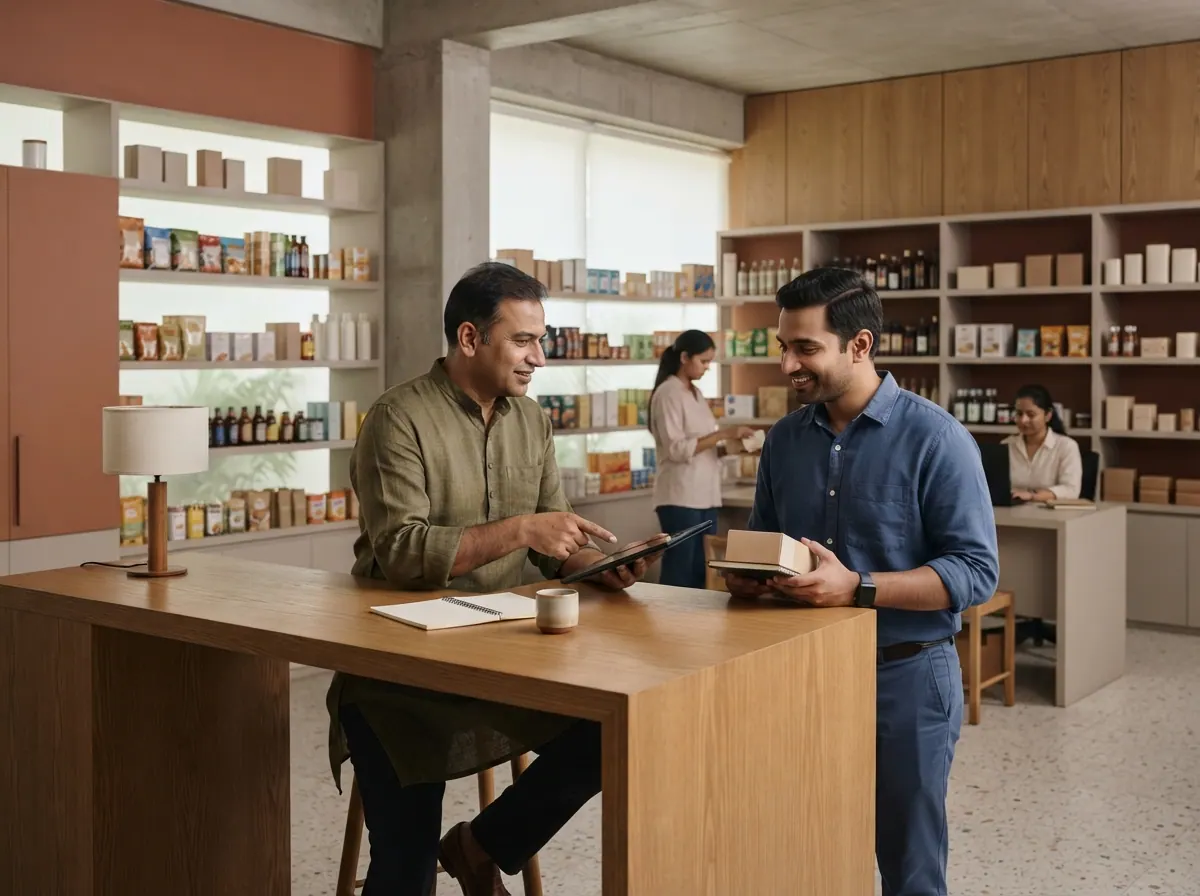
भारत में डिस्ट्रीब्यूटरशिप शुरू करने के लिए आपको चाहिए एक कंपनी जो आपको इलाके के लिए नियुक्त करे, गोदाम, डिलीवरी वाहन, कुछ सेल्समैन जो दुकानों को जानते हों, और लगभग ₹5–30 लाख। पैसा ज़्यादातर स्टॉक, दुकानों को दिए उधार और कंपनी के माँगे गए डिपॉज़िट में जाता है। डिस्ट्रीब्यूटर कंपनी से खरीदकर किराना, जनरल स्टोर और छोटे थोक वालों को बेचता है, और हर बिक्री पर थोड़ा प्रतिशत कमाता है। कमाई मात्रा, जल्दी वसूली और कम एक्सपायरी नुकसान से होती है।
यहाँ सारे आँकड़े अंदाज़े हैं। पैसे लगाने से पहले कंपनी की शर्तें और स्थानीय दाम पूछ लें।
डिस्ट्रीब्यूटरशिप कैसे मिलती है?
खाने, साबुन, बिस्किट, तेल, चाय जैसी चीज़ें बेचने वाली कंपनियाँ इलाके-इलाके में डिस्ट्रीब्यूटर नियुक्त करती हैं। कुछ विज्ञापन देती हैं, कुछ अपने एरिया सेल्स ऑफिस से पूछताछ लेती हैं, और कुछ किसी मौजूदा थोक वाले को चुनती हैं। कंपनी के सेल्स ऑफिस से पूछें:
- क्या आपके शहर या आसपास कोई रिक्ति है?
- गोदाम का आकार, वाहन और स्टाफ कितना चाहिए?
- डिपॉज़िट, उधार की शर्तें और मार्जिन क्या हैं?
- कौन-सी दुकानें और इलाका आपका होगा?
डिस्ट्रीब्यूटरशिप दिलाने का वादा करने वाले को पैसा न दें। नियुक्ति सिर्फ़ कंपनी करती है। आप किसी मौजूदा डिस्ट्रीब्यूटर के सब-डिस्ट्रीब्यूटर या होलसेलर बनकर भी शुरू कर सकते हैं और वहाँ से सीख सकते हैं।
कितना खर्च आता है?
एक शहर और आसपास के गाँव कवर करने वाले छोटे डिस्ट्रीब्यूटर के लिए:
| मद | अंदाज़ा |
|---|---|
| गोदाम की किराये की सिक्योरिटी | ₹50,000–2 लाख |
| रैक, पैलेट, तौल, ऑफिस का सेटअप | ₹50,000–1.5 लाख |
| डिलीवरी वाहन (छोटा पिकअप, पुराना या नया) | ₹1.5–6 लाख |
| बिलिंग सॉफ्टवेयर, फोन, प्रिंटर | ₹30,000–80,000 |
| कंपनी का डिपॉज़िट, जहाँ माँगा जाए | ₹1–5 लाख |
| पहला स्टॉक | ₹2–10 लाख |
| पहले महीने में दुकानों को दिया उधार | ₹1–4 लाख |
| रजिस्ट्रेशन, GST और कागज़ | ₹10,000–30,000 |
| कुल | लगभग ₹5–30 लाख |
स्टॉक और दुकानों के उधार में फँसा पैसा आपका सबसे बड़ा खर्च है। मुनाफ़ा गिनने से पहले इसे गिनें।
कितनी कमाई हो सकती है?
डिस्ट्रीब्यूटर अपनी बिक्री पर प्रतिशत मार्जिन कमाता है, जिसे कंपनी तय करती है। नीचे सिर्फ़ गणित दिखाने के लिए मान लिया गया मार्जिन है।
आमदनी
- दुकानों को महीने की बिक्री: ₹30,00,000
- मान लिया मिला-जुला मार्जिन 5% = ₹1,50,000
खर्च
- गोदाम और ऑफिस का किराया = ₹20,000
- दो सेल्समैन = ₹36,000
- ड्राइवर = ₹14,000
- गाड़ी का तेल और मरम्मत = ₹14,000
- अकाउंटेंट = ₹15,000
- बिजली और फोन = ₹4,000
- डूबा उधार और दुकानों में फँसे पैसे का ब्याज = ₹15,000
- छोटे खर्च = ₹4,000
- कुल = ₹1,22,000
बचत: ₹1,50,000 − ₹1,22,000 = ₹28,000 महीना, और इसी में आपकी अपनी कमाई भी है।
असली मार्जिन और न मिले उधार से जवाब बहुत हिलता है। एक बड़ी दुकान जो ₹1 लाख न दे, कई महीने की कमाई मिटा सकती है।
शुरू करने से पहले क्या चाहिए?
- कंपनी की नियुक्ति। नियुक्ति नहीं तो कंपनी के रेट पर माल नहीं।
- कार्यशील पूँजी। आप कंपनी को जल्दी देते हैं और दुकानें आपको देर से। इस अंतर के लिए पैसा चाहिए।
- गोदाम। सूखा, बारिश, चूहों और चोरी से सुरक्षित, जहाँ प्रोडक्ट और एक्सपायरी तारीख के हिसाब से रखने की जगह हो।
- डिलीवरी वाहन और ड्राइवर। दुकानें हर हफ्ते तय दिन पर डिलीवरी चाहती हैं।
- दुकानों को जानने वाले सेल्समैन। वे दौरा करते हैं, ऑर्डर लेते हैं और पैसा वसूलते हैं। किराना दुकानों को जानने वाले स्थानीय लोग चमकदार CV से ज़्यादा काम के होते हैं।
- बिलिंग सिस्टम। इनवॉइस, स्टॉक, एक्सपायरी तारीखें और हर दुकान का उधार दर्ज होना चाहिए।
कदम-दर-कदम
- बाज़ार घूमें। अपने इलाके की दुकानें गिनें और देखें वे कौन-से ब्रांड रखती हैं और कौन-से गायब हैं।
- कंपनी के एरिया सेल्स ऑफिस से संपर्क करें और पूछें कि डिस्ट्रीब्यूटर कैसे नियुक्त होते हैं।
- गोदाम का इंतज़ाम करें जो उनकी ज़रूरतें पूरी करे, और रैक व तौल लगाएँ।
- एक ड्राइवर और दो सेल्समैन रखें और हर एक को साफ रूट और हर दुकान के लिए हफ्ते का दिन दें।
- पहला ऑर्डर सीमित रखें, खासकर धीमे ब्रांडों का।
- हर दुकान की उधार सीमा लिखकर तय करें, और भुगतान का दिन भी।
- पहले आया, पहले गया। सबसे पुराना माल पहले भेजें और हर हफ्ते एक्सपायरी तारीख देखें।
- जहाँ हो सके डिलीवरी के दिन ही वसूली करें। हफ्ते की वसूली महीने के अंत से आसान है।
- हर महीने हर दुकान की बिक्री देखें और वे ब्रांड आगे बढ़ाएँ जो वे नहीं ले रहीं।
कौन-से लाइसेंस लगते हैं?
- GST रजिस्ट्रेशन दुकानों को बिल देने और कंपनियों से खरीदने के लिए ज़रूरी है।
- Shops and Establishments रजिस्ट्रेशन और जहाँ नगर पालिका माँगे वहाँ ट्रेड लाइसेंस।
- FSSAI लाइसेंस अगर खाने का सामान रखते हैं, क्योंकि नियम खाना स्टोर और वितरित करने वालों पर भी लागू होते हैं। स्थानीय फूड सेफ्टी ऑफिस से पूछें कि कौन-सा लगेगा।
- Udyam रजिस्ट्रेशन मुफ्त है और बैंक लोन में मदद करता है।
- कंपनी का एग्रीमेंट। साइन करने से पहले CA या वकील के साथ पढ़ें, खासकर टारगेट, वापसी और समाप्ति की शर्तें।
यह सब अपने स्थानीय ऑफिस या CA से पक्का कर लें, क्योंकि नियम राज्य के हिसाब से बदलते हैं।
क्या-क्या गलत हो सकता है?
- दुकान का उधार जो वापस नहीं आता। दुकान महीनों माल लेती है और फिर बंद हो जाती है या मालिक बदल जाता है।
- एक्सपायरी का नुकसान। बिस्किट या तेल का पैलेट गोदाम में एक्सपायर हो जाए तो कंपनी वापस न ले तो खर्च आपका।
- कंपनी के टारगेट। कंपनी महीने का टारगेट पूरा करने के लिए दुकानों की माँग से ज़्यादा खरीदवाने का दबाव डाल सकती है।
- सेल्समैन का दुकानों के संपर्क लेकर जाना। सेल्समैन किसी दूसरे डिस्ट्रीब्यूटर के पास चला जाता है और ऑर्डर साथ ले जाता है।
- स्टॉक चोरी और गिनती की गलतियाँ। रोज़ की गिनती न हो तो छोटा रिसाव बड़ा हो जाता है।
- पड़ोसियों की रेट कटिंग। दूसरा थोक वाला वही ब्रांड सस्ता बेचकर आपकी दुकानें खींच लेता है।
- कंपनी की सप्लाई में देरी। कंपनी माल भेजने में देर करती है और दुकानें कहीं और से ले लेती हैं।
ये हालात आपके सामने आएँगे
आप क्या करेंगे? हर फ़ैसले की एक क़ीमत है।
शुरुआत
Someone says they know the area sales manager and can get you a distributorship for ₹2 lakh. You have not written to the company.
- Write to the company office: Takes time, the real route
- Ask other distributors the process: Small cost, the real route
A cheaper godown has a leaking corner and rats. A dry one on the main road costs ₹8,000 more each month.
- Take the dry godown: Higher rent, safe stock
- Take the cheap godown: Saves rent, damage risk
Shops expect weekly delivery. A used pickup costs a lot upfront, while hiring a van per day costs more over time.
- Buy a used pickup: Big cost, full control
- Hire a van by the day: Low cost, sometimes unavailable
The sales officer says a big first order brings a better scheme. Your godown is not yet full of customers.
- Place a big order: Better scheme, cash stuck
- Place a smaller order: Safe cash, thinner scheme
One man has worked for a rival and asks ₹22,000 a month. A fresh hire asks ₹14,000 but does not know the shopkeepers.
- Hire the experienced man: Higher pay, faster start
- Hire the fresher: Lower pay, slow start
Paper bills are cheap but miss expiry dates and shop-wise dues. Software costs money and a few weeks of learning.
- Buy billing software: Cost and training, clear books
- Use paper bills: Cheap, errors build up
You will stock biscuits, oil and tea. Neighbours say nobody checks a small godown.
- Get the food licence first: Fee now, papers clean
- Start with non-food lines only: Smaller range, stay legal
पहला महीना
The largest kirana in your area will take ₹60,000 of goods a month if you give 45 days credit.
- Give 15 days credit: Safer, may lose the shop
- Give 45 days credit: Big shop kept, cash stuck
You cover 300 shops. Weekly visits to all shops cost more fuel and salesman time than visiting the small ones fortnightly.
- Weekly for big shops, fortnightly for small: Saves fuel, small shops miss
- Visit every shop weekly: More cost, steady orders
A company truck brought 98 cartons for a bill of 100. The driver wants you to sign and leave.
- Count and note the shortage: Takes time, claim possible
- Sign and settle later: Quick, a ₹4,000 loss
Forty cartons of biscuits have four weeks of shelf life left. Shops hesitate to take them.
- Offer a discount to shops: Cash back, less margin
- Ask the company to take back: May get credit, takes time
A shopkeeper says three cartons were missing from yesterday's delivery. Your driver says the count was right.
- Credit the shop, check records: Costs money, trust kept
- Refuse until proven: No cost, the shop may leave
A new scheme gives one free pack for every ten, but shops expect a price cut. Your salesmen explain it differently.
- Print a simple scheme sheet: Small cost, clear to all
- Let salesmen explain verbally: Free, fights likely
रोज़ का काम
Shops will order more oil, sweets, packs and gift items before Diwali. The company pushes a large lot.
- Stock heavily: Strong sales, expiry risk
- Stock moderately: Safer, may run out
A wholesaler in the next market sells the same brand 2% cheaper and your small shops are leaving.
- Match with a small discount: Lower margin, keep shops
- Offer better service instead: Costs effort, loyal shops
The salesman knows 120 shops by name and has an offer from a bigger distributor.
- Raise pay and give incentive: Higher cost, stays
- Let go, hire a new one: Saves pay, shops may follow
A mid-size shop has not paid for 80 days and the shutter is half down most days.
- Stop supply, press for payment: Tense, some cash may return
- Keep supplying, hope for payment: Keeps the shop, debt grows
The area manager wants you to take ₹5 lakh more stock this month to qualify for an incentive. Shops do not need that much.
- Take the extra stock: Incentive earned, cash stuck
- Decline politely: Safe cash, manager unhappy
A bridge is washed out and the van cannot reach 40 shops for a week.
- Hire a tractor for deliveries: Costs money, shops served
- Wait for the road: Free, shops buy elsewhere
A small snack brand wants you to distribute in your town. The margin is higher but nobody knows the name.
- Take the brand: Higher margin, slow sales
- Stay with known brands: Safe, margin stays
A salesman's cash collection is ₹9,000 less than the shop receipts show. The salesman says shops paid less.
- Check with every shop: Takes days, clears the gap
- Ask for repayment: Quick, may lose the salesman
Many shops return soaked cartons from one batch. The company has a strict damage claim period.
- Claim with photos in time: Time spent, money back
- Absorb the loss: No effort, loss stays
Rent goes up 12%. A cheaper godown outside town would add distance and fuel to each trip.
- Pay the higher rent: Higher cost, same place
- Move outside town: Saves rent, longer trips
जब मुश्किल आए
A night count shows fifteen cartons short. Only two staff hold the keys.
- Install a camera and daily count: Costs money, deters theft
- Warn the staff only: Free, the gap may continue
Rats have torn open bags of flour and pulses at the back of the godown. About ₹18,000 of stock is hit.
- Clean fully, add pest control: Costs money, safe stock
- Bin it and claim what you can: Smaller loss, more paperwork
Your best-selling brand is out of stock at the company depot. Shops are asking daily.
- Buy from a nearby distributor: Thin margin, shops served
- Wait for the company: Free, shops go elsewhere
A notice says your returns do not match purchases from the company. Some entries were missed.
- Hire a CA to reconcile: Fee and tax, papers clear
- Reply yourself with your bills: Small cost, answer on time
The company wants payment in three days, but shops owe you more than you can collect this week.
- Offer shops a small cash discount: Cash in, lower margin
- Borrow from a private lender: Quick, costly interest
बढ़ाना
The company offers you a neighbouring town too. It needs another godown, salesmen and a lot more credit.
- Take the second territory: Big spend, more volume
- Deepen your own town: Safer, slower growth
A non-competing company wants you for its range, which goes on the same van and to the same shops.
- Take the second range: More income, more stock risk
- Stay with one company: Simple, income limited
क्या यह आपके लिए सही है?
डिस्ट्रीब्यूटरशिप आपके लिए ठीक है अगर आप उधार और वसूली में सहज हैं, छोटी टीम संभालना पसंद करते हैं, और स्थानीय दुकानदारों को जानते हैं। अगर आप स्टॉक और एक्सपायरी का रिकॉर्ड ध्यान से रख सकते हैं तो और अच्छा, क्योंकि नुकसान वहीं छिपते हैं।
अगर आप छोटे पैसे पर जल्दी कमाई चाहते हैं तो कम ठीक है। मार्जिन कम है, पैसा हफ्तों फँसा रहता है, और काम रोज़ का है। पहले यह करके देखें: एक महीना किसी स्थानीय डिस्ट्रीब्यूटर या होलसेलर के साथ बिताएँ, डिलीवरी वैन पर साथ जाएँ, और देखें दुकानें कितनी बार देर से भुगतान करती हैं और कौन-सा स्टॉक अटकता है।