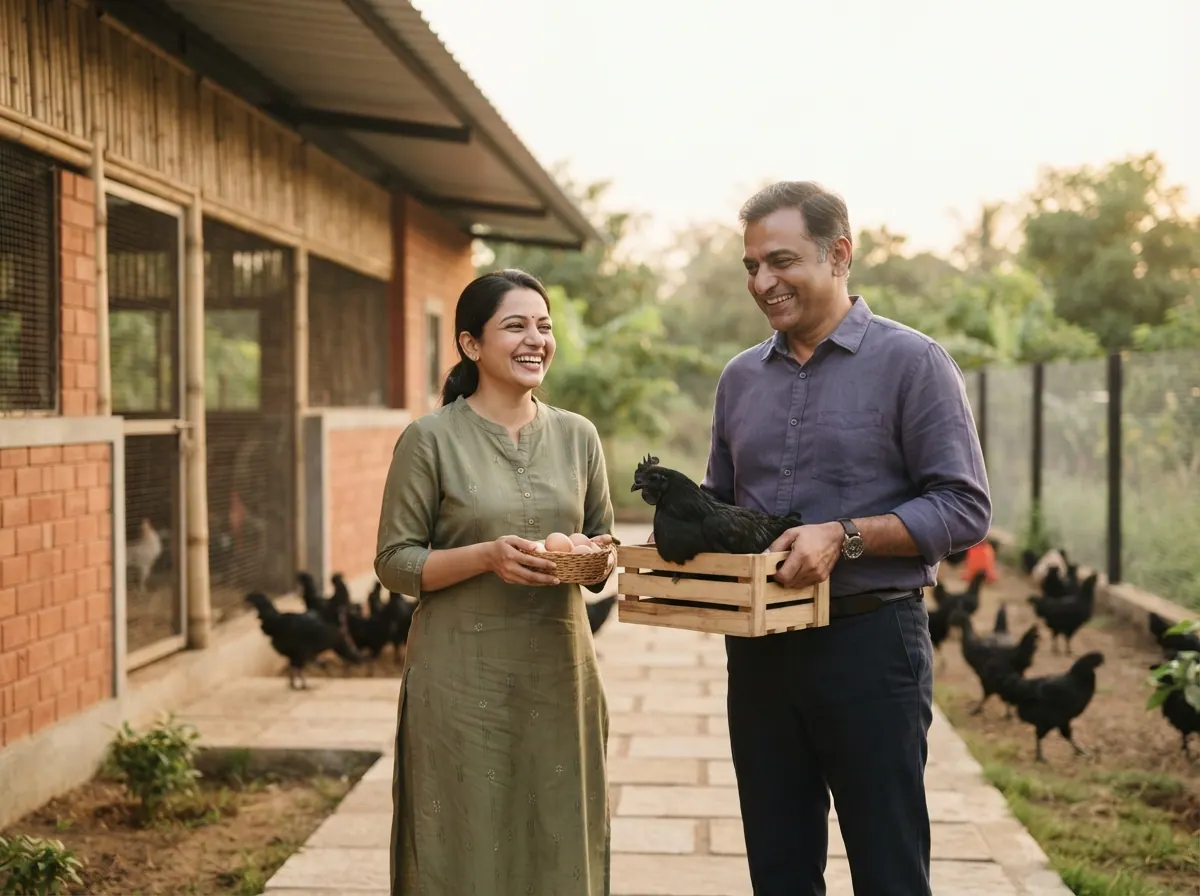
देसी मुर्गी पालन में, ज़मीन आपकी अपनी हो तो, 100 मुर्गियों के लिए करीब ₹50,000–90,000 या 400 मुर्गियों के लिए करीब ₹1.9–3 लाख लगते हैं, और हर बैच बिकने में पांच से छह महीने लेता है। पैसा ब्रॉयलर से ज़्यादा प्रति किलो भाव में है, पर मुर्गियां महीनों खाती हैं, चूज़ों के रूप में आसानी से मरती हैं, और देसी भाव देने वाला खरीदार चाहिए।
यहां के सारे आंकड़े अंदाज़े हैं। पैसा लगाने से पहले अपने इलाके के दाम देख लें।
कितना खर्च आएगा?
| चीज़ | 100 मुर्गियां | 400 मुर्गियां |
|---|---|---|
| छत और तार की जाली वाला ऊंचा शेड | ₹20,000–35,000 | ₹70,000–1 लाख |
| चूज़े (₹50–150 प्रति, कड़कनाथ महंगा) | ₹5,000–15,000 | ₹20,000–40,000 |
| ब्रूडर, बल्ब या हीटर, पर्दे | ₹5,000–10,000 | ₹15,000–25,000 |
| दाना और पानी के बर्तन, ट्रे | ₹5,000–10,000 | ₹15,000–25,000 |
| शुरुआती महीनों का दाना | ₹10,000–15,000 | ₹40,000–55,000 |
| टीके और डॉक्टर | ₹2,000–4,000 | ₹6,000–10,000 |
| बाड़ या खुली जगह, रात का ढक्कन | ₹5,000–10,000 | ₹25,000–40,000 |
| कुल | करीब ₹50,000–90,000 | करीब ₹1.9–3 लाख |
चूज़ों के दाम नस्ल, उम्र और सप्लायर से बहुत बदलते हैं। सिर्फ़ ऐसी हैचरी या फ़ार्म से लें जो टीकों का रिकॉर्ड दे, और पैरेंट मुर्गियां दिखाने को कहें।
दाना सबसे बड़ा चलने का खर्च है। जो मुर्गियां बाहर घूमती हैं वे खरीदा दाना कम खाती हैं, पर तभी जब उनके लिए सुरक्षित जगह हो।
कौन-सी मुर्गी रखें?
- कड़कनाथ: मध्य प्रदेश की काले मांस वाली नस्ल, जिसका काला मांस और अंडे कुछ खरीदार ऊंचे दाम पर लेते हैं। धीरे बढ़ती है और चूज़ों की अच्छी देखभाल चाहती है।
- देसी (लोकल) मुर्गियां: मज़बूत, शुरू करने में सस्ती, और त्योहारों और घर के खाने के लिए अच्छी बिकती हैं।
- सुधरी हुई घरेलू नस्लें और क्रॉस: सरकारी और निजी हैचरी घर के पालन के लिए तैयार मुर्गियां बेचती हैं। वे शुद्ध लोकल मुर्गियों से तेज़ बढ़ती हैं। अपने पशुपालन कार्यालय से पूछें कि आपके पास क्या बिकता है।
- अंडे और मांस दोनों: कुछ फ़ार्म हैचिंग अंडों के लिए झुंड रखते हैं, पर उसमें हैचिंग और इन्क्यूबेटर का खर्च जुड़ता है।
चुनने से पहले अपने शहर के खरीदारों से पूछें कि उन्हें क्या चाहिए, क्योंकि जो मुर्गी आपके बाज़ार में नहीं बिकती वह नुकसान है।
कितनी कमाई हो सकती है?
यह छह महीने तक पाले गए 400 चूज़ों के एक बैच का हिसाब है, किराये के पार्ट-टाइम हेल्पर के साथ।
आमदनी
- 400 चूज़े, करीब 12% मरे = 48 गए, यानी बेचने को 352 मुर्गियां
- औसत ज़िंदा वज़न करीब 1.5 किलो = 528 किलो
- ज़िंदा भाव करीब ₹300 किलो (सुस्त महीने में ₹250 या कम भी हो सकता है)
- 528 × ₹300 = ₹1,58,400
बैच का खर्च
- चूज़े: 400 × ₹60 = ₹24,000
- दाना: करीब 1,400 किलो × ₹32 = ₹44,800
- टीके और दवाइयां = ₹6,000
- पार्ट-टाइम हेल्पर: ₹6,000 × 6 महीने = ₹36,000
- रोशनी, ईंधन और पानी = ₹5,000
- ढुलाई और छोटे खर्च = ₹4,000
- कुल = ₹1,19,800
बचत: ₹1,58,400 − ₹1,19,800 = बैच का करीब ₹38,600, यानी छह महीने में करीब ₹6,400 महीना। ज़िंदा भाव ₹250 हो तो आमदनी ₹1,32,000 रहती है और सिर्फ़ ₹12,200 बचते हैं। घर वाले काम करें तो ₹36,000 वापस जोड़ लें। यहां शेड का खर्च नहीं गिना, इसलिए उसे कई बैचों में वसूलना याद रखें।
चूज़ों की मौत बैच तय करती है। बिकने से पहले हर 10 चूज़े मरने से करीब ₹4,500 की आमदनी चली जाती है।
शुरू करने से पहले क्या चाहिए?
- सूखा, ऊंचा शेड। गीला फ़र्श और नम बिछावन बीमारी लाते हैं। इसे शिकारी-रोधी बनाएं, हवा के लिए जाली और ठंडी रातों के लिए पर्दे के साथ।
- पहले तीन हफ़्ते ब्रूडिंग। चूज़ों को रात-दिन गर्मी और साफ़ पानी चाहिए।
- डॉक्टर या टीके का सप्लायर। अपने local डॉक्टर से टीकों का कैलेंडर पूछें, जिसमें रानीखेत (न्यूकैसल रोग) और वे जो वे सलाह दें।
- देसी मुर्गी जानने वाला खरीदार। local कसाई, होटल, रेस्टोरेंट और त्योहार के खरीदारों से मिलें। पूछें कि कितने साइज़ और रंग पर भाव देते हैं।
- सुरक्षित खुली जगह। मुर्गियों को खुली जगह चाहिए, पर कुत्तों, सांपों, चीलों और चोरी से बचाव भी।
कदम-दर-कदम
- दो चलते फ़ार्म देखें और पूछें कि पिछले बैच में कितने चूज़े मरे और किस भाव पर बिके।
- पहले शेड और ब्रूडर बनाएं, और चूज़ों के आने से पहले उन्हें पूरी तरह सुखा लें।
- ऐसी हैचरी से चूज़े मंगाएं जो टीकों का रिकॉर्ड दे। ठंडे घंटों में डिलीवरी लें, और पानी और ग्लूकोज़ तैयार रखें।
- करीब तीन हफ़्ते ब्रूडिंग करें, शुरू में हर कुछ घंटे गर्मी और जगह देखें।
- समय पर टीके लगवाएं, और नए बैच को पुरानी मुर्गियों से अलग रखें।
- डॉक्टर की सलाह पर खुली जगह या बड़े बाड़े में ले जाएं, दाने के बर्तन ज़मीन से ऊपर रखकर और रोज़ ताज़ा पानी देकर।
- अपने मुख्य खरीदार को लॉट में बेचें, और कुछ हफ़्तों की गुंजाइश रखें ताकि बेहतर हफ़्ते का इंतज़ार कर सकें।
कौन-से लाइसेंस लगते हैं?
छोटे देसी झुंड में कागज़ कम हैं, पर ये देखें:
- local इजाज़त। अपनी पंचायत या नगर पालिका से पूछें कि घरों के पास शेड के लिए मंज़ूरी चाहिए या नहीं, खासकर बड़े स्तर पर।
- सब्सिडी और loan। सरकारी योजनाओं और बैंकों ने कुछ समूहों के लिए घरेलू मुर्गी पालन और छोटी हैचरी में मदद की है। नियम और रकम बदलते रहते हैं, इसलिए अपने ज़िले के पशुपालन कार्यालय से पूछें कि अभी क्या खुला है।
- मांस खुद बेचना। कटा चिकन बेचना खाने का बिज़नेस है जिसका अपना food licence और कटाई के नियम हैं। ज़िंदा मुर्गी व्यापारी को बेचना आसान है। लाइसेंस दफ़्तर से पूछें।
- अंडे और हैचिंग। हैचिंग अंडे या चूज़े बेचने के अपने नियम हो सकते हैं। पशुपालन कार्यालय से पूछें।
- टैक्स। आपकी बिक्री पर टैक्स कैसे लगेगा, यह CA से पूछें।
क्या गलत हो सकता है?
- पहले हफ़्तों में चूज़े मरना। ठंडी रातें, नम बिछावन और गंदा पानी बहुत मारते हैं। यहीं ज़्यादातर नए किसान पैसा खोते हैं।
- रानीखेत फैलना। न्यूकैसल रोग तेज़ी से फैलता है और बहुत मुर्गियां मारता है। समय पर टीके नुकसान से कहीं सस्ते हैं।
- कुत्ते, सांप और चीलें। खुले बाड़े में एक रात एक पूरा बैच खत्म कर सकती है।
- कम भाव पर बेचना। देसी भाव त्योहारों के आसपास चढ़ते हैं और सुस्त महीनों में गिरते हैं। जिस झुंड को अभी बिकना है उसे कम भाव मिलता है।
- नकली देसी खरीदार। कुछ व्यापारी देसी मुर्गी का भाव ब्रॉयलर वाला देते हैं। बाज़ार भाव पहले से जानें।
- उम्र और नस्लें मिलाना। बड़ी मुर्गियां छोटी में बीमारी ला सकती हैं।
ये हालात आपके सामने आएँगे
आप क्या करेंगे? हर फ़ैसले की एक क़ीमत है।
शुरुआत
A trader offers desi chicks at half the hatchery rate. They cannot show any vaccine record.
- Buy from the hatchery: Costs more, records given
- Take the cheap chicks: Saves money, high death risk
Kadaknath chicks cost much more and grow slowly. Local desi chicks are cheaper and hardier.
- Buy Kadaknath chicks: Higher price, fussy chicks
- Buy local desi chicks: Cheaper, lower price
A raised mesh floor stays dry but costs more. A ground floor with litter is cheap but damp in rain.
- Build a raised floor: Costly, fewer sick chicks
- Use a ground floor: Cheap, damp risk
Chicks need heat for three weeks. Bulbs cost little but power cuts leave them cold.
- Buy a gas brooder as backup: Extra cost, steady heat
- Use bulbs only: Cheap, cold-night risk
Dogs roam the area. Strong mesh around the range costs a lot for a small flock.
- Fence the range with mesh: Costly, birds protected
- Keep birds in a small pen: Cheap, birds stay cramped
A hatchery gives a better rate for 300. You have never raised desi birds before.
- Start with 100: Smaller risk, higher price per chick
- Take the 300 lot: Better rate, bigger loss risk
The vet charges per visit for a vaccine plan. A neighbour offers their schedule for free.
- Use the vet's plan: Fee, right schedule
- Copy the neighbour: Free, may not suit
पहला महीना
Chicks are huddled in a corner and some are weak. The shed may be too cold at night.
- Add heat, call the vet: Cost now, saves more chicks
- Cover with sacks: Cheap, more may die
Rain blew into the shed and the litter is wet and smelly. Fresh litter costs money.
- Replace the litter: Costly, healthier chicks
- Turn and dry it: Cheap, disease risk
Chicks drink from the borewell. The water has turned cloudy and smells odd.
- Use clean tank water: Extra cost, safer chicks
- Keep using the borewell: Free, risk of illness
The shop asks a lot more for chick starter. A neighbour offers cheaper homemade mash.
- Buy proper starter: Costly, steady growth
- Use homemade mash: Cheaper, slower growth
You found a snake after a night. Three chicks are missing. The shed has gaps at the base.
- Seal the shed base: Costs now, safer nights
- Set a night watch: Tiring, loss may repeat
रोज़ का काम
The Ranikhet vaccine date has come but the vet is away for a week. A private vet asks extra.
- Pay the private vet: Extra fee, on schedule
- Wait for your own vet: Free, birds unprotected
Ready feed bags cost a lot. Mixing maize and soya yourself saves money but needs care.
- Buy ready feed: Costly, balanced
- Mix your own feed: Cheaper, uneven nutrition
Desi birds sell higher before the festival. Some of your birds are not yet at full weight.
- Sell the heavy ones now: Good price, some stay back
- Hold all to full weight: Extra feed, may miss peak
Neighbours ask for desi eggs from your hens. Selling them uses eggs you could hatch.
- Sell the eggs: Quick income, fewer chicks
- Hatch them for chicks: Incubator cost, more birds
A local butcher offers a price close to broiler rate for your desi birds.
- Refuse and find buyers: Wait, better price
- Accept the low rate: Fast sale, thin income
Several young birds have bloody droppings and look weak. The pen is crowded and damp.
- Call the vet, thin the pen: Costly, saves the batch
- Give shop medicine: Cheaper, may not work
A restaurant wants desi birds each week at a set weight. Your birds grow at different speeds.
- Stagger batches to supply: More feed cost, steady buyer
- Sell lots when ready: Simple, uneven income
Afternoon heat is stressing the flock. Birds are gasping with wings open and drinking heavily.
- Add fans, sprinkle roof: Power and water cost
- Open the sides, wait: Free, some may die
Birds scatter feed from open trays and rats are eating it. Hanging feeders cost money.
- Buy hanging feeders: Costs now, less waste
- Keep the open trays: Free, feed wasted
जब मुश्किल आए
The next farm has sudden deaths and green droppings. A buyer is visiting your farm tomorrow.
- Lock down and call the vet: Costly, protects your birds
- Sell only after vet clears: Delay, money comes later
The lock was cut and the birds are gone. Thefts rise before festivals.
- Add a lock, light and dog: Costly, a deterrent
- Hire a night watchman: Monthly cost, safer
Electricity fails all night in the second week. The chicks are bunching up and shivering.
- Buy an inverter: Costly, steady heat
- Use charcoal heaters: Cheap, fire and gas risk
A trader offers cash for the whole pen, including birds that look unwell. They say they will 'manage' it.
- Sell only healthy birds: Less cash, clean name
- Treat sick birds, sell later: Medicine cost, delay
Your regular trader owes for two lots and wants a third on credit.
- Cash only from now: Safer, fewer sales
- Give a third lot: More owed, sales continue
बढ़ाना
Your first batch sold. A bigger shed needs a loan and more hours of work.
- Build for 400 birds: Big spend, more to sell
- Cut losses first: Small spend, steadier batch
Buying chicks is a big cost. An incubator and parent birds let you hatch your own, but cut into time.
- Buy incubator, keep parents: Setup cost, cheaper chicks
- Keep buying chicks: No setup, higher cost
Households would pay more for cleaned, packed desi chicken. It needs a food licence, a clean room and cold storage.
- Set up with a licence: Costly, better margin
- Keep selling live birds: No licence, normal price
The animal husbandry office mentions support for backyard poultry. It needs papers and nothing is promised.
- Apply with a CA's help: Fees, cleaner records
- Skip the paperwork: No fees, no support
क्या यह आपके लिए सही है?
देसी मुर्गी पालन आपके लिए ठीक है अगर दिन में कई बार मुर्गियां देख सकते हैं, शुरू के नुकसान झेल सकते हैं, और हर बैच के लिए पांच-छह महीने इंतज़ार कर सकते हैं। ठीक नहीं है अगर जल्दी महीने की आमदनी चाहिए या शेड के पास नहीं रह सकते।
एक अच्छा test: 100 मुर्गियों से शुरू करें, मौत, दाना और वज़न का रोज़ का रिकॉर्ड रखें, और बैच अपने चुने खरीदार को बेचें। चूज़ों की मौत काबू में हो और हिसाब बैठे, तब 400 तक बढ़ाएं।