Desi chicken farming in India costs about ₹50,000–90,000 for 100 birds or ₹1.9–3 lakh for 400 birds, on land you already have, and each batch takes five to six months before it sells. The money is in a higher price per kilo than broiler chicken, but the birds eat for months, die easily as chicks, and need a buyer who pays the desi rate.
All figures here are estimates. Check prices near you before you spend.
What does it cost?
| Item | 100 birds | 400 birds |
|---|---|---|
| Raised shed with roof and wire mesh | ₹20,000–35,000 | ₹70,000–1 lakh |
| Chicks (₹50–150 each, Kadaknath costs more) | ₹5,000–15,000 | ₹20,000–40,000 |
| Brooder, bulbs or heater, curtains | ₹5,000–10,000 | ₹15,000–25,000 |
| Feeders, drinkers, trays | ₹5,000–10,000 | ₹15,000–25,000 |
| Feed for the first months | ₹10,000–15,000 | ₹40,000–55,000 |
| Vaccines and vet visits | ₹2,000–4,000 | ₹6,000–10,000 |
| Fencing or range area, night cover | ₹5,000–10,000 | ₹25,000–40,000 |
| Total | about ₹50,000–90,000 | about ₹1.9–3 lakh |
Chick prices differ a lot by breed, age and supplier. Buy only from a hatchery or farm that gives you a vaccine record, and ask to see the parent birds.
Feed is the largest running cost. Birds that range outdoors eat less bought feed, but only if you have safe space for them.
Which bird should you keep?
- Kadaknath: a black-fleshed breed from Madhya Pradesh, with dark meat and eggs sold at a premium to some buyers. It is slow-growing and needs good chick care.
- Local desi (country) birds: hardy, cheap to start, and sell well for festivals and home cooking.
- Improved backyard breeds and crosses: government and private hatcheries sell birds bred for backyard rearing. They grow faster than pure local birds. Ask your animal husbandry office what is sold near you.
- Eggs and meat both: some farms keep a flock for hatching eggs, but that adds a hatching and incubator cost.
Ask the buyers in your town what they want before you choose, since a bird that does not sell in your market is a loss.
How much can it earn?
Here is one batch of 400 chicks grown to six months, with a hired part-time helper.
Income
- 400 chicks, about 12% die = 48 lost, so 352 birds to sell
- Average live weight about 1.5 kg = 528 kg
- Live price about ₹300 a kg (it can be ₹250 or less in a slack month)
- 528 × ₹300 = ₹1,58,400
Costs for the batch
- Chicks: 400 × ₹60 = ₹24,000
- Feed: about 1,400 kg × ₹32 = ₹44,800
- Vaccines and medicines = ₹6,000
- Part-time helper: ₹6,000 × 6 months = ₹36,000
- Light, fuel and water = ₹5,000
- Transport and small costs = ₹4,000
- Total = ₹1,19,800
Left over: ₹1,58,400 − ₹1,19,800 = about ₹38,600 for the batch, or about ₹6,400 a month over six months. If the live price is ₹250, income is ₹1,32,000 and you keep only ₹12,200. If family does the work, add back the ₹36,000. Shed cost is not counted here, so remember to pay it back over several batches.
Chick losses decide the batch. Every 10 chicks that die before sale take away about ₹4,500 of income.
What do you need before you start?
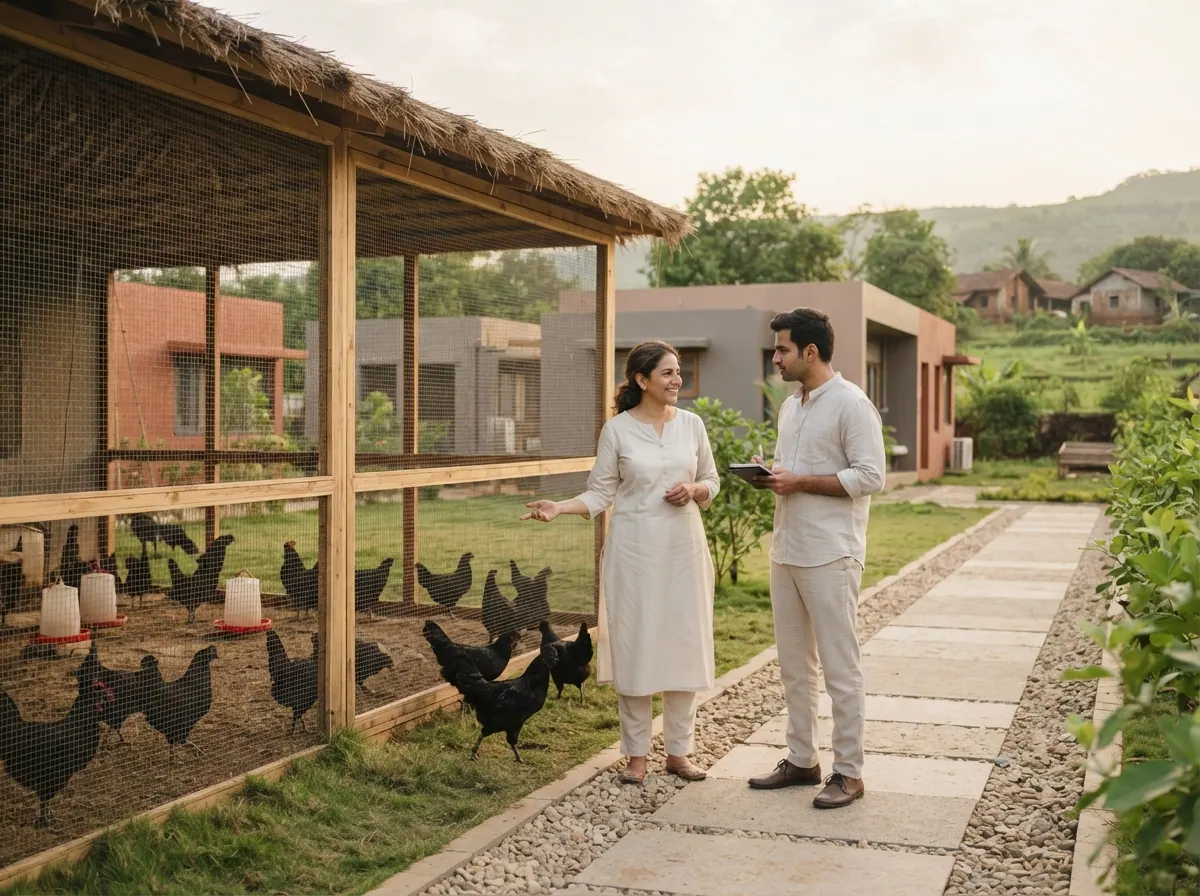
- A dry, raised shed. Wet floors and damp bedding cause disease. Make it predator-proof, with mesh for ventilation and curtains for cold nights.
- Brooding for the first three weeks. Chicks need warmth and clean water night and day.
- A vet or vaccine supplier. Ask your local vet for a vaccine plan, including Ranikhet (Newcastle disease) and others they advise.
- A buyer who knows desi birds. Visit local butchers, hotels, restaurants and festival buyers. Ask what size and colour they pay for.
- Safe range space. Birds need open space but also protection from dogs, snakes, kites and theft.
Step by step
- Visit two working farms and ask how many chicks died in their last batch and what they sold at.
- Build the shed and brooder first, and dry them fully before chicks arrive.
- Order chicks from a hatchery that gives you a vaccine record. Take delivery in cool hours, and have water and glucose ready.
- Brood for about three weeks, checking heat and spacing every few hours at first.
- Vaccinate on schedule, and keep new batches apart from older birds.
- Move to a range or larger pen as the vet advises, with feeders raised off the ground and fresh water daily.
- Sell in lots to your main buyer, and keep a few weeks of flexibility so you can wait for a better week.
Which licences apply?
A small desi flock has little paperwork, but check:
- Local permission. Ask your panchayat or municipality if a shed near houses needs approval, especially at a larger scale.
- Subsidy and loans. Government schemes and banks have supported backyard poultry and small hatcheries for some groups. Rules and amounts change, so ask your district animal husbandry office what is open now.
- Selling meat yourself. Selling dressed chicken is a food business with its own food licence and slaughter rules. Selling live birds to a trader is simpler. Ask the licensing office.
- Eggs and hatching. Selling hatching eggs or chicks may have its own rules. Ask the animal husbandry office.
- Tax. Ask a CA how your sales are treated.
What goes wrong?
- Chicks die in the first weeks. Cold nights, damp bedding, and dirty water kill many. This is where most new farmers lose money.
- Ranikhet outbreak. Newcastle disease spreads fast and kills many birds. Vaccination on time is far cheaper than a loss.
- Dogs, snakes and kites. One night in an open pen can end a batch.
- Selling when the rate is low. Desi prices rise around festivals and fall in slack months. A flock that must be sold now gets the low rate.
- Fake desi buyers. Some traders pay broiler rates for desi birds. Know your market price in advance.
- Mixing ages and breeds. Older birds can carry disease to young ones.
Situations you will face
What would you do? Each choice costs something.
Getting started
A trader offers desi chicks at half the hatchery rate. They cannot show any vaccine record.
- Buy from the hatchery: Costs more, records given
- Take the cheap chicks: Saves money, high death risk
Kadaknath chicks cost much more and grow slowly. Local desi chicks are cheaper and hardier.
- Buy Kadaknath chicks: Higher price, fussy chicks
- Buy local desi chicks: Cheaper, lower price
A raised mesh floor stays dry but costs more. A ground floor with litter is cheap but damp in rain.
- Build a raised floor: Costly, fewer sick chicks
- Use a ground floor: Cheap, damp risk
Chicks need heat for three weeks. Bulbs cost little but power cuts leave them cold.
- Buy a gas brooder as backup: Extra cost, steady heat
- Use bulbs only: Cheap, cold-night risk
Dogs roam the area. Strong mesh around the range costs a lot for a small flock.
- Fence the range with mesh: Costly, birds protected
- Keep birds in a small pen: Cheap, birds stay cramped
A hatchery gives a better rate for 300. You have never raised desi birds before.
- Start with 100: Smaller risk, higher price per chick
- Take the 300 lot: Better rate, bigger loss risk
The vet charges per visit for a vaccine plan. A neighbour offers their schedule for free.
- Use the vet's plan: Fee, right schedule
- Copy the neighbour: Free, may not suit
First month
Chicks are huddled in a corner and some are weak. The shed may be too cold at night.
- Add heat, call the vet: Cost now, saves more chicks
- Cover with sacks: Cheap, more may die
Rain blew into the shed and the litter is wet and smelly. Fresh litter costs money.
- Replace the litter: Costly, healthier chicks
- Turn and dry it: Cheap, disease risk
Chicks drink from the borewell. The water has turned cloudy and smells odd.
- Use clean tank water: Extra cost, safer chicks
- Keep using the borewell: Free, risk of illness
The shop asks a lot more for chick starter. A neighbour offers cheaper homemade mash.
- Buy proper starter: Costly, steady growth
- Use homemade mash: Cheaper, slower growth
You found a snake after a night. Three chicks are missing. The shed has gaps at the base.
- Seal the shed base: Costs now, safer nights
- Set a night watch: Tiring, loss may repeat
Running it
The Ranikhet vaccine date has come but the vet is away for a week. A private vet asks extra.
- Pay the private vet: Extra fee, on schedule
- Wait for your own vet: Free, birds unprotected
Ready feed bags cost a lot. Mixing maize and soya yourself saves money but needs care.
- Buy ready feed: Costly, balanced
- Mix your own feed: Cheaper, uneven nutrition
Desi birds sell higher before the festival. Some of your birds are not yet at full weight.
- Sell the heavy ones now: Good price, some stay back
- Hold all to full weight: Extra feed, may miss peak
Neighbours ask for desi eggs from your hens. Selling them uses eggs you could hatch.
- Sell the eggs: Quick income, fewer chicks
- Hatch them for chicks: Incubator cost, more birds
A local butcher offers a price close to broiler rate for your desi birds.
- Refuse and find buyers: Wait, better price
- Accept the low rate: Fast sale, thin income
Several young birds have bloody droppings and look weak. The pen is crowded and damp.
- Call the vet, thin the pen: Costly, saves the batch
- Give shop medicine: Cheaper, may not work
A restaurant wants desi birds each week at a set weight. Your birds grow at different speeds.
- Stagger batches to supply: More feed cost, steady buyer
- Sell lots when ready: Simple, uneven income
Afternoon heat is stressing the flock. Birds are gasping with wings open and drinking heavily.
- Add fans, sprinkle roof: Power and water cost
- Open the sides, wait: Free, some may die
Birds scatter feed from open trays and rats are eating it. Hanging feeders cost money.
- Buy hanging feeders: Costs now, less waste
- Keep the open trays: Free, feed wasted
When things go wrong
The next farm has sudden deaths and green droppings. A buyer is visiting your farm tomorrow.
- Lock down and call the vet: Costly, protects your birds
- Sell only after vet clears: Delay, money comes later
The lock was cut and the birds are gone. Thefts rise before festivals.
- Add a lock, light and dog: Costly, a deterrent
- Hire a night watchman: Monthly cost, safer
Electricity fails all night in the second week. The chicks are bunching up and shivering.
- Buy an inverter: Costly, steady heat
- Use charcoal heaters: Cheap, fire and gas risk
A trader offers cash for the whole pen, including birds that look unwell. They say they will 'manage' it.
- Sell only healthy birds: Less cash, clean name
- Treat sick birds, sell later: Medicine cost, delay
Your regular trader owes for two lots and wants a third on credit.
- Cash only from now: Safer, fewer sales
- Give a third lot: More owed, sales continue
Growing
Your first batch sold. A bigger shed needs a loan and more hours of work.
- Build for 400 birds: Big spend, more to sell
- Cut losses first: Small spend, steadier batch
Buying chicks is a big cost. An incubator and parent birds let you hatch your own, but cut into time.
- Buy incubator, keep parents: Setup cost, cheaper chicks
- Keep buying chicks: No setup, higher cost
Households would pay more for cleaned, packed desi chicken. It needs a food licence, a clean room and cold storage.
- Set up with a licence: Costly, better margin
- Keep selling live birds: No licence, normal price
The animal husbandry office mentions support for backyard poultry. It needs papers and nothing is promised.
- Apply with a CA's help: Fees, cleaner records
- Skip the paperwork: No fees, no support
Is it right for you?
Desi chicken farming suits you if you can check birds several times a day, can handle early losses, and can wait five to six months for each batch. It suits you less if you need quick monthly income or cannot be near the shed.
A good test: start with 100 birds, keep a daily record of deaths, feed and weight, and sell the batch to the buyer you have chosen. If your chick deaths are under control and the numbers add up, then grow to 400.