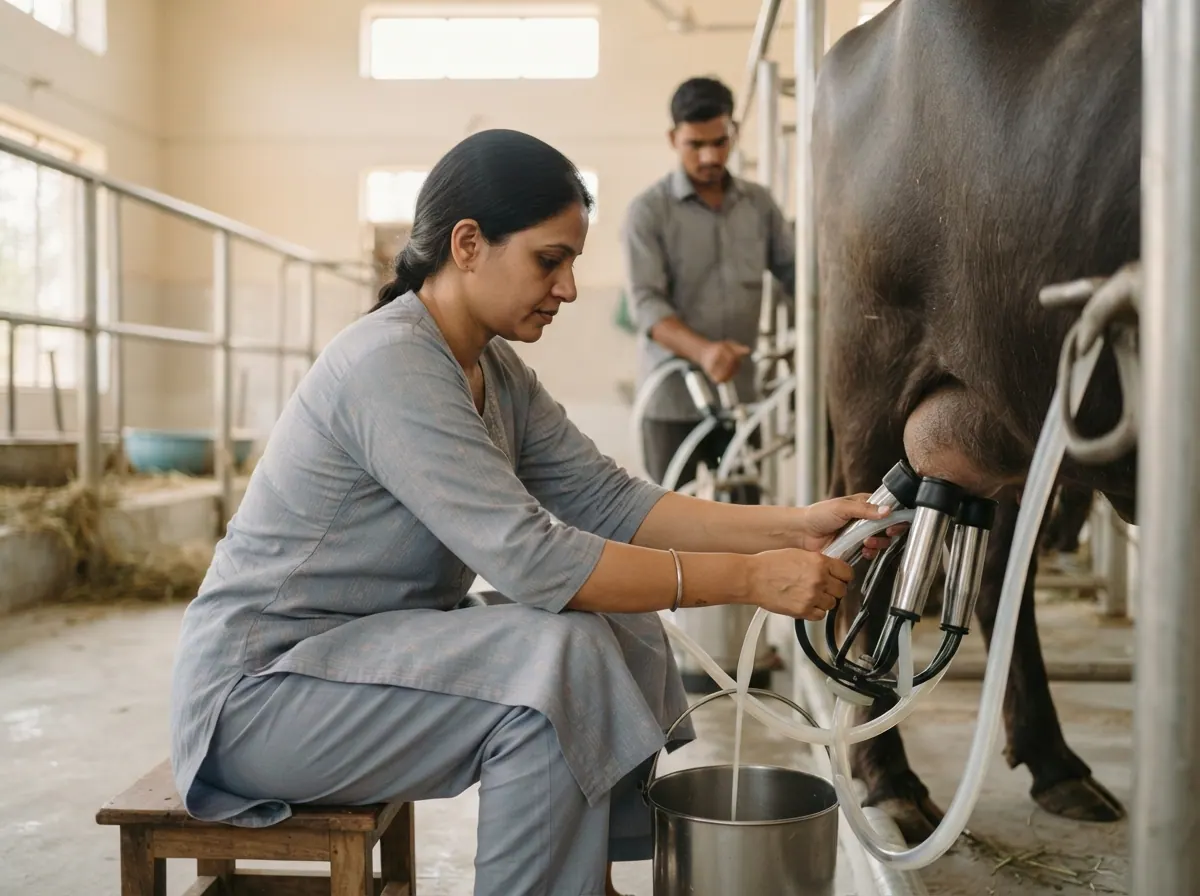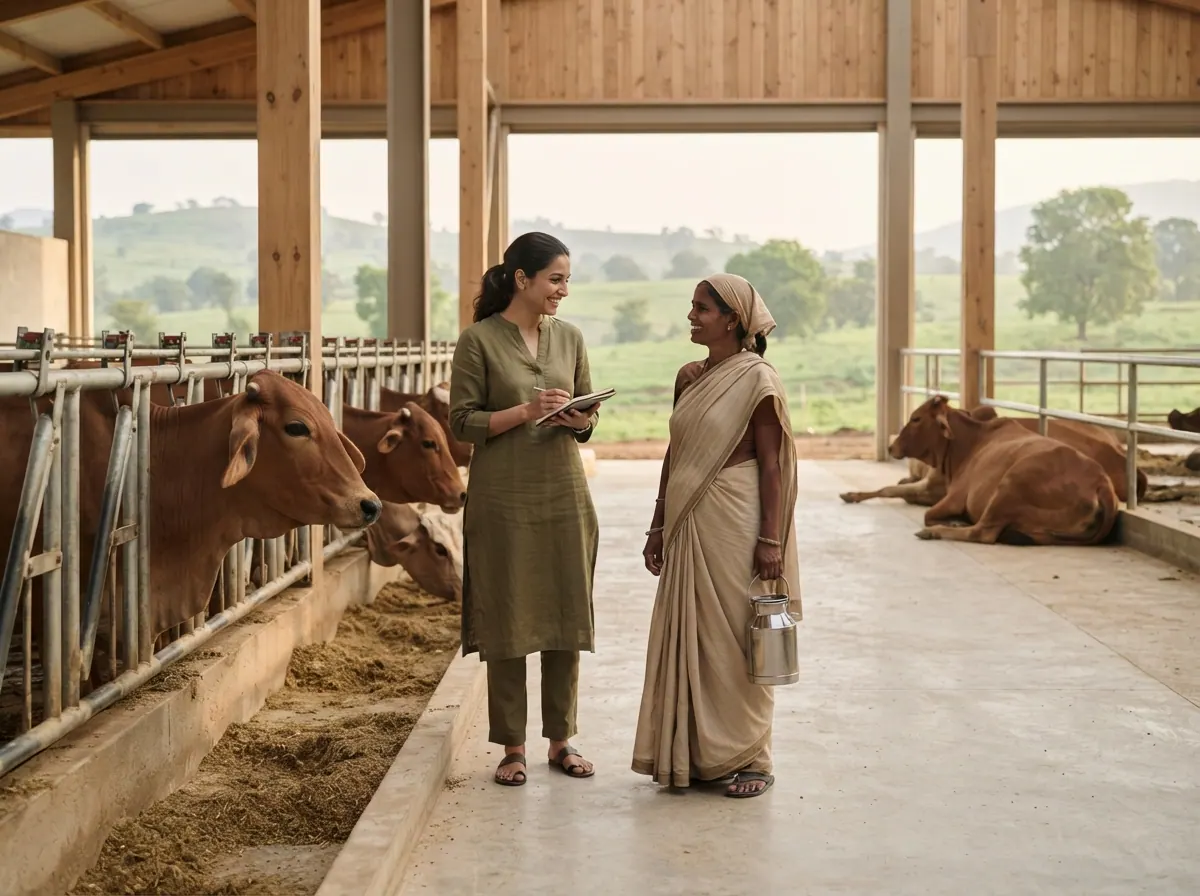
भारत में डेयरी फार्म शुरू करने के लिए आपको चाहिए सूखे फ़र्श वाला साफ़ शेड, स्वस्थ दुधारू जानवर, चारे की योजना, बुलाने लायक डॉक्टर, और 10 जानवरों के लिए करीब ₹9.5–15 लाख, या मिल्किंग मशीन के साथ 20 जानवरों के लिए ₹20–30 लाख। यह कुछ अपनी ज़मीन होने पर है। इसमें कमाई रोज़ दो बार दूध बेचने से होती है, इसलिए खरीदा हुआ दुधारू जानवर कुछ ही दिन में पैसा देने लगता है, पर चारा रोज़ का बिल है, भले जानवर सूखा हो।
यहाँ सारे आँकड़े अंदाज़े हैं। पैसा लगाने से पहले अपने इलाके के दाम ज़रूर देख लें।
इसमें कितना खर्च आता है?
| मद | 10 जानवर | 20 जानवर |
|---|---|---|
| जानवर (गाय या भैंस, दूध में) | ₹6–9 लाख | ₹12–18 लाख |
| छत, फ़र्श और नाँद वाला शेड | ₹1.5–2.5 लाख | ₹3–5 लाख |
| चारा काटने की मशीन | ₹30,000–45,000 | ₹40,000–60,000 |
| मिल्किंग मशीन | नहीं (हाथ से दूध) | ₹60,000–1 लाख |
| चारे का खेत तैयार करना | ₹30,000–50,000 | ₹60,000–1.2 लाख |
| पानी, नाली और धुलाई | ₹30,000–60,000 | ₹80,000–1.2 लाख |
| दो महीने का फीड रिज़र्व | ₹80,000–1.2 लाख | ₹1.6–2.4 लाख |
| बीमा | ₹20,000–35,000 | ₹40,000–65,000 |
| डॉक्टर, टीके, मिनरल मिक्स | ₹15,000–25,000 | ₹30,000–50,000 |
| कुल | करीब ₹9.5–15 लाख | करीब ₹20–30 लाख |
सबसे बड़ा खर्च जानवर का दाम है। जो गाय रोज़ 15 लीटर देती है वह 8 लीटर वाली से काफ़ी महँगी होती है, इसलिए पैसे देने से पहले उसे दुहते हुए देखें। अगर आप बड़े जानवर खरीदने की जगह अपनी बछिया पालें तो शुरुआती खर्च कम होता है, पर आमदनी दो से तीन साल बाद शुरू होती है।
गाय या भैंस?
- क्रॉसब्रीड गाय (होल्स्टीन फ्रीज़ियन या जर्सी क्रॉस): ज़्यादा लीटर देती है, पर अच्छा चारा, छाया और गर्मी में पंखे चाहिए।
- देसी गाय (गिर, साहीवाल, थारपारकर आदि): मज़बूत, दूध कम, और कुछ खरीदार इसके लिए ज़्यादा देते हैं। यह अपने इलाके में जाँच लें।
- मुर्रा और दूसरी भैंस: गाढ़ा दूध, जिसका वहाँ अच्छा भाव मिलता है जहाँ रेट फैट पर चलता है। भैंस गर्मी में देर से आती है और ब्याने में ज़्यादा अंतर रखती है।
अपने नज़दीकी दूध संग्रह केंद्र से पूछें कि वह किसका ज़्यादा भाव देता है, और उसका फैट-SNF रेट चार्ट कैसा है।
कितनी कमाई हो सकती है?
यह 10 जानवरों वाले जमे हुए फार्म का हिसाब है, जिसमें 8 दूध में हैं, एक सामान्य महीने में।
एक महीने में बिका दूध
- 8 दुधारू जानवर × रोज़ करीब 10 लीटर = रोज़ 80 लीटर
- 80 लीटर × करीब ₹38 प्रति लीटर = ₹3,040 रोज़
- ₹3,040 × 30 दिन = करीब ₹91,200 महीना
हर महीने का खर्च
- चारा (कंसन्ट्रेट, सूखा चारा और कुछ खरीदा हरा चारा): 8 दूध देने वाले जानवर × ₹215 रोज़ + 2 सूखे जानवर × ₹110 रोज़ = ₹1,940 रोज़ × 30 = ₹58,200
- एक पेड वर्कर = ₹12,000
- डॉक्टर और दवा = ₹3,000
- बिजली, पानी और मरम्मत = ₹2,500
- ब्याने-गाभिन कराने और छोटे खर्च = ₹1,500
- ढुलाई और समिति के चार्ज = ₹2,000
- कुल = ₹79,200
बचत: ₹91,200 − ₹79,200 = करीब ₹12,000 महीना।
बछड़े बिकने और गोबर की खाद से थोड़ा और आता है, पर इस हिसाब में वह नहीं गिना। अगर आपका परिवार खुद काम करे तो वर्कर के ₹12,000 भी बचते हैं। कमज़ोर जगहें हैं सूखे महीने, जब जानवर खाता है पर दूध नहीं देता, और थनैला वाला एक जानवर या अगले बछड़े में लंबा अंतर, जिससे दूध काफ़ी घट सकता है।
शुरू करने से पहले क्या चाहिए?
- अपना उगाया चारा। अगर मौसम सूट करे तो नेपियर या मक्का और रिजका से चारा बहुत सस्ता पड़ता है।
- ऐसी जगह जो दूध उसी दिन ले ले। सहकारी समिति, प्राइवेट डेयरी चिलिंग सेंटर या अपने पक्के घरेलू ग्राहक।
- रात में बुलाने लायक डॉक्टर। जानवर दफ़्तर के समय का इंतज़ार नहीं करते।
- साफ़ पानी। दुधारू जानवर बहुत पानी पीता है, इसलिए गर्मी में सप्लाई देख लें।
- सूखे महीनों के लिए नकद। आपके कुछ जानवर किसी भी समय सूखे होंगे।
कदम दर कदम
- किसी चालू डेयरी पर एक हफ़्ता बिताएँ। सुबह 4 बजे की दुहाई, चारा और सफ़ाई देखें।
- शेड बनाएँ, जिसमें ढलान वाला फिसलन-रहित फ़र्श, नाली, छाया और अच्छी हवा हो, और बछड़ों व बीमार जानवर के लिए अलग कोना हो।
- जानवर छोटे लॉट में खरीदें जाने-माने किसान या ब्रीडर से, और उन्हें दुहते हुए देखें। थन, चूचक और पैर जाँचें, और पिछले ब्याने और टीकों के बारे में पूछें।
- नए जानवरों को अलग रखें जितना डॉक्टर कहे, फिर टीके लगवाएँ। मुँहपका-खुरपका, ब्रूसेलोसिस, लम्पी स्किन रोग और कीड़े की दवा के बारे में डॉक्टर से पूछें।
- फीड का रूटीन बनाएँ, तय समय और मात्रा के साथ, और फीड धीरे-धीरे बदलें।
- हर जानवर का रिकॉर्ड रखें: दूध, ब्याने की तारीख, गाभिन कराने की तारीख और इलाज।
- दुहाई से पहले और बाद में थन धोएँ और सुखाएँ, और दूध ढककर जल्दी ठंडा करें।
- ब्याने की योजना बनाएँ ताकि हमेशा कुछ जानवर दूध में रहें और आमदनी स्थिर रहे।
कौन-से लाइसेंस लगते हैं?
- स्थानीय अनुमति पंचायत या नगर निकाय से शेड के लिए, और घरों या पानी के पास गोबर-मूत्र के निपटान की योजना।
- FSSAI रजिस्ट्रेशन या लाइसेंस चाहिए अगर आप दूध या दूध के उत्पाद बेचते हैं, सिवाय तब जब आप किसी डेयरी सहकारी समिति के रजिस्टर्ड सदस्य हों और सारा दूध उसी को देते हों। खाद्य सुरक्षा कार्यालय से पक्का करें।
- लोन और योजनाएँ। बैंकों और नाबार्ड से जुड़ी डेयरी योजनाओं ने डेयरी फार्म को सहारा दिया है, और किसान क्रेडिट कार्ड पशुपालन तक बढ़ाया गया है। पुरानी डेयरी पूंजी सब्सिडी योजना (DEDS) 2020 में बंद हो चुकी है, इसलिए कुछ ब्लॉग जो 25% सब्सिडी बताते हैं, उस पर भरोसा न करें। नियम बदलते हैं, इसलिए अपने बैंक और ज़िला कार्यालय से पूछें।
- पशु बीमा में आमतौर पर कान का टैग और जानवर मरने पर डॉक्टर की रिपोर्ट चाहिए। पहले शर्तें पढ़ लें।
- टैक्स। बिक्री बढ़ने पर CA से पूछें।
क्या गलत हो सकता है?
- थनैला (मास्टाइटिस)। गंदे थन या गीला फ़र्श थन को सुजा सकता है, दूध खराब कर सकता है और हफ़्तों की कमाई छीन सकता है।
- ट्रेडर की बात पर गाय खरीदना। कुछ जानवर बिक्री के दिन ज़्यादा दूध के साथ दिखाए जाते हैं। खुद दुहकर देखें।
- गर्मी का तनाव। गर्मी में दूध घटता है और जानवर गर्मी में नहीं आते। छाया, पानी और पंखे का पैसा वापस आता है।
- फीड का बिल बढ़ना। दुकान पर कंसन्ट्रेट सस्ता लगता है पर रोज़ का सबसे बड़ा खर्च वही है।
- बछड़ों के बीच लंबा अंतर। जानवर जितना महीना गाभिन नहीं होता, उतना महीना चारा खाता है और दूध कम देता है।
- इलाके में बीमारी। मुँहपका-खुरपका और लम्पी स्किन तेज़ी से फैलते हैं। टीके और नए जानवरों को अलग रखना ज़रूरी है।
- दूध का पेमेंट देर से आना। देर से पैसे देने वाला प्राइवेट खरीदार आपको चारे के लिए तंग कर सकता है।
ये हालात आपके सामने आएँगे
आप क्या करेंगे? हर फ़ैसले की एक क़ीमत है।
शुरुआत
A trader says this cow gives 16 litres a day and wants a high price. You have only seen it milked once.
- Milk it yourself twice: Delay, a true figure
- Pay on the trader's word: Quick deal, yield may drop
Cows give more litres, but the society pays well for buffalo fat. Cows need shade and fans in summer.
- Buy crossbred cows: More litres, more fans and feed
- Buy Murrah buffaloes: Rich milk, fewer litres
The mason says a rough, sloped floor costs more than plain cement. A smooth floor is cheap but animals slip.
- Rough sloped floor: Higher cost, fewer injuries
- Plain cement floor: Cheaper, slip risk
You have a spare acre. Planting costs money and gives nothing for two months, while green fodder can be bought daily.
- Plant the napier: Cost now, cheaper feed later
- Buy fodder daily: No planting, higher feed bill
The village society pays by fat and keeps a monthly cut. A private dairy offers a higher flat rate but pays after fifteen days.
- Join the society: Steady, fair, lower rate
- Sell to the private dairy: Higher rate, late payment
Four cows come from a mela. The vet told you to keep new animals apart, and there is no pen.
- Build a small pen: Cost now, safe herd
- Tie them in the main shed: No cost, infection risk
पहला महीना
A cow has calved and the calf will not stand or suck. The vet charges extra at night.
- Call the vet now: Night fee, better chance
- Wait until morning: Saves the fee, may lose it
Milk from one quarter shows clots and the udder feels hot. Your helper says milk it out and carry on.
- Call the vet, test the milk: Fee and discarded milk
- Discard that milk, sell the rest: Lose some milk, safe for buyers
It takes ten extra minutes a cow and needs clean cloth and water. The helper wants to skip it.
- Do it every time: Time and soap, cleaner milk
- Use a quick dip cup: Small cost, still cleaner milk
The insurance agent needs ear tags and a vet's health note. It costs money before any claim.
- Tag and insure all: Premium now, claim cover
- Insure only the best two: Lower cost, others at risk
A dealer's new brand is cheaper per bag. The cows are used to the old one and milk is steady.
- Stay with the old feed: Higher cost, steady milk
- Switch at once: Cheaper, milk may drop
The government camp is free but weeks away. A private vet can come this week for a fee.
- Pay the private vet: Cost, covered now
- Wait for the camp: Free, weeks unprotected
रोज़ का काम
At forty-four degrees the cows pant and milk has fallen a litre each. Fans and a sprinkler cost money.
- Fit fans and sprinklers: Cost and power, milk holds
- Give shade cloth only: Cheap, milk dips
It has been bred twice and has not conceived. Every extra month is feed with little milk.
- Vet check and treatment: Cost, better chance
- Try the bull once more: Cheap, may fail again
Maize is cheap now. Silage needs a pit, plastic and labour but saves green fodder in summer.
- Make silage: Cost and work, cheap feed later
- Buy dry fodder later: No work, higher cost later
Your fat reading fell and the rate dropped. A neighbour says a little water and powder fixes it.
- Fix the feed and wait: Slower, honest milk
- Accept the lower rate for now: Less money, honest milk
The dairy owes you a month of milk money and says next week. Feed dealers want cash on delivery.
- Switch to the society: Steady pay, lower rate
- Wait and borrow for feed: Loan interest, keeps buyer
Twenty families ask for fresh milk each morning at a better rate. It takes a bike, bottles and two hours daily.
- Start home delivery: Bike and time, better price
- Send all to the society: Easy, lower rate
A vegetable grower will pay for every trolley of dung. You were also thinking of a biogas plant.
- Sell the dung: Extra cash, no biogas
- Build a small biogas unit: Cost now, gas and slurry
जब मुश्किल आए
Three cows in the next lane have skin lumps and fever. Your animals graze on the same road.
- Keep herd in, call the vet: Costs fodder and fees
- Isolate lumpy cows, discard their milk: Costs milk and fees, protects people
It dies after a day of bloat and gasping. Insurance needs the vet's note and tag number.
- File the claim properly: Effort and fee, payout
- Skip the paperwork: No effort, no payout
No rain for weeks and your napier is wilting. Dealers raise the price of bought fodder.
- Buy fodder at high price: Heavy cost, milk holds
- Cut the ration: Saves money, milk drops
The society bike broke down and two cans turned in the sun. The society refuses them.
- Buy a chilling can and ice: Cost, protects future milk
- Boil it down at home: Cheap, small returns
Your regular milker quits after the festival. Milking is at four tomorrow and you have no one trained.
- Hire a milker at higher pay: Higher wage, steady work
- Do it yourselves for now: No cost, tiring weeks
Several cows have worms and low milk. A full round costs more than treating only the thin ones.
- Treat the whole herd: Costly, per vet advice
- Treat only the thin cows: Cheaper, worms may stay
बढ़ाना
With twenty animals, hand milking takes hours. A machine saves labour but needs cleaning and power.
- Buy the machine: Costly, saves labour
- Hire a second milker: Monthly wage, no machine
Milk sells steadily and a bank offers a loan. More animals also mean more shed, feed and risk.
- Expand with a loan: Heavy loan, more milk
- Improve milk per cow: Smaller spend, steady gain
Buying cows is costly. Rearing calves costs feed for two years before they milk.
- Raise your own heifers: Feed cost, cheaper herd
- Keep buying milkers: Costly, immediate milk
A shopkeeper wants curd and ghee in your name. It means packing, cold storage and an FSSAI registration.
- Register and start: Cost and paperwork, better margin
- Keep selling raw milk: Simple, lower margin
The bank will consider a dairy loan with a project report, animal records and insurance papers.
- Hire a CA for the report: Fee, a loan chance
- Grow from own savings: No fee, slower growth
क्या यह आपके लिए सही है?
डेयरी आपके लिए ठीक है अगर आप रोज़ सुबह-शाम शेड पर हो सकते हैं, त्योहार के दिन भी, और चारे के लिए थोड़ी ज़मीन है। यह ठीक नहीं है अगर आपको खाली समय चाहिए या नज़दीक कोई पक्का दूध खरीदार नहीं है।
एक अच्छा टेस्ट: जानवर खरीदने से पहले एक महीना किसी डेयरी पर काम करें। फिर भी मन हो तो पाँच से दस जानवर से शुरू करें, सही रिकॉर्ड रखें, और तभी बढ़ाएँ जब प्रति जानवर दूध और फीड का बिल काबू में हो।