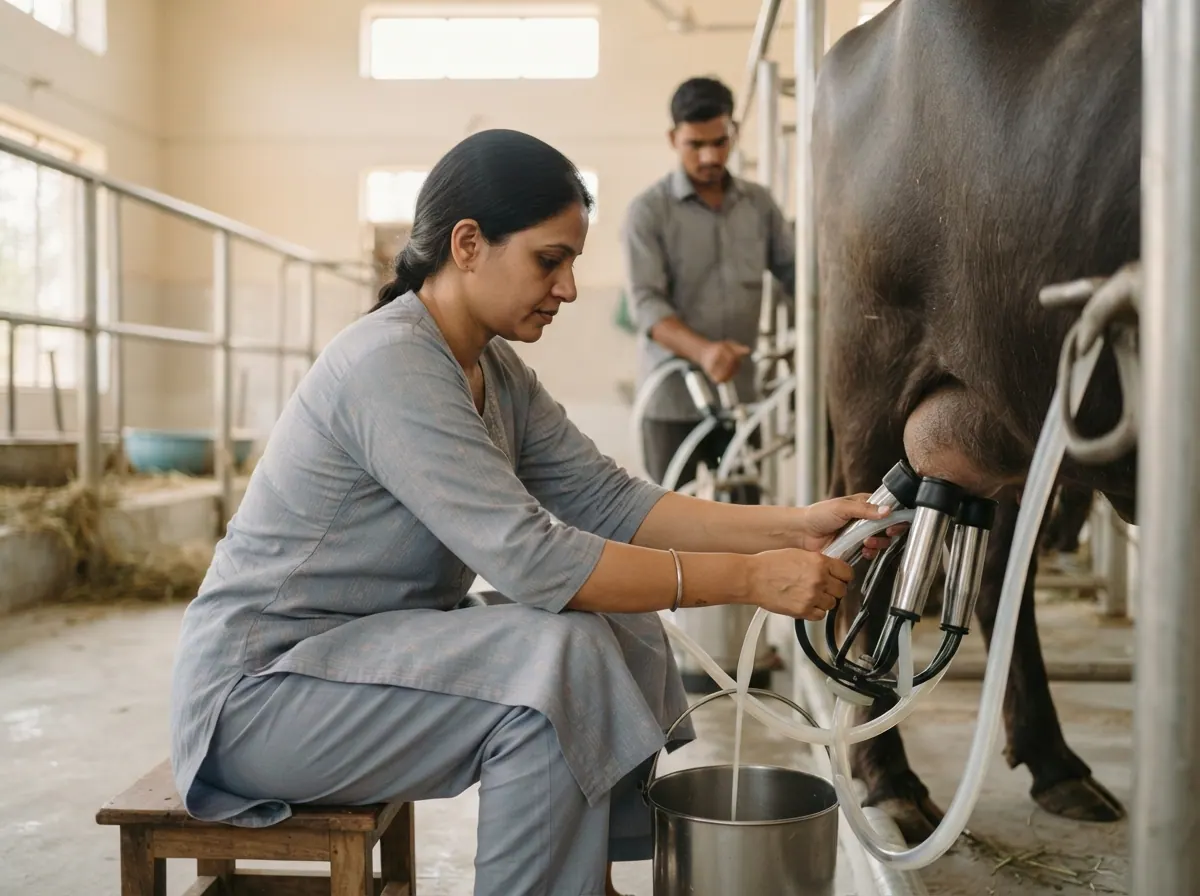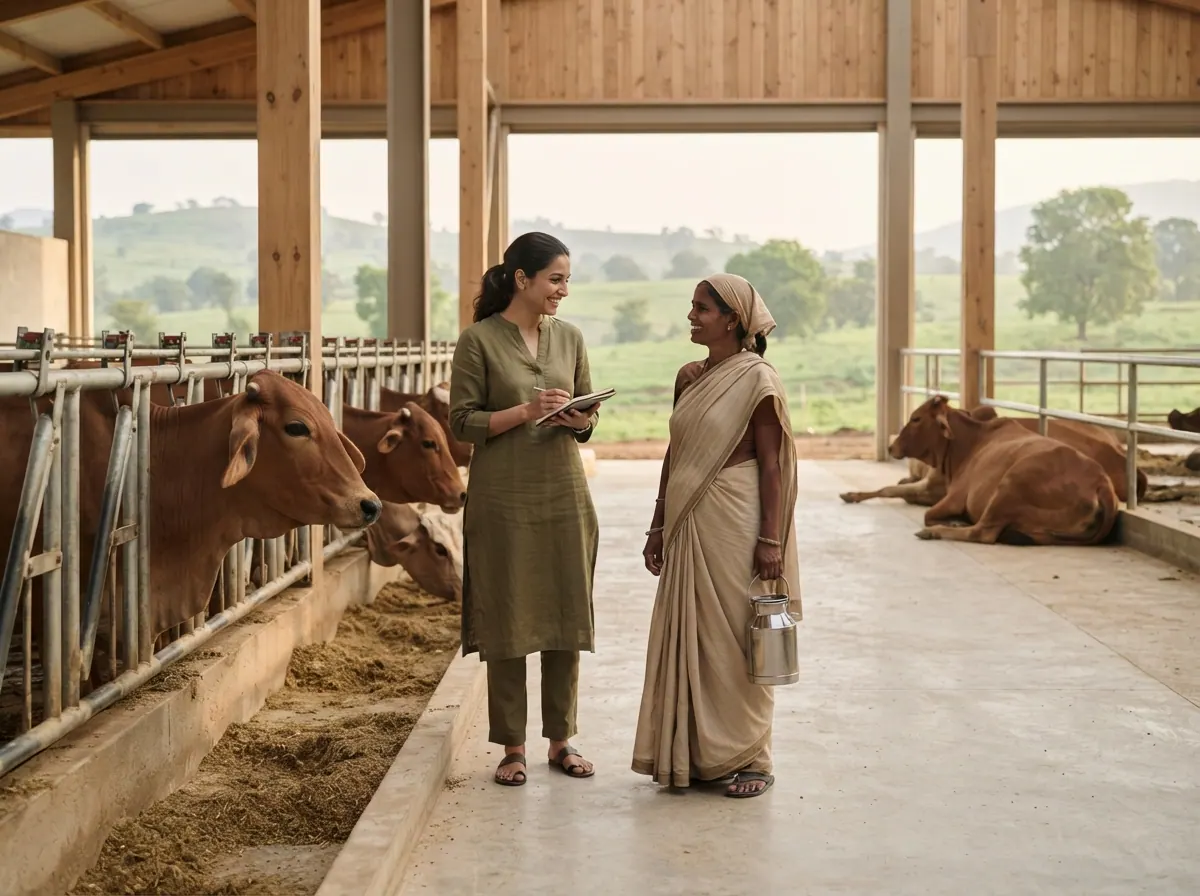
To start a dairy farm in India you need a clean shed with a dry floor, healthy milking animals, a fodder plan, a vet you can call, and about ₹9.5–15 lakh for 10 animals, or ₹20–30 lakh for 20 animals with a milking machine. That is with some land of your own. The business earns by selling milk twice a day, so a bought milking animal pays you within days, but feed is a bill you pay every day, even when the animal is dry.
All figures here are estimates. Check prices near you before you spend.
What does it cost?
| Item | 10 animals | 20 animals |
|---|---|---|
| Animals (cow or buffalo, in milk) | ₹6–9 lakh | ₹12–18 lakh |
| Shed with roof, floor and manger | ₹1.5–2.5 lakh | ₹3–5 lakh |
| Chaff cutter | ₹30,000–45,000 | ₹40,000–60,000 |
| Milking machine | none (hand milking) | ₹60,000–1 lakh |
| Fodder plot setup | ₹30,000–50,000 | ₹60,000–1.2 lakh |
| Water, drainage and washing | ₹30,000–60,000 | ₹80,000–1.2 lakh |
| Feed reserve for two months | ₹80,000–1.2 lakh | ₹1.6–2.4 lakh |
| Insurance | ₹20,000–35,000 | ₹40,000–65,000 |
| Vet, vaccines, mineral mix | ₹15,000–25,000 | ₹30,000–50,000 |
| Total | about ₹9.5–15 lakh | about ₹20–30 lakh |
Animal price is the big number. A cow that gives 15 litres a day costs far more than one that gives 8, so ask to see it being milked before you pay. If you raise your own heifers instead of buying adults, setup is lower but income starts two to three years later.
Cow or buffalo?
- Crossbred cow (Holstein Friesian or Jersey cross): gives more litres, but needs good feed, shade and fans in heat.
- Desi cow (Gir, Sahiwal, Tharparkar and others): hardy, less milk, and some buyers pay extra for it. Check this locally.
- Murrah and other buffaloes: rich milk, which pays well where the rate depends on fat. Buffaloes can be slow to show heat and calve at longer gaps.
Ask the milk collection centre near you which one they pay more for, and what their fat and SNF rate chart looks like.
How much can it earn?
Here is a settled farm with 10 animals, of which 8 are in milk, in a normal month.
Milk sold in a month
- 8 milking animals × about 10 litres a day = 80 litres a day
- 80 litres × about ₹38 a litre = ₹3,040 a day
- ₹3,040 × 30 days = about ₹91,200 a month
Costs each month
- Feed (concentrate, dry fodder and some bought green): 8 milking animals × ₹215 a day + 2 dry animals × ₹110 a day = ₹1,940 a day × 30 = ₹58,200
- One paid worker = ₹12,000
- Vet and medicine = ₹3,000
- Power, water and repairs = ₹2,500
- Breeding and small expenses = ₹1,500
- Transport and society charges = ₹2,000
- Total = ₹79,200
Left over: ₹91,200 − ₹79,200 = about ₹12,000 a month.
Calf sales and manure add a little more, but this number does not count them. If your own family does the work, you keep the worker's ₹12,000 as well. The weak points are the dry months, when an animal eats but gives nothing, and one animal with mastitis or a long gap before the next calf, which can cut your milk noticeably.
What do you need before you start?
- Fodder you grow yourself. Napier or maize and lucerne, if your climate suits, make feed far cheaper than buying everything.
- A place that sells milk the same day. A cooperative society, private dairy chilling centre or your own regular home customers.
- A vet you can call at night. Cows do not wait for office hours.
- Clean water. A milking animal drinks a lot, so check the supply in summer.
- Cash for dry months. Some of your animals will be dry at any time.
Step by step
- Spend a week on a working dairy. Watch the 4 a.m. milking, feeding and cleaning.
- Build the shed with a sloped, non-slip floor, drainage, shade and good air, and a separate corner for calves and a sick animal.
- Buy animals in small lots from a known farmer or a breeder, and see them milked. Check the udder, teats and legs, and ask about the last calving and vaccinations.
- Keep new animals apart for the time your vet says, then vaccinate. Ask your vet about foot-and-mouth disease, brucellosis, lumpy skin disease and deworming.
- Set a feed routine with fixed times and quantities, and change feed slowly.
- Keep records of each animal: milk, calving date, breeding date and treatment.
- Wash and dry teats before and after milking, and keep milk covered and chilled quickly.
- Plan calving so some animals are always in milk and your income is steady.
Which licences apply?
- Local permission from the panchayat or municipal body for the shed, and a waste plan for dung and urine near homes or water.
- FSSAI registration or licence is needed if you sell milk or milk products, unless you are a registered member of a dairy cooperative society and supply all your milk to it. Confirm with the food safety office.
- Loans and schemes. Banks and NABARD-backed dairy schemes have supported dairy farms, and Kisan Credit Card has covered animal husbandry. The old dairy capital subsidy scheme (DEDS) ended in 2020, so do not count on the 25% subsidy some blogs still advertise. Rules change, so ask your bank and the district office.
- Livestock insurance usually needs ear tags and a vet's report if an animal dies. Read the conditions first.
- Tax. Ask a CA about your sales when they grow.
What goes wrong?
- Mastitis. Dirty teats or a wet floor can swell an udder, spoil milk and cost you weeks of income.
- Buying a cow on a trader's word. Some animals are shown with extra milk on the day of sale. Ask to milk it yourself.
- Heat stress. In summer, milk drops and animals fail to come in heat. Shade, water and fans pay back.
- Feed bill creeping up. Concentrate looks cheap in the shop but is the largest daily cost.
- Long gaps between calves. Each extra month an animal does not conceive is a month of feed with little milk.
- Disease in the area. Foot-and-mouth disease and lumpy skin disease move quickly. Vaccination and keeping new animals apart matter.
- Delayed milk payment. A private buyer who pays late can leave you short for feed.
Situations you will face
What would you do? Each choice costs something.
Getting started
A trader says this cow gives 16 litres a day and wants a high price. You have only seen it milked once.
- Milk it yourself twice: Delay, a true figure
- Pay on the trader's word: Quick deal, yield may drop
Cows give more litres, but the society pays well for buffalo fat. Cows need shade and fans in summer.
- Buy crossbred cows: More litres, more fans and feed
- Buy Murrah buffaloes: Rich milk, fewer litres
The mason says a rough, sloped floor costs more than plain cement. A smooth floor is cheap but animals slip.
- Rough sloped floor: Higher cost, fewer injuries
- Plain cement floor: Cheaper, slip risk
You have a spare acre. Planting costs money and gives nothing for two months, while green fodder can be bought daily.
- Plant the napier: Cost now, cheaper feed later
- Buy fodder daily: No planting, higher feed bill
The village society pays by fat and keeps a monthly cut. A private dairy offers a higher flat rate but pays after fifteen days.
- Join the society: Steady, fair, lower rate
- Sell to the private dairy: Higher rate, late payment
Four cows come from a mela. The vet told you to keep new animals apart, and there is no pen.
- Build a small pen: Cost now, safe herd
- Tie them in the main shed: No cost, infection risk
First month
A cow has calved and the calf will not stand or suck. The vet charges extra at night.
- Call the vet now: Night fee, better chance
- Wait until morning: Saves the fee, may lose it
Milk from one quarter shows clots and the udder feels hot. Your helper says milk it out and carry on.
- Call the vet, test the milk: Fee and discarded milk
- Discard that milk, sell the rest: Lose some milk, safe for buyers
It takes ten extra minutes a cow and needs clean cloth and water. The helper wants to skip it.
- Do it every time: Time and soap, cleaner milk
- Use a quick dip cup: Small cost, still cleaner milk
The insurance agent needs ear tags and a vet's health note. It costs money before any claim.
- Tag and insure all: Premium now, claim cover
- Insure only the best two: Lower cost, others at risk
A dealer's new brand is cheaper per bag. The cows are used to the old one and milk is steady.
- Stay with the old feed: Higher cost, steady milk
- Switch at once: Cheaper, milk may drop
The government camp is free but weeks away. A private vet can come this week for a fee.
- Pay the private vet: Cost, covered now
- Wait for the camp: Free, weeks unprotected
Running it
At forty-four degrees the cows pant and milk has fallen a litre each. Fans and a sprinkler cost money.
- Fit fans and sprinklers: Cost and power, milk holds
- Give shade cloth only: Cheap, milk dips
It has been bred twice and has not conceived. Every extra month is feed with little milk.
- Vet check and treatment: Cost, better chance
- Try the bull once more: Cheap, may fail again
Maize is cheap now. Silage needs a pit, plastic and labour but saves green fodder in summer.
- Make silage: Cost and work, cheap feed later
- Buy dry fodder later: No work, higher cost later
Your fat reading fell and the rate dropped. A neighbour says a little water and powder fixes it.
- Fix the feed and wait: Slower, honest milk
- Accept the lower rate for now: Less money, honest milk
The dairy owes you a month of milk money and says next week. Feed dealers want cash on delivery.
- Switch to the society: Steady pay, lower rate
- Wait and borrow for feed: Loan interest, keeps buyer
Twenty families ask for fresh milk each morning at a better rate. It takes a bike, bottles and two hours daily.
- Start home delivery: Bike and time, better price
- Send all to the society: Easy, lower rate
A vegetable grower will pay for every trolley of dung. You were also thinking of a biogas plant.
- Sell the dung: Extra cash, no biogas
- Build a small biogas unit: Cost now, gas and slurry
When things go wrong
Three cows in the next lane have skin lumps and fever. Your animals graze on the same road.
- Keep herd in, call the vet: Costs fodder and fees
- Isolate lumpy cows, discard their milk: Costs milk and fees, protects people
It dies after a day of bloat and gasping. Insurance needs the vet's note and tag number.
- File the claim properly: Effort and fee, payout
- Skip the paperwork: No effort, no payout
No rain for weeks and your napier is wilting. Dealers raise the price of bought fodder.
- Buy fodder at high price: Heavy cost, milk holds
- Cut the ration: Saves money, milk drops
The society bike broke down and two cans turned in the sun. The society refuses them.
- Buy a chilling can and ice: Cost, protects future milk
- Boil it down at home: Cheap, small returns
Your regular milker quits after the festival. Milking is at four tomorrow and you have no one trained.
- Hire a milker at higher pay: Higher wage, steady work
- Do it yourselves for now: No cost, tiring weeks
Several cows have worms and low milk. A full round costs more than treating only the thin ones.
- Treat the whole herd: Costly, per vet advice
- Treat only the thin cows: Cheaper, worms may stay
Growing
With twenty animals, hand milking takes hours. A machine saves labour but needs cleaning and power.
- Buy the machine: Costly, saves labour
- Hire a second milker: Monthly wage, no machine
Milk sells steadily and a bank offers a loan. More animals also mean more shed, feed and risk.
- Expand with a loan: Heavy loan, more milk
- Improve milk per cow: Smaller spend, steady gain
Buying cows is costly. Rearing calves costs feed for two years before they milk.
- Raise your own heifers: Feed cost, cheaper herd
- Keep buying milkers: Costly, immediate milk
A shopkeeper wants curd and ghee in your name. It means packing, cold storage and an FSSAI registration.
- Register and start: Cost and paperwork, better margin
- Keep selling raw milk: Simple, lower margin
The bank will consider a dairy loan with a project report, animal records and insurance papers.
- Hire a CA for the report: Fee, a loan chance
- Grow from own savings: No fee, slower growth
Is it right for you?
Dairy suits you if you can be at the shed at dawn and dusk every day, even on festival days, and have some land for fodder. It suits you less if you need free time, or have no steady milk buyer nearby.
A good test: work on a dairy for a month before buying animals. If you still want it, start with five to ten animals, keep careful records, and grow only when your milk per animal and feed bill are under control.